Cold Storage Warehouse Automation — The Complete 2026 Guide
Conveyors, AS/RS and robotics for chilled (+2 °C) and frozen (−25 °C) warehouses — materials, motors, condensation and energy.
Cold storage warehouse automation is the fastest-growing automation segment in the Benelux, driven by food retail e-commerce, frozen meal production and pharma cold chain. Automating a chilled or frozen facility is not a normal warehouse project with a thicker jacket: below 0 °C, lubricants stiffen, steel contracts, polymers turn brittle, condensation freezes on every surface that crosses a temperature boundary, and human labour becomes both expensive and legally time-limited. This guide covers what actually changes when you move a conveyor, AS/RS or robotic cell into a temperature-controlled room — material choices, motor ratings, condensation management, energy strategy and realistic cost benchmarks for Belgian, Dutch and Luxembourg projects.
1. The four temperature classes and what each one demands
| Class | Temperature | Typical goods | Automation impact |
|---|---|---|---|
| Ambient controlled | +15 to +25 °C | Dry food, pharma | Standard equipment |
| Chilled | +2 to +7 °C | Dairy, meat, produce | Sealed bearings, IP65 drives, condensation control |
| Frozen | −18 to −25 °C | Frozen meals, ice cream | Low-temperature grease, heated gearboxes, freezer-rated electronics |
| Deep frozen / blast | −30 to −40 °C | Tuna, blast tunnels | Stainless frames, external drives, minimal electronics in-room |
The cost step is not linear. Moving from ambient to chilled adds roughly 15–25% to conveyor capex; moving from chilled to −25 °C frozen adds another 30–60%, and deep-freeze blast environments can double it.
2. Material choice: what survives −25 °C
- Frames: hot-dip galvanised or AISI 304 stainless. Painted mild steel fails at the weld seams once daily frost/defrost cycling starts.
- Rollers: stainless tube with sealed, low-temperature-greased bearings (rated to −40 °C). Standard lithium grease thickens below −15 °C and multiplies start-up torque by 2–3×.
- Belts: avoid standard PVC — it stiffens and cracks. Use polyurethane or freezer-grade modular plastic (POM/PP blends rated for sub-zero impact).
- Polymers: nylon guides and sprockets become brittle; specify UHMW-PE or acetal with sub-zero impact ratings.
- Cabling: PUR-jacketed, cold-flex rated. PVC cable jackets crack when a technician bends them at −20 °C.
3. Motors and drives: derate, heat or externalise
The single most common cold-store failure mode is a drive that works fine in commissioning and dies in month four. Three strategies, in order of cost:
- Freezer-rated 24 V MDR with sealed motors and conformal-coated cards, rated to −30 °C. Best for tote and carton handling; expect 20–35% premium over standard MDR.
- Anti-condensation heaters in gearboxes and control cabinets, thermostatically held above dew point. Mandatory for any drive that will be switched off during defrost cycles.
- Drives outside the cold room — motor and gearbox mounted through the wall in an ambient corridor, shaft or chain penetrating the envelope. The most robust option for pallet conveyors and the standard for deep-freeze.
Also derate torque: cold grease, contracted tolerances and frozen product residue can raise breakaway torque by 40–70% versus the ambient calculation. Size drives on breakaway, not running load.
4. Condensation, frost and the temperature boundary
Every point where product or air crosses a temperature boundary is a frost risk. Practical rules:
- Air-lock the boundary: fast-acting doors plus an air curtain, or a dedicated air-lock vestibule for high-frequency conveyor penetrations.
- Never route warm humid air into the cold room. Positive pressure in the chilled area keeps moist ambient air out and cuts evaporator frosting.
- Design for defrost: the line will be off and warming for 20–60 minutes per cycle. Slope frames and drip trays so melt water leaves the structure instead of refreezing under a roller.
- Scanners and photo-eyes need heated lenses or air-purged housings; fogged optics are the number-one cause of phantom jams in chilled DCs.
- Floor heating beneath frozen rooms prevents subsoil frost heave that misaligns rails and AS/RS masts over the years.
5. Which automation technology fits a cold store
| Technology | Fit at −25 °C | Notes |
|---|---|---|
| Pallet shuttle / radio shuttle | Excellent | Very high density, few electronics, battery performance drops ~30% — plan ambient charging. |
| Pallet AS/RS crane | Excellent | Highest density per m³; the classic frozen-store answer. Cranes tolerate cold well with rated lubricants. |
| Shuttle AS/RS (tote) | Good | Requires freezer-rated shuttles; maintenance access design is critical. |
| Chain / roller pallet conveyor | Good | Use through-wall drives and stainless frames. |
| AMR fleets | Limited | Battery capacity and LiDAR fogging suffer; usable in chilled, rare below −18 °C. |
| Piece-picking robots | Limited | Vision and vacuum grippers struggle with frost and packaging condensation. |
The dominant Benelux pattern for frozen sites in 2026: AS/RS or shuttle storage inside the cold envelope, order assembly and packing in a chilled or ambient buffer just outside it, connected by a short conveyor penetration. That keeps people and sensitive electronics out of −25 °C while retaining storage density.
6. Energy: automation pays back twice in cold storage
Refrigeration is 60–70% of a frozen DC's energy bill, and cubic volume drives it. Automation shrinks the refrigerated envelope: a high-bay AS/RS stores the same pallet count in roughly 40–50% of the floor area of a reach-truck store, and needs no lighting, heating or aisle width for people. Combined with fewer door openings (automated in/out instead of truck traffic), typical measured savings in Benelux projects land at 25–40% of refrigeration energy — on top of the labour case. Where a labour-only business case shows a 6-year payback, adding the energy and space effect frequently pulls it under 4.
7. Labour, safety and compliance
- Working time in freezer rooms is restricted and requires rotation and warm-up breaks — a real productivity cost that automation removes.
- Food-contact zones need washdown-capable, EHEDG-friendly design; specify open frames that drain and avoid horizontal ledges that trap ice.
- Pharma cold chain (GDP) adds continuous temperature mapping and validated alarming: budget for sensors on the conveyor path, not only in the room.
- Emergency access: plan how a technician safely reaches a jam inside a −25 °C aisle, including duress alarms and lock-out procedures.
8. Cost benchmarks (Benelux, 2026 indicative)
| Item | Ambient | Chilled +2 °C | Frozen −25 °C |
|---|---|---|---|
| Pallet conveyor (€/m) | 800–1 400 | 1 000–1 700 | 1 400–2 400 |
| 24V MDR tote line (€/m) | 500–900 | 650–1 100 | 900–1 500 |
| Pallet AS/RS (€/pallet position) | 350–600 | 420–700 | 550–950 |
| Annual maintenance (% of capex) | 3–5% | 4–6% | 6–9% |
9. Specification checklist before you go to tender
- Fix the temperature class per zone — and the worst case, not the setpoint.
- State the defrost regime (frequency, duration, method) in the tender; it drives drive selection.
- Require component temperature ratings in writing, including bearings, grease, cables and control cards.
- Define the temperature boundary crossings and who owns air-lock design.
- Specify maintenance access from the ambient side wherever physically possible.
- Model refrigeration energy in the business case alongside labour — it is often the larger number.
Easy Systems designs and integrates conveyor and storage automation for chilled and frozen facilities across Belgium, the Netherlands and Luxembourg, including through-wall drive layouts and defrost-tolerant control design.
Every article in this guide.
 Conveyor Systems
Energy Efficiency in Conveyor Systems: A Benelux Guide
This article provides practical steps for enhancing the energy efficiency of conveyor systems in the Benelux. Discover how modern motors, smart controls, and data-driven maintenance can reduce operational costs and CO2 emissions in your warehouse or production facility.
 Warehouse Automation
Automated Case Picking: The Role of Coordinated Conveyor Systems
Intelligently coordinated conveyor systems are the backbone of modern automated case picking operations, enabling Benelux warehouses to achieve picking rates over 500 cases per hour and order accuracy above 99.9%. This article explores the key technologies, benefits, and implementation strategies.
 Warehouse Automation
Human-Robot Collaboration on the Conveyor Line: A Benelux Guide
Explore how collaborative robots (cobots) are safely and efficiently integrated into conveyor lines in Benelux warehouses. This guide covers safety standards, implementation, and ROI for effective human-robot teams.
 Conveyor Systems
Energy-Efficient Motors: Powering Sustainable Benelux Conveyors
Upgrading to energy-efficient motors like Permanent Magnet Synchronous Motors (PMSM) or Motorized Drive Rollers (MDR) can significantly reduce conveyor energy consumption and operational costs, aligning with EU sustainability goals for Benelux logistics.
 Warehouse Automation
Modular Robotics for Flexible Warehouse Logistics
Modular robotics revolutionizes warehouse automation by using interchangeable components for ultimate flexibility. This approach allows logistics operations to scale and adapt to market changes rapidly, significantly cutting costs and downtime.
 Conveyor Systems
Conveyor Safety in the Benelux: A Guide to Compliance
A comprehensive guide to conveyor system safety standards in Belgium, the Netherlands, and Luxembourg. We cover essential regulations like the Machinery Directive 2006/42/EC and EN 620, risk assessment, and operational best practices to ensure a safe and compliant warehouse environment.
 Conveyor Systems
Hybrid Conveyor Systems: Synergy in Benelux Warehouses
Hybrid conveyor systems strategically combine the high-throughput power of classic conveyors with the flexibility of modular automation, creating adaptable and scalable logistics solutions ideal for the dynamic demands of Benelux distribution centers.
 Conveyor Systems
Modular Conveyor Systems: Flexible Solutions for Production & Distribution
Modular conveyor systems consist of standardized, interconnecting sections that enable rapid installation and easy reconfiguration. This inherent flexibility allows businesses to scale their material handling capabilities quickly in response to market changes, making it a cornerstone of modern, agile logistics.
 Warehouse Automation
The Role of AI in WCS for Benelux Conveyor Systems
AI-powered Warehouse Control Systems are transforming conveyor operations in the Benelux, moving beyond simple automation to predictive, self-optimizing material flow. This unlocks major gains in efficiency, throughput, and resilience for logistics hubs in the Netherlands, Belgium, and Luxembourg.
 Warehouse Automation
Machine Vision in Conveyor Systems for QC & Optimisation
Machine vision systems are crucial for modern warehouse automation, using cameras and software to inspect products, verify labels, and guide sorting on conveyor belts. This enhances quality control and optimizes material flow in busy Benelux logistics hubs.
 Conveyor Systems
Conveyor Material Choice: Durability and Performance in the Benelux
Choosing the right conveyor material—steel for strength, aluminum for flexibility, or plastic for hygiene—is critical for optimizing warehouse operations in the Benelux. This article explores the trade-offs between durability, cost, and compliance for local industries.
 Conveyor Systems
Hygienic Conveyor Systems for Benelux Food & Pharma
Learn to select the right hygienic conveyor system for food or pharmaceutical production in the Benelux, focusing on EHEDG standards, cleanability, and materials like stainless steel to ensure safety and compliance.
 Warehouse Automation
Optimizing Conveyor Performance with Fleet Management Software: A Practical Approach for Benelux Warehouses
Fleet management software offers a centralized solution for monitoring, analyzing, and optimizing conveyor systems. This approach moves beyond basic control to unlock significant gains in throughput, uptime, and efficiency for modern Benelux warehouses.
 Warehouse Automation
Cybersecurity for Automated Conveyor Systems: Risks & Prevention
Protect your warehouse automation from cyber threats. This guide covers key risks for conveyor systems in the Benelux, from PLC vulnerabilities to network intrusions, and provides concrete prevention strategies to ensure operational continuity and data integrity.
 Conveyor Systems
Future-Proofing Conveyor Investments in Benelux Warehouses
Investing in a conveyor system is a major commitment. This guide explores how Benelux warehouse managers can ensure their investment is future-proof through scalable design, modular components, and adaptable technology, preparing for market shifts and growth.
 Warehouse Automation
AGVs and Conveyors: A Guide to Seamless Warehouse Integration
Integrating Automated Guided Vehicles (AGVs) with conveyor systems bridges automation gaps, creating a fluid, uninterrupted material flow. This powerful combination boosts efficiency, flexibility, and throughput in European distribution centers.
 Warehouse Automation
Future-Proofing Your Warehouse: How Scalable Conveyor Systems Adapt to Growth in the Benelux
Scalable conveyor systems offer the flexibility Benelux warehouses need to manage growth and seasonal peaks. By investing in modular designs, businesses can expand capacity, integrate new technologies, and optimize material flow without costly overhauls.
 Conveyor Systems
Custom Conveyor Solutions: Addressing Unique Challenges in Benelux Manufacturing
Standard conveyors often fail to meet the specific demands of Benelux manufacturing. Custom solutions provide the necessary flexibility for complex product handling, space limitations, and stringent regulations, delivering a significant return on investment.
 Conveyor Systems
Zero-Pressure Accumulation Conveyors: Enhancing Throughput & Preventing Damage in Benelux Sortation Centers
Zero-Pressure Accumulation (ZPA) conveyors are essential for modern sortation centers, creating buffer zones that prevent product damage and maintain high throughput. This article explores the technology, benefits, and implementation of ZPA systems in the Benelux region.
 Conveyor Systems
Guided Conveyor Systems: Navigating Benelux Manufacturing
Guided conveyor systems use fixed paths with integrated logic to automatically route items through complex manufacturing and logistics environments, crucial for Benelux's high-tech production landscape.
 Warehouse Automation
From Manual to Automated: A Step-by-Step Guide for Benelux Companies Transitioning Their Material Handling
This guide provides Benelux logistics managers with a clear, step-by-step framework for transitioning from manual to automated material handling. Discover how to analyze operations, define objectives, select technology, and ensure a smooth implementation for improved efficiency and ROI.
 Conveyor Systems
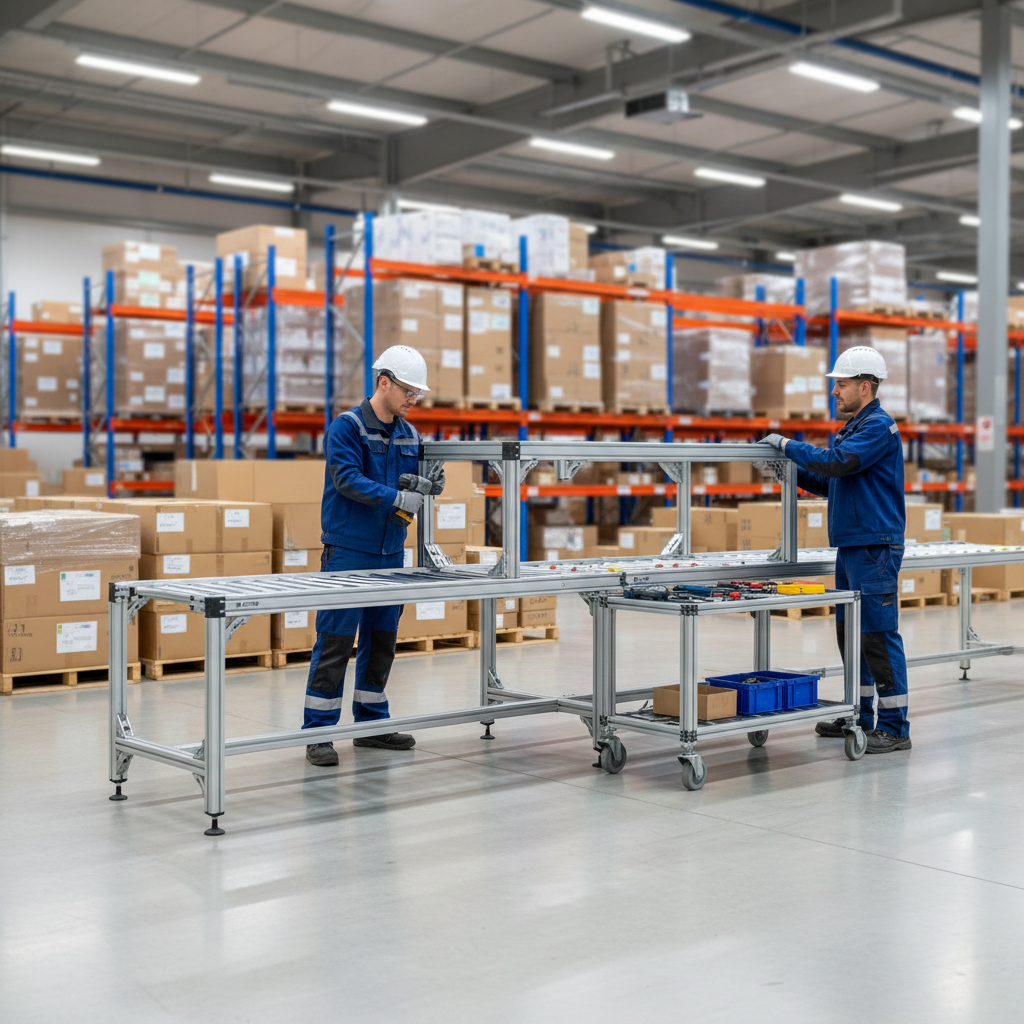
Quick-Install Conveyors: Minimizing Downtime in Benelux
In the fast-paced Benelux logistics sector, downtime is costly. Quick-install conveyors offer a solution: modular, pre-engineered systems that reduce installation time from weeks to days, ensuring operational continuity.
 Conveyor Systems
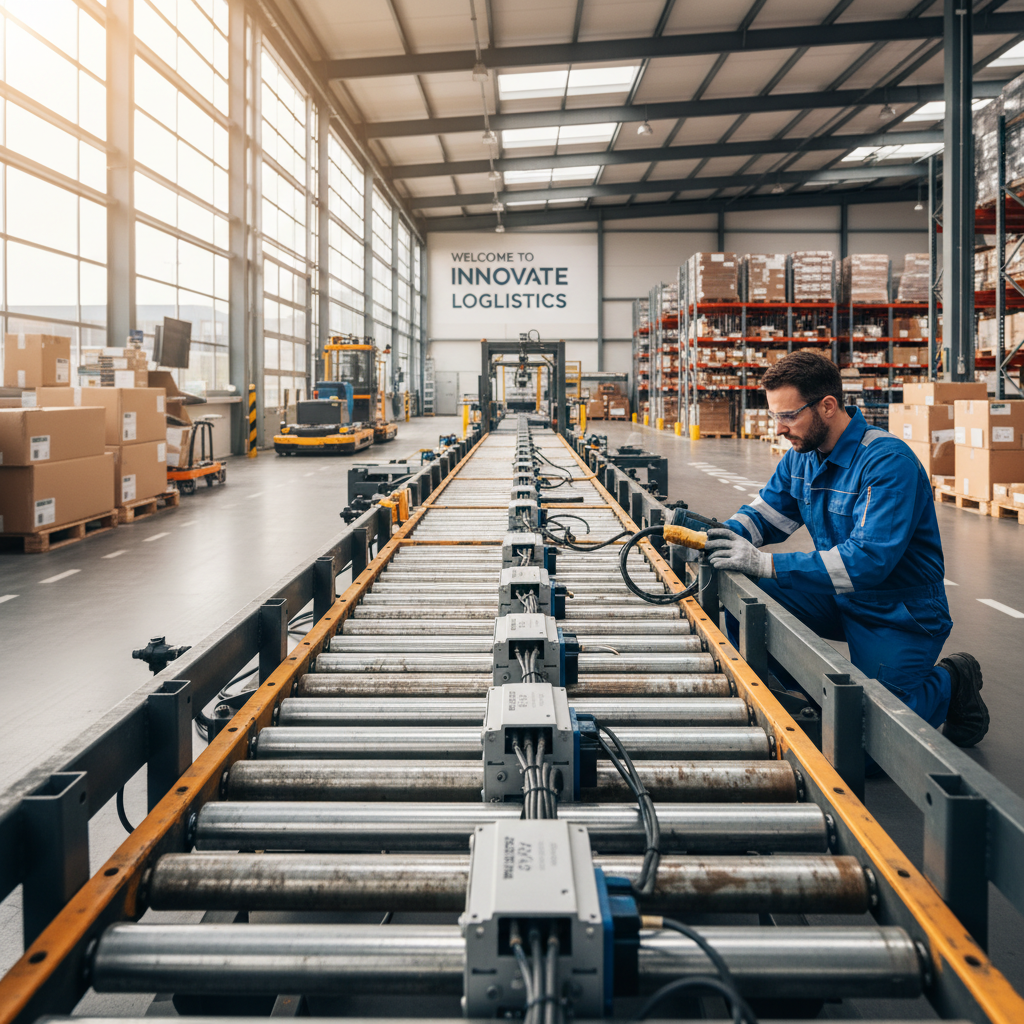
Conveyor Upgrades for Benelux SMEs: Affordable Optimization
For Benelux SMEs, conveyor system upgrades are not about complete replacement but smart, affordable optimizations. Enhance efficiency and reduce costs by focusing on high-impact areas like motors, controls, and modular additions.
 Warehouse Automation
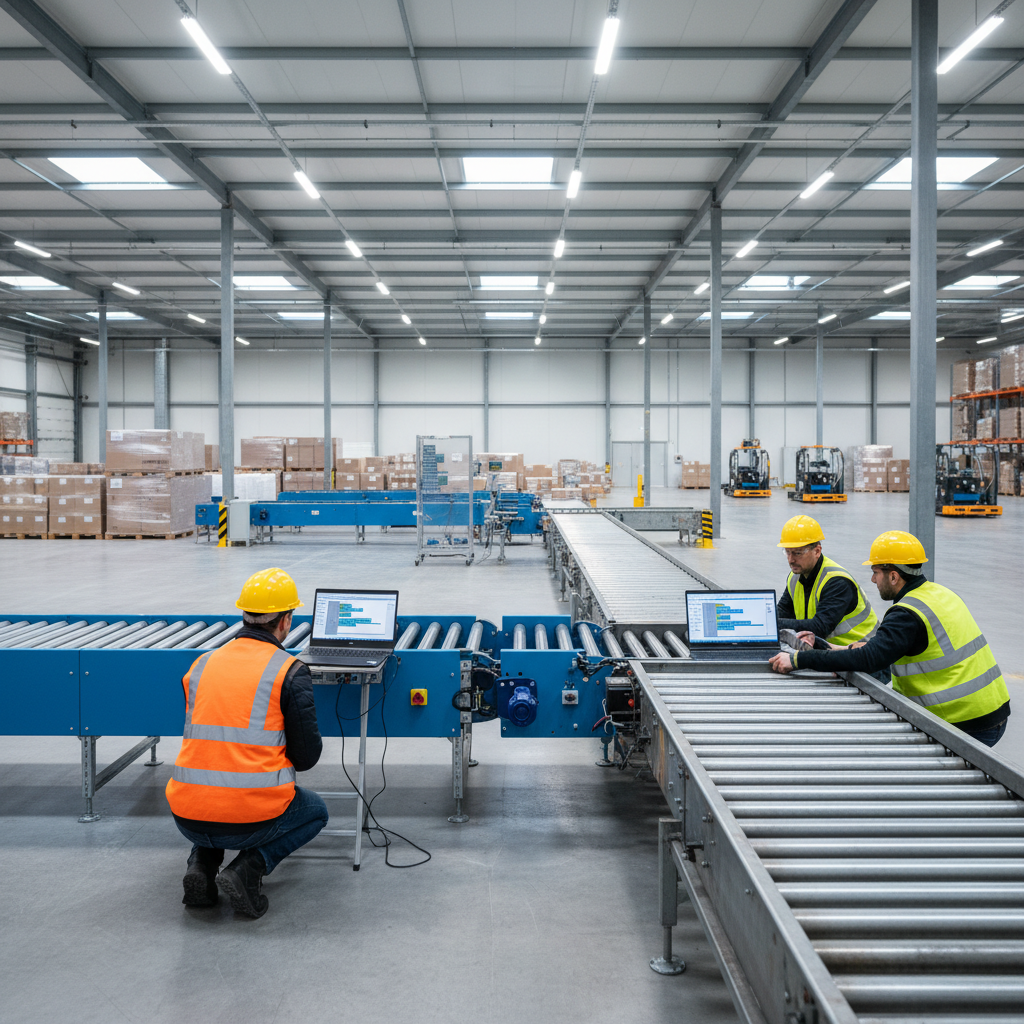
Conveyor Integration: Bridging Old & New in Benelux Warehouses
Successfully integrating new automated conveyors with existing systems is crucial for Benelux warehouses. This guide explores practical strategies to bridge the gap, ensuring a smooth transition, enhanced efficiency, and a future-proof logistics operation without a complete overhaul.
Planning a new conveyor or automation project?
Easy Systems designs and installs internal transport, conveyor and warehouse automation systems across the Benelux. Tell them about your flow — they'll come back with a system that scales.