Conveyor Safety in the Benelux: A Guide to Compliance
A comprehensive guide to conveyor system safety standards in Belgium, the Netherlands, and Luxembourg. We cover essential regulations like the Machinery Directive 2006/42/EC and EN 620, risk assessment, and operational best practices to ensure a safe and compliant warehouse environment.
In the high-throughput logistics hubs of the Benelux, conveyor systems are the arteries of operation. However, their efficiency can never come at the cost of safety. Understanding and implementing the specific safety standards applicable in Belgium, the Netherlands, and Luxembourg is not just a legal obligation but a cornerstone of a productive, reliable, and humane warehouse operation. This guide provides a detailed overview of the regulatory landscape, risk assessment procedures, and best practices for ensuring full compliance and optimal safety.
Definition
Conveyor system safety standards are a set of legal and technical regulations, primarily governed by the European Machinery Directive 2006/42/EC and its harmonized standards like EN 620, that dictate the design, manufacturing, installation, and operation of conveyor equipment to minimize risks and prevent injury to personnel.
Key Numbers
| Metric | Typical range (EU 2026) | Notes |
|---|---|---|
| Investment in Safety Systems | €5,000 - €50,000+ per system | Includes E-stops, guarding, sensors, and PLC integration. |
| Accident Reduction Rate | 60-75% | Achievable through a combination of modern equipment and strict operational protocols. |
| ROI on Safety Investment | 2-4 years | Calculated based on reduced downtime, lower insurance premiums, and avoided fines. |
| Cost of Non-Compliance Fines | €10,000 - €500,000+ | Varies per country and severity; can include operational shutdown orders. |
| Mandatory Training Hours | 8-16 hours per operator/year | Includes initial training and annual refreshers on safe operating procedures. |
| Typical Guarding Cost | €100 - €350 per meter | Mesh fencing and polycarbonate guards are the most common solutions. |
Core EU & Benelux Regulations
Navigating the legal framework is the first step toward compliance. For conveyor systems in the Benelux, safety is governed by a hierarchy of regulations, with EU directives at the top, supported by specific national standards.
H3: The Machinery Directive 2006/42/EC
This is the cornerstone of all machine safety in Europe. It mandates that any conveyor system placed on the market or put into service within the EU must meet essential health and safety requirements (EHSRs). Manufacturers are required to perform a risk assessment, compile a technical file, issue a Declaration of Conformity, and affix the CE mark to the equipment. This is non-negotiable for both new installations and significant modifications to existing ones.
H3: Harmonized Standard EN 620:2021
EN 620, "Continuous handling equipment and systems - Safety requirements," is the primary harmonized standard for conveyor systems. Adhering to EN 620 provides a "presumption of conformity" with the Machinery Directive. It specifies detailed requirements for all life cycle stages of a conveyor, covering everything from mechanical hazards (crushing, shearing, entanglement) to electrical and thermal risks. It provides concrete guidelines for clearances, guard design, and the placement of safety devices.
H3: National Implementations: NEN, NBN, ILNAS
While EU law provides the framework, national bodies in each Benelux country adopt and sometimes supplement these standards.
- Netherlands: The Dutch Standardization Institute (NEN) publishes the NEN-EN 620 standards. The ‘Arbowet’ (Working Conditions Act) enforces the implementation of these safety norms in the workplace, with inspections carried out by the Nederlandse Arbeidsinspectie.
- Belgium: The Bureau for Standardisation (NBN) is the Belgian counterpart. The ‘Codex Welzijn op het Werk’ provides the legal basis for workplace safety, including the use of compliant machinery.
- Luxembourg: The Luxembourg Institute for Standardization, Accreditation, Safety and Quality of Products and Services (ILNAS) oversees the adoption of EN standards.
Risk Assessment: A Practical Approach
A systematic risk assessment is not a bureaucratic exercise; it's a critical process to identify and mitigate potential harm. The process, typically following the EN ISO 12100 standard, involves identifying all potential hazards, estimating the potential severity and probability of harm, and evaluating the risk. Based on this evaluation, protective measures are designed and implemented until the residual risk is at an acceptable level. This must be done before the conveyor is first used and repeated whenever a significant change is made.
For a DC in Antwerp or a fulfillment center near Utrecht, this means considering not just the machine itself but its interaction with people and the environment. What are the risks at transfer points between a belt conveyor and a roller conveyor? What happens if a box falls? Are there sufficient clearances for maintenance staff? These are the questions a thorough risk assessment must answer.
Comparing Safety Features by Conveyor Type
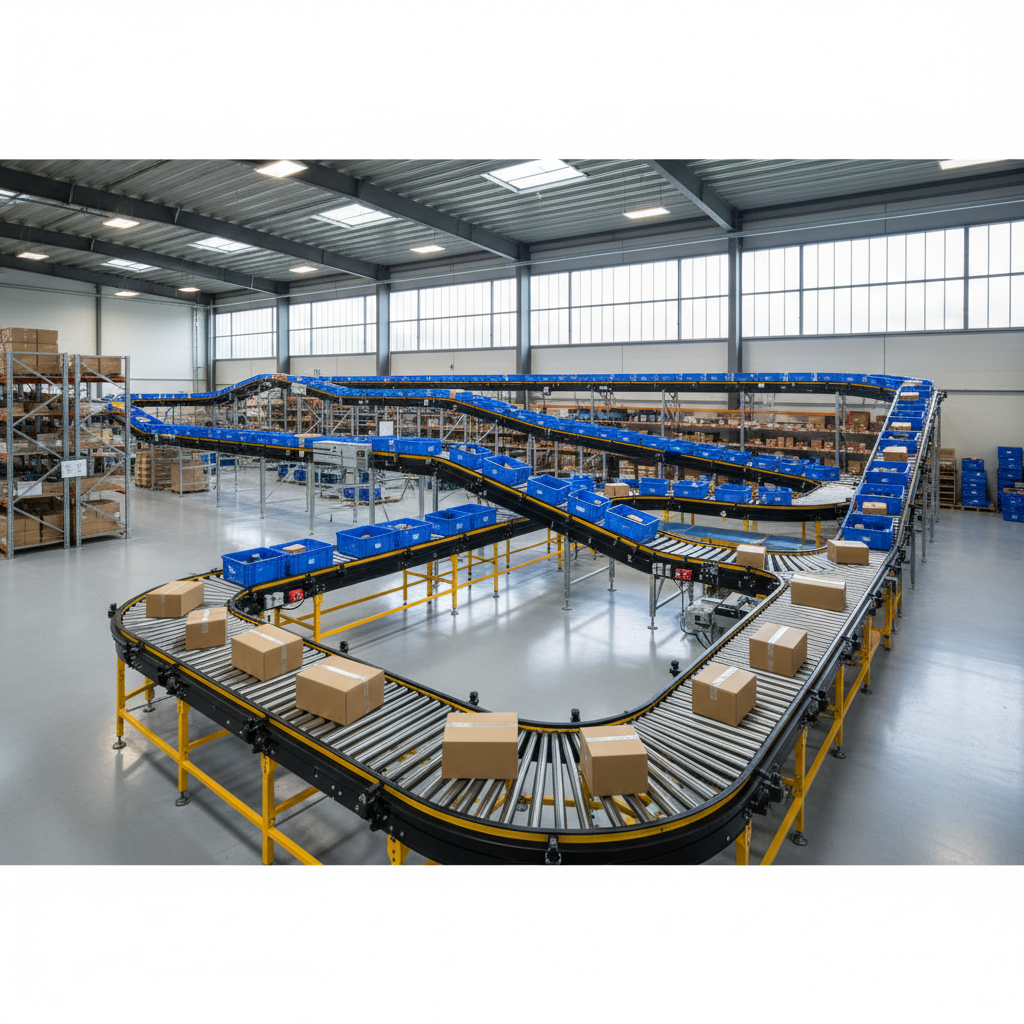
Different conveyor systems present different inherent risks. Choosing the right system and applying the correct safeguards is crucial. Our in-depth guide on roller conveyors provides further detail on one of the most common system types.
| Conveyor Type | Primary Hazard | Essential Safety Components | Best for... |
|---|---|---|---|
| Belt Conveyor | Entanglement at drive/tail pulleys, pinch points along the frame. | Full pulley guarding, side guards, emergency pull-cords, underside guarding. | Bulk materials, packaged goods over long distances. |
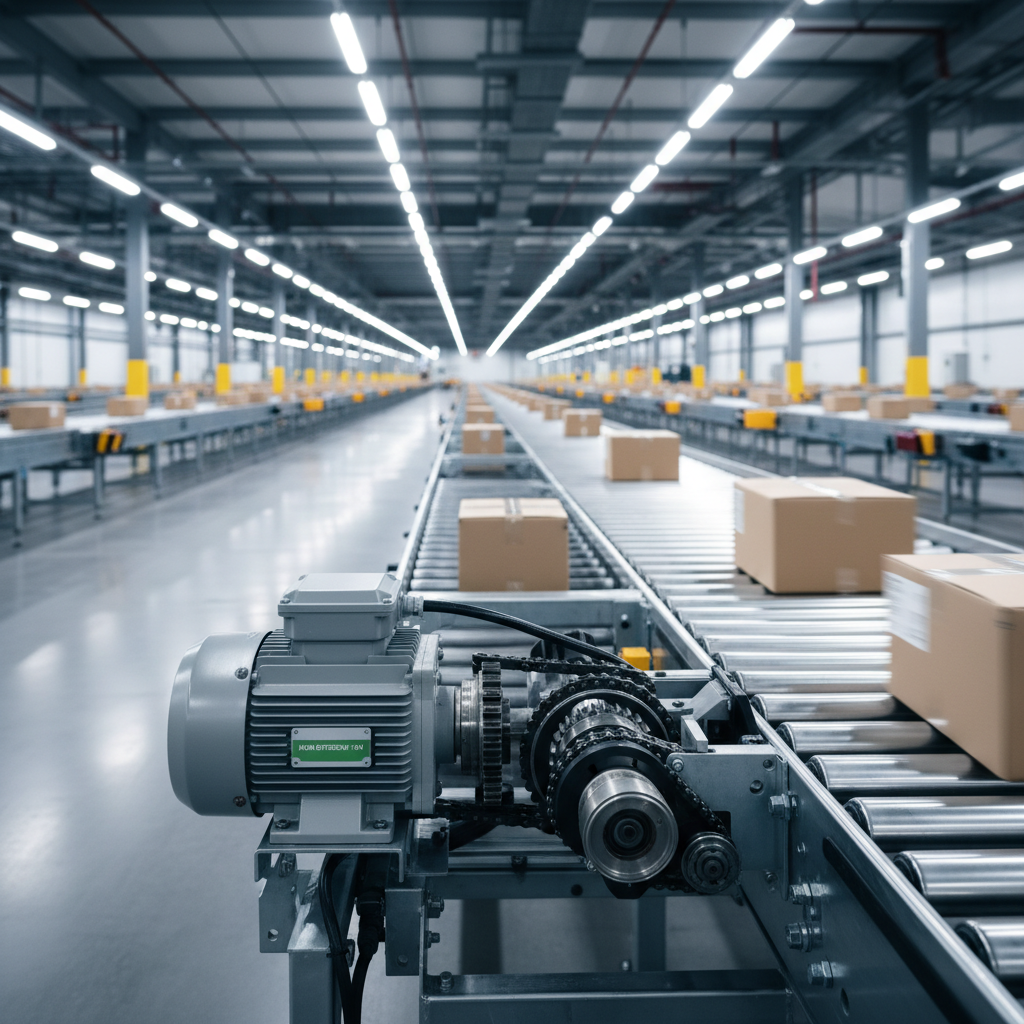
| Lineshaft Roller Conveyor | Pinch points between rollers, entanglement with a rotating shaft. | Guards over drive shaft, finger guards between rollers, pop-out roller sections. | Light to medium-weight cartons, zone-based accumulation. |
| Motor Driven Roller (MDR) | Low; pinch points between rollers. Uses 24V or 48V DC power. | Minimal guarding needed due to low torque; zero-pressure accumulation logic is a key safety feature. | Modern, flexible layouts, e-commerce fulfillment. |
| Chain Conveyor | Crushing and shearing points between chain and sprockets/guides. | Fully enclosed chain returns, solid side profiles, in-fill plates over gaps. | Pallets, heavy unit loads, harsh environments. |
Operational Best Practices for a Safe Warehouse
Compliant hardware is only half the battle. A safe operation relies on robust procedures and a well-trained workforce. Key best practices include:
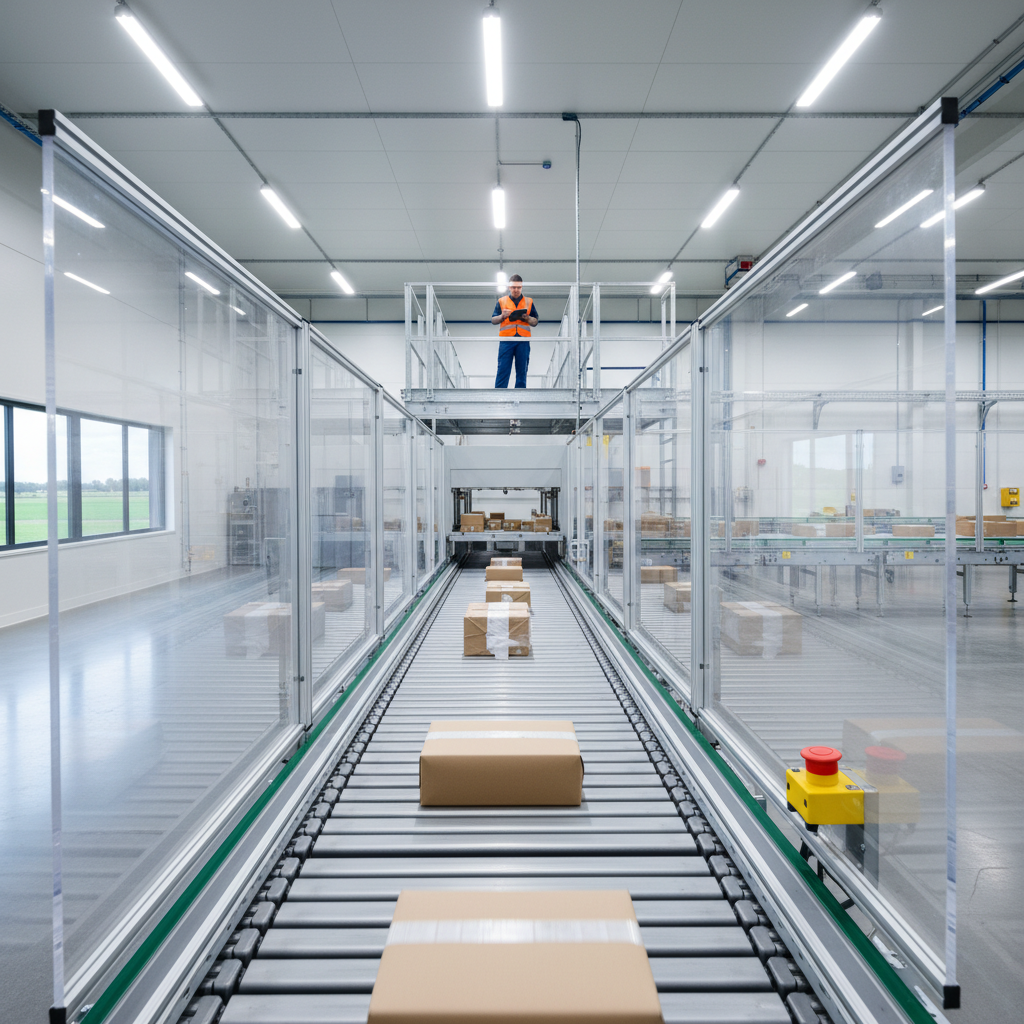
- Strict Zero-Access Policies: Personnel should never be allowed to walk on, cross over, or ride on a running conveyor. Designated crossing points (stairs or bridges) are mandatory and should be clearly marked.
- Lock-Out/Tag-Out (LOTO): Before any maintenance or cleaning, the conveyor must be de-energized and locked out to prevent accidental startups. Every authorized employee should have their own lock and key.
- Regular Operator Training: Training should cover safe operating procedures, the location and function of emergency stops, LOTO procedures, and how to report hazards. This needs to be documented and refreshed annually.
- Clear Signage and Floor Markings: Warning signs indicating moving parts, pinch points, and automated areas must be clearly visible. Floor markings should delineate pedestrian walkways from conveyor zones.
- Housekeeping: Keeping the area around conveyors free of debris, spills, and obstacles is crucial to prevent slips, trips, and falls.
Positioning Yourself as a Trusted Partner: Easy Systems
In a landscape governed by stringent regulations, partnering with an experienced and knowledgeable system integrator is not a luxury; it's a necessity. At Easy Systems, we design and build conveyor solutions with safety and compliance as a foundational principle, not an afterthought. Our engineering process begins with a thorough risk assessment in line with EN ISO 12100. Every system we deliver, from a simple gravity roller conveyor to a complex automated sorting line, carries the CE mark and comes with a complete technical file and Declaration of Conformity as required by the Machinery Directive 2006/42/EC.
We build safety into the core of your system, utilizing high-quality components, robust guarding, and intelligent control systems programmed for safe sequencing and immediate shutdown when needed. By integrating safety from day one, we help you avoid costly retrofitting, ensure full compliance with Benelux labor laws, and create a work environment that protects your most valuable asset: your people. Choose Easy Systems for a conveyor solution that is not only efficient and reliable but uncompromisingly safe.
Frequently asked questions
What is the most important safety standard for conveyors in the Netherlands?+
The most important standard is the NEN-EN 620:2021, which is the Dutch implementation of the harmonized European standard. It works in conjunction with the EU Machinery Directive 2006/42/EC and is enforced under the Dutch 'Arbowet'. Compliance ensures your system meets all essential health and safety requirements.
How often do I need to perform a risk assessment on my conveyor system?+
A risk assessment is mandatory before a new conveyor system is first put into service. It must be updated whenever a significant modification is made, such as a change in speed, function, or layout. Best practice recommends a periodic review every 2-3 years, even without changes, to account for evolving standards.
Are emergency stops required on all conveyors?+
Yes, according to EN 620, emergency stop devices (E-stops) are required and must be readily accessible at all operator control stations and at other strategic locations determined by the risk assessment. For a typical belt conveyor, this often means E-stop buttons every 15-20 meters and pull-cord systems along accessible lengths.
Can I use a variable frequency drive (VFD) to change my conveyor speed?+
Yes, you can use a VFD, but changing the speed may be considered a 'significant modification' under the Machinery Directive. This could trigger the need for a new risk assessment and potentially updated safety measures, as a higher speed could increase risks. The maximum speed must not exceed the original design specification.
What is the difference between a safety PLC and a standard PLC?+
A standard PLC controls routine operations, while a Safety PLC is specifically designed and certified (e.g., to SIL 3 or PLe levels) to manage safety-critical functions. It has redundant processors and self-monitoring capabilities to ensure it fails in a predictable, safe state. For complex systems, a Safety PLC is essential for integrating light curtains, E-stops, and safe-speed monitoring.
Are light curtains and physical guards interchangeable?+
No, they serve different purposes. Physical guards provide permanent protection against mechanical hazards like pinch points. Light curtains are electro-sensitive devices that stop the machine when a person or object crosses a defined boundary. They are used where frequent access is needed, but they do not protect against all mechanical hazards and must be selected based on a thorough risk assessment.

The Easy Systems editorial desk reviews and fact-checks every Conveyor-Design article against Benelux project experience. Editors translate engineering decisions — throughput, peak factors, layout, integration — into plain-language guides for operations managers, project leads and decision-makers.
- Warehouse layout & slotting
- Order-profile analysis
- Vendor-neutral comparison
- Benelux logistics market