Energy-Efficient Motors: Powering Sustainable Benelux Conveyors
Upgrading to energy-efficient motors like Permanent Magnet Synchronous Motors (PMSM) or Motorized Drive Rollers (MDR) can significantly reduce conveyor energy consumption and operational costs, aligning with EU sustainability goals for Benelux logistics.
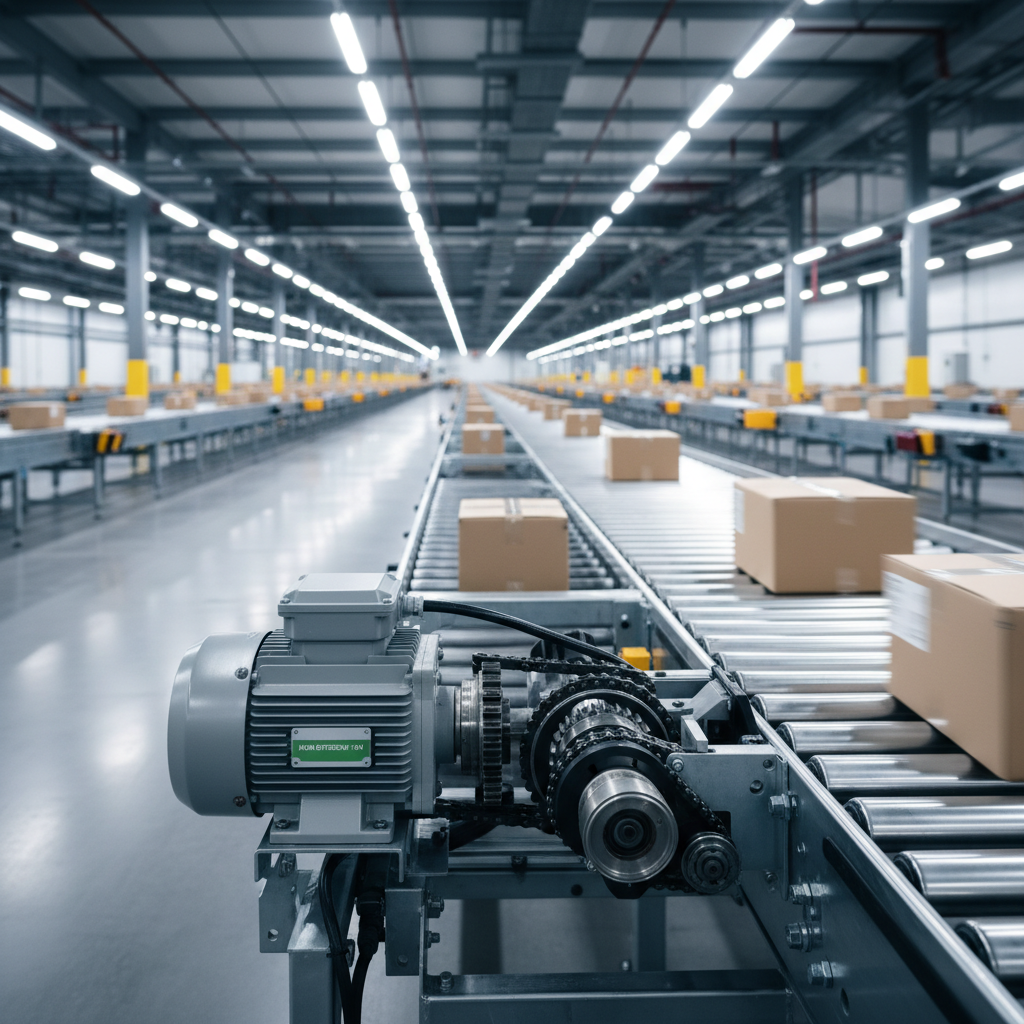
In the high-stakes, low-margin world of logistics, every euro cent counts. For warehouse and distribution center operators in the Benelux, soaring energy prices and mounting pressure from EU sustainability directives have turned operational efficiency from a competitive advantage into a baseline necessity. This article explores the critical role of energy-efficient motors in designing and operating sustainable conveyor systems, a cornerstone of modern material handling.
Definition
Energy-efficient conveyor motors are electric motors designed to convert a higher percentage of electrical energy into mechanical power, minimizing energy loss as heat. Classified by International Efficiency (IE) standards, these motors (e.g., IE3, IE4, IE5) or integrated solutions like MDR are crucial for reducing the total cost of ownership (TCO) and carbon footprint of automated material handling systems.
Key Numbers
| Metric | Typical range (EU 2026) | Notes |
|---|---|---|
| Energy Savings Potential | 20% - 60% | Compared to legacy IE1/IE2 motors, depending on technology. |
| Investment Cost (Motor) | €300 - €1,500 | Per motor, depending on type (AC vs. PMSM) and power rating. |
| Return on Investment (ROI) | 2 - 4 years | Based on 2-shift operation and average Benelux energy prices (€0.25/kWh). |
| Typical Speed | 0.3 - 2.5 m/s | Application-dependent; sorters and merge lines run faster. |
| CO2 Reduction per motor | 150 - 400 kg/year | Assuming average EU grid carbon intensity and continuous operation. |
| Operational Lifetime | 40,000 - 60,000 hours | Significantly influenced by maintenance and operating conditions. |
Why Energy Efficiency is a Game-Changer for Benelux Logistics
Conveyor systems are the arteries of any modern warehouse, but they can also be a major energy drain. Traditionally powered by standard AC induction motors that run continuously regardless of load, these systems represent a significant opportunity for optimization. With electricity prices in Belgium, the Netherlands, and Luxembourg among the highest in Europe, the financial incentive for an upgrade has never been stronger.
Furthermore, the EU's Ecodesign Directive (Regulation 2019/1781) sets strict minimum efficiency standards for electric motors. As of July 2023, new motors between 75 kW and 200 kW must meet the IE4 standard. While most conveyor motors fall below this power rating, the directive signals a clear regulatory trend towards higher efficiency across the board. Proactively adopting IE4, IE5, or equivalent technologies positions Benelux companies ahead of future regulation and reinforces their green credentials to clients and consumers.
The Financial and Environmental Case
Consider a medium-sized distribution center with 500 meters of roller conveyor. A traditional system might consume around 15 kWh. By retrofitting with energy-efficient motors and controls, consumption can be slashed to 6-8 kWh. At an average price of €0.25/kWh, running 16 hours a day, 300 days a year, the annual savings can exceed €15,000. Environmentally, this equates to a reduction of several tonnes of CO2 emissions annually, contributing directly to corporate sustainability goals.
Types of Energy-Efficient Conveyor Motors
Choosing the right motor technology is crucial for maximizing efficiency. The decision depends on the specific application—be it continuous transport, sorting, or accumulation. Let's compare the most common options available in the European market.
| Motor Technology | Best For | Efficiency | Initial Cost | Control Complexity |
|---|---|---|---|---|
| AC Induction Motor (IE3/IE4) | Continuous transport, heavy loads (e.g., pallet handling) | High (85-95%) | Moderate | Low (can run directly from mains, VFD for speed control) |
| Permanent Magnet Synchronous Motor (PMSM/EC) | High-torque applications, variable speed requirements | Very High (90-96%) | High | Moderate (requires a dedicated drive/controller) |
| Motorized Drive Roller (MDR) | Zone-based systems, Zero-Pressure Accumulation (ZPA), light-to-medium loads | Excellent (at system level) | Moderate (per zone) | Low (integrated controls, often 24V DC) |
A Deeper Dive into the Technologies
AC Induction Motors (IE3/IE4)
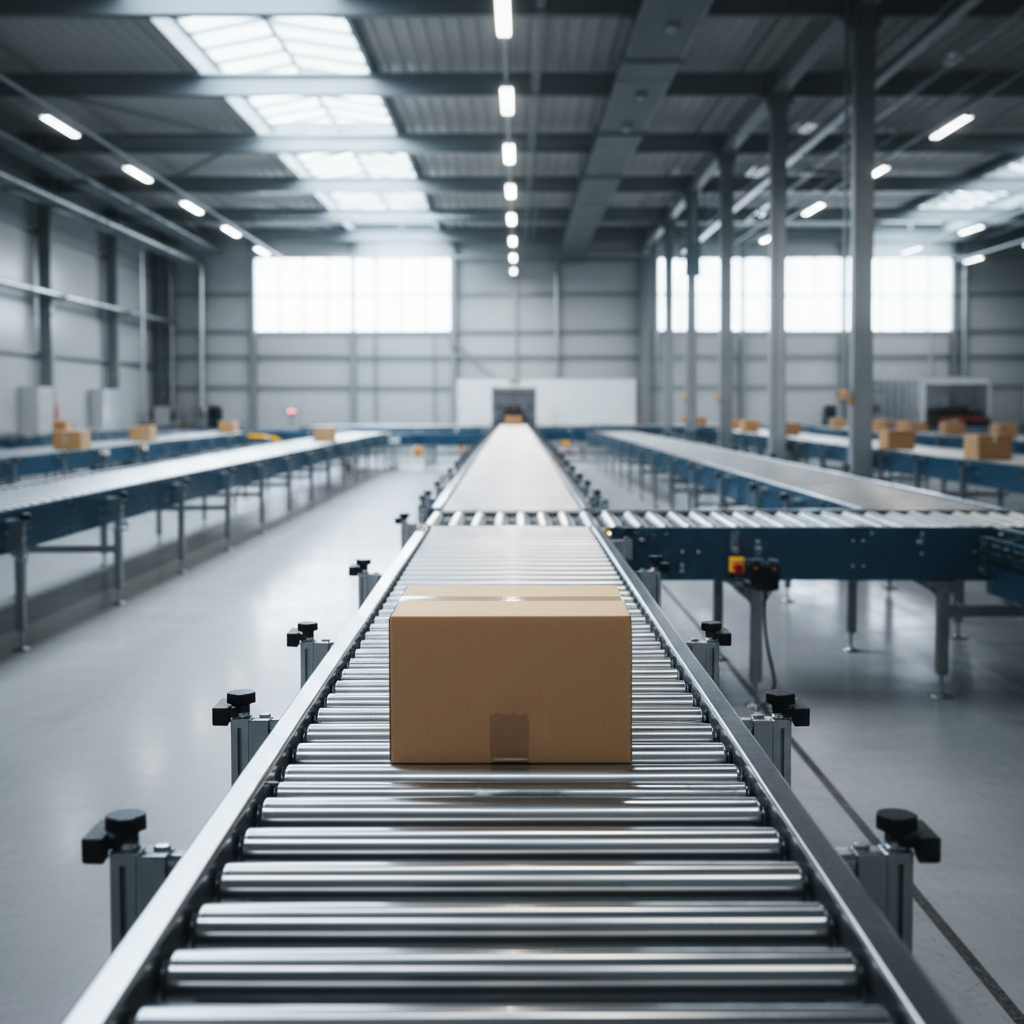
The workhorse of the industry, the AC induction motor, is robust and reliable. Modern versions meeting IE3 (Premium Efficiency) and IE4 (Super Premium Efficiency) standards offer significant improvements over older IE1/IE2 motors. They are best suited for long stretches of continuously running belt or roller conveyors, especially those found in pallet handling systems. For more detailed information on roller conveyor specifics, our Roller Conveyor Guide provides in-depth analysis.
Permanent Magnet Synchronous Motors (PMSM)
PMSMs, also known as Electronically Commutated (EC) motors, use permanent magnets in the rotor, eliminating rotor conductor losses and thus achieving higher efficiency than even the best induction motors. They maintain their efficiency across a wide range of speeds, making them ideal for applications with variable loads and speeds, such as merge and sortation subsystems.
Motorized Drive Rollers (MDR)
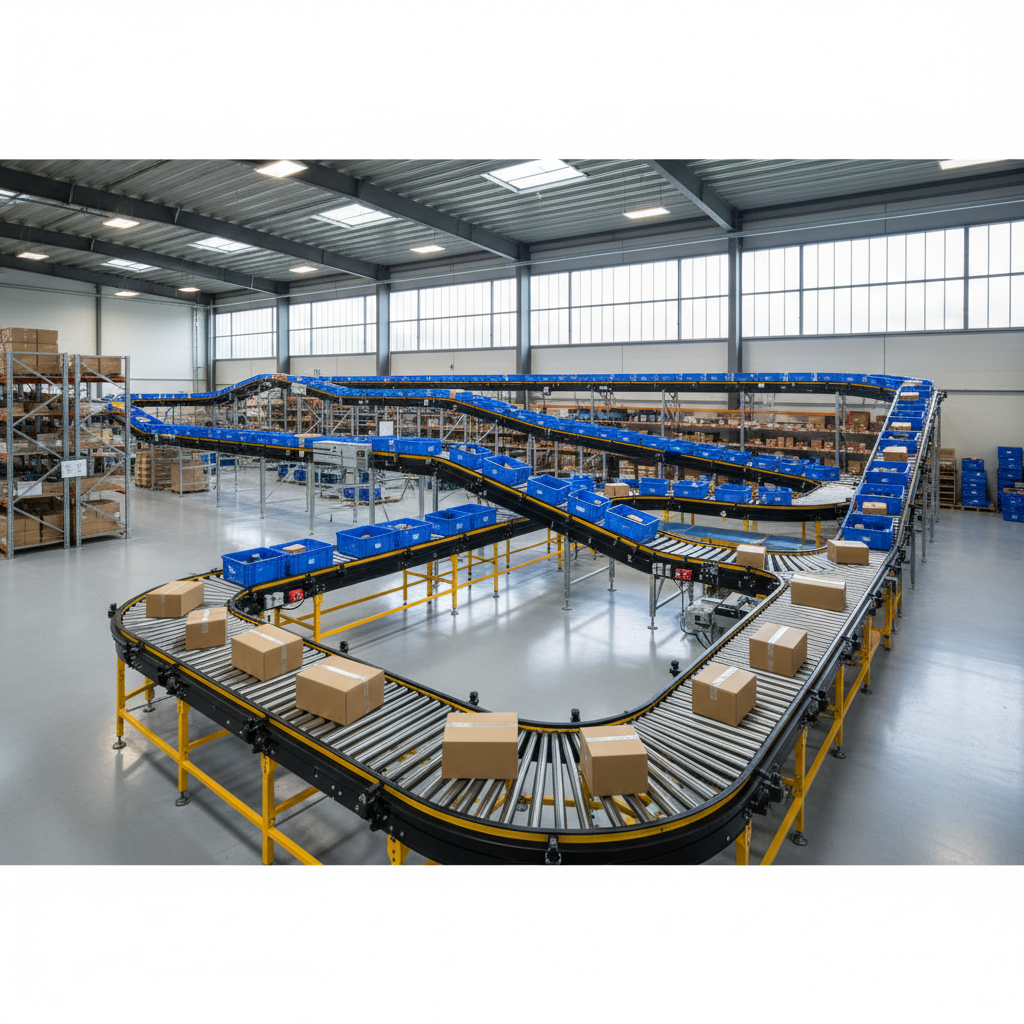
MDR technology revolutionizes conveyor design for carton and tote handling. It consists of a 24V DC brushless motor housed inside a conveyor roller, creating modular, independently controlled zones. This allows for 'run-on-demand' operation, where rollers only activate when a product is present. For applications requiring accumulation, MDR is the undisputed champion of energy efficiency, often cutting consumption by over 50% compared to continuously running belt-under-roller systems.
Integration with Smart Controls
The full potential of energy-efficient motors is unlocked when they are paired with intelligent control systems. A modern Warehouse Control System (WCS) or PLC-based logic can orchestrate motor activity with precision.
- Run-on-Demand: Sensors detect the presence of goods and activate the upstream motor or zone just in time to receive the item, shutting it down immediately after. This is the core principle of MDR systems.
- Speed Regulation: Using Variable Frequency Drives (VFDs) with AC motors or the integrated controls of PMSM/MDRs allows the system to adjust conveyor speed based on real-time throughput requirements, reducing energy use during slower periods.
- Sleep Modes: During extended idle times (e.g., between waves or during breaks), the control system can put entire conveyor lines into a low-power sleep mode, waking them up instantly when needed.
Holistic System Design for Peak Sustainability
While motors are a massive component, achieving true energy efficiency requires a holistic approach. As we often explain to clients, companies grow, but their processes don't always grow with them, leading to inefficiencies. You can read more about this common issue on our partner blog: Bedrijven groeien, maar hun processen groeien niet altijd mee. Key considerations in system design include using low-friction belts, high-quality bearings, and ensuring proper and regular maintenance to prevent increased drag, which forces motors to work harder.
Positioning Your Benelux Facility for a Greener Future with Easy Systems
In a competitive landscape defined by efficiency and sustainability, settling for outdated, energy-intensive conveyor motors is no longer a viable option. The transition to IE4/IE5 motors or the strategic implementation of MDR technology presents a clear path to reduced operational expenditures, a smaller carbon footprint, and a more resilient logistics operation. The question is not if, but when and how to upgrade.
At Easy Systems, we specialize in designing and implementing state-of-the-art conveyor solutions tailored to the specific needs of the Benelux market. We don't just sell components; we engineer integrated systems where high-efficiency motors, intelligent controls, and optimized mechanical design work in harmony. Our expertise ensures your investment translates into measurable energy savings and a clear ROI. By partnering with us, you choose a future-proof system that is not only powerful and reliable but also lean, green, and ready for the challenges of tomorrow.
Frequently asked questions
How much can I save by upgrading my conveyor motors in the Netherlands?+
On average, upgrading from legacy IE1/IE2 motors to modern IE4 or MDR systems can reduce your conveyor's electricity consumption by 30-60%. With Dutch commercial electricity prices averaging €0.25-€0.30/kWh, this can translate into annual savings of thousands of euros per conveyor line.
What is the typical ROI for an energy-efficient conveyor motor upgrade in Belgium?+
The return on investment (ROI) for retrofitting a conveyor system with energy-efficient motors in Belgium is typically between 2 and 4 years. This calculation depends on the system's operating hours, the price of electricity, and the specific technology chosen (e.g., MDR vs. IE4).
Are energy-efficient motors mandatory in the EU?+
Yes, the EU's Ecodesign directive mandates minimum efficiency levels. As of July 2023, newly installed three-phase motors with a power rating between 75 kW and 200 kW must meet the IE4 standard. While many conveyor motors are below this threshold, the regulation indicates a clear trend towards stricter rules.
What is MDR and is it better than a belt conveyor?+
MDR stands for Motorized Drive Roller. It's a technology where the motor is inside the roller itself. For applications requiring products to stop and accumulate (zero-pressure accumulation), MDR is significantly more energy-efficient than a traditional belt conveyor, which runs continuously, consuming up to 50% more power.
Can I retrofit my existing conveyor system with energy-efficient motors?+
Yes, retrofitting is a very common and cost-effective strategy. Standard NEMA/IEC frame AC induction motors are often easily swapped. Implementing MDR may require more significant modification to create zones. A system audit can determine the most effective upgrade path for your specific hardware.
How do smart controls help save energy in conveyor systems?+
Smart controls, like a WCS or PLC, use sensors to implement 'run-on-demand' logic. They activate motors only when a product is present and can put the system into a low-power sleep mode during idle periods. This can reduce energy waste by an additional 10-15% on top of motor efficiency gains.

The Easy Systems engineering team designs, integrates and commissions conveyor systems and warehouse automation across Belgium, the Netherlands and Luxembourg. Combined experience covers roller and belt conveyors, sorters, AGV/AMR fleets, AutoStore, shuttle AS/RS and WMS/WCS integration for distribution centers and e-commerce fulfillment operations.
- Conveyor design (roller, belt, modular plastic)
- Sortation & merge logic
- AGV / AMR fleet integration
- AutoStore & shuttle AS/RS
- WMS / WCS integration