Conveyors in Urban Last Mile Delivery: A Benelux Focus
In dense Benelux urban centers, conveyor systems within micro-fulfillment hubs are essential for optimizing last mile delivery. They accelerate order processing, reduce sorting errors, and enable later cut-off times, directly impacting delivery speed and cost-efficiency.
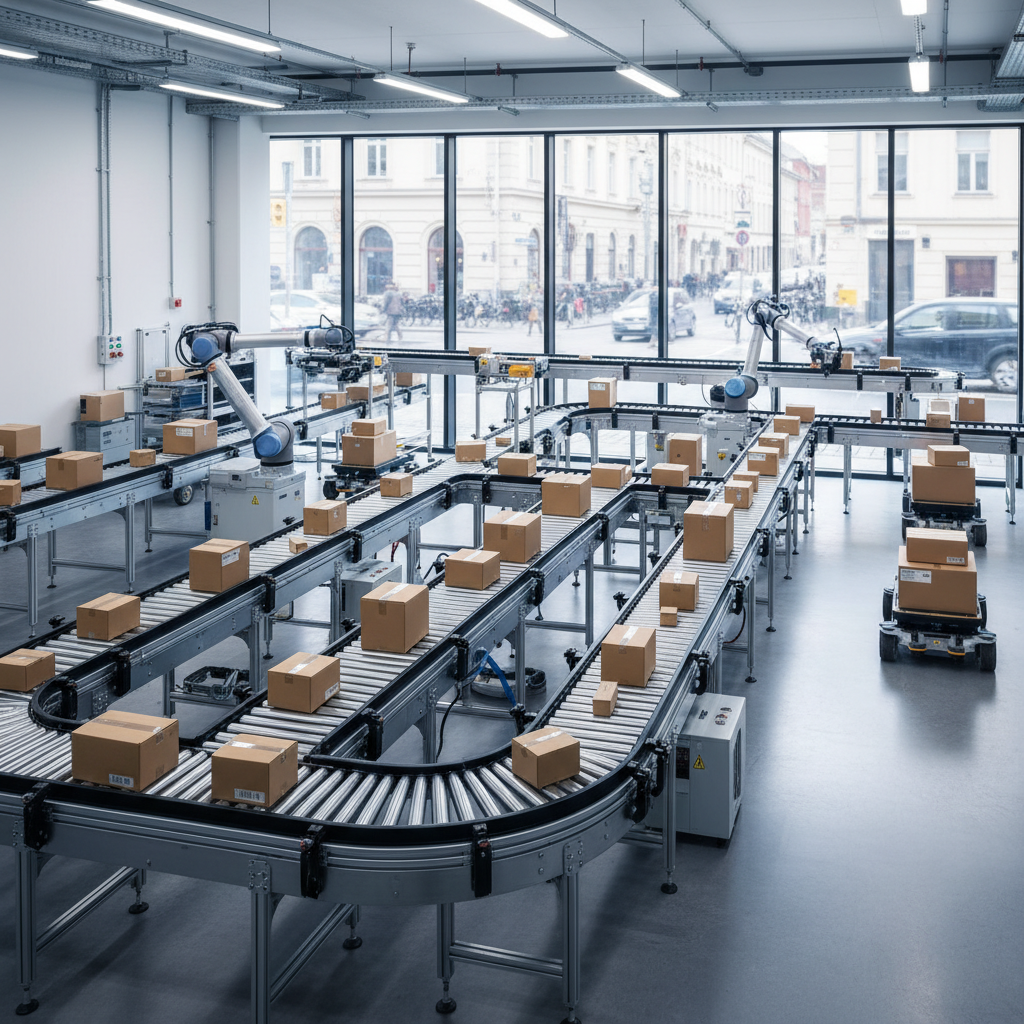
The final leg of the delivery journey, the "last mile," is notoriously complex and expensive, especially in the densely populated urban landscapes of the Benelux. As e-commerce continues to surge, companies are establishing urban and micro-fulfillment centers to be closer to their customers. In these compact, high-pressure environments, conveyor systems are not just a tool for movement but a strategic asset for optimizing the entire last mile delivery process, from order consolidation to van loading.
Definition
In the context of last mile logistics, conveyor systems are automated material handling solutions used within urban fulfillment or sorting hubs to transport, sort, and consolidate parcels for final delivery. They form the backbone of these facilities, ensuring a fast, accurate, and efficient flow of goods from receiving to dispatch, directly impacting delivery speed and cost.
Key Numbers
| Metric | Typical range (EU 2026) | Notes |
|---|---|---|
| Throughput (Parcels/Hour) | 1,500 - 4,000 CPH | For a typical urban micro-fulfillment center (< 2,000 m²). |
| Conveyor Speed | 0.5 - 1.8 m/s | Varies based on parcel type and sorting complexity. |
| Investment (€/meter) | €800 - €2,500 | Includes basic roller conveyors to more complex sorting conveyors. |
| ROI Period | 1.5 - 3 years | Based on labor savings, increased throughput, and error reduction. |
| Footprint Efficiency (Parcels/m²) | 5 - 15 | Reflects the density achievable with multi-level or spiral conveyors. |
| Energy Consumption (per 10m segment) | 0.5 - 1.5 kWh | Modern Motorized Drive Roller (MDR) systems are at the lower end. |
The Challenge of Urban Last Mile in the Benelux
Cities like Amsterdam, Brussels, and Luxembourg present unique logistical challenges: traffic congestion, environmental zones (LEZs), limited delivery windows, and high real estate costs. Traditional, large-scale distribution centers located outside cities are ill-equipped for the demands of same-day or even two-hour delivery. This has given rise to a new model: the urban fulfillment center. These smaller facilities, strategically located within city limits, require compact, efficient, and highly automated internal processes to be viable. Manual operations are too slow, error-prone, and labor-intensive to meet the speed and cost pressures of the urban market.
Why Automation is Non-Negotiable
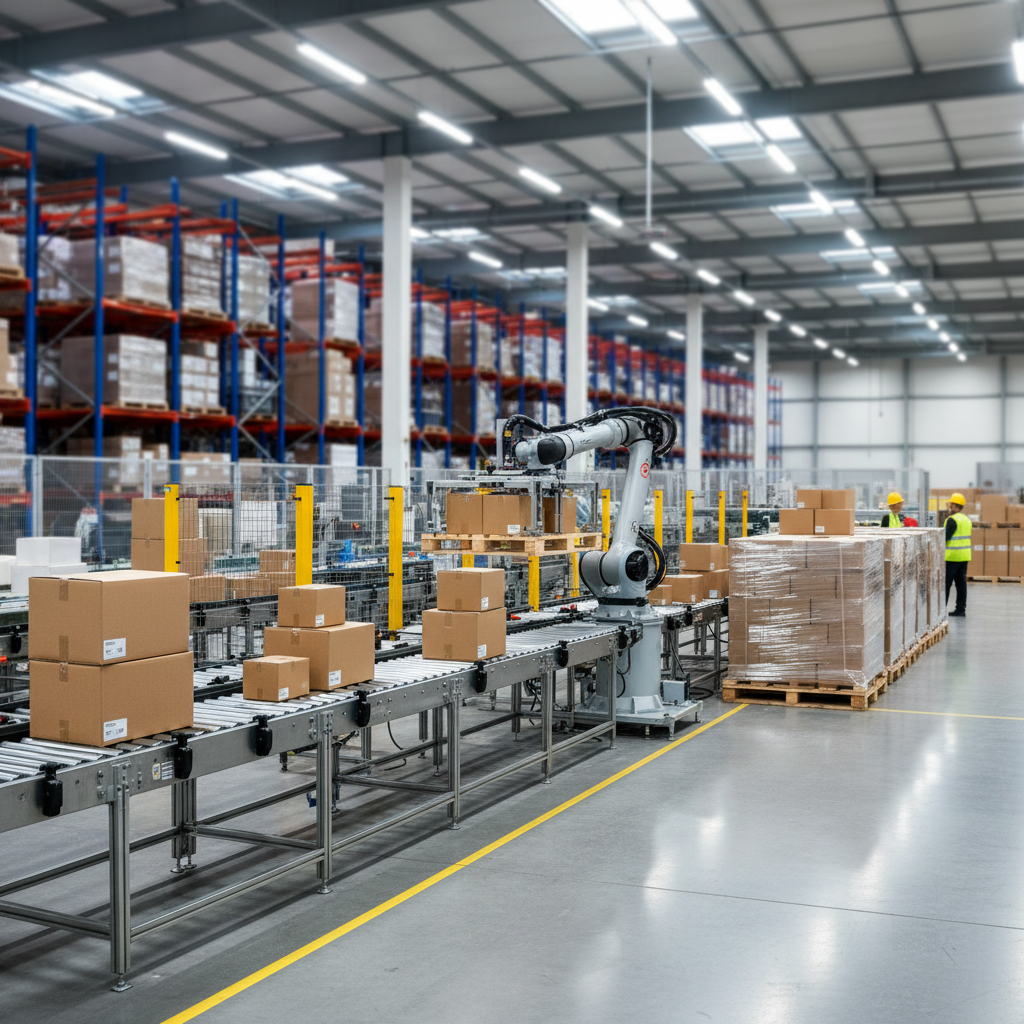
To succeed, urban hubs must process a high volume of individual orders in a very short timeframe. This involves rapid unloading, sorting by postal code or delivery route, and consolidating orders for specific delivery vans or cargo bikes. Conveyor systems automate this flow, creating a streamlined process that minimizes manual touchpoints. For example, a parcel can be inducted onto a conveyor system, scanned, and automatically routed to the correct outbound lane for a specific delivery route in a matter of minutes, a task that would take significantly longer manually.
Core Conveyor Technologies for Urban Hubs
Not all conveyors are created equal. The choice of technology depends on the specific function within the hub, from bulk transport to granular sorting. A well-designed system, like those discussed in our guide to sortation systems, often combines several types.
Roller and Belt Conveyors for Inbound and Transport
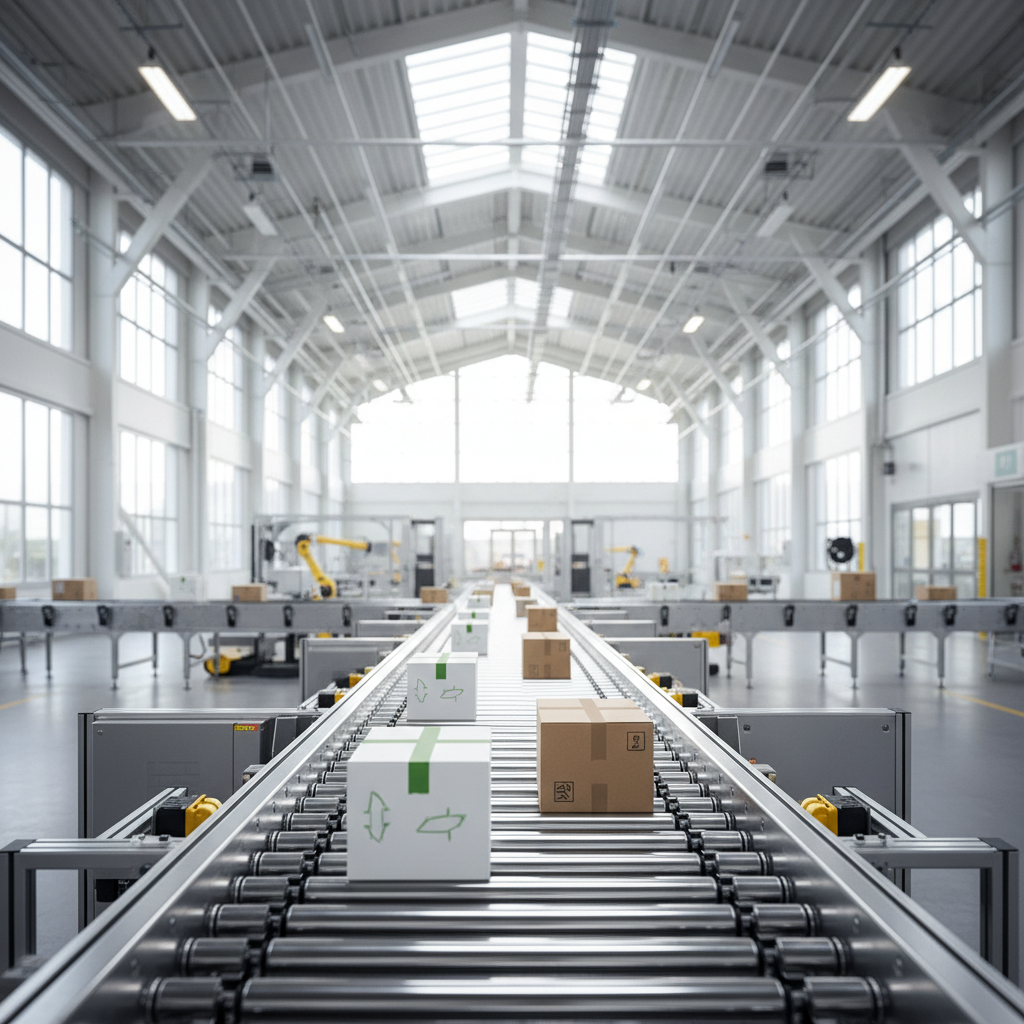
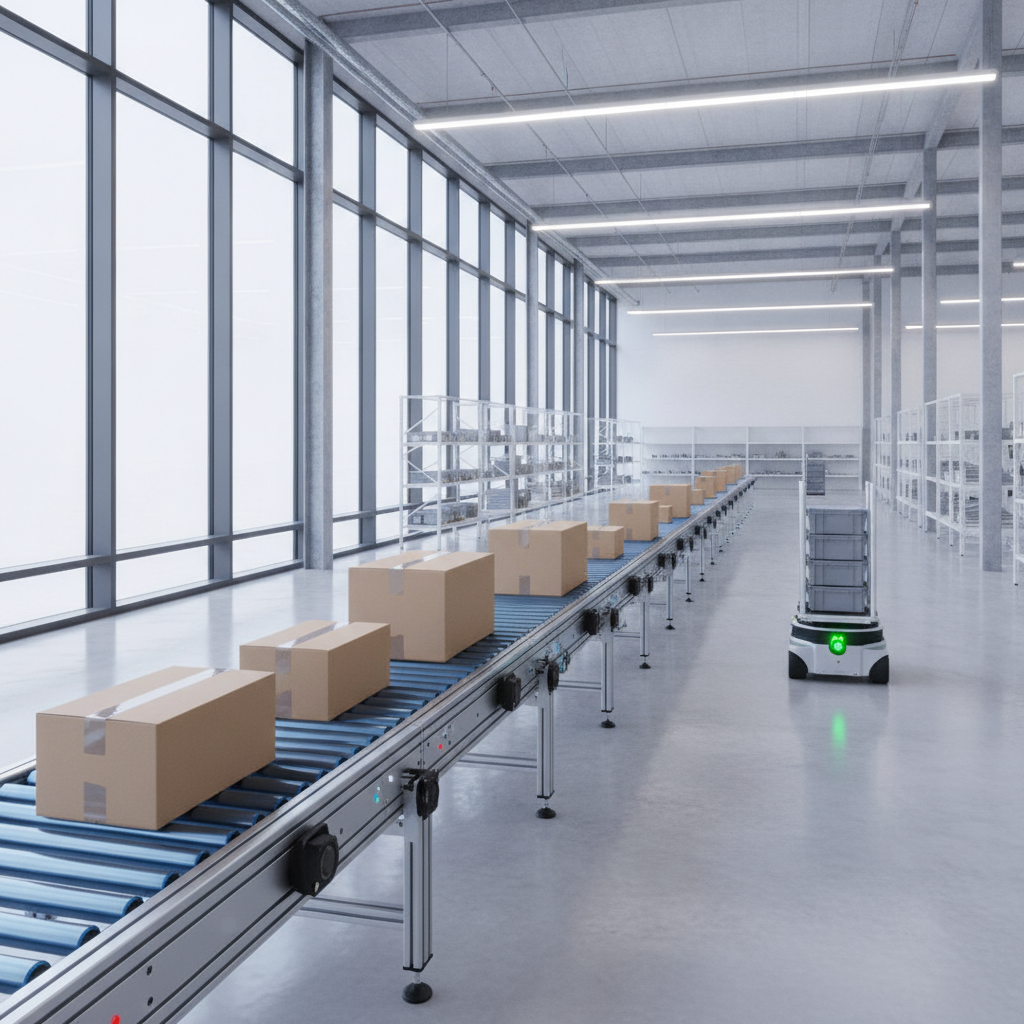
The workhorse of any fulfillment center is the roller conveyor or belt conveyor. In an urban hub, they are used for:
- Inbound Handling: Rapidly moving parcels from the delivery truck to the induction area.
- Transport: Connecting different process areas, such as the sorting zone and the packing stations.
- Accumulation: Using zero-pressure accumulation conveyors to create a buffer of parcels before a sorting machine, ensuring a continuous, smooth flow without product damage.
Sorting Conveyors for Route Consolidation
The most critical function in a last mile hub is sorting parcels into specific delivery routes. This is where specialized sorting conveyors come into play.
| Conveyor Sorter Type | Typical Speed | Best For | Benelux Use Case |
|---|---|---|---|
| Wheel/Roller Divert Sorter | ~1.0 m/s | Low to medium throughput (up to 2,000 CPH); uniform package sizes. | A small hub in a city like Ghent sorting parcels for 10-15 different postal codes. |
| Belt Slat or Shoe Sorter | 1.5 - 2.5 m/s | High throughput (3,000 - 10,000+ CPH); wide range of package sizes. | A larger urban distribution center near the Port of Antwerp or Rotterdam. |
| Cross-Belt Sorter | 1.8 - 2.8 m/s | Very high throughput and accuracy; handles fragile or small items well. | Advanced e-commerce hubs in the Randstad area with a high density of destinations. |
Maximizing Space: The Vertical Dimension
Real estate in cities like Amsterdam or Utrecht is expensive, with prices often exceeding €200 per square meter for industrial space. Maximizing the use of vertical space is therefore crucial. Spiral conveyors are an essential component here. They can transport parcels between different floor levels or conveyor lines with a minimal footprint, far smaller than a long, inclined belt conveyor. A typical spiral conveyor can elevate parcels 4 meters with a diameter of just 3-4 meters, saving valuable floor space for sorting and staging operations.
Integration with Warehouse Control Systems (WCS)
A conveyor system is only as smart as the software that controls it. A Warehouse Control System (WCS) is the brain of the operation, interfacing with the higher-level Warehouse Management System (WMS) and the low-level Programmable Logic Controllers (PLCs) of the conveyors. The WCS directs the flow of parcels in real-time. When a parcel is scanned at induction, the WCS identifies it, determines its destination route, and activates the correct diverters on the conveyor to send it to the right outbound lane. This integration is key to achieving the high accuracy (often >99.8%) and speed required for last mile operations. For many businesses, process optimization is a continuous challenge, as detailed in our analysis of how business processes must evolve with growth.
The Economic Impact of Conveyor Automation
The business case for conveyor automation in urban hubs is compelling.
- Reduced Labor Costs: Automation reduces the need for manual sorting and movement, a significant saving given the higher labor costs in Benelux urban areas (typically €25-€35 per hour, all-in).
- Increased Throughput & Later Cut-offs: Faster processing allows for later customer order cut-off times. A hub might be able to extend its deadline from 3 PM to 7 PM for next-day delivery, a powerful competitive advantage.
- Fewer Sorting Errors: Automated scanning and sorting virtually eliminates miss-sorts, which are costly to rectify, involving return logistics and re-delivery attempts that can cost €5-€10 per incident.
- Improved Ergonomics and Safety: Automating the movement of parcels reduces physical strain on employees, leading to a safer workplace and lower absenteeism.
Easy Systems: Your Partner for Urban Logistics Automation
The unique constraints and high demands of urban fulfillment centers require a specific type of conveyor solution: modular, flexible, and intelligent. At Easy Systems, we specialize in designing and implementing conveyor systems that are perfectly adapted to the challenges of last mile delivery in the Benelux. Our modular roller and belt conveyor solutions can be configured to fit any space, maximizing efficiency in a compact footprint. By integrating smart controls and leveraging technologies like zero-pressure accumulation, we build robust systems that serve as the engine for your urban logistics operation. We understand that in the race for the last mile, speed, accuracy, and reliability are paramount. Trust Easy Systems to deliver the conveyor infrastructure that helps you win that race, every day.
Frequently asked questions
What is the average cost of a conveyor system for a small urban hub?+
For a small urban fulfillment hub (around 1,000 m²), a complete conveyor system for sorting and transport can range from €80,000 to €300,000. The final cost depends on the complexity, level of automation (e.g., sorter type), and throughput requirements, but typically yields a positive ROI within 2-3 years.
How much space do I need for a last mile conveyor system?+
Modern, modular conveyor systems are designed for compact spaces. A simple sorting system for 10-15 routes can be implemented in an area as small as 150-250 m². The use of spiral conveyors to move between levels can further reduce the footprint by up to 70% compared to inclined belt conveyors.
Can conveyors handle different package sizes for e-commerce?+
Yes, modern conveyor systems are designed to handle a wide mix of e-commerce parcels. Roller conveyors with 50 mm diameter rollers are standard for most boxes, while belt conveyors are used for polybags or irregular items. Advanced sorters can handle items from as small as 100x100mm up to large boxes of 800x600mm.
How does a conveyor system increase last mile delivery speed?+
A conveyor system dramatically reduces the in-hub processing time. By automating the sorting of parcels by delivery route, it cuts down the 'dock-to-dispatch' time from hours to minutes. This allows delivery vans to be loaded earlier and more accurately, enabling couriers to start their routes sooner and meet tight delivery windows.
What kind of maintenance is required for urban conveyor systems?+
Modern conveyor systems, especially those using Motorized Drive Rollers (MDR), require minimal maintenance. A typical schedule involves quarterly inspections of belts and rollers and an annual check-up of electrical components and software. This preventative maintenance usually amounts to less than 2% of the initial investment cost per year.

The Easy Systems engineering team designs, integrates and commissions conveyor systems and warehouse automation across Belgium, the Netherlands and Luxembourg. Combined experience covers roller and belt conveyors, sorters, AGV/AMR fleets, AutoStore, shuttle AS/RS and WMS/WCS integration for distribution centers and e-commerce fulfillment operations.
- Conveyor design (roller, belt, modular plastic)
- Sortation & merge logic
- AGV / AMR fleet integration
- AutoStore & shuttle AS/RS
- WMS / WCS integration