Conveyors for End-of-Line Packaging & Palletizing in Benelux
In Benelux warehouses, integrating conveyor systems into end-of-line packaging and palletizing is critical for achieving high throughput. This article covers the key systems, from case sealers to robotic palletizers, that drive efficiency.
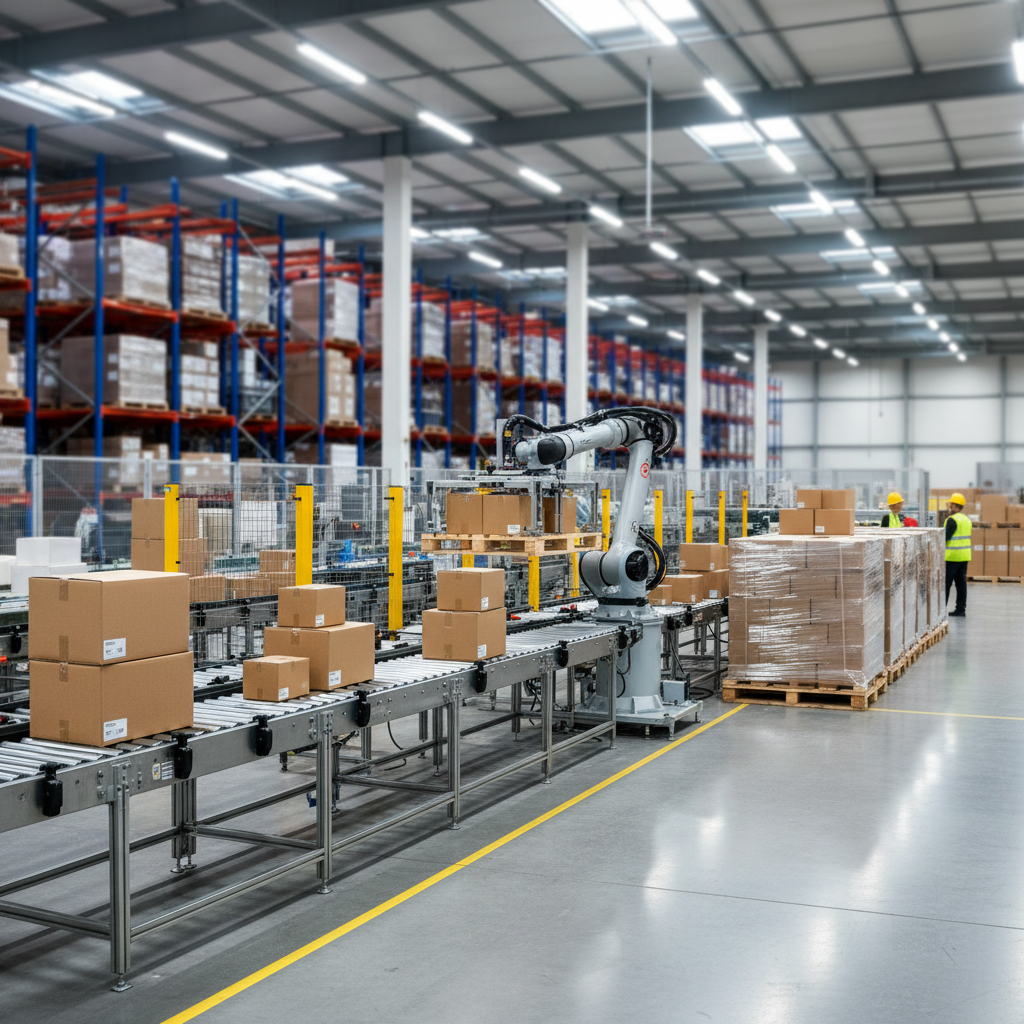
In the high-stakes, fast-paced logistics landscape of the Benelux, the final 50 meters of a production or fulfillment line are often the most critical. End-of-line packaging and palletizing, the last touchpoint before a product is ready for shipment, represents a major bottleneck or a significant opportunity for efficiency gains. With rising labor costs and the relentless pressure of e-commerce, companies in the Netherlands, Belgium, and Luxembourg are increasingly turning to automation. At the heart of this transformation are conveyor systems, the unsung heroes that connect, buffer, and feed the entire end-of-line process.
Definition
End-of-Line Packaging and Palletizing refers to the final automated stage in a production or logistics facility. Here, finished products are packed into cases, sealed, labeled, and automatically placed onto a pallet in a pre-defined pattern, making them ready for warehousing or dispatch. Conveyor systems are the critical infrastructure that transports items through these sequential processes.
Key Numbers
| Metric | Typical range (EU 2026) | Notes |
|---|---|---|
| Throughput (Cases/Hour) | 600 - 2,500+ | Dependent on case size and system complexity. |
| System Speed (m/s) | 0.3 - 1.5 m/s | Varies for accumulation vs. transport sections. |
| Investment (€/system) | €50,000 - €500,000+ | Includes conveyors, robots, and software integration. |
| Return on Investment (ROI) | 1.5 - 4 years | Faster for 24/7 operations with high labor costs. |
| Footprint Reduction (vs. manual) | 20% - 40% | Achieved through compact, vertical designs like spiral conveyors. |
| Labor Cost Savings (€/FTE) | €45,000 - €65,000 per year | Based on average fully-loaded labor cost in the Benelux region. |
The Anatomy of an Automated End-of-Line System
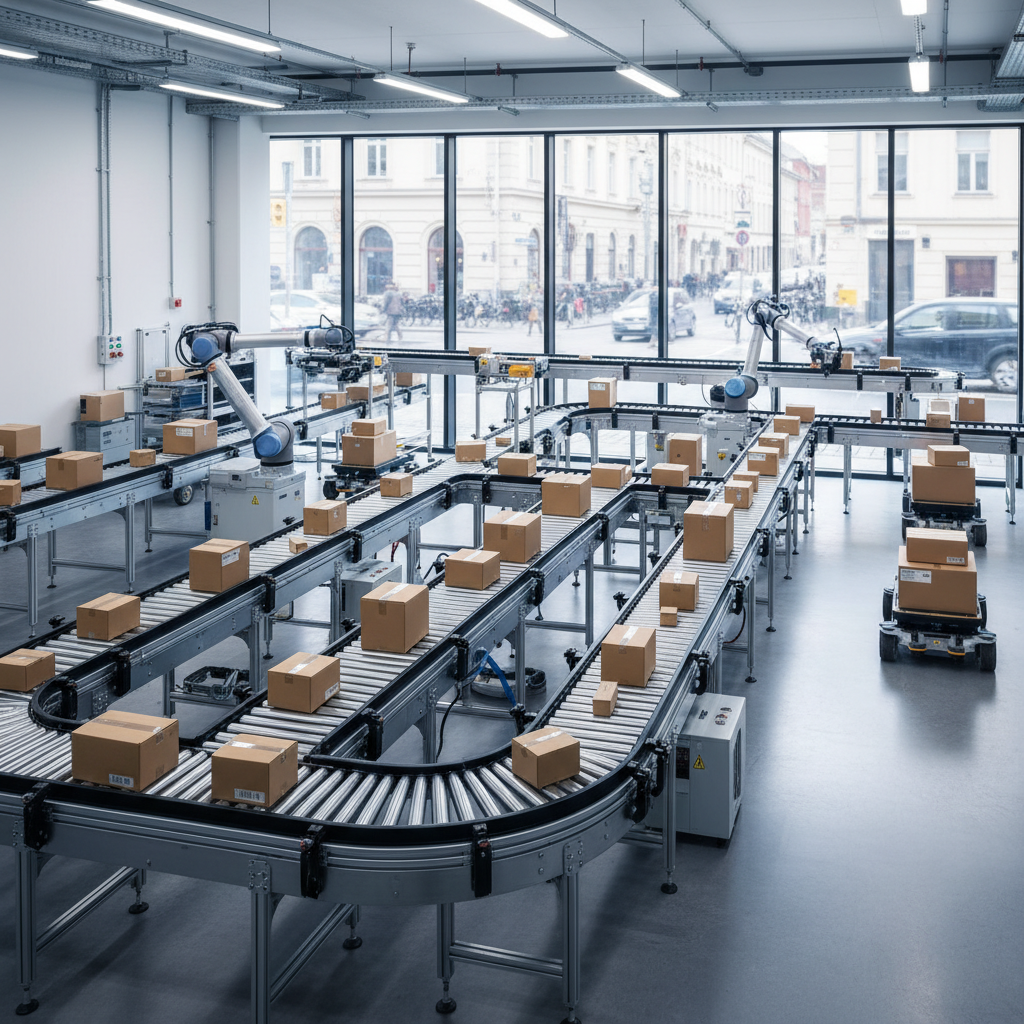
A modern end-of-line system is a sequence of synchronized machines. While the exact configuration varies, a typical flow for case handling in a Benelux distribution center looks like this:
- Case Sealing: After an order is packed, the carton is transported to an automatic case sealer.
- Checkweighing: A dynamic scale verifies the weight against expected values to catch errors.
- Labeling (SLAM): A Print & Apply system adds the shipping label. This is often part of a SLAM line (Scan, Label, Apply, Manifest).
- Transport & Sortation: The case travels on a network of roller conveyors or belt conveyors, potentially being sorted based on its destination.
- Buffering & Sequencing: Cases arrive at a zero-pressure accumulation conveyor section, which queues them up efficiently for the palletizer.
- Palletizing: A robotic arm picks cases from the conveyor and stacks them onto a pallet.
- Pallet Finishing: The full pallet is conveyed to an automatic stretch wrapper and then staged for pickup by a forklift or AGV.
The conveyor system is the circulatory system in this anatomy, ensuring a smooth, continuous, and correctly sequenced flow of goods from one station to the next.
Core Conveyor Technologies for Packaging & Palletizing
Not all conveyors are created equal. The choice of technology is critical for a successful end-of-line system. The primary types used are roller, belt, and chain conveyors, each with a specific role.
Transport, Buffering, and Sequencing
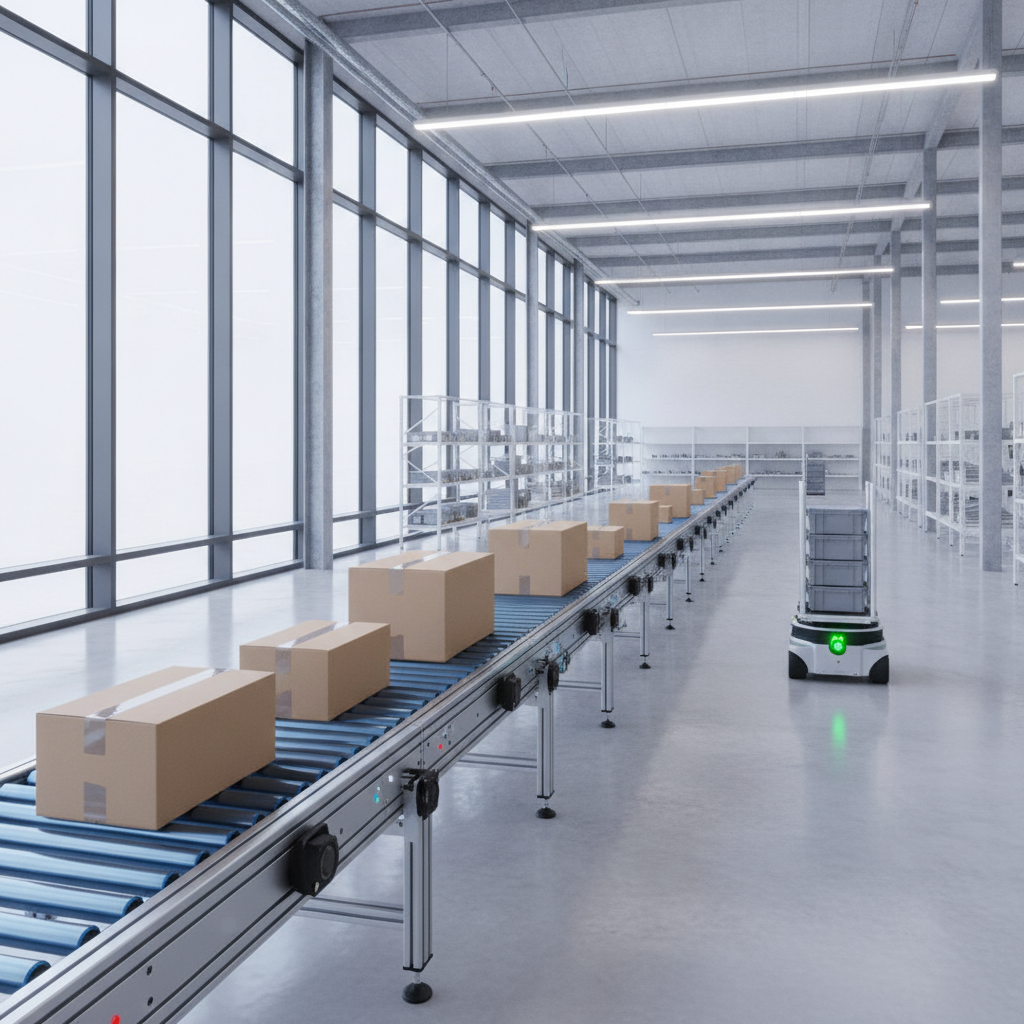
Simple transport is handled by basic roller or belt conveyors. The real intelligence comes from buffering and sequencing. Accumulation conveyors act as a buffer zone, preventing a downstream stoppage (like a pallet change) from halting the entire upstream line. They ensure the palletizing robot is never starved for product, maximizing its utilization. Sequencing logic, managed by the control system, ensures that cases arrive in the correct order for stable pallet patterns.
The table below compares the most common conveyor types in end-of-line applications:
| Feature | Roller Conveyor | Belt Conveyor | Modular Plastic Belt | Chain Conveyor (Pallets) |
|---|---|---|---|---|
| Best for | Case/tote transport on flat planes | Inclines, declines, delicate items | Washdown areas, gentle handling | Heavy pallet loads (>1000 kg) |
| Load Capacity (kg/m) | 50 - 150 kg/m | 20 - 75 kg/m | 30 - 100 kg/m | Up to 2,000 kg per pallet |
| Avg. Speed (m/s) | 0.3 - 1.2 m/s | 0.3 - 1.5 m/s | 0.2 - 0.8 m/s | 0.2 - 0.5 m/s |
| Benelux Use Case | Transporting e-commerce parcels to a palletizer | Moving sealed food packages up to a labeling machine | Fresh produce or pharmaceutical packaging lines | Moving full pallets from palletizer to stretch wrapper |
Integration with Robotics and Control Systems
A conveyor is only as smart as the system controlling it. Seamless integration between the material handling equipment and the software layer is non-negotiable for achieving high performance.
Robotic Palletizing Cells
The handover between the conveyor and the palletizing robot is a critical moment. The conveyor must present the case at a precise, repeatable position and orientation for the robot to grip it successfully. Sensors on the conveyor (photocells) signal the box's arrival, and in advanced applications, vision systems can verify its position or read a code. The choice of roller or belt can affect the precision of this placement.
The Brains: PLC, WCS, and WMS
At a local level, a PLC (Programmable Logic Controller) controls the motors and sensors of the conveyor itself. However, in a larger context, this PLC reports to a higher-level system. A Warehouse Control System (WCS) acts as the traffic cop, managing the flow of goods across different equipment zones—from the conveyor to the robot to the stretch wrapper. The WCS, in turn, receives its orders from the WMS (Warehouse Management System), which holds the master data about orders and pallet patterns. For a deep dive into how these systems interact, see our guide on WMS/WCS integration.
Benelux Context: Labor, Space, and E-commerce
The business case for end-of-line automation is particularly strong in the Benelux region due to a confluence of economic and logistical factors.
- Addressing Labor Scarcity: With fully-loaded labor costs for a warehouse operator often exceeding €35-€45 per hour and a chronic shortage of personnel, the ROI for replacing manual palletizing is compelling. Automation allows skilled employees to be redeployed to more value-added tasks.
- Maximizing Footprint: Industrial real estate around logistical hotspots like Antwerp, Rotterdam, and Schiphol is among the most expensive in Europe. Automated conveyor systems can be designed to be far more compact than manual operations, using vertical space with spiral conveyors to reduce the overall GFA (Gross Floor Area).
- E-commerce Demands: The growth of e-commerce fulfillment centers in the region requires high-speed, flexible systems that can handle a wide variety of SKUs and order profiles. As one of our partner articles notes, many companies find their operational processes can't keep up with their growth. Automated end-of-line systems provide the scalability needed to cope with peak season volumes.
Easy Systems: Your Partner for End-of-Line Conveyor Automation in Europe
Successfully implementing an automated end-of-line system requires more than just buying a robot and a few conveyors. It demands a holistic approach to process design, system integration, and future-proofing. At Easy Systems, we specialize in designing and manufacturing modular conveyor systems that form the foundation of robust packaging and palletizing lines across the Benelux and Europe.
Our philosophy is built on providing modular, scalable, and easy-to-integrate solutions. We work closely with system integrators and end-users to provide the optimal roller, belt, and chain conveyor components that seamlessly connect case sealers, labelers, and robotic palletizers. Our deep experience in the Benelux market ensures that our designs account for local challenges of space, labor, and operational demands, positioning your end-of-line operations as a competitive advantage, not a bottleneck.
Frequently asked questions
What is the average cost of an automated end-of-line palletizing system in the Benelux?+
A complete system, including conveyors, a robotic palletizer, and basic integration, typically ranges from €80,000 to €300,000. The final cost depends heavily on required throughput, complexity, and safety features.
How much throughput can a conveyor-fed palletizer handle?+
Depending on the robot, gripper, and case type, a single robotic cell fed by a well-designed conveyor system can palletize between 10 to 25 cases per minute. This translates to a throughput of 600 to 1,500 cases per hour.
What is the difference between a case conveyor and a pallet conveyor?+
Case conveyors, like roller or belt types, are designed for lighter loads, typically under 50 kg per item, moving individual boxes. Pallet conveyors use heavy-duty chains or large-diameter rollers to move full pallets weighing 1,000 kg or more.
How do accumulation conveyors improve palletizing efficiency?+
They create a buffer of cases right before the palletizer. This ensures the robot never has to wait for product, increasing its overall equipment effectiveness (OEE) by as much as 15-20% by smoothing out any upstream production fluctuations.
Can a single palletizing line handle multiple products?+
Yes, modern systems use barcode scanners or vision systems to identify different SKUs on the conveyor. The Warehouse Control System (WCS) then instructs the robot to stack them onto different pallets according to pre-defined, product-specific patterns.
What is the typical lead time for an end-of-line conveyor project in Europe?+
For a standard conveyor system project, the lead time from design approval to commissioning is typically between 12 and 20 weeks. More complex, highly customized solutions can extend this timeline to 30 weeks or more.

The Easy Systems editorial desk reviews and fact-checks every Conveyor-Design article against Benelux project experience. Editors translate engineering decisions — throughput, peak factors, layout, integration — into plain-language guides for operations managers, project leads and decision-makers.
- Warehouse layout & slotting
- Order-profile analysis
- Vendor-neutral comparison
- Benelux logistics market