The Role of Energy Efficiency in Modern Conveyor Systems
Energy efficiency in conveyor systems is crucial for Benelux warehouses aiming to reduce costs and meet sustainability targets. By adopting technologies like Motorized Drive Rollers (MDR) and smart PLC controls, facilities can cut energy consumption by up to 60%, lowering operational expenses and enhancing their green credentials.
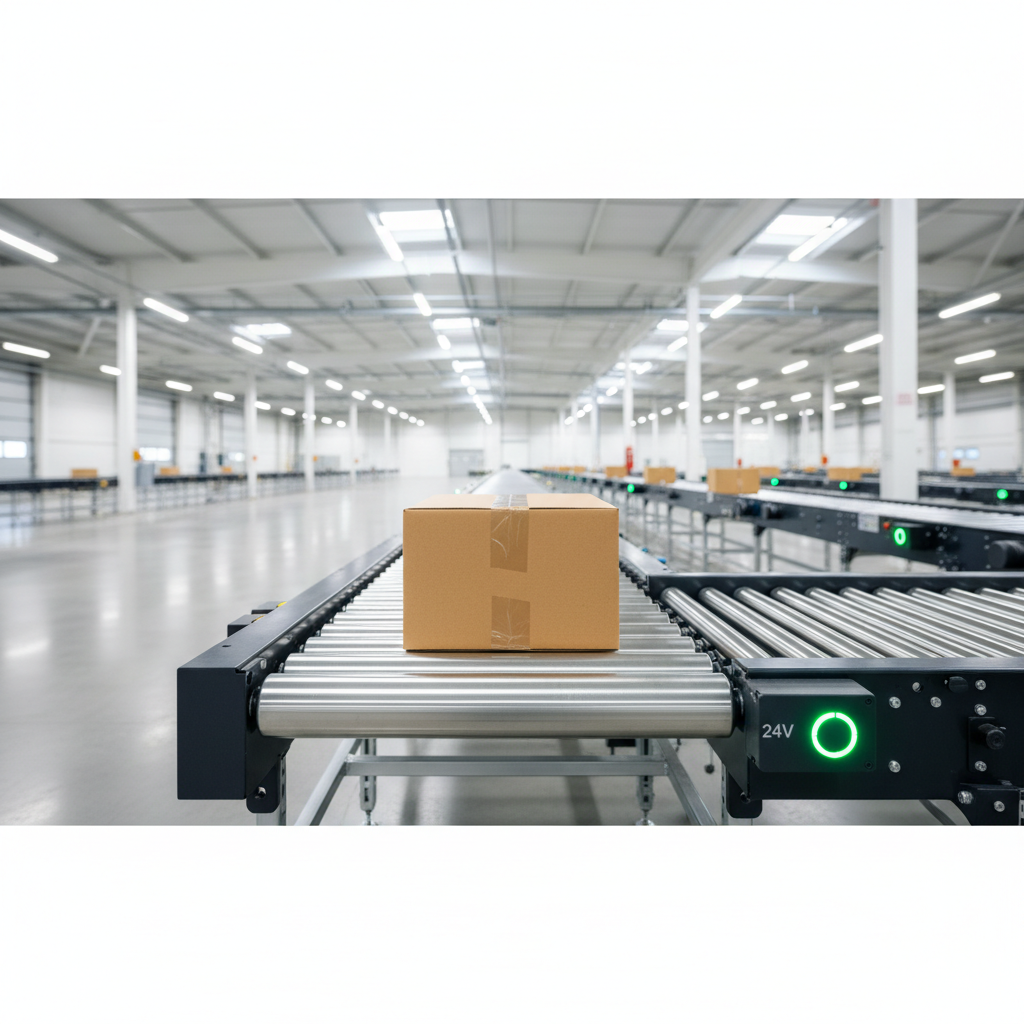
In the high-stakes logistics landscape of the Benelux, where every euro and watt counts, the energy consumption of material handling equipment has become a primary concern. Traditional conveyor systems, often running continuously regardless of load, are significant contributors to a warehouse's electricity bill. This article explores the critical role of energy efficiency in modern conveyor design, detailing the technologies that lower operational costs and the strategic advantages they offer for businesses aiming to meet ambitious sustainability goals.
Definition
Energy-efficient conveyor systems are material handling solutions designed to minimize electrical power consumption during operation. They achieve this through components like high-efficiency motors, smart controls that power zones only when needed (on-demand operation), and low-friction designs, directly reducing a facility's operational costs and carbon footprint.
Key Numbers
| Metric | Typical range (EU 2026) | Notes |
|---|---|---|
| Energy Savings vs. Traditional | 30% - 60% | Higher end achieved with MDR and zero-pressure accumulation. |
| Investment Cost (MDR system) | €350 - €600 per meter | Depends on width, load capacity, and control complexity. |
| Annual Energy Cost Savings | €40 - €70 per meter | Based on Benelux electricity prices (€0.25-€0.35/kWh) and typical 2-shift operation. |
| Return on Investment (ROI) | 2 - 5 years | Accelerated by rising energy costs and government incentives. |
| Motor Efficiency Standard | IE4 or IE5 | Mandatory for many new installations under EU Ecodesign regulations. |
| Power Consumption (per zone) | 25W - 50W | For a typical MDR-powered zone, only active when transporting goods. |
Why Energy Efficiency Matters More Than Ever in Benelux Logistics
The focus on energy efficiency is driven by two powerful forces: economics and regulation. In the Benelux, a region with some of Europe's highest industrial electricity prices, reducing power consumption has a direct and substantial impact on the bottom line. A large distribution center can house several kilometers of conveyors; a 30-60% reduction in their energy use translates into tens of thousands of euros in annual savings.
Secondly, the regulatory environment is tightening. The European Green Deal and the subsequent Corporate Sustainability Reporting Directive (CSRD) compel more companies to report on their environmental impact, including energy consumption. For logistics operators in Belgium, the Netherlands, and Luxembourg, demonstrating a commitment to sustainability is no longer optional—it's a prerequisite for market leadership and compliance. Efficient systems also contribute to a better BREEAM or LEED certification for the warehouse building itself.
Core Technologies for Energy-Efficient Conveyors
Achieving significant energy savings requires moving beyond the "one-size-fits-all" model of a single, continuously running motor driving a long belt. Modern efficiency is built on modularity and intelligence.
Motorized Drive Rollers (MDR)
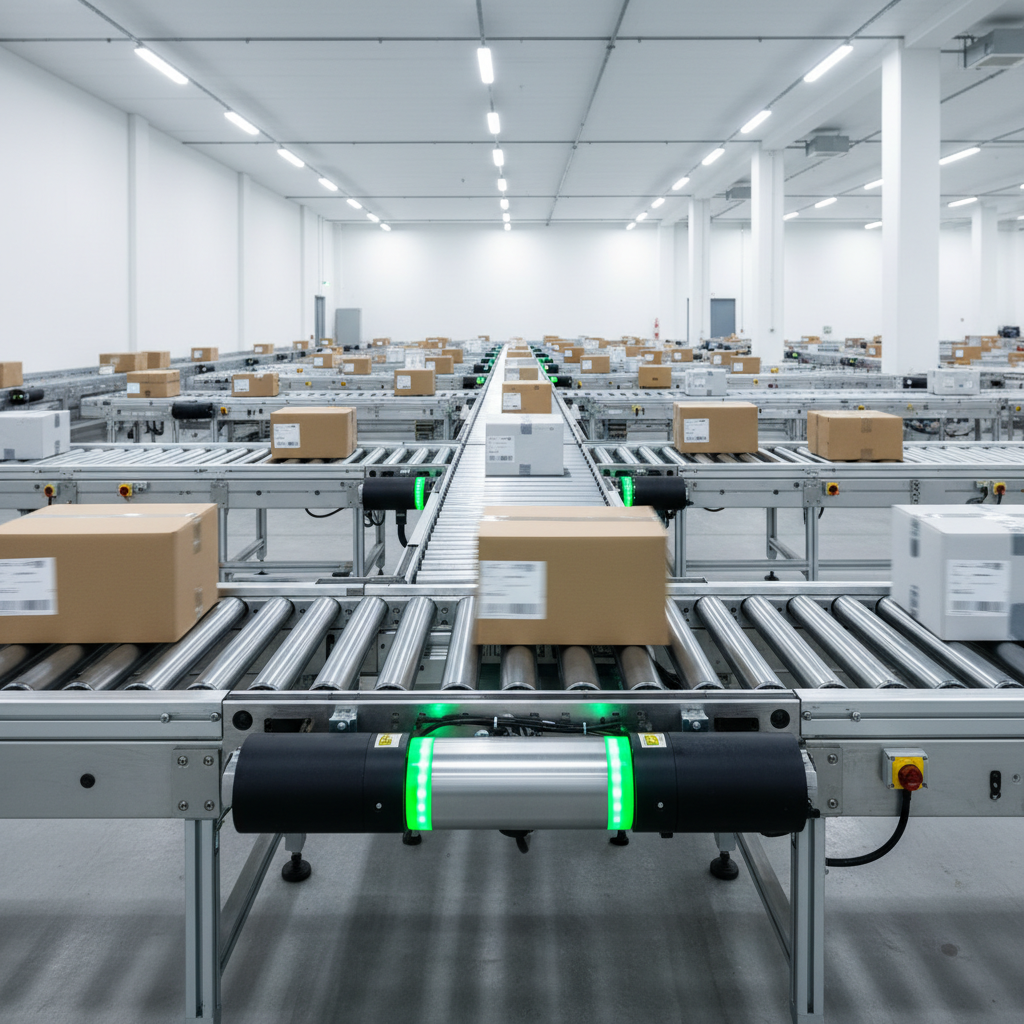
Perhaps the single most important innovation is the Motorized Drive Roller (MDR), also known as a 24V DC roller. Instead of one large AC motor, the conveyor is divided into manageable sections or zones, each powered by its own integrated low-voltage motor roller. A sensor at the start of each zone detects an incoming product and activates the motor just long enough to move it to the next zone. This "run-on-demand" principle is the foundation of modern zero-pressure accumulation systems, ensuring that 80-90% of the conveyor can be idle at any given moment, consuming virtually no power.
High-Efficiency Motors and Drives
For applications still requiring centralized power, such as heavy-duty pallet handling or high-speed sorting, the focus shifts to motor efficiency. The EU's Ecodesign directive mandates minimum efficiency standards. Modern systems utilize IE4 (Super Premium Efficiency) or even IE5 (Ultra-Premium Efficiency) permanent magnet motors. While their initial cost is higher, they consume significantly less power and have a longer service life, making them a wise long-term investment.
Intelligent Controls and PLC Logic
The brain of an energy-efficient system is its control logic, typically managed by a Programmable Logic Controller (PLC). Smart PLCs can execute sophisticated energy-saving strategies:
- Sleep Mode: Automatically powers down entire conveyor lines during extended periods of inactivity (e.g., breaks, end of shifts) and restarts them instantly when a product is detected.
- Speed Modulation: In conjunction with Variable Frequency Drives (VFDs), the PLC can adjust conveyor speed based on real-time throughput, slowing down during lulls to save energy.
- Intelligent Gapping: Optimizes the space between cartons to ensure a smooth, continuous flow, minimizing the stop-start cycles that consume extra power.
Integrating these PLC strategies with a higher-level Warehouse Execution System (WES) allows for system-wide energy optimization based on the overall order flow. For any business experiencing operational bottlenecks, it's important to recognize that company growth doesn't always mean process scalability, and intelligent automation is the key to bridging that gap.
Comparing Traditional vs. Energy-Efficient Conveyor Systems
The difference in design philosophy and operational cost between traditional and modern systems is stark. The table below highlights the key distinctions for a typical parcel handling application.
| Feature | Traditional Line-Shaft Conveyor | Modern MDR Conveyor System |
|---|---|---|
| Drive System | Single, large 400V AC motor driving a long shaft | Distributed 24V DC Motorized Drive Rollers (one per zone) |
| Operation Mode | Continuous operation; entire line runs constantly | Run-on-demand; zones activate only when product is present |
| Energy Consumption | High; typically 5-8 kWh for a 100m line | Low; typically 1.5-3 kWh for a 100m line |
| Noise Level | High (70-75 dB) due to chains, belts, and large motor | Very Low (55-60 dB); quiet DC motors |
| Maintenance | Frequent; tensioning belts, lubricating chains, motor service | Minimal; brushless DC motors are virtually maintenance-free |
| Modularity/Flexibility | Low; difficult to modify or reconfigure | High; zones can be easily added, removed, or changed |
Calculating the ROI of an Energy-Efficient Upgrade
To illustrate the financial case, consider a 100-meter roller conveyor line operating two shifts (4,000 hours/year) in the Netherlands.
- Traditional System Energy Use: A system with a 5.5 kW AC motor consumes 5.5 kWh. Annual cost: 4,000 hours * 5.5 kW * €0.30/kWh = €6,600.
- MDR System Energy Use: An equivalent MDR system might have an average consumption of 2.0 kWh (accounting for zones being off most of the time). Annual cost: 4,000 hours * 2.0 kW * €0.30/kWh = €2,400.
- Annual Savings: €6,600 - €2,400 = €4,200.
- Investment Premium: The upgrade to MDR might cost an additional €12,000.
- Simple ROI: €12,000 / €4,200 per year = ~2.85 years.
This calculation doesn't even include reduced maintenance costs, lower noise levels improving the work environment, and the invaluable marketing and compliance benefits of a smaller carbon footprint.
Easy Systems: Your Partner for Sustainable Logistics in the Benelux
In a market as competitive as the Benelux, efficiency is not just about speed; it's about intelligence, sustainability, and cost control. At Easy Systems, we specialize in designing and implementing modular, energy-efficient conveyor solutions that are tailored to the specific needs of your warehouse or production facility. Our expertise in 24V DC technology, MDR systems, and smart PLC controls allows us to build robust solutions that significantly reduce your energy expenditure. We understand the regulatory and economic pressures facing Benelux businesses and deliver systems that provide a rapid return on investment and position you as a leader in sustainable logistics. Trust Easy Systems to engineer a conveyor solution that works harder for your business and lighter on the planet.
Frequently asked questions
How much energy can a modern conveyor system save?+
A modern conveyor system using Motorized Drive Rollers (MDR) and run-on-demand technology can save between 30% and 60% in energy consumption compared to older, continuously running AC motor systems. For a 100-meter line, this can translate to annual savings of over 4,000 kWh.
What is the main technology behind energy-efficient conveyors?+
The primary technology is the Motorized Drive Roller (MDR), a 24V DC roller with an integrated motor. It allows conveyors to be divided into zones that only activate when a product is present, eliminating the massive energy waste of a continuously running system.
Is an energy-efficient conveyor system more expensive?+
Yes, the initial investment for an energy-efficient system, like one with MDR technology, is typically 15-25% higher than a traditional system. However, with energy savings often exceeding €40 per meter annually, the ROI is usually achieved within 2 to 5 years in the Benelux.
Do I need to replace my entire conveyor system to be more energy-efficient?+
Not always. It's possible to retrofit sections of existing conveyor lines with energy-efficient components. For example, replacing a worn-out AC motor and driveshaft with modular MDR sections can be a phased approach to upgrading your facility and starting to save energy immediately.
How do efficient conveyors help with sustainability goals in the EU?+
They directly reduce a company's Scope 2 greenhouse gas emissions by lowering electricity consumption. This is a key metric for the EU's Corporate Sustainability Reporting Directive (CSRD) and helps improve a facility's overall environmental rating, like BREEAM, which is crucial in the Benelux market.

The Easy Systems engineering team designs, integrates and commissions conveyor systems and warehouse automation across Belgium, the Netherlands and Luxembourg. Combined experience covers roller and belt conveyors, sorters, AGV/AMR fleets, AutoStore, shuttle AS/RS and WMS/WCS integration for distribution centers and e-commerce fulfillment operations.
- Conveyor design (roller, belt, modular plastic)
- Sortation & merge logic
- AGV / AMR fleet integration
- AutoStore & shuttle AS/RS
- WMS / WCS integration