The Role of AI in Predictive Conveyor Maintenance in the Benelux
AI-powered predictive maintenance is transforming conveyor system reliability in the Benelux. By analyzing real-time data, it predicts failures before they happen, drastically cutting downtime and operational costs for warehouses.

Key numbers
| Metric | Typical range (EU 2026) | Notes |
|---|---|---|
| Reduction in Unplanned Downtime | 50-75% | Compared to reactive maintenance schedules. The highest impact metric. |
| Maintenance Cost Savings | 20-40% | From optimized labor, fewer emergency repairs, and smarter part purchasing. |
| System Payback Period (ROI) | 9-18 months | For mid-to-large scale warehouse conveyor systems. |
| Initial Setup Cost | €25,000 - €85,000 | Per 100m of conveyor, depending on sensor density and software tier. |
| Early Fault Detection Window | 3-12 weeks | Time between the initial AI-generated alert and the predicted failure date. |
| Increase in OEE | 5-15% | Overall Equipment Effectiveness increase, driven by improved availability. |
In the high-stakes world of logistics and e-commerce fulfillment, conveyor systems are the arteries of the warehouse. Any unplanned stop can cause immediate blockages, leading to significant financial losses. In the competitive Benelux market, where efficiency is paramount, companies are turning to Artificial Intelligence (AI) and Machine Learning (ML) to revolutionize their maintenance strategies, shifting from a reactive to a predictive model.
Definition
Predictive maintenance (PdM) is a proactive maintenance strategy that uses data analysis tools and techniques to detect anomalies in operation and possible defects in processes and equipment so that they can be fixed before they result in failure. For conveyor systems, this means using AI to analyze data from sensors and predict when a component like a motor, bearing, or belt is likely to fail.
Why Predictive Maintenance is Crucial in the Benelux
The Benelux region—Belgium, the Netherlands, and Luxembourg—is one of Europe's most vital logistics hotspots, home to major ports like Rotterdam and Antwerp and a dense network of distribution centers. In this environment, operational efficiency is not just an advantage; it's a necessity. Several factors make AI-driven predictive maintenance particularly compelling here:
- High Labor Costs: The Benelux has some of the highest labor costs in Europe. Sending skilled technicians to diagnose and repair equipment is expensive, especially for emergency call-outs. Predictive maintenance optimizes labor by scheduling interventions only when necessary.
- Extreme Operational Demands: Distribution centers in this region often operate 24/7. The cost of downtime is astronomical, with estimates ranging from €5,000 to over €50,000 per hour, depending on the facility's scale.
- Competitive Landscape: With a high concentration of logistics providers, companies compete on speed and reliability. An OTIF (On-Time, In-Full) delivery rate is a critical KPI, and system uptime is fundamental to achieving it.
By anticipating failures, warehouses can schedule maintenance during planned downtimes, order parts in advance, and prevent catastrophic failures that halt the entire operation.
Core AI Technologies in Conveyor Maintenance
The Foundation: Data-Driven Insights
An effective PdM strategy is built on a constant stream of high-quality data. AI algorithms are only as good as the data they are trained on. For a typical belt conveyor system, this involves deploying a suite of specialized sensors:
- Vibration Analysis: Every motor and rotating component has a unique vibration signature. Deviations from this baseline often indicate developing issues like bearing wear, misalignment, or imbalance. Sensors can detect minuscule changes in vibration frequencies, often months before a human could notice them.
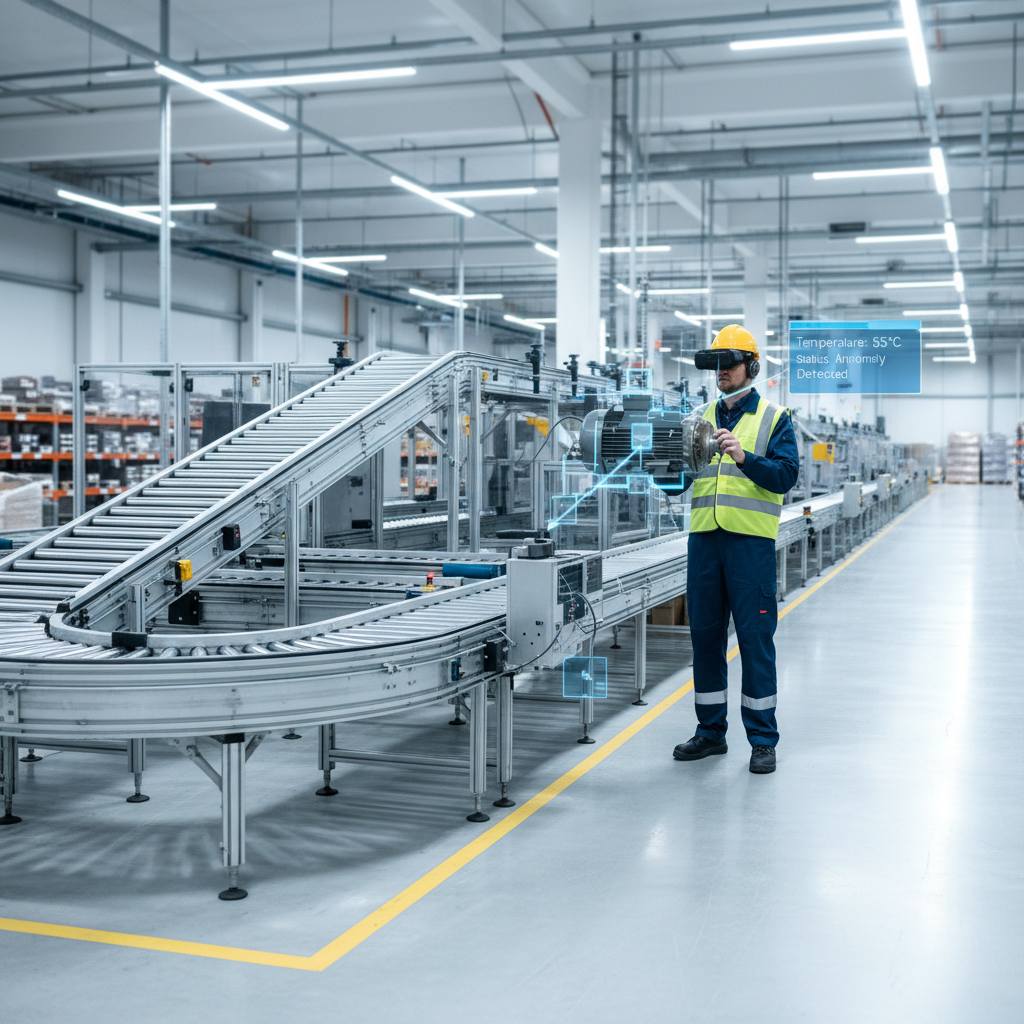
- Thermal Imaging: Overheating is a classic sign of mechanical stress or electrical faults. Continuous thermal monitoring of motors, gearboxes, and electrical cabinets can flag anomalies long before they lead to failure. An increase of just 5-10°C can be an early warning sign.
- Acoustic Analysis: Similar to vibration, the sounds a conveyor makes can be indicative of its health. AI-powered acoustic sensors can identify subtle changes in noise patterns, such as the high-frequency screech of a failing bearing or the specific hum of a struggling motor.
- Power Consumption: A motor drawing more current than usual is working harder, likely due to increased friction from a worn-out component or a tensioning issue. Monitoring amperage provides another layer of diagnostic data.
Data Collection & Analysis: The Engine of Predictive Maintenance
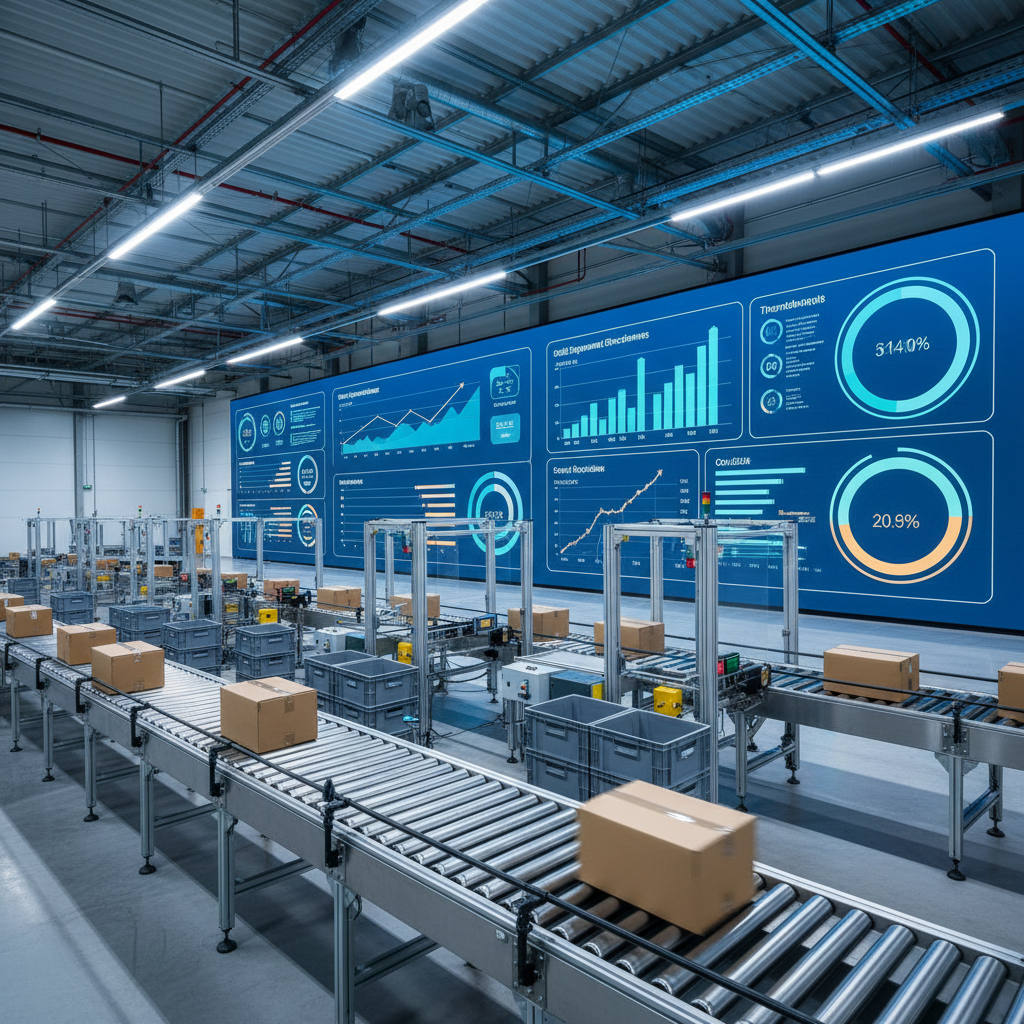
Once sensors are in place, the data must be collected, transmitted, and analyzed. This is where the synergy between IoT (Internet of Things) and AI comes into play. Low-power sensors transmit data wirelessly to a central gateway. From there, it can be processed locally (edge computing) for immediate alerts or sent to the cloud for more complex analysis by machine learning models.
The Role of Machine Learning
ML algorithms, particularly unsupervised learning models, are ideal for this task. The system learns the 'normal' operational baseline from weeks of data. Once this baseline is established, the algorithm can flag any data point that deviates significantly as an 'anomaly.' Over time, as these anomalies are correlated with specific maintenance outcomes, the model becomes 'supervised,' learning to predict not just that a failure might occur, but *what kind* of failure it is likely to be (e.g., 'bearing failure class 3 in motor 7B imminent within 72 hours').
Implementing an AI-Powered Maintenance Strategy
Transitioning from a traditional maintenance schedule to a predictive one is a strategic project that involves several key phases:
- Assessment and Criticality Analysis: Identify the most critical components in your conveyor network. Focus initial efforts on sections where downtime would have the most significant impact.
- Sensor Deployment and Integration: Install appropriate sensors on critical assets. Ensure they are correctly integrated with a data acquisition system and your existing PLC or control infrastructure.
- Data Collection and Baselining: Allow the system to collect data for a period of 2-4 weeks to establish a robust operational baseline. This is crucial for the accuracy of the AI models.
- Model Training and Validation: The ML model is trained on this baseline data. The system starts generating alerts that should be validated by maintenance teams to create a feedback loop.
- Integration with WCS/CMMS: For maximum efficiency, PdM alerts should automatically generate work orders in a Computerized Maintenance Management System (CMMS) or be fed into a WCS. The WCS can then determine the most opportune moment to schedule the maintenance task with minimal disruption to product flow.
Implementing such a system requires a holistic approach, where operational technology (OT) and information technology (IT) converge. As detailed in a recent Easy Systems analysis, aligning processes with growth is key, and adopting intelligent maintenance is a prime example of this synergy.
Predictive Maintenance in Action: A Cost-Benefit Analysis
The business case for predictive maintenance is compelling. While it requires an upfront investment in technology and expertise, the return on investment (ROI) is typically realized within 12 to 24 months. Let's compare the three main maintenance strategies in a typical Benelux DC context.
| Metric | Reactive Maintenance (Fix when it breaks) | Preventive Maintenance (Time-based schedule) | Predictive Maintenance (AI-based condition) |
|---|---|---|---|
| Unplanned Downtime | High (50-60 hours/year) | Low-Medium (15-25 hours/year) | Very Low ( < 10 hours/year) |
| Annual Maintenance Cost | Base (e.g., €100k) | Base + 20-30% (e.g., €130k) | Base - 25-30% (e.g., €70k) |
| Spare Parts Inventory | High (Need to stock for every eventuality) | Medium (Stock for planned changes) | Low (Just-in-time ordering based on predictions) |
| Component Lifespan | Sub-optimal (Often fails catastrophically) | Wasted (Components replaced before end-of-life) | Maximized (Replaced just before failure) |
| Labor Efficiency | Poor (Emergency call-outs, overtime) | Moderate (Scheduled, but sometimes unnecessary work) | High (Targeted, necessary interventions only) |
The Integration with Warehouse Control Systems (WCS)
A standalone predictive maintenance system is valuable, but its power is magnified when integrated with a Warehouse Control System (WCS). When the PdM system predicts an impending failure, it can communicate this to the WCS. The WCS, which has a real-time overview of all warehouse operations and order flow, can then make an intelligent decision about *when* to schedule the repair. For instance, it could automatically divert product flow away from the affected conveyor section and schedule the maintenance task for a low-volume period, all without human intervention. This tight integration is a cornerstone of the Industry 4.0 vision for logistics. For a deeper dive into the world of conveyors, our comprehensive guide on roller conveyors provides foundational knowledge.
Challenges and Future Outlook
Despite the clear benefits, adoption is not without its challenges. The initial investment, the need for data science skills, and concerns about data security are common hurdles. Furthermore, retrofitting older systems can sometimes be complex. However, the trend is clear. As sensor technology becomes cheaper and AI platforms become more accessible and user-friendly, predictive maintenance will evolve from a competitive advantage to a standard operational practice. The future may see digital twins—virtual replicas of physical conveyor systems—running simulations to predict failures with even greater accuracy, further blurring the lines between the physical and digital factory floor.
Easy Systems: Your Partner for Intelligent Conveyor Solutions
At Easy Systems, we design, manufacture, and install modular conveyor systems engineered for the demands of modern logistics. Our solutions are built with intelligence in mind, ready for integration into the data-driven ecosystem of today's warehouses. We understand the unique pressures of the Benelux market and partner with our clients to deliver robust, efficient, and future-proof material handling solutions. Whether you are looking to upgrade an existing line or design a new facility, our expertise ensures your operations remain resilient and competitive. We see maintenance not as a cost center, but as a strategic component of operational excellence, and our systems reflect this forward-thinking philosophy.
Frequently asked questions
What is the main benefit of AI in conveyor maintenance?+
The primary benefit is moving from fixed schedules to a data-driven, predictive model. This cuts unplanned downtime by up to 75% and lowers maintenance costs by 20-40%. Instead of reacting to failures or replacing parts too early, interventions are timed perfectly, maximizing both component life and system uptime.
Is predictive maintenance expensive to implement?+
Initial investment for a medium-sized system in 2026 will range from €25,000 to €85,000, covering sensors and software. However, with maintenance savings of 20-40% and drastically reduced downtime costs, most companies achieve a full return on investment within 9-18 months of operation.
Can older conveyor systems be retrofitted?+
Yes. Most legacy conveyor systems, even those over 15 years old, can be retrofitted for predictive maintenance. This typically involves adding non-invasive external sensors for vibration and temperature. The data is then streamed to a cloud platform for AI analysis, requiring no deep changes to the conveyor's core PLC.
What kind of data does the AI analyze?+
The AI primarily analyzes data from three types of sensors. Vibration sensors detect anomalies in motors and bearings, often providing a 3-12 week warning. Thermal sensors monitor for overheating in electrical and mechanical parts. Acoustic sensors listen for changes in operational noise, identifying issues like belt misalignment or worn-out rollers.
How does it affect the maintenance team's work?+
It transforms the maintenance team's role from reactive firefighters to proactive planners. Instead of stressful emergency call-outs, technicians work on scheduled, data-informed tasks. This shift increases team efficiency by up to 30% and allows staff to develop higher-value skills in data analysis and system optimization.

The Easy Systems editorial desk reviews and fact-checks every Conveyor-Design article against Benelux project experience. Editors translate engineering decisions — throughput, peak factors, layout, integration — into plain-language guides for operations managers, project leads and decision-makers.
- Warehouse layout & slotting
- Order-profile analysis
- Vendor-neutral comparison
- Benelux logistics market