Modular Conveyor Systems: Flexibility & Scalability for Growing Benelux Companies
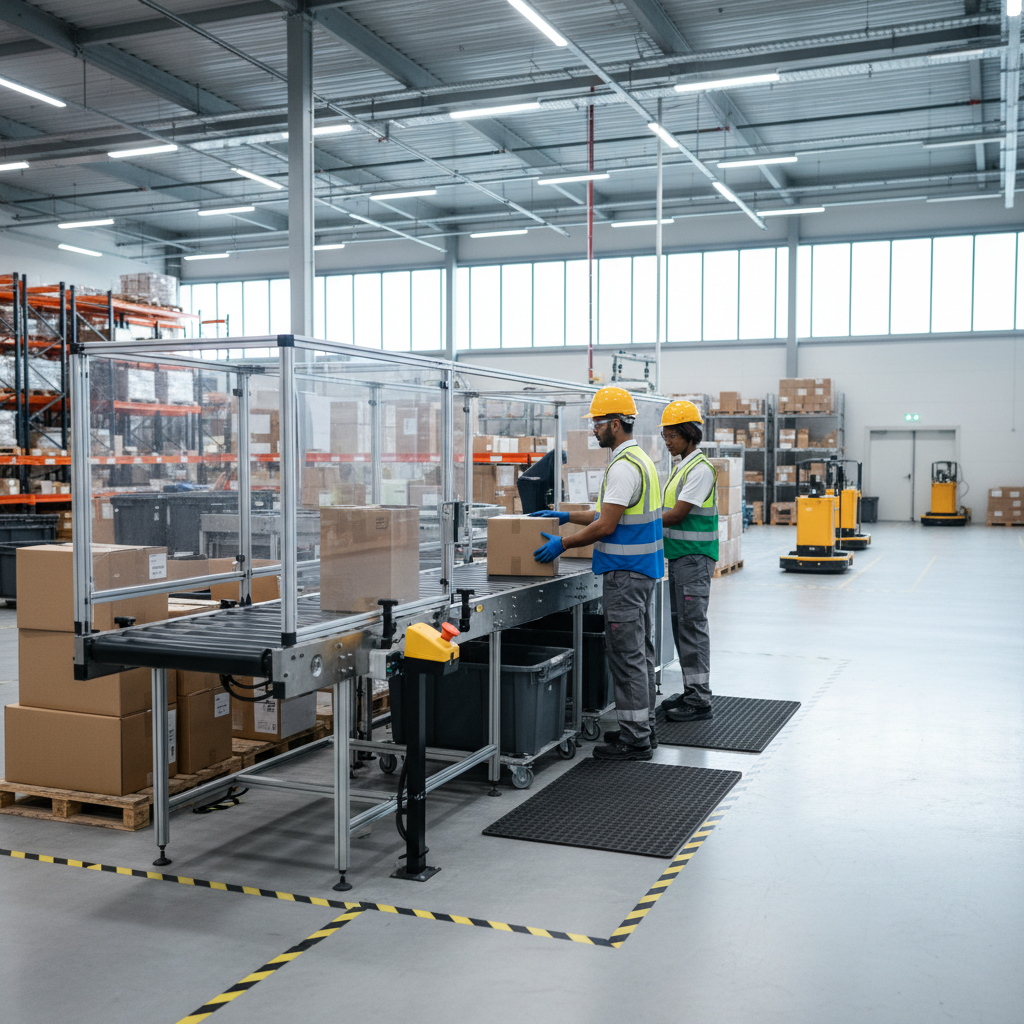
Modular conveyor systems offer growing Benelux companies crucial agility. These systems, built from standardized, interlocking sections, can be rapidly reconfigured and expanded to meet changing market demands, ensuring your logistics infrastructure never becomes a bottleneck.
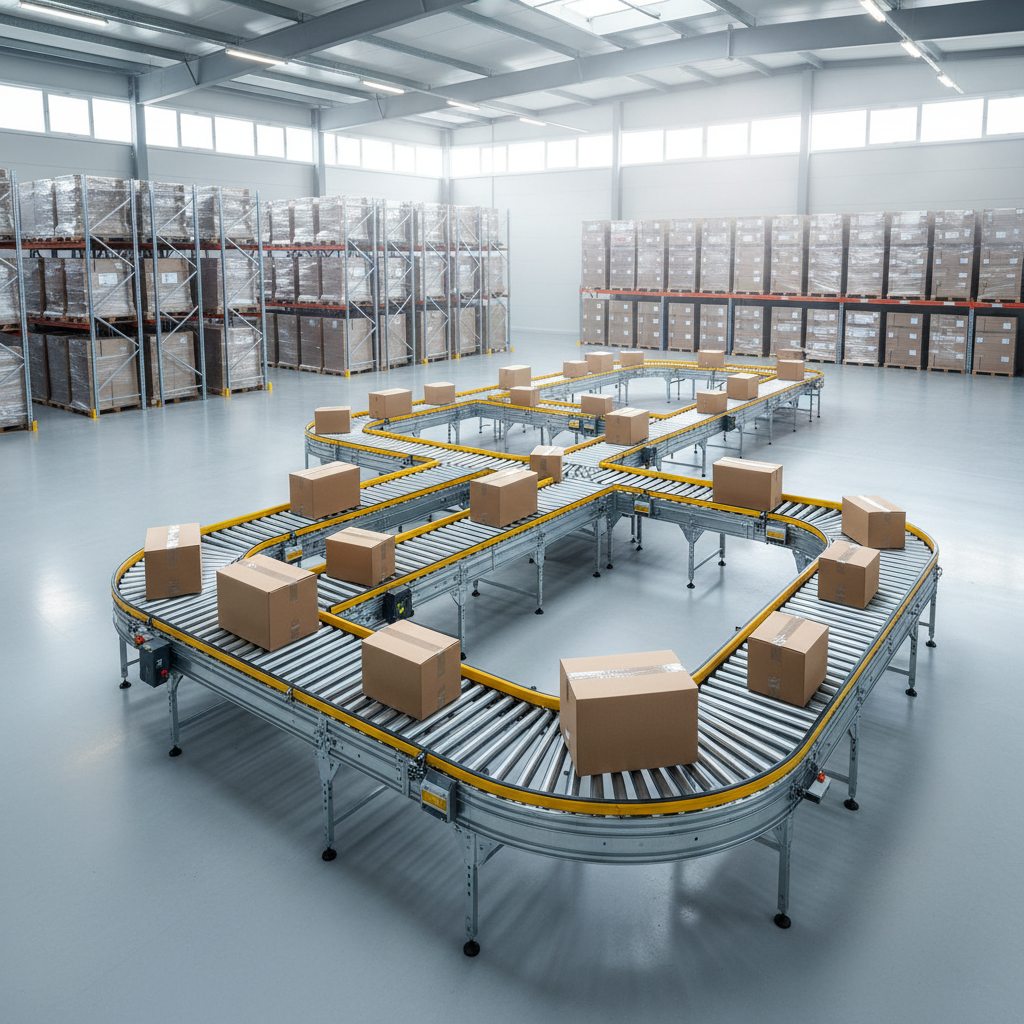
In the fast-paced logistics landscape of the Benelux, businesses face a constant challenge: growth. As order volumes increase and product mixes change, warehouse operations must adapt or become a critical bottleneck. Traditional, custom-engineered conveyor systems, once the backbone of the industry, often lack the flexibility required. Modular conveyor systems have emerged as a powerful solution, offering the agility and scalability that modern e-commerce, 3PL, and manufacturing companies need to thrive.
Definition
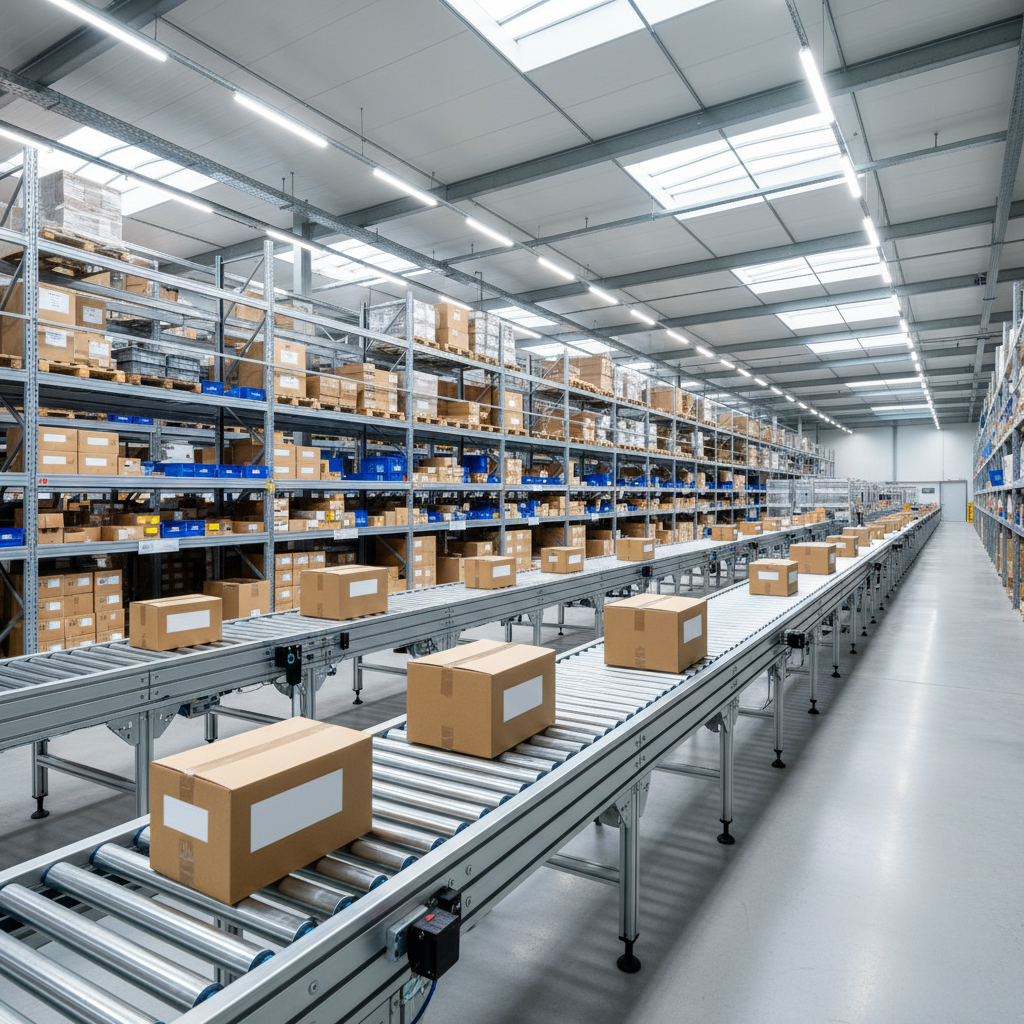
A modular conveyor system is an intralogistics transport solution constructed from a series of standardized, pre-engineered, and interoperable sections or modules. These modules (e.g., straight sections, curves, mergers, sorters) can be quickly assembled, reconfigured, and expanded in a plug-and-play manner, allowing the system's layout and functionality to adapt to evolving operational needs.
Key Numbers
| Metric | Typical range (EU 2026) | Notes |
|---|---|---|
| Throughput (CPH) | 600 - 4,000 CPH | Depends on module type, speed, and product size. Motorized roller zones offer higher control. |
| Typical Speed | 0.3 m/s - 1.5 m/s | Speeds can be variable per zone, especially with MDR technology. |
| Initial Investment | €20,000 - €300,000+ | Cost is highly dependent on length, complexity (sorters, inclines), and control systems. |
| ROI Period | 2 - 4 years | Calculated based on labour savings, increased throughput, and reduced errors. |
| Reconfiguration Time | 24 - 72 hours | For layout changes or small expansions, significantly less than traditional systems. |
| Energy Consumption | 0.5 kWh - 5 kWh | Zone-based systems (MDR) are highly efficient, running only when products are present. |
| Typical Lifespan | 10 - 15 years | Individual modules can be replaced or upgraded, extending the total system lifespan. |
Why Modularity is Crucial for Benelux Businesses
The logistics environment in Belgium, the Netherlands, and Luxembourg is defined by high labour costs, limited industrial space, and a central role in European e-commerce. This creates a unique pressure to be efficient and adaptable. Growing companies often start with semi-manual processes, but quickly hit a ceiling. As one study notes, many companies grow, but their processes don't always grow with them. A modular approach directly addresses this challenge.
Key Advantages of a Modular Approach
- Scalability on Demand: Start with a basic transport line and add functionality later. You can begin with simple A-to-B transport and later integrate a sorter, a spiral conveyor for vertical transport, or an accumulation zone as your order volume justifies the investment.
- Flexibility for Market Changes: If your product dimensions change or you need to re-arrange your picking zones, a modular system can be reconfigured over a weekend. A traditional welded-frame system would require weeks of cutting, welding, and downtime.
- Reduced Initial Investment: By investing only in what you need now, the initial capital outlay is significantly lower. This "pay-as-you-grow" model de-risks the investment in automation.
- Simplified Maintenance: Using standardized components means spare parts are readily available and maintenance procedures are consistent across the entire system. Technicians can quickly swap out a faulty motor or roller section, minimizing downtime.
Traditional vs. Modular Conveyors: A Comparative Analysis
The choice between a traditional (custom-engineered) and a modular conveyor system has significant long-term implications for a company's operational agility and total cost of ownership (TCO).
| Factor | Traditional Conveyor System | Modular Conveyor System |
|---|---|---|
| Design & Engineering | Fully custom, project-specific engineering. High upfront design costs. | Based on pre-engineered, standardized modules. Faster design phase. |
| Installation & Commissioning | Lengthy process involving on-site welding, cutting, and custom wiring. Typically weeks to months. | Fast assembly with bolted connections and plug-and-play electricals. Typically days to weeks. |
| Flexibility & Scalability | Very low. Changes are expensive, time-consuming, and cause significant disruption. | Very high. Layouts can be reconfigured or expanded with minimal downtime. |
| Maintenance & Spare Parts | Custom parts may have long lead times. Requires specialized knowledge. | Standardized parts are often in stock. Simpler to repair and maintain. |
| Total Cost of Ownership (TCO) | Lower initial cost for very simple, static layouts, but higher TCO if changes are ever needed. | Potentially higher initial cost for complex systems, but lower TCO due to adaptability and reduced downtime. |
Core Technologies in Modern Modular Conveyors
The intelligence and efficiency of modern modular systems come from the technologies embedded within them. These are not just "dumb" movers but sophisticated systems that contribute to overall warehouse efficiency.
Motorized Drive Roller (MDR)
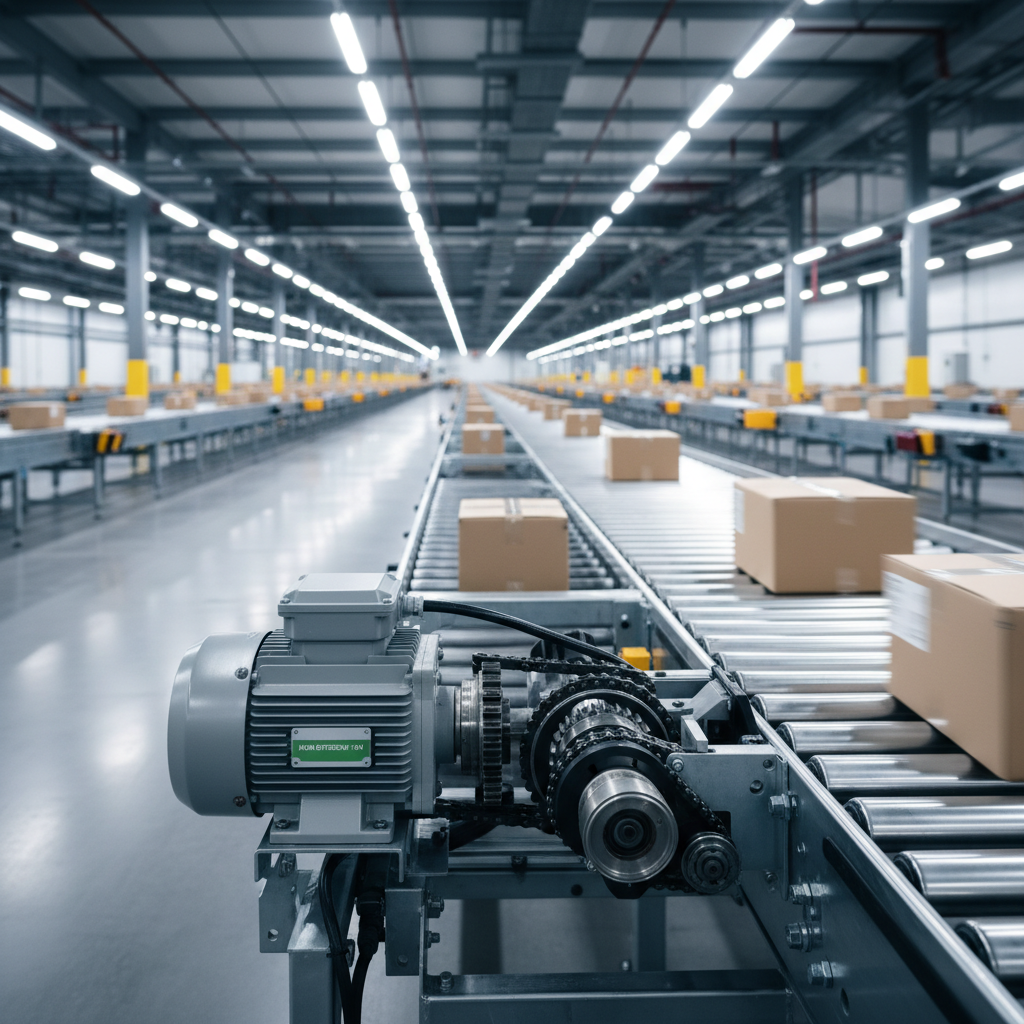
At the heart of many modular systems is the Motorized Drive Roller (MDR). This is a conveyor roller with an integrated 24V DC motor. Each small section of the conveyor (a "zone") is powered by its own MDR. This allows for Zero-Pressure Accumulation (ZPA), where boxes can queue up without touching, preventing product damage. MDR technology is incredibly energy-efficient, as each zone only runs when a box is present.
Control and Integration
Modular systems are controlled by a hierarchy of systems. At the base level, plug-and-play zone controllers manage the MDRs. These are then governed by a PLC (Programmable Logic Controller) that dictates the overall routing logic. For full integration into the warehouse ecosystem, the PLC communicates with a Warehouse Control System (WCS) or Warehouse Execution System (WES), which in turn interfaces with the main Warehouse Management System (WMS). This integration ensures that the conveyor system acts in concert with all other warehouse processes. Our guide on WMS, WCS, and WES provides more detail on this critical topic.
Choosing the Right Modules for Your Needs
Building your ideal system involves selecting from a catalogue of available modules. A typical modular roller conveyor offering includes:
Common Module Types
- Straight Sections: The most basic module, used for transportation over distance. Available in various lengths (e.g., 500 mm, 1000 mm, 2000 mm) and widths (e.g., 450 mm, 600 mm, 800 mm).
- Curve Sections: Used to navigate corners, typically available in 45-degree and 90-degree versions.
- Merge/Divert Modules: Used to combine flows from two lines into one, or to divert packages from one line to another (e.g., for sorting).
- Incline/Decline Modules: Belted modules designed to move products between different elevations.
- Transfer Modules: Used for right-angle changes in direction, often using chain or belt transfers that pop up between the rollers.
Easy Systems: Your Partner for Scalable Conveyor Solutions
Choosing the right hardware is only part of the solution. You need a partner who understands the strategic challenges of growth and can translate your business needs into a flexible, future-proof logistics backbone. At Easy Systems, we specialize in designing and implementing modular conveyor systems specifically for the dynamic needs of Benelux companies.
Our approach is centered on partnership. We start by analyzing your current processes and future growth projections. From there, we design a modular system that provides immediate efficiency gains while retaining the flexibility to be reconfigured and expanded. With our standardized components and experienced engineering team, we ensure fast installation and reliable long-term performance. We don't just sell conveyors; we deliver scalable infrastructure that allows your business to grow without constraints.
Frequently asked questions
How much does a modular conveyor system cost in the Benelux?+
A simple modular conveyor line might start around €20,000. A more complex system for a small distribution center, including some curves and transfers, typically ranges from €80,000 to €250,000. The cost is driven by length, width, and the number of functional modules like sorters or inclines.
How quickly can you reconfigure a modular conveyor?+
Minor reconfigurations, like adding a new picking station or changing a curve, can often be done in a single weekend (24-48 hours). This minimizes operational downtime. Compared to traditional systems which can take weeks, the speed of adaptation is a primary advantage.
What is the main advantage of a modular conveyor vs a traditional one?+
The single biggest advantage is flexibility. A modular system can be easily changed, scaled, and repurposed as your business grows or your product mix changes. This adaptability significantly lowers the long-term total cost of ownership (TCO) and prevents your logistics system from becoming obsolete.
What is the typical lifespan of a modular conveyor system?+
The overall system framework has a lifespan of 15+ years. Because it's modular, individual components like motors or rollers can be easily replaced or upgraded. This extends the system's useful life far beyond that of a monolithic system, where a single component failure can be critical.
Can modular conveyors handle different product sizes?+
Yes, they are designed for this. A system is typically specified for a certain range of carton/tote sizes (e.g., lengths from 200mm to 800mm, weights up to 50 kg). The use of sensor-based zones and adjustable guardrails allows them to handle a diverse mix of products effectively.
Is a modular conveyor system energy-efficient?+
Yes, systems using Motorized Drive Roller (MDR) technology are highly energy-efficient. They operate on a "run-on-demand" basis, meaning a zone is only powered when a product is present. This can lead to energy savings of up to 60-70% compared to traditional conveyors that run continuously.

The Easy Systems editorial desk reviews and fact-checks every Conveyor-Design article against Benelux project experience. Editors translate engineering decisions — throughput, peak factors, layout, integration — into plain-language guides for operations managers, project leads and decision-makers.
- Warehouse layout & slotting
- Order-profile analysis
- Vendor-neutral comparison
- Benelux logistics market