Conveyor Ergonomics & Safety: A Benelux Guide (2026)
This guide provides a comprehensive overview of conveyor system ergonomics and safety, with a specific focus on the Benelux region. Learn about key regulations, design principles for reducing injuries, and the financial return of investing in a safer, more ergonomic warehouse environment.
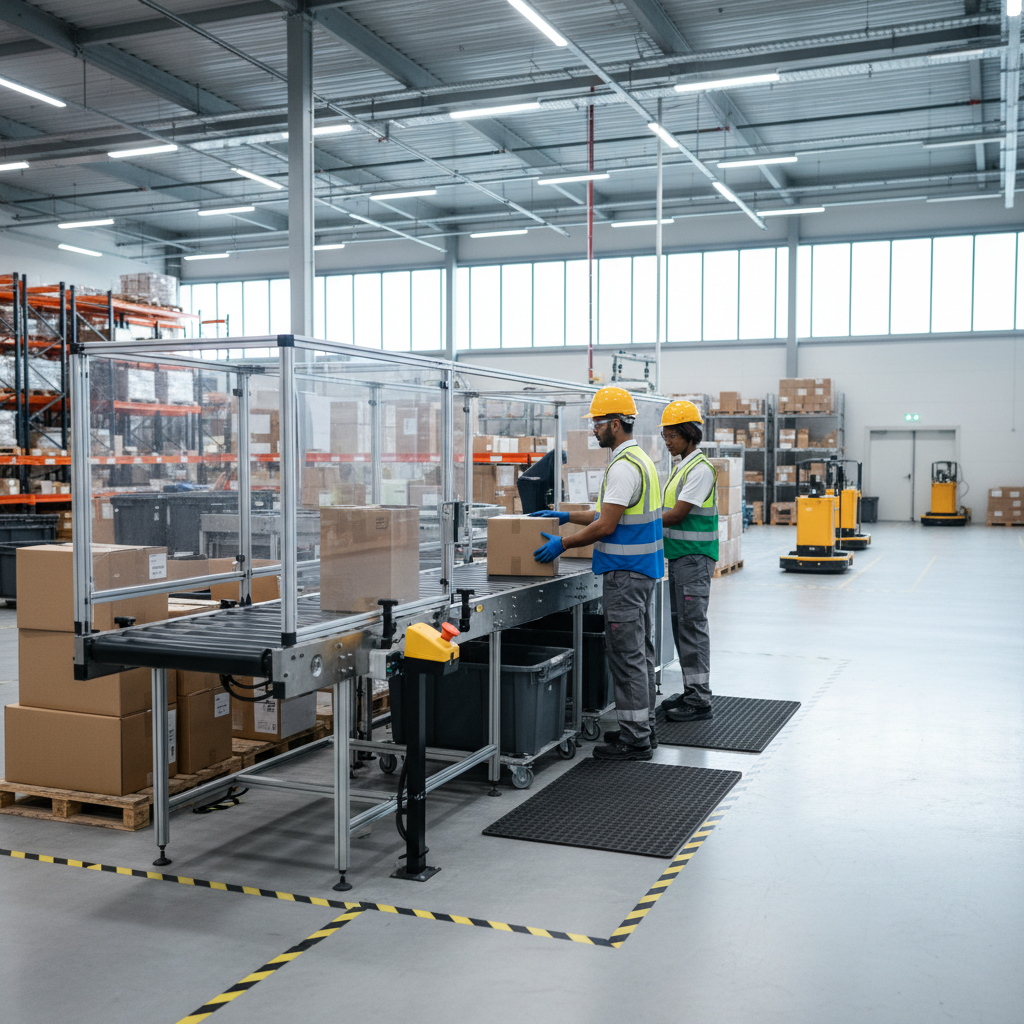
In the high-throughput logistics hubs of the Benelux, conveyor systems are the arteries of operation. However, their efficiency can come at a high cost if ergonomics and safety are overlooked. Repetitive tasks, awkward postures, and mechanical hazards can lead to costly injuries and downtime. This guide explores the critical importance of ergonomic design and safety protocols for conveyor systems within the specific legal and operational context of Belgium, the Netherlands, and Luxembourg.
Definition
Conveyor Ergonomics and Safety refers to the practice of designing and operating conveyor systems to optimize human well-being and reduce workplace risks. It involves creating workstations that fit the operator, minimizing physical strain, and integrating safety mechanisms to prevent accidents, all in compliance with legal standards like the EU Machinery Directive and NEN-EN 619.
Key Numbers
| Metric | Typical Range (Benelux 2026) | Notes |
|---|---|---|
| Musculoskeletal Disorder (MSD) Reduction | 40% - 60% | Achieved through ergonomic design (e.g., adjustable height, reduced reach). |
| Investment in Ergonomic Features | €500 - €5,000 per workstation/meter | Depends on complexity, from simple stands to automated height adjustment. |
| Return on Investment (ROI) | 1.5 - 3 years | Calculated from reduced absenteeism, lower insurance costs, and increased productivity. |
| Noise Level Reduction (MDR vs. Traditional) | 5 - 10 dB | MDR systems are significantly quieter, reducing operator fatigue. |
| Emergency Stop Installation Cost | €250 - €1,000 per unit | Mandatory safety feature; cost varies by system complexity and integration. |
| Typical Conveyor Speed | 0.2 m/s - 1.5 m/s | Speed must be appropriate for the task to prevent errors and accidents. |
| Minimum Guarding Height | 1400 mm | Standard height for protective barriers to prevent reaching into hazardous areas. |
The Legal Framework in the Benelux
Operating a conveyor system in the Benelux means adhering to a stringent set of rules derived from European directives. The most critical of these is the Machinery Directive 2006/42/EC, which mandates that all machinery sold within the EU must meet specific health and safety requirements. This is enforced through national legislation in the Netherlands (Arbowet) and Belgium (Codex Welzijn op het Werk).
For conveyors specifically, the harmonized standard NEN-EN 619:2002+A1:2010 ("Continuous handling equipment and systems - Safety and EMC requirements for equipment for mechanical handling of unit loads") is paramount. This standard provides detailed specifications on:
- Guarding: Preventing access to pinch points, rotating shafts, and moving parts.
- Emergency Stops: Requirements for placement, visibility, and operation.
- Electrical Safety: Protection against shocks and conformity with EMC standards.
- Operator Positions: Ensuring safe and ergonomically sound workstations.
Failure to comply can result in heavy fines, operational shutdowns, and legal liability in case of an accident. A thorough Risk Assessment and Inventory (RI&E) is a mandatory first step for any new installation or modification.
Common Ergonomic Risks in Conveyor Operations
Ergonomic injuries are often cumulative, developing over time from seemingly low-risk tasks. In a warehouse environment, these risks are amplified by the repetitive nature of the work.
Repetitive Strain and Awkward Postures
Operators often perform the same motions thousands of times per shift. Key risk factors include:
- Working Height: A conveyor that is too low causes constant bending, straining the lower back. A conveyor that is too high forces raised shoulders and elbows, leading to neck and shoulder pain. The ideal height is typically at elbow level, but this varies per task (precision vs. force).
- Reach Distance: Repeatedly reaching more than 45-50 cm to pick or place items significantly increases strain on the back and shoulders.
- Twisting: Workstations that force operators to twist their torso to interact with the conveyor are a primary cause of back injuries.
Key Safety Hazards and Prevention
Beyond ergonomics, conveyors present distinct mechanical and electrical hazards that require robust safety solutions.
Pinch Points and Entanglement
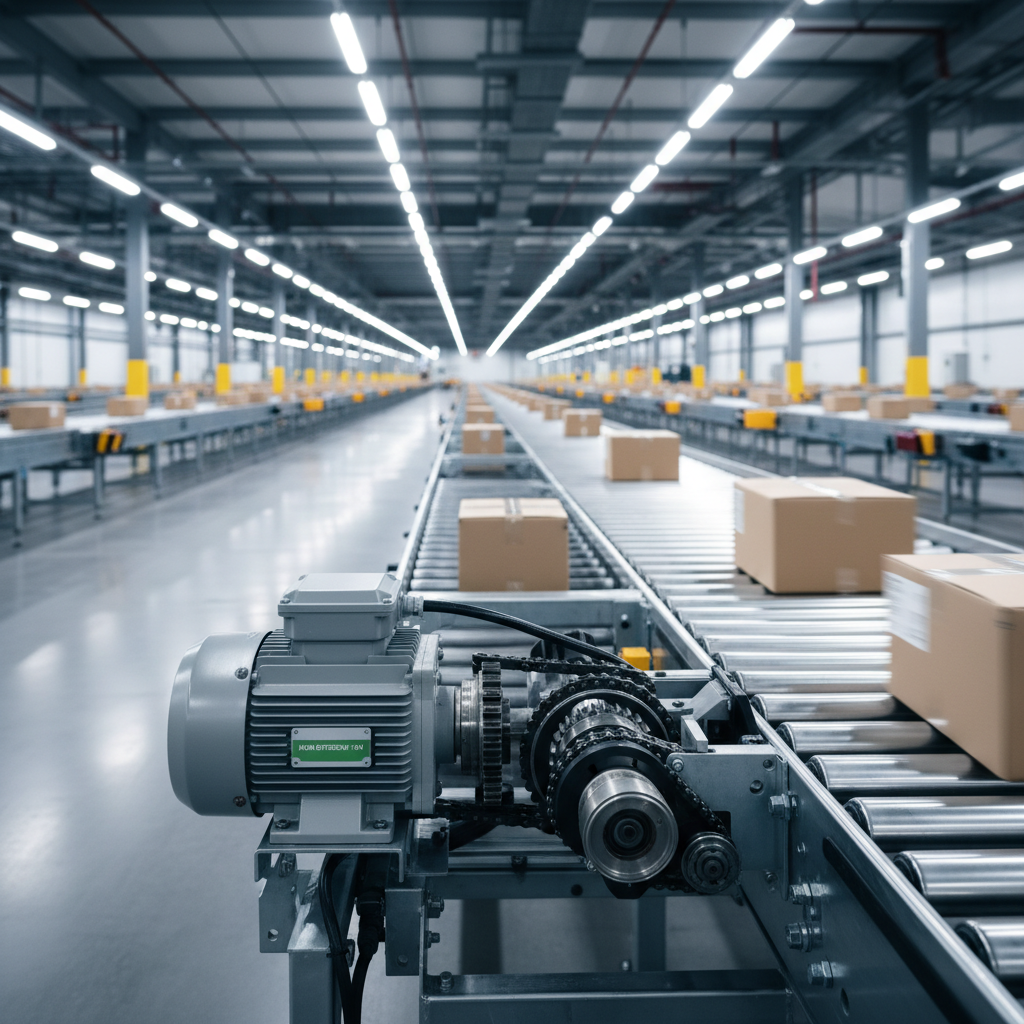
Anywhere a moving part of the conveyor meets a stationary part, a pinch point is created. This is especially true for belt conveyor pulleys and roller conveyor chains. The primary prevention methods are:
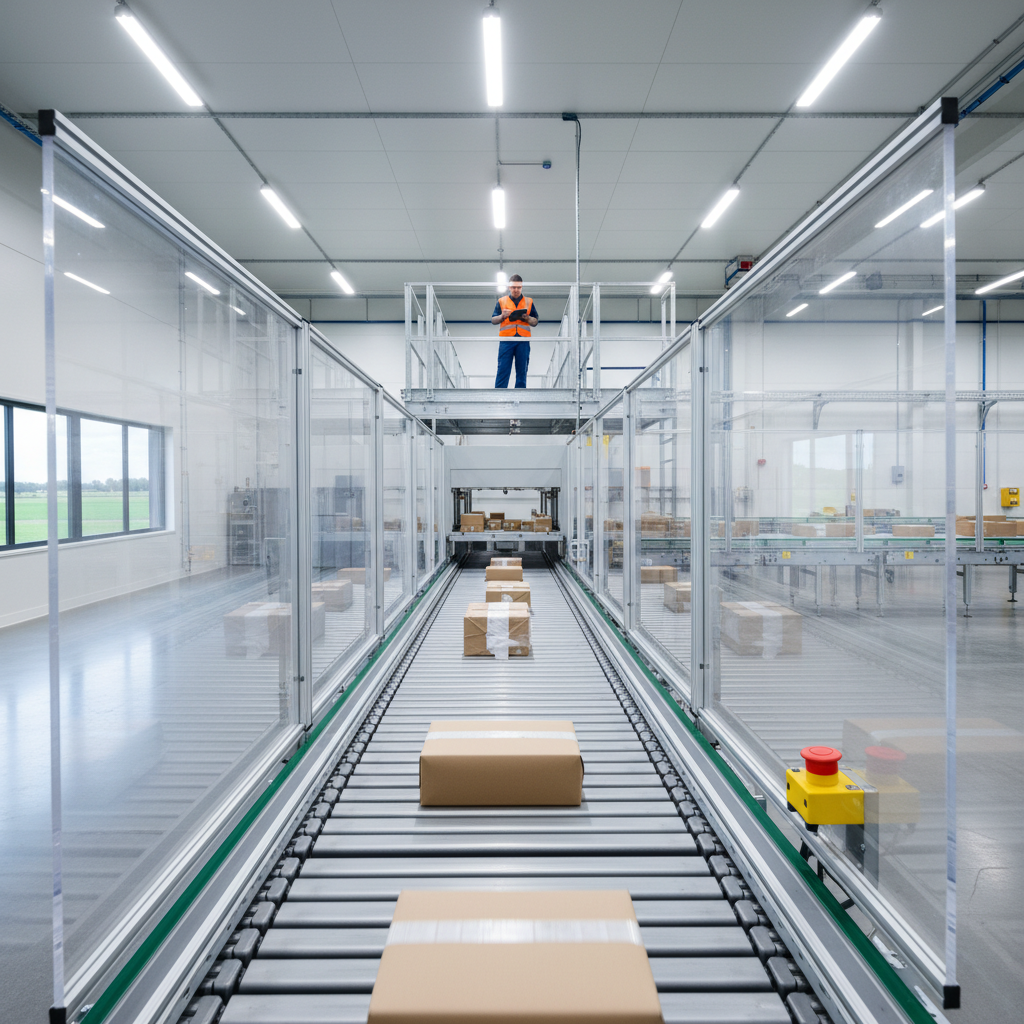
- Fixed Guards: Physical barriers that permanently enclose the hazardous area.
- Interlocked Guards: Guards with a sensor that stops the conveyor if the guard is opened or removed.
Falling Objects
On elevated or overhead systems, items can fall and strike personnel below. This risk is mitigated through side guards, netting, and enclosed conveyor profiles. For a detailed look at roller conveyor options, see our comprehensive roller conveyor guide.
Ergonomic Design Principles for Conveyor Systems
A proactive approach to design is the most effective way to ensure a safe and productive environment.
Adjustable and Task-Specific Design
The "one size fits all" approach is a recipe for injury. Modern ergonomic design focuses on adjustability:
- Height-Adjustable Workstations: Using electric or hydraulic lifts, operators can set the conveyor height to their personal elbow height, accommodating a diverse workforce. The investment, typically €1,500-€4,000 per meter, pays for itself quickly.
- Turntables and Ball Transfer Units: Integrating these at corners or packing stations allows operators to rotate heavy boxes easily, eliminating the need to twist their bodies.
- Optimal Lighting: Adequate lighting (minimum 500 lux for detailed tasks) reduces eye strain and helps operators spot hazards.
Comparison of Conveyor Types: Ergonomics & Safety
| Conveyor Type | Primary Ergonomic Risk | Primary Safety Hazard | Noise Level | Best For |
|---|---|---|---|---|
| Belt Conveyor | Fixed height can cause posture issues. | Pinch points at drive/idler pulleys. | Moderate (65-75 dB) | Transporting variable-sized items, inclines. |
| Roller Conveyor (Line-Shaft) | Repetitive pushing of heavy items on non-powered sections. | Pinch points from exposed belts/chains. | High (70-80 dB) | Accumulation and transport of flat-bottomed goods. |
| MDR Roller Conveyor | Minimal; powered rollers reduce physical effort. | Low; no external drive train, rollers stop if blocked. | Low (60-70 dB) | Zero-pressure accumulation, quiet zones, flexible routing. |
| Spiral Conveyor | Can be difficult to access for maintenance. | Entanglement if not properly guarded. | Moderate (65-75 dB) | Vertical transport, saving floor space. |
The Role of Training and Maintenance
Even the best-designed system is only as safe as the people who use and maintain it. Comprehensive training is not a one-time event but an ongoing process. Operators must be trained on:
- Safe work procedures and the "why" behind them.
- How to use emergency stops and other safety features.
- Recognizing and reporting hazards or malfunctions.
- The basics of ergonomic self-care, like proper lifting techniques.
A preventative maintenance schedule is equally critical. Worn parts, loose guards, or faulty sensors are accidents waiting to happen. Regular inspections, as specified by the manufacturer, are a legal and practical necessity. As noted in a recent Easy Systems analysis, processes that don't evolve with company growth often introduce unseen risks, making maintenance and periodic reviews vital.
Easy Systems: Your Partner in Safe and Ergonomic Conveyor Solutions
Designing conveyor systems that are productive, safe, and ergonomic requires specialized expertise. At Easy Systems, we don't just sell conveyors; we engineer integrated solutions tailored to the unique demands of your Benelux operation. Our modular approach allows us to create systems that are not only compliant with all relevant EU and local standards from day one but are also adaptable to the future needs of your workforce.
By combining decades of engineering experience with a deep understanding of warehouse ergonomics, we build systems that protect your most valuable asset: your people. We conduct thorough on-site analyses to identify risks and design workstations that reduce physical strain, minimize noise, and eliminate hazards. From initial risk assessment to final commissioning and operator training, we are your trusted partner in achieving operational excellence safely and efficiently.
Frequently asked questions
What is the ideal height for a conveyor belt for standing workers?+
The ideal height for a conveyor belt depends on the task. For light assembly or packing, the surface should be at elbow height, typically 100-110 cm from the floor. For tasks requiring more physical force, a lower height of 85-95 cm is better to allow workers to use their body weight.
How much does a safe, ergonomic conveyor system cost in the Benelux?+
Costs vary widely. A simple, gravity roller conveyor might cost €200-€400 per meter. An automated, height-adjustable belt conveyor with full guarding and MDR technology can range from €1,500 to over €4,000 per meter. The investment typically sees a return in 2-3 years through safety and productivity gains.
What are the most common injuries from conveyor belts?+
The most common injuries are musculoskeletal disorders (MSDs) like back pain and tendonitis from repetitive motion and awkward postures. Acute injuries include lacerations and amputations from getting caught in pinch points, and contusions from falling objects. Proper design can reduce MSDs by up to 60%.
Are noise-reducing conveyors worth the investment?+
Yes. Reducing warehouse noise from 80 dB to 70 dB can significantly decrease operator fatigue and stress, improving focus and reducing errors. Modern Motorized Drive Roller (MDR) conveyors are 5-10 dB quieter than older systems and the investment is often justified by improved productivity and a better work environment.
What is NEN-EN 619 and why is it important?+
NEN-EN 619 is a key European standard that specifies the safety requirements for conveyor systems handling unit loads. It provides concrete guidelines on guarding, emergency stops, and system design to prevent accidents. Compliance is considered the state-of-the-art and is essential for meeting legal obligations under the EU Machinery Directive.
How can I make my existing conveyor line more ergonomic?+
Start with low-cost interventions. Place anti-fatigue mats at workstations (€50-€150 each). Provide adjustable platforms or stools. Ensure reach distances are under 50 cm. For a larger impact, consider retrofitting sections with height-adjustable legs or integrating turntables at packing stations.

The Easy Systems engineering team designs, integrates and commissions conveyor systems and warehouse automation across Belgium, the Netherlands and Luxembourg. Combined experience covers roller and belt conveyors, sorters, AGV/AMR fleets, AutoStore, shuttle AS/RS and WMS/WCS integration for distribution centers and e-commerce fulfillment operations.
- Conveyor design (roller, belt, modular plastic)
- Sortation & merge logic
- AGV / AMR fleet integration
- AutoStore & shuttle AS/RS
- WMS / WCS integration