Energy Management in Sustainable Conveyor Systems: Benelux Case Studies
Optimizing conveyor systems for sustainability involves more than just speed. This guide explores key energy management strategies like Motorized Drive Roller (MDR) technology, zero-pressure accumulation, and energy recovery, supported by real-world Benelux case studies.
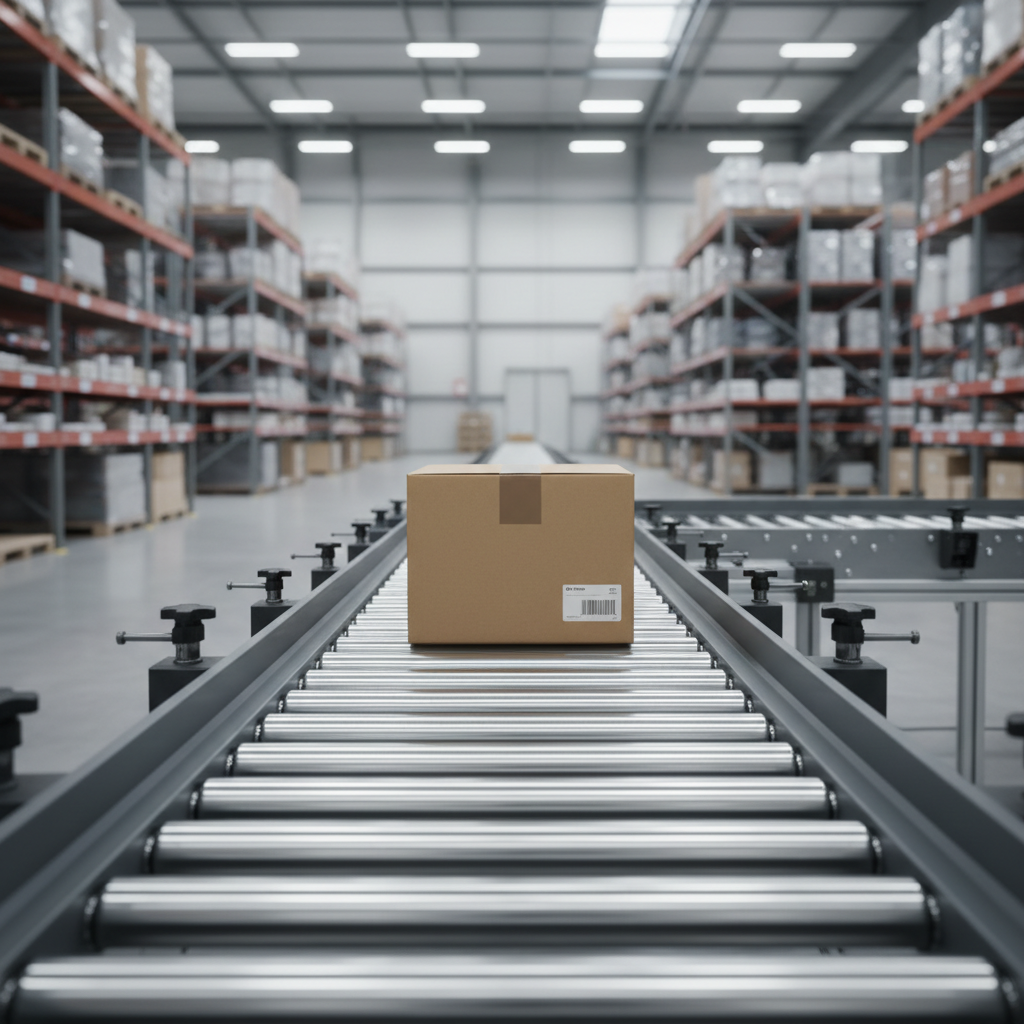
As sustainability targets and rising energy costs reshape European logistics, the focus on warehouse efficiency has intensified. Conveyor systems, the arteries of modern distribution centers, are a prime area for optimization. This article delves into the critical role of energy management in creating sustainable conveyor solutions, highlighting key technologies and providing practical insights from Benelux-based operations. We will explore how strategic upgrades not only reduce environmental impact but also deliver substantial financial returns.
Definition
Energy management for conveyor systems refers to the strategic use of technology and control logic to minimize electricity consumption during operation. It involves running motors and belts only when necessary, using energy-efficient components, and recovering kinetic energy, thereby reducing operational costs and the system's carbon footprint.
Key Numbers
| Metric | Typical range (EU 2026) | Notes |
|---|---|---|
| Energy Savings Potential | 40-60% | Compared to conveyors with continuously running AC motors. |
| Investment Cost (MDR upgrade) | €150 - €300 per meter | Dependent on roller density and control complexity. |
| ROI for Energy-Efficient Systems | 2-4 years | Based on energy savings, reduced maintenance, and potential subsidies. |
| Energy Consumption (MDR) | 0.03 - 0.05 kWh per hour per zone | Measured during active, on-demand operation. |
| Noise Level Reduction | 5-10 dB | Shift from continuously running motors to quiet, on-demand MDRs. |
| Typical Motor Lifespan (MDR) | 20,000 - 30,000 operational hours | Significantly longer than maintenance-intensive traditional drive systems. |
The Shift from 'Always-On' to 'On-Demand' Operation
For decades, the standard for conveyor systems was a single, powerful AC motor driving long sections of belt or rollers. This 'always-on' approach is simple but incredibly inefficient. The motor runs continuously, consuming significant power (e.g., 1.5 - 5.5 kW) regardless of whether a single package or no packages are on the conveyor. This constant operation also leads to accelerated wear on belts, bearings, and the drive train, increasing maintenance costs and downtime.
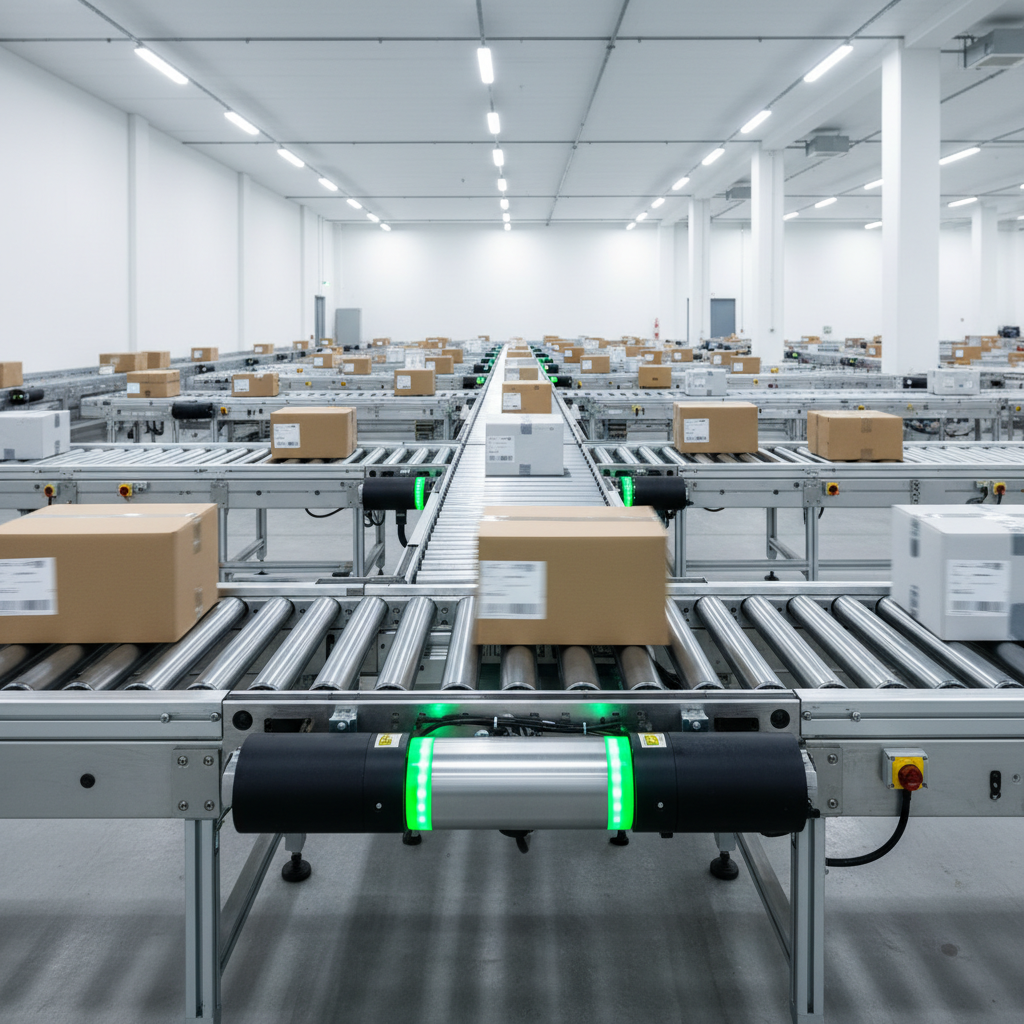
The modern approach, driven by sustainability goals and technological advancements, is 'on-demand' operation. This paradigm is enabled by technologies like Motorized Drive Rollers (MDR). Instead of one large motor, the conveyor is divided into manageable sections or zones, each powered by its own integrated 24V DC motor-roller. A package entering a zone activates only that specific zone's motor. Once the package moves to the next zone, the previous one powers down. This granular control is the foundation of energy-efficient material handling.
Key Technology: Motorized Drive Rollers (MDR)
MDR technology, also known as powered roller technology, is a cornerstone of modern, sustainable conveyor design. Each MDR unit is a self-contained roller with an integrated low-voltage DC motor. This decentralized power source offers several advantages:
- Energy Efficiency: Power is consumed only when a product is being transported in a specific zone. This can lead to energy savings of up to 60% compared to traditional AC-powered systems.
- Safety: Operating at 24V DC significantly reduces electrical shock hazards for maintenance personnel compared to high-voltage AC systems.
- Quiet Operation: The absence of constantly running motors, chains, and line shafts dramatically lowers ambient noise levels in the warehouse, improving the working environment.
- Modularity and Scalability: MDR-based systems are inherently modular. Zones can be easily added, removed, or reconfigured, providing flexibility as operational needs change. This is a topic we cover in more detail in our comprehensive roller conveyor guide.
The Role of Zero-Pressure Accumulation (ZPA)
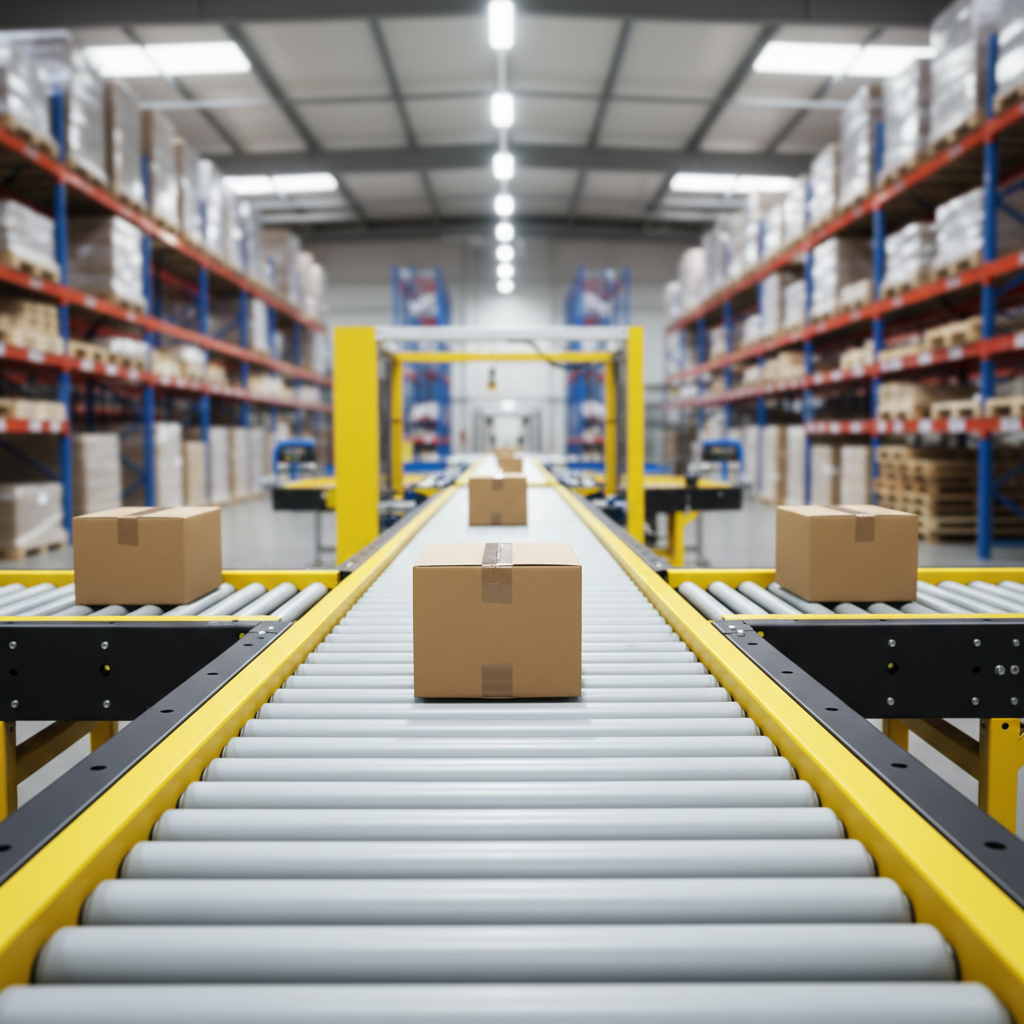
Zero-Pressure Accumulation (ZPA) is a control logic that works hand-in-hand with MDR technology to maximize efficiency and protect products. In a ZPA system, packages are transported along the conveyor but are not allowed to touch or build up pressure against each other. Each conveyor zone has a sensor that detects the presence of a package. The zone will only activate to move its package forward if the next downstream zone is empty.
This intelligent traffic management prevents product damage, which is crucial for fragile or high-value goods. From an energy perspective, ZPA ensures that entire lines of conveyor can remain dormant, consuming zero power, while waiting for a downstream process to become available. This eliminates the wasteful practice of running a full line just to buffer a few boxes at the end.
Comparison of Conveyor Drive Technologies
| Feature | Traditional AC Motor Drive | MDR with ZPA Logic |
|---|---|---|
| Energy Usage | Continuous, high consumption (1.5-5.5 kW) | On-demand, low consumption (~35W per zone) |
| Control | Centralized (On/Off for entire line) | Decentralized (Zone-by-zone control) |
| Noise Level | High (65-75 dB) | Low (55-65 dB, silent when idle) |
| Maintenance | Frequent (belt tensioning, bearing lubrication) | Minimal (brushless DC motors are maintenance-free) |
| Scalability | Difficult and costly to modify | Highly modular and easy to reconfigure |
Benelux Case Studies: Sustainability in Practice
The Benelux region, with its high logistics density and strong commitment to EU climate goals, has become a hotbed for sustainable warehouse automation. Many distribution centers in Belgium, the Netherlands, and Luxembourg are actively implementing energy-efficient conveyor technologies.
Case Study 1: E-commerce Fulfillment Center, Roosendaal (NL)
A large e-commerce provider in Roosendaal retrofitted 1,200 meters of their outbound sorting conveyor from a traditional line-shaft system to a full MDR-ZPA solution. The primary goal was to reduce soaring electricity costs and meet corporate sustainability targets. The result was a 55% reduction in energy consumption for their conveyor lines, translating to over €45,000 in annual savings. The quieter operation was an additional, highly valued benefit that improved the workplace for over 200 employees. The project's ROI was calculated at just under 3 years.
Case Study 2: Pharmaceutical Distribution Hub, Liège (BE)
In Liège, a critical hub for pharmaceutical distribution, a new facility was designed with energy efficiency as a core principle. The operation required both ambient and cold-chain conveyors. The use of MDR systems was particularly beneficial in the refrigerated section. Because MDRs generate very little waste heat compared to AC motors, the cooling system had to work less hard, creating a secondary layer of energy savings. The precise, gentle handling of the accumulation conveyor with ZPA logic also reduced the risk of damage to sensitive medical products, improving overall process quality.
Beyond MDR: Advanced Energy Management Techniques
While MDR and ZPA are foundational, a holistic energy management strategy incorporates other elements:
- Smart Controls and WES: A modern Warehouse Execution System (WES) can orchestrate conveyor operation based on real-time order flow. It can dynamically adjust speeds, power down entire sections during lulls (e.g., between waves or shifts), and route products along the most energy-efficient path. As we discuss in our guide on warehouse software, this level of control is key to optimizing complex logistics processes.
- Regenerative Braking: In systems with vertical elements, like spiral conveyors or declines, gravity does much of the work. Instead of using mechanical brakes that dissipate energy as heat, regenerative systems can use the motor as a generator. They capture the kinetic energy of descending packages and convert it back into usable electricity, which can be fed back into the system or the local power grid.
- High-Efficiency Components: Specifying high-efficiency gearboxes, premium efficiency motors (IE4/IE5 ratings for AC applications), and low-friction belts all contribute to marginal gains that add up to significant savings across a large system.
For many companies, the journey towards sustainability feels complex, as internal processes often struggle to keep pace with business growth. Recognizing this challenge is the first step towards implementing scalable, efficient solutions. A thoughtful approach to automation, as detailed in articles like "Bedrijven groeien, maar hun processen groeien niet altijd mee", can bridge this gap, turning operational bottlenecks into competitive advantages.
Positioning for a Greener Future: Your Trusted Partner
In an era defined by the EU's "Fit for 55" package and increasing stakeholder demand for corporate responsibility, energy management is no longer a peripheral concern—it is central to modern logistics. The technologies and strategies discussed are not futuristic concepts; they are proven, readily available solutions delivering tangible results in warehouses across the Benelux today.
At Easy Systems, we specialize in designing and implementing modular, energy-efficient conveyor systems that align with your sustainability and financial goals. Leveraging extensive experience with MDR, ZPA, and smart control integration, we help our clients build logistics infrastructures that are not only prepared for future regulations but are also more cost-effective and reliable in the present. We understand the specific operational demands of the European market and partner with you to create a solution that reduces your carbon footprint while boosting your bottom line. Partner with us to make your material handling operations a benchmark for sustainable efficiency.
Frequently asked questions
How much energy can a sustainable conveyor system really save?+
An energy-efficient conveyor system using Motorized Drive Rollers (MDR) and ZPA logic can reduce electricity consumption by 40% to 60% compared to a traditional system with a continuously running AC motor. For a medium-sized warehouse, this can translate into annual savings of €20,000 to €50,000.
What is the average cost to upgrade to an MDR conveyor system?+
The cost for upgrading to an MDR-based system typically ranges from €150 to €300 per meter. The final price depends on factors like the required roller density, width of the conveyor, and the complexity of the control system. The return on investment is usually seen within 2 to 4 years.
Is MDR technology suitable for all types of products?+
MDR is highly versatile and suitable for a wide range of products, from small polybags up to cartons weighing 50 kg. Its gentle, zero-pressure accumulation handling makes it ideal for e-commerce, pharmaceuticals, and electronics. For very heavy loads like pallets, different technologies like chain conveyors are typically used.
How does a quieter conveyor system benefit my warehouse?+
Switching to an on-demand MDR system can lower ambient noise levels by 5 to 10 decibels. This creates a safer and more pleasant working environment, which has been shown to improve employee concentration, reduce stress, and can contribute to higher productivity and lower staff turnover.
Can I integrate an energy-efficient conveyor into my existing WMS?+
Yes, modern MDR control systems are designed for integration. Using standard communication protocols, the conveyor's control logic can connect to your Warehouse Management System (WMS) or Warehouse Execution System (WES). This allows for dynamic control, such as powering down lines during periods of inactivity, directly from your central software.
Are there subsidies for installing energy-efficient conveyors in the Benelux?+
Yes, various national and regional programs in Belgium and the Netherlands offer fiscal incentives or subsidies for investments in energy-saving technologies. For example, the EIA (Energie-investeringsaftrek) in the Netherlands allows companies to deduct a percentage of the investment costs from their taxable profit. It is always recommended to check with a local advisor.

The Easy Systems engineering team designs, integrates and commissions conveyor systems and warehouse automation across Belgium, the Netherlands and Luxembourg. Combined experience covers roller and belt conveyors, sorters, AGV/AMR fleets, AutoStore, shuttle AS/RS and WMS/WCS integration for distribution centers and e-commerce fulfillment operations.
- Conveyor design (roller, belt, modular plastic)
- Sortation & merge logic
- AGV / AMR fleet integration
- AutoStore & shuttle AS/RS
- WMS / WCS integration