Energy Efficiency in Conveyor Systems: Cost Reduction in Benelux
Discover how Benelux logistics hubs can significantly reduce operational costs by implementing energy-efficient conveyor technologies, from Motorized Drive Rollers (MDR) to intelligent software and predictive maintenance.
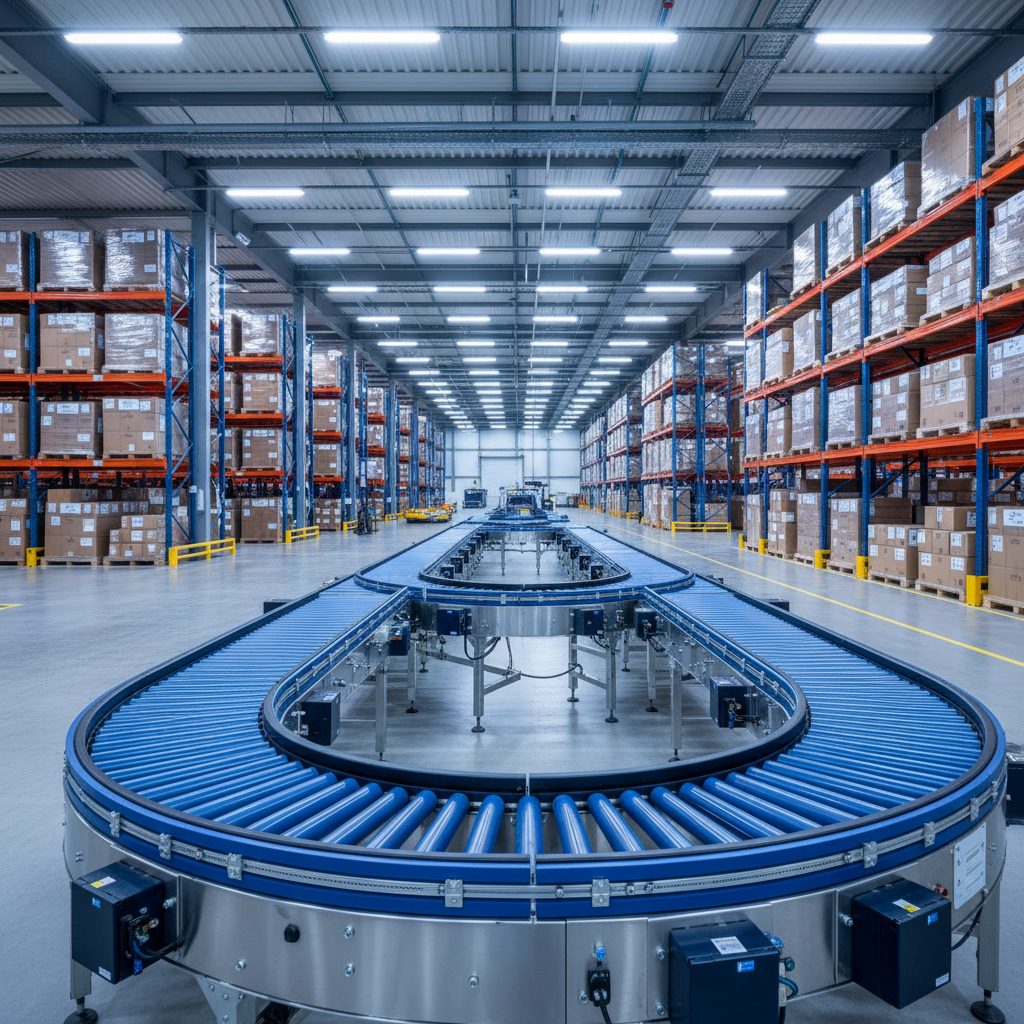
In the high-stakes, low-margin world of logistics and warehousing, operational costs are under constant scrutiny. For facilities in the Benelux—a pivotal European logistics hub—energy expenditure is a significant and rising component of these costs. Industrial conveyor systems, the arteries of any modern distribution center, are often major energy consumers. However, by adopting modern technologies and strategic operational protocols, businesses can dramatically improve energy efficiency, leading to substantial cost savings and a more sustainable footprint.
Definition
Energy efficiency in industrial conveyor systems refers to the set of strategies, technologies, and maintenance practices designed to minimize the electrical power consumed per unit of goods transported. It involves using components like Motorized Drive Rollers (MDR), intelligent controls, and optimized system design to reduce waste, lower operational costs, and decrease environmental impact.
Key Numbers
| Metric | Typical range (EU 2026) | Notes |
|---|---|---|
| Energy Savings with MDR | 40-60% | Compared to conveyors with single, large AC motors. |
| Investment (MDR System) | €400 - €700 per meter | Includes rollers, controllers, and power supplies. |
| Annual Energy Cost Savings | €2,000 - €8,000 per 100m line | Dependent on electricity price (€/kWh) and operating hours. |
| ROI for Energy Retrofit | 2-4 years | Based on energy savings and reduced maintenance costs. |
| Energy Use (Traditional AC Motor) | 0.75 - 2.2 kWh per hour | For a typical 50-meter belt conveyor line under constant load. |
| Energy Use (MDR System) | 0.3 - 0.9 kWh per hour | Equivalent 50-meter line, operating only when product is present. |
The Business Case for Energy Efficiency in Benelux Warehouses
With electricity prices in Belgium, the Netherlands, and Luxembourg among the highest in Europe, the financial incentive for optimizing energy consumption has never been stronger. A typical distribution center can spend tens of thousands of euros annually on powering its material handling equipment. A 20% reduction in this figure translates directly to the bottom line. Beyond direct cost savings, sustainability is a powerful brand differentiator. Customers and partners increasingly favor companies with demonstrable green credentials, and regulatory pressure from the EU's Green Deal is pushing industries towards lower carbon emissions. Investing in energy efficiency is no longer a luxury but a strategic necessity for competitive advantage.
From Constant Drain to On-Demand Power
The traditional approach to conveyor design often involved large, powerful AC motors running continuously, regardless of the actual volume of products on the line. This is akin to leaving the lights on in an empty building. The paradigm shift is towards "on-demand" or zonal operation. Modern systems are engineered to consume power only when and where it is needed. This granular control is the cornerstone of energy-efficient material handling, creating a system that is responsive, intelligent, and, most importantly, frugal.
Core Strategies for Reducing Conveyor Energy Consumption
Achieving significant energy savings requires a multi-faceted approach, combining hardware upgrades, intelligent software, and diligent maintenance.
1. Component Selection: The Power of the Motor
The single most impactful decision in designing an energy-efficient conveyor is the choice of motor technology. While standard AC induction motors are robust, they are notoriously inefficient when not running at their optimal load.
| Motor Technology | Energy Efficiency | Control-ability | Initial Cost (€/meter) | Best For |
|---|---|---|---|---|
| Standard AC Induction Motor | Low to Medium | Limited (On/Off) | €200 - €350 | Long, continuous runs with consistent heavy loads. |
| AC Motor with VFD | Medium to High | Good (Variable Speed) | €300 - €500 | Applications with fluctuating loads and speeds. |
| Motorized Drive Roller (MDR) | Very High | Excellent (Zonal) | €400 - €700 | Zero-pressure accumulation, sorting, and applications with intermittent product flow. |
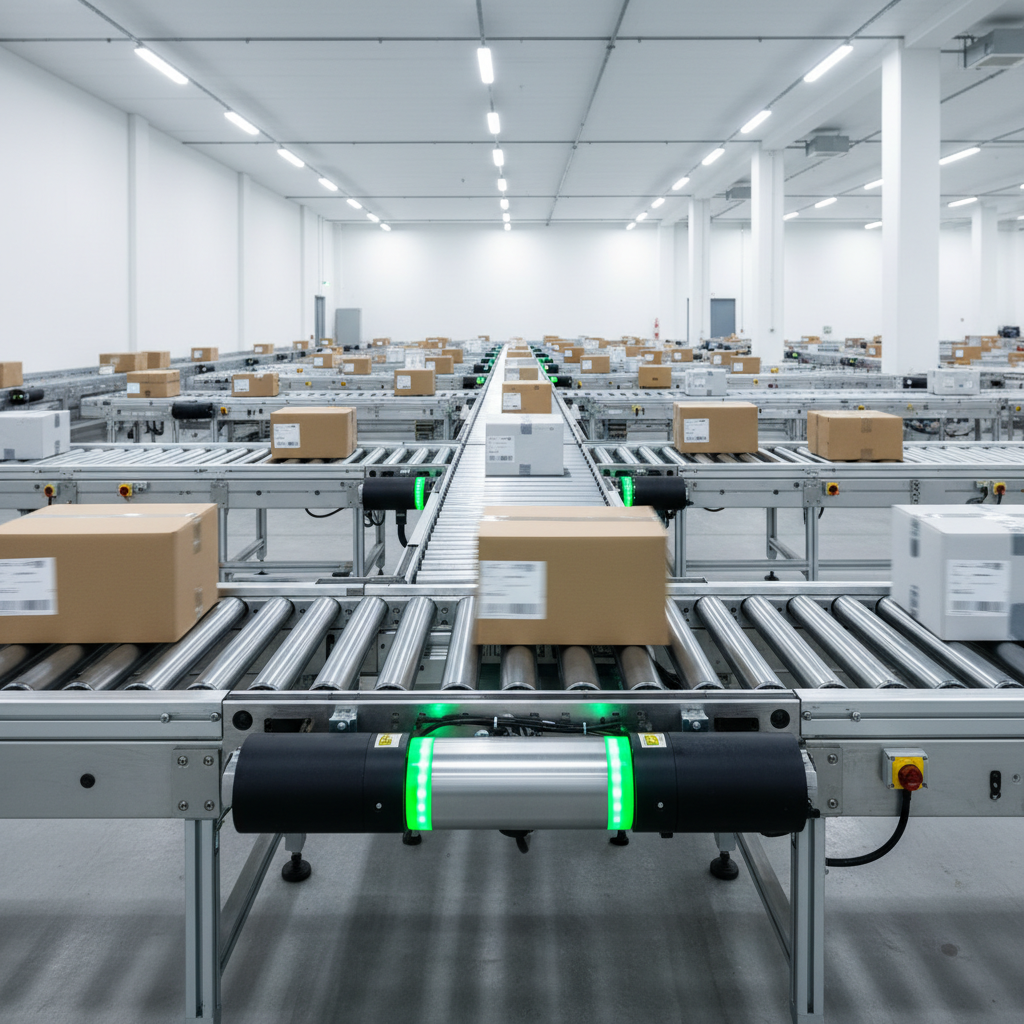
- Motorized Drive Rollers (MDR): These 24V DC rollers have an integrated motor, forming discrete zones that are powered on only when a product is detected. This is the gold standard for accumulation and sorting applications, often yielding energy savings of up to 60%.
- Variable Frequency Drives (VFDs): For applications still requiring a single, larger motor (e.g., a long belt conveyor), a VFD is essential. It allows the motor's speed to be adjusted to match the required throughput, drastically cutting power consumption during slower periods compared to a motor running at full speed constantly.
2. System Design and Intelligent Controls
Software and system logic play a crucial role in activating the hardware's potential. A powerful motor is only as efficient as the instructions it receives.
- Zero-Pressure Accumulation (ZPA): ZPA logic, often managed by a Warehouse Control System (WCS), ensures that conveyor zones shut down when empty. This prevents products from colliding and, critically, minimizes unnecessary motor runtime and noise.
- Sleep/Wake-up Modes: Modern control systems can be programmed to put entire conveyor sections into a low-power "sleep" mode after a set period of inactivity (e.g., 5-10 minutes). The system automatically re-activates when a product is detected upstream. This is highly effective during lunch breaks, shift changes, or periods of low volume.
Integrating these controls effectively is key. As discussed in our guide on WMS and WCS integration, the WCS acts as the brain, translating high-level commands from the WMS into the specific, real-time actions of the conveyor motors and sensors, optimizing flow and energy use simultaneously.
3. Predictive and Proactive Maintenance
A poorly maintained system wastes energy. Friction is the enemy of efficiency. A robust maintenance schedule can yield efficiency gains of 10-15% on its own.
- Lubrication: Regular lubrication of bearings and chains reduces mechanical resistance, meaning the motor works less to move the belt or rollers.
- Belt Tensioning: An over-tensioned belt requires significantly more force to move, while an under-tensioned belt can slip, wasting motor energy. Regular checks and adjustments are crucial.
- Component Cleaning: Keeping rollers, belts, and sensors free of debris ensures smooth operation and accurate detection, preventing unnecessary motor activation.
Calculating the ROI in a Benelux Context
Let's consider a hypothetical 100-meter accumulation conveyor line in a warehouse near the Port of Antwerp, operating two shifts (4,000 hours/year). With a regional electricity price of €0.25/kWh, the potential savings are substantial.
- Traditional System (0.75kW motor): 4,000 hours * 0.75 kW * €0.25/kWh = €750 annually. This is a simplified calculation for one small section; a large system has many such motors. A full 100m line running constantly could easily consume €10,000-€15,000 in electricity.
- MDR System (running 40% of the time): 4,000 hours * 0.40 * (average power, e.g., 1.5kW for the line) * €0.25/kWh = €4,000 annually.
This illustrates a direct annual saving of at least €6,000. An investment in a modern system, costing around €50,000 (€500/m), would have a payback period of just over 8 years on energy alone. However, when factoring in reduced maintenance, higher reliability, and lower noise levels, the ROI period often drops to 2-4 years. Many businesses find that process improvements are a critical, but often overlooked, part of growth. For more on this, see our analysis on how business processes must scale with growth.
Easy Systems: Your Partner for Energy-Efficient Conveyor Solutions
At Easy Systems, part of the BOA Concept group, we specialize in designing and implementing modular, energy-efficient conveyor systems tailored to the unique demands of the Benelux market. Our solutions are built around principles of intelligence and sustainability. We leverage 24V DC MDR technology and smart, zonal controls to deliver systems that not only meet your throughput requirements but also significantly lower your operational expenditure. From initial design consultation to installation and ongoing support, we help you build a logistics backbone that is powerful, scalable, and cost-effective, ensuring your facility is prepared for a competitive and energy-conscious future.
Frequently asked questions
How much electricity can an MDR conveyor system save?+
An MDR (Motorized Drive Roller) conveyor system can reduce electricity consumption by 40% to 60% compared to a traditional system using a single, always-on AC motor. In a typical Benelux warehouse, this can translate to annual savings of €2,000 to €5,000 for a 100-meter conveyor line.
What is the average ROI for an energy-efficient conveyor upgrade?+
The average Return on Investment (ROI) for upgrading to an energy-efficient conveyor system, such as one with MDR technology, is typically between 2 and 4 years. This calculation includes direct energy savings, which can be over €30 per meter per year, as well as reduced maintenance and downtime costs.
Can I make my existing conveyor system more energy-efficient?+
Yes. You can often retrofit existing AC-powered conveyors with a Variable Frequency Drive (VFD), which can cut energy use by 20-50% by matching motor speed to the load. Additionally, implementing a rigorous maintenance schedule for lubrication and belt tensioning can improve efficiency by another 10-15%.
What is zero-pressure accumulation and how does it save energy?+
Zero-Pressure Accumulation (ZPA) is a conveyor logic that creates buffer zones and stops products from touching. It saves energy by turning off the motors in unoccupied zones. A conveyor line might only be active 40-50% of the time, and ZPA ensures that energy is only consumed during those active periods, drastically reducing waste.
How does maintenance impact conveyor energy consumption?+
Regular maintenance is critical for energy efficiency. A poorly lubricated bearing or an overly tight belt can increase friction, forcing the motor to draw more power. A good maintenance program can reduce a conveyor's energy consumption by 10-15% and prevent costly premature component failure.
Are there government incentives for energy-efficient logistics in the Benelux?+
Yes, various national and regional schemes in Belgium, the Netherlands, and Luxembourg offer tax deductions or subsidies for investments in energy-saving technologies. For example, the Dutch 'Energie-investeringsaftrek' (EIA) allows businesses to deduct a percentage of the investment costs from their taxable profit, accelerating the ROI of a new conveyor system.

The Easy Systems editorial desk reviews and fact-checks every Conveyor-Design article against Benelux project experience. Editors translate engineering decisions — throughput, peak factors, layout, integration — into plain-language guides for operations managers, project leads and decision-makers.
- Warehouse layout & slotting
- Order-profile analysis
- Vendor-neutral comparison
- Benelux logistics market