AI in Conveyor Systems: Optimizing Benelux Warehouse Performance
Artificial Intelligence (AI) and Machine Learning are transforming Benelux logistics by making conveyor systems predictive, adaptive, and hyper-efficient. This unlocks significant gains in throughput, reduces operational costs, and provides a crucial competitive edge in Europe's densest logistics landscape.
Key numbers
| Metric | Typical range (EU 2026) | Notes |
|---|---|---|
| Unplanned Downtime Reduction | 50% - 70% | Based on AI predictive maintenance models. |
| Throughput Increase | 15% - 25% | Achieved by dynamic speed and flow optimization. |
| Maintenance Cost Savings | 20% - 30% | Shift from reactive/preventive to predictive scheduling. |
| Energy Consumption Reduction | 10% - 18% | From real-time motor speed and gap optimization. |
| Predictive Model Accuracy | >95% | For forecasting specific component failures (e.g., motors, bearings). |
| Return on Investment (ROI) | 18 - 36 months | For retrofitting existing conveyor systems with AI. |
In the hyper-competitive, high-density logistics landscape of the Benelux, every second and every square meter counts. As e-commerce continues to surge and labor costs rise, warehouses and distribution centers in Belgium, the Netherlands, and Luxembourg are turning to intelligent automation. Artificial Intelligence and Machine Learning are no longer futuristic concepts; they are becoming essential tools for optimizing the performance of conveyor systems, the arteries of any modern warehouse.
Definition
AI and Machine Learning in conveyor systems refers to the use of intelligent algorithms to analyze data from sensors, PLCs, and warehouse software to autonomously improve system performance. This extends beyond simple automation to include predictive maintenance, dynamic resource allocation, and real-time optimization of speed, routing, and energy usage.
The Data-Driven Revolution in Benelux Logistics
For decades, conveyor systems have been workhorses, reliably moving goods based on pre-programmed logic. The introduction of AI marks a paradigm shift from this reactive or purely automated state to a predictive and adaptive one. This is especially critical in the Benelux, which serves as a primary gateway to Europe through major ports like Rotterdam and Antwerp-Bruges.
Why Now? The Benelux Context
The push for AI adoption in this region is fueled by several factors:
- High Operational Costs: Labor wages and real estate prices in the Benelux are among the highest in Europe. AI-driven efficiency directly translates to lower costs per package handled.
- Extreme Logistics Density: The region has one of the highest concentrations of distribution centers in the world. Competition is fierce, and operational excellence is a key differentiator.
- Peak Season Volatility: The boom in e-commerce creates massive fluctuations in demand. AI allows conveyor systems to adapt dynamically to volume changes, which rigid systems cannot handle efficiently.
- Sustainability Goals: European regulations and corporate responsibility are pushing companies to reduce their carbon footprint. AI-powered energy optimization is a significant contributor to this goal.
From PLC Data to Actionable Insights
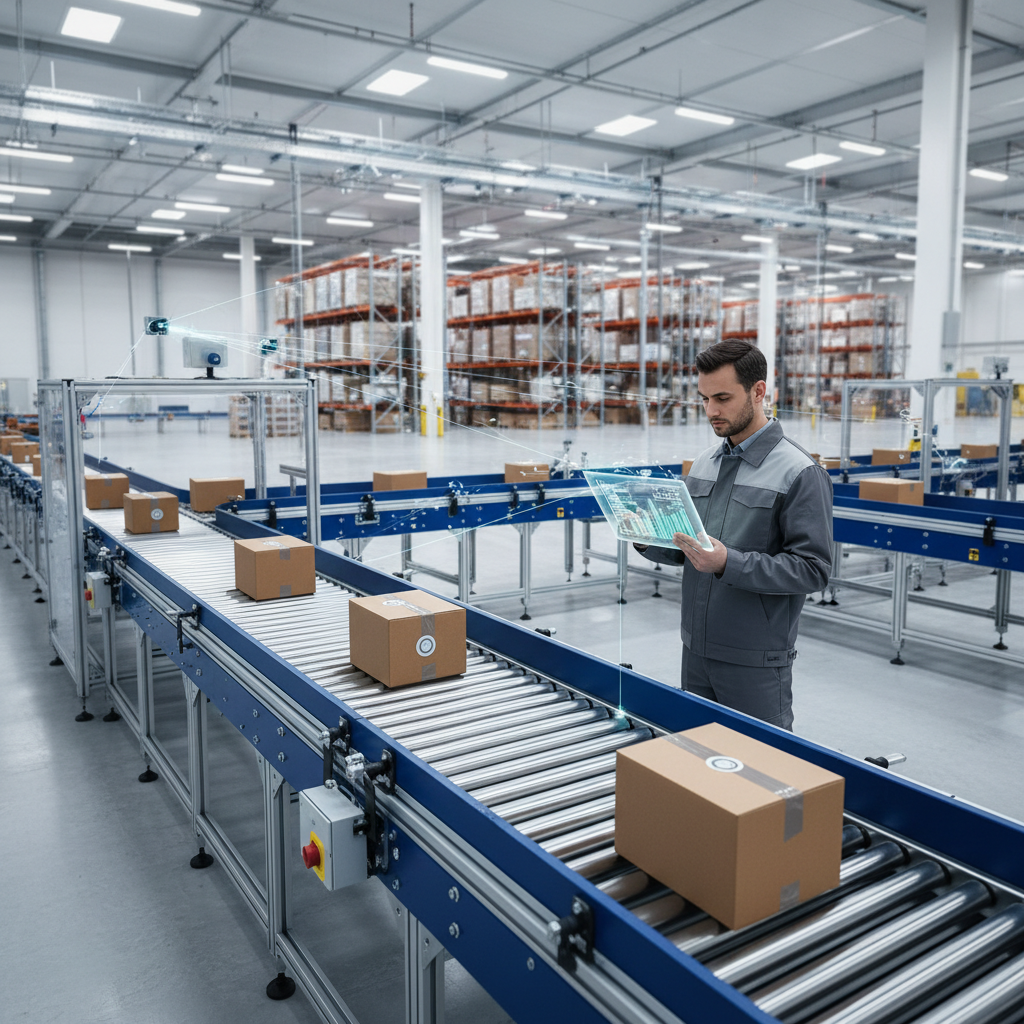
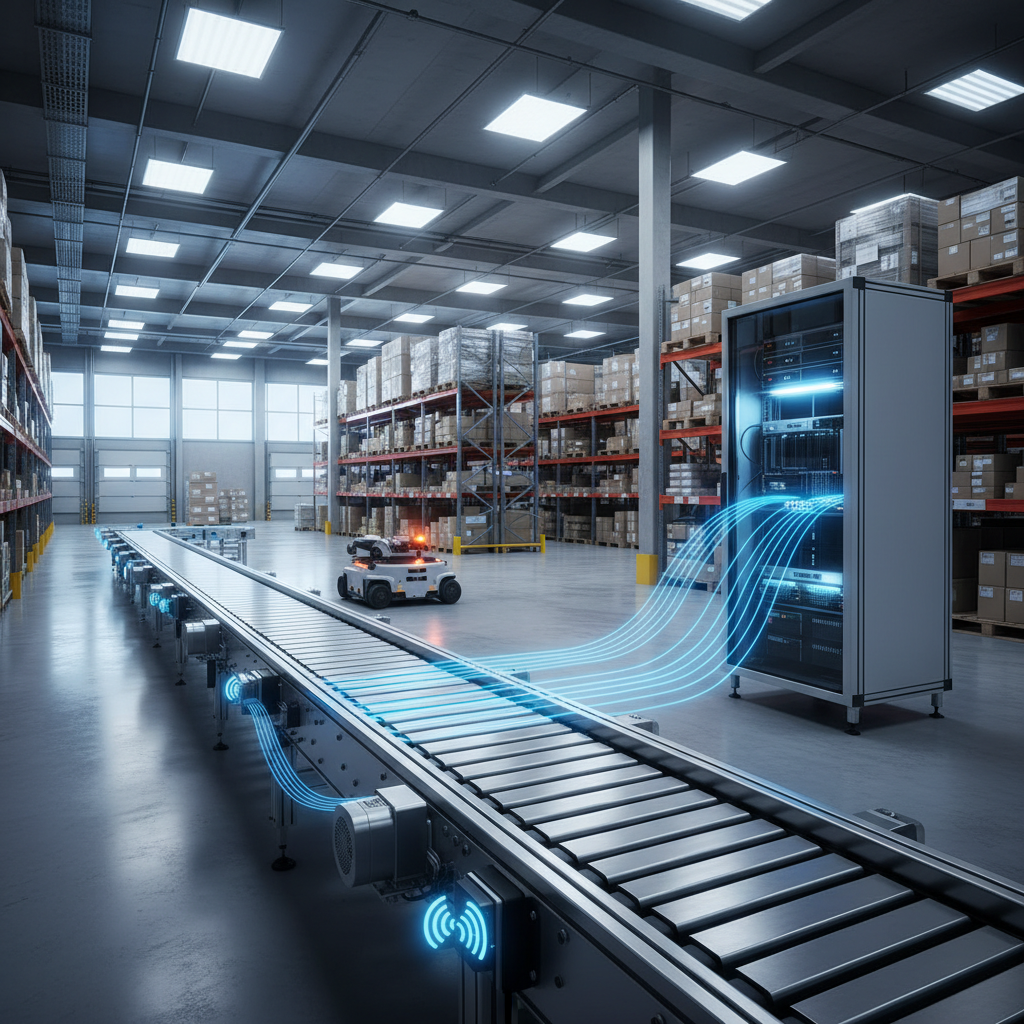
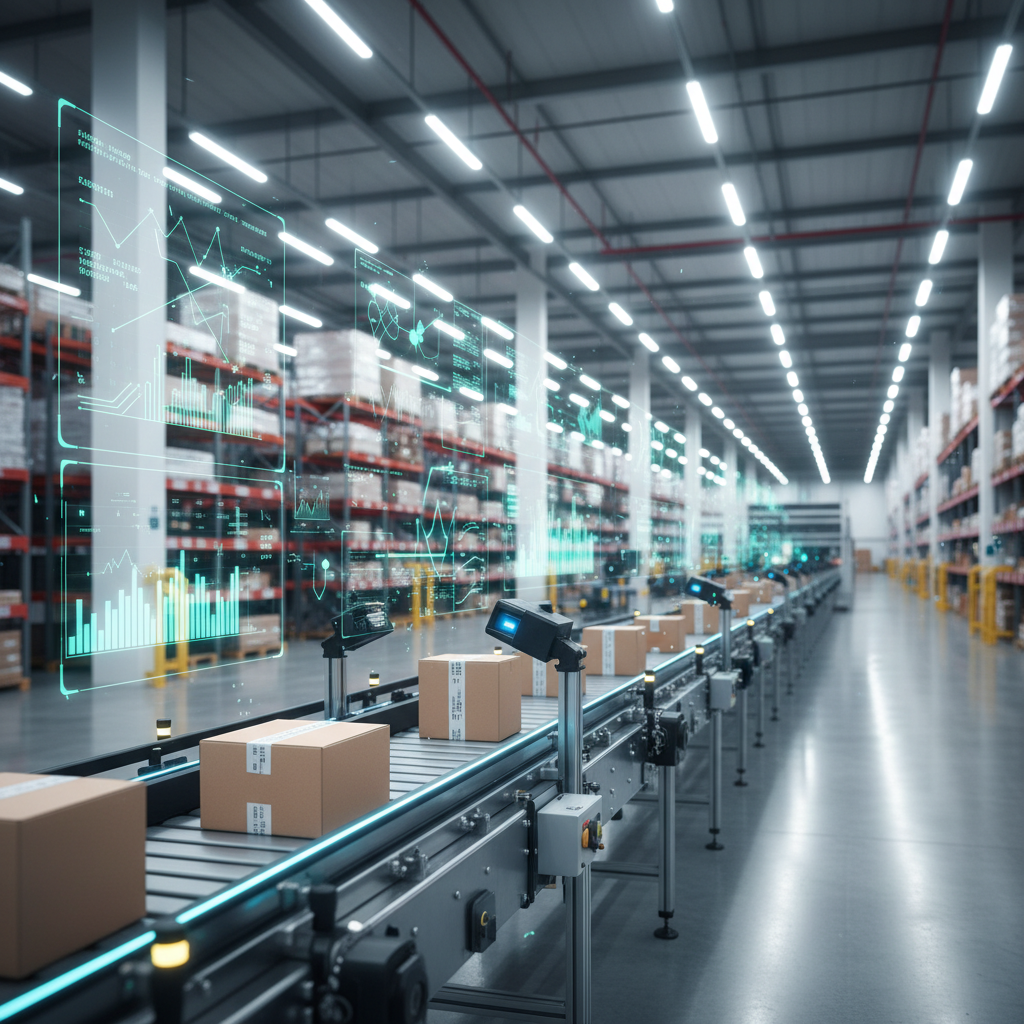
Every modern conveyor is equipped with a PLC (Programmable Logic Controller) and numerous sensors that monitor motor temperature, vibration, speed, and package flow. Historically, this data was primarily used for basic control and fault detection. AI and Machine Learning models now ingest this stream of data to uncover hidden patterns. Instead of just flagging a motor that has failed, the AI can predict a failure is likely to occur in the next 100 operating hours, allowing maintenance to be scheduled during a planned shutdown.
Core Applications of AI in Conveyor Performance
The impact of AI is felt across several key areas of conveyor operation, turning standard equipment into an intelligent, self-optimizing network.
Predictive Maintenance
This is the most significant and immediate benefit. Unplanned downtime is the enemy of any automated facility, with costs running into tens of thousands of Euros per hour. AI models analyze vibrations, power draw, and thermal data to forecast component failure. For a medium-sized DC, this could mean reducing unplanned downtime from 80 hours per year to fewer than 15, preventing bottlenecks that ripple through the entire fulfillment chain.
Dynamic Routing and Flow Optimization
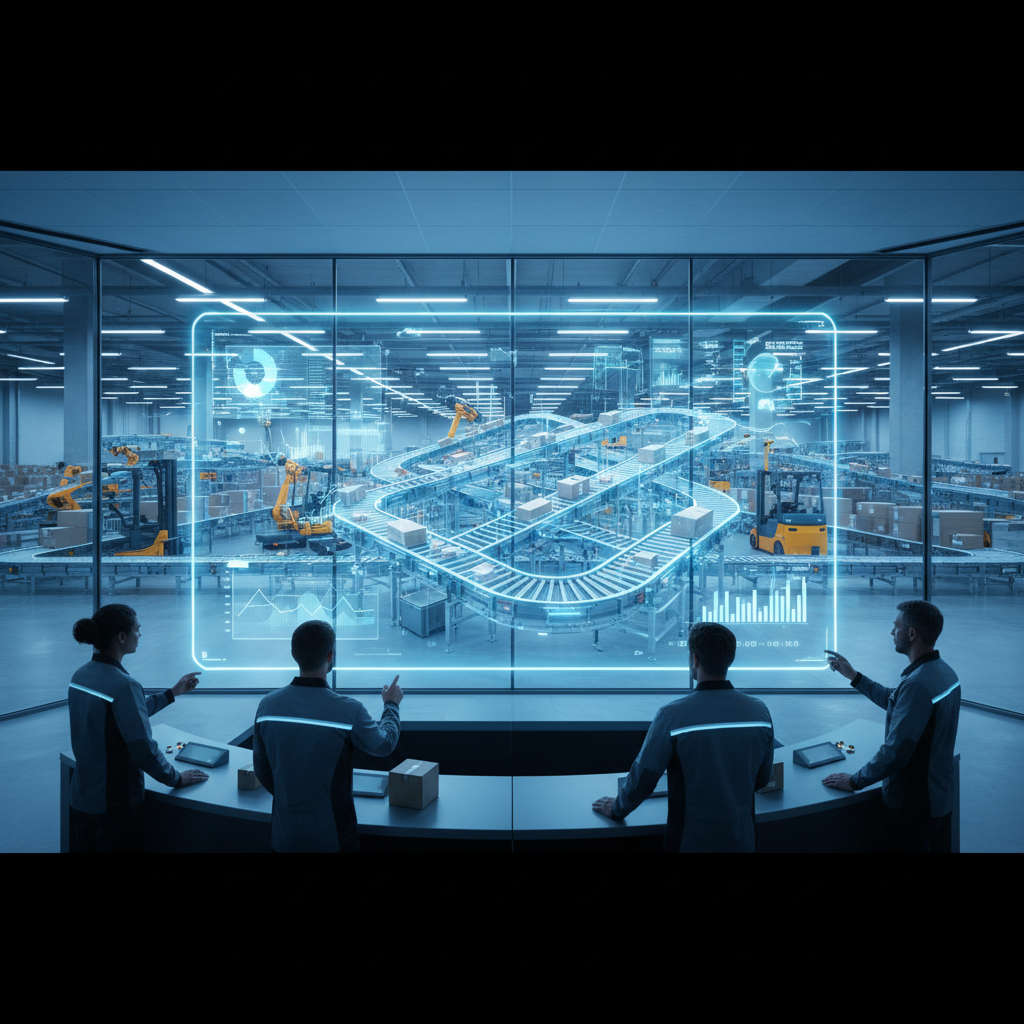
In complex systems with multiple lines and sorters, AI can make real-time routing decisions that a human or a fixed-logic WCS (Warehouse Control System) cannot. By analyzing current and predicted carton flow, an AI-enabled Warehouse Execution System (WES) can dynamically adjust the speed of individual conveyor segments, balance loads between sorting lanes, and prevent jams before they form. This can increase a system's overall capacity by 15-25% without adding any new hardware.
Energy Consumption Management
A large conveyor network can consume a significant amount of electricity. AI algorithms can dramatically reduce this by powering down unused zones or running motors at the most efficient speed (e.g., 0.7 m/s instead of 1.0 m/s) based on real-time volume. For a distribution center operating 24/7, this can result in energy savings of up to 20%, translating to tens of thousands of Euros annually and a smaller carbon footprint.
Comparing Traditional vs. AI-Optimized Conveyors
The shift to an AI-driven approach represents a fundamental upgrade in capability. The following table illustrates the key differences:
| Feature | Traditional Conveyor System | AI-Optimized Conveyor System |
|---|---|---|
| Maintenance Strategy | Reactive (fix when broken) or Preventive (fixed schedule) | Predictive (fix before broken based on data) |
| Routing Logic | Fixed, pre-programmed rules | Dynamic, adaptive real-time routing |
| Energy Use | Constant speed, "always on" zones | Variable speed, intelligent zone control, up to 20% savings |
| Performance Metric | Uptime / Mean Time Between Failures (MTBF) | Overall Equipment Effectiveness (OEE), Cost Per Item |
| Typical Throughput | Static maximum (e.g., 5,000 CPH) | Optimized throughput (e.g., 5,500-6,000 CPH) |
Implementation Challenges in the Benelux
While the benefits are clear, adopting AI is not without its hurdles. Companies in the Benelux must plan for the initial investment and the operational shifts required to leverage this technology effectively.
Data Infrastructure and Integration
The adage "garbage in, garbage out" is especially true for AI. Success depends on high-quality, granular data from sensors across the conveyor network. This often requires upgrading sensors and ensuring seamless integration with existing WMS and WCS platforms. Standardization efforts like OPC UA are helping to simplify this process, but it remains a primary technical challenge.
The Cost of Implementation and ROI
An initial investment in sensors, software licenses, and implementation support can range from €50,000 to over €250,000, depending on the scale of the system. However, the ROI is often compelling. A facility that reduces its downtime by 60 hours per year at a cost of €10,000/hour recoups €600,000 in saved revenue. Coupled with energy savings and throughput gains, a payback period of 12-24 months is realistic.
The Skill Gap
The most significant challenge is often human. Finding engineers who understand both the mechanical realities of a belt conveyor and the statistical models of machine learning is difficult. Many successful companies find that their business processes are the main bottleneck for growth, not the technology itself. To truly benefit from AI, logistics companies must invest in upskilling their workforce and fostering a data-centric culture. Read more about how companies can scale their processes alongside their growth.
The Future: Generative AI and Autonomous Control
The field is evolving rapidly. The next frontier involves not just prediction but autonomous action. Future conveyor networks may use generative AI to design more efficient layouts or re-route entire sections of a distribution center in response to long-term demand shifts. The ultimate goal is a "lights-out" warehouse where conveyor systems manage, maintain, and optimize themselves with minimal human intervention, leaving employees to focus on higher-value strategic tasks.
Easy Systems: Your Partner for Intelligent Automation
Navigating the transition to AI-driven logistics requires a partner with deep expertise in both conveyor engineering and modern control systems. At Easy Systems, we specialize in designing and implementing modular, intelligent conveyor solutions tailored to the unique demands of the European market. We understand that technology is only one part of the equation; successful automation hinges on a robust design, seamless integration, and a focus on measurable business outcomes. Whether you are taking your first steps with data collection or are ready to deploy a fully predictive system, our engineering team can help you build the resilient, high-performance infrastructure needed to thrive in the future of Benelux logistics.
Frequently asked questions
What is the primary benefit of AI for conveyor systems?+
The primary benefit is shifting from reactive to predictive operations. AI-powered predictive maintenance forecasts equipment failures before they happen, which can reduce costly unplanned downtime by up to 70% and improve Overall Equipment Effectiveness (OEE) by 5-10% in a typical Benelux distribution center.
Can AI be integrated into existing conveyor systems in the Benelux?+
Yes, most AI solutions are designed to be retrofitted. By adding sensors (costing €50-€200 per meter) and integrating with the existing conveyor PLC and WCS, older systems can gain advanced capabilities without a complete replacement. This approach typically delivers a faster ROI than a full system overhaul.
What is a typical ROI for implementing AI on conveyor systems?+
A typical ROI for an AI retrofit on conveyor systems in the Benelux is between 18 and 36 months. Returns are driven by reduced downtime, lower maintenance labor costs (by 20-30%), increased throughput, and energy savings of 10-18%. The initial investment depends on system complexity.
How does AI contribute to sustainability in warehouse operations?+
AI significantly improves sustainability by optimizing conveyor energy consumption, cutting electricity usage by 10-18%. By dynamically adjusting motor speeds to match real-time package flow and avoiding unnecessary idling, the system reduces the warehouse's overall carbon footprint, helping Benelux companies meet EU 2026 environmental targets.
What kind of data does an AI system need to optimize conveyors?+
An AI system ingests data from various sources: high-frequency data from motor vibration sensors, thermal cameras, and power meters, plus operational data from the PLC and WCS. This includes package volume and routing information, allowing the AI to analyze over 1,000 data points per second to build its performance model.

The Easy Systems editorial desk reviews and fact-checks every Conveyor-Design article against Benelux project experience. Editors translate engineering decisions — throughput, peak factors, layout, integration — into plain-language guides for operations managers, project leads and decision-makers.
- Warehouse layout & slotting
- Order-profile analysis
- Vendor-neutral comparison
- Benelux logistics market