
The Role of AI in Predictive Maintenance for Conveyor Systems in the Benelux: A Deep Dive
Leveraging AI for predictive maintenance is no longer a future concept but a present-day necessity for logistics hubs in the Benelux. This article explores how AI-driven analytics on data from IoT sensors can predict failures in conveyor systems, reducing costly downtime and improving operational efficiency.
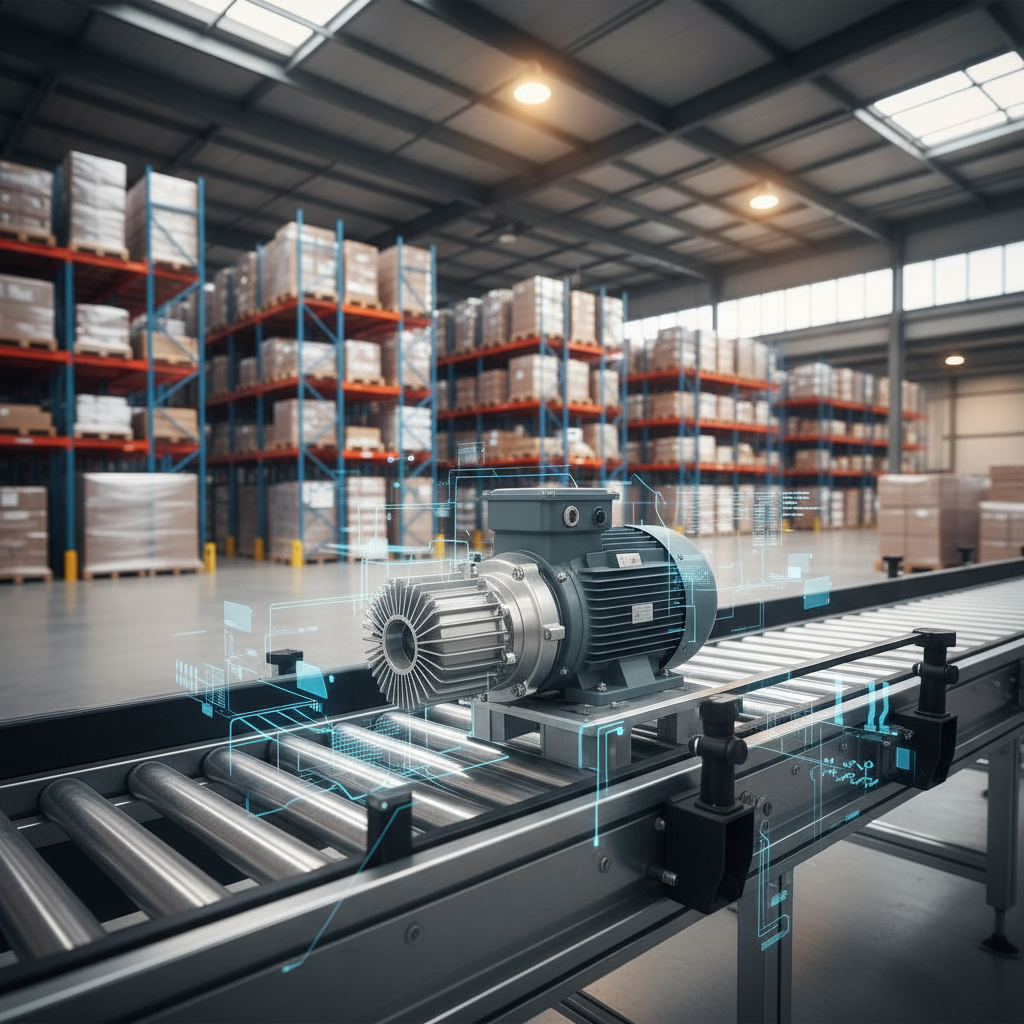
Key numbers
| Metric | Typical range (EU 2026) | Notes |
|---|---|---|
| Unplanned Downtime Reduction | 30% – 50% | Compared to reactive or purely time-based maintenance schedules. |
| Overall Maintenance Cost Reduction | 25% – 40% | Includes savings from labor, spare parts, and extended asset life. |
| Return on Investment (ROI) Payback | 12 – 24 months | For a full-scale implementation in a medium to large DC. |
| Failure Prediction Accuracy | 90% – 98% | Accuracy of the AI model in correctly predicting a failure within a defined future window (e.g., 2 weeks). |
| Implementation Cost (Pilot) | €20,000 – €45,000 | For a critical 100-meter conveyor line, including sensors, software, and integration. |
| Spare Parts Inventory Reduction | 15% – 30% | Achieved by moving from a "just-in-case" to a "just-in-time" parts-stocking model. |
In the bustling logistics corridors of the Benelux—a region renowned for its high density of distribution centers and ports—operational efficiency is not just a goal; it's the backbone of the economy. Unplanned downtime on a conveyor system can cascade into significant financial losses, measured in thousands of euros per hour. This is where Artificial Intelligence (AI) in predictive maintenance emerges as a transformative force, shifting an entire paradigm from "if it breaks, fix it" to "fix it before it breaks".
Definition
AI-powered predictive maintenance for conveyor systems is a strategy that uses machine learning algorithms to analyze real-time data from IoT sensors on conveyor components (like motors, bearings, and belts) to detect patterns, identify anomalies, and accurately predict when a part is likely to fail. This allows for just-in-time servicing, minimizing disruption and maximizing asset lifespan.
The Evolution from Reactive to Predictive Maintenance
For decades, maintenance in warehouses followed a simple, yet costly, logic. The transition to a predictive model represents a significant leap in operational intelligence and financial savings. Understanding this evolution is key to appreciating the value AI brings.
Three Maintenance Paradigms
Historically, maintenance strategies have matured through three phases: reactive (run-to-failure), preventive (time-based), and now, predictive (condition-based). AI is the engine that makes true predictive maintenance not just possible, but highly accurate and scalable. Each approach has different implications for cost, downtime, and operational complexity, particularly relevant for high-throughput hubs in Antwerp, Rotterdam, or Luxembourg.
| Strategy | Method | Typical Downtime Reduction Potential | Cost & Complexity |
|---|---|---|---|
| Reactive Maintenance | Fix components only after they fail. | 0% (Baseline) | Low initial cost, but extremely high, unpredictable costs from extended downtime. |
| Preventive Maintenance | Service or replace parts on a fixed schedule (e.g., every 2,000 hours). | 15-20% | Moderate. Can result in unnecessary servicing and premature part replacement. |
| AI-Powered Predictive Maintenance | Continuously monitor component health with sensors and use AI to predict failures. | 30-50% | Higher initial investment in sensors and software, but offers the lowest total cost of ownership through maximized asset life and minimal unplanned downtime. |
Core Components of an AI-Powered Maintenance System
Implementing a predictive maintenance program for conveyor systems requires a synergistic stack of hardware and software. Each layer plays a critical role in transforming physical vibrations and temperature shifts into actionable maintenance alerts.
IoT Sensors: The Nervous System
The foundation of any predictive system is high-quality data. In a conveyor context, this is gathered by a network of specialized sensors strategically placed on critical components:
- Vibration Sensors: These are the most crucial, detecting subtle changes in the vibration patterns of motors, bearings, and rollers. A change can indicate imbalance, misalignment, or wear. A quality sensor can cost between €150 and €500 per unit.
- Thermal Sensors: Infrared sensors or thermal cameras monitor component temperature. Overheating is a classic indicator of excessive friction or impending motor failure.
- Acoustic Sensors: These sensors "listen" for unusual sounds, such as grinding or whining, that are precursors to bearing or gearbox issues.
- Power Consumption Monitors: Tracking the energy usage of a drive motor can reveal inefficiencies that point to mechanical drag or strain on the system.
Data Analytics and Machine Learning: The Brain
Raw sensor data is meaningless without a powerful analytical engine. This is where ML algorithms come in. The data is streamed to a local or cloud-based platform where models, trained on historical data, work to:
- Establish a Baseline: The AI first learns the "normal" operating signature of each monitored component.
- Detect Anomalies: It then watches for any deviation from this baseline in real-time.
- Classify Faults & Predict Failures: By correlating specific anomalies with known failure modes, the AI can not only flag a problem but also estimate the remaining useful life (RUL) of the component.
Practical Benefits in Benelux Warehouses
For a distribution center in the Netherlands or a 3PL provider in Belgium, the benefits are tangible and significant, addressing key regional pressures like high labor costs and the need for maximum asset utilization.
Case Study: Monitoring a Belt Conveyor Drive Unit
Consider the main drive motor of a primary sorting belt conveyor. An AI system continuously monitors its vibration signature and temperature. Over a week, the ML model detects a微small but growing 2kHz frequency in the vibration data, an anomaly invisible to the human eye. Simultaneously, the average temperature rises by 3°C. The AI cross-references these patterns and predicts an impending bearing failure with 95% confidence, estimating a RUL of 70 operating hours. This triggers an automated work order. Maintenance can then replace the €200 bearing during a planned 30-minute stop overnight, averting a catastrophic failure that would have caused 8 hours of downtime, costing upwards of €80,000 in lost productivity and delayed shipments.
Implementation: Strategy & Challenges
Adopting AI for maintenance is a strategic project, not just an IT upgrade. A phased approach is often most effective in the complex operational environments of the Benelux.
Navigating Data Integration Challenges
One of the largest hurdles is data integration. Predictive maintenance data provides maximum value when it isn't siloed. The alerts and RUL estimates need to be fed into higher-level management systems. For instance, integrating this data with a Warehouse Control System (WCS) allows the system to automatically reroute product flow around a conveyor that is scheduled for maintenance. This level of system orchestration is crucial for maintaining throughput and is a core topic in modern logistics architecture. For a deeper understanding of how these systems interact, our comprehensive guide on WMS, WCS, and WES integration provides essential context.
Many modern enterprises struggle with optimizing their internal processes to keep pace with their growth. As companies expand, legacy systems and disconnected data streams can create significant inefficiencies, a problem that AI-driven maintenance helps to solve directly. A deeper analysis on this topic can be found on our partner's blog: companies grow, but their processes don't always keep up.
Cost vs. Return on Investment (ROI)
The upfront cost of a full-scale sensor deployment and software subscription can seem daunting, ranging from €50,000 to over €500,000 depending on the size of the facility. However, the ROI is compelling. With downtime costs in automated a European DC often ranging from €10,000 to €25,000 per hour, preventing just one or two major incidents a year can fully justify the investment. A typical ROI timeframe in the Benelux market is between 18 and 24 months.
The Future of Smart Maintenance
The field is evolving rapidly. The next wave of innovation is already on the horizon, promising even more integrated and autonomous maintenance operations.
Digital Twins and Simulation
A digital twin is a virtual, real-time replica of a physical conveyor system. By feeding live sensor data into this model, operators can simulate the impact of different loads and speeds, and test failure scenarios without affecting the live operation. This allows for even more precise maintenance planning and system optimization.
Generative AI in Maintenance Workflows
Soon, generative AI will be able to automatically draft detailed, step-by-step repair instructions for technicians based on the specific fault detected, complete with part numbers and required tools. It could even generate reports on maintenance effectiveness and suggest improvements to the underlying control logic in the PLC.
Easy Systems: Your Partner for Intelligent Automation
Navigating the transition to AI-powered predictive maintenance requires a partner who understands not just the technology, but the physical reality of conveyor systems and the operational pressures of the Benelux logistics market. At Easy Systems, we design and build robust, modular conveyor solutions that are ready for the future of maintenance. Our systems are designed for easy sensor integration and compatibility with modern data platforms. We can help you identify critical points in your material handling flow and build a foundation for a smarter, more resilient, and more profitable operation. Trust Easy Systems to guide you from system design to intelligent, predictive operations.
Frequently asked questions
What is the main advantage of AI predictive maintenance over traditional methods?+
The main advantage is proactivity. Instead of reacting to failures, AI predicts them. This data-driven approach can extend the lifespan of key components like motors and belts by 20-40%. It allows for servicing exactly when needed, which minimizes unplanned downtime and reduces the costs associated with unnecessary scheduled maintenance by eliminating premature parts replacement.
How much does it cost to implement?+
Costs vary by scale. A pilot project on a critical conveyor line typically costs €20,000 - €45,000. A full-facility deployment in a large Benelux distribution center (over 30,000 m²) can range from €150,000 to over €500,000. The return on investment is often realized within 12-24 months, driven by savings from avoided downtime.
What kind of data does an AI maintenance system collect?+
The system primarily collects data from IoT sensors on critical conveyor components. This includes vibration analysis, temperature readings from motors, and acoustic signatures. A typical sensor might generate over 1,000 data points per minute. This high-frequency data is fed into machine learning models to detect anomalies that are imperceptible to humans, providing an early warning of potential failure.
How long does implementation take?+
A focused pilot project on a single conveyor line can be implemented relatively quickly, typically within 6 to 12 weeks. This includes sensor installation, software configuration, and initial model training. A full-scale rollout across an entire facility is a more significant project, usually phased over 6 to 18 months, depending on the complexity of the conveyor network.
Is this technology suitable for older conveyor systems?+
Yes, AI predictive maintenance can be retrofitted onto most existing conveyor systems. Non-invasive IoT sensors are attached to older equipment without major modifications. This allows warehouses to modernize maintenance capabilities and extend the life of legacy assets, often with a project ROI of under 24 months. It’s a cost-effective alternative to a complete system overhaul.
What is the typical accuracy of failure prediction?+
Modern AI models for predictive maintenance achieve high levels of accuracy, typically between 90% and 98%. This means the system can correctly forecast a component failure within a specific future window (e.g., the next 2-4 weeks) with high confidence. This accuracy is crucial for building trust and ensuring maintenance teams can plan their work effectively.

The Easy Systems editorial desk reviews and fact-checks every Conveyor-Design article against Benelux project experience. Editors translate engineering decisions — throughput, peak factors, layout, integration — into plain-language guides for operations managers, project leads and decision-makers.
- Warehouse layout & slotting
- Order-profile analysis
- Vendor-neutral comparison
- Benelux logistics market