Ergonomics & Safety in Conveyor Systems: A Benelux Focus
This guide provides a Benelux-focused overview of ergonomic and safety standards for conveyor systems. It details risk mitigation, EU compliance (EN 619:2002+A1:2010), and design strategies to reduce workplace injuries by up to 60% and improve overall operational efficiency.
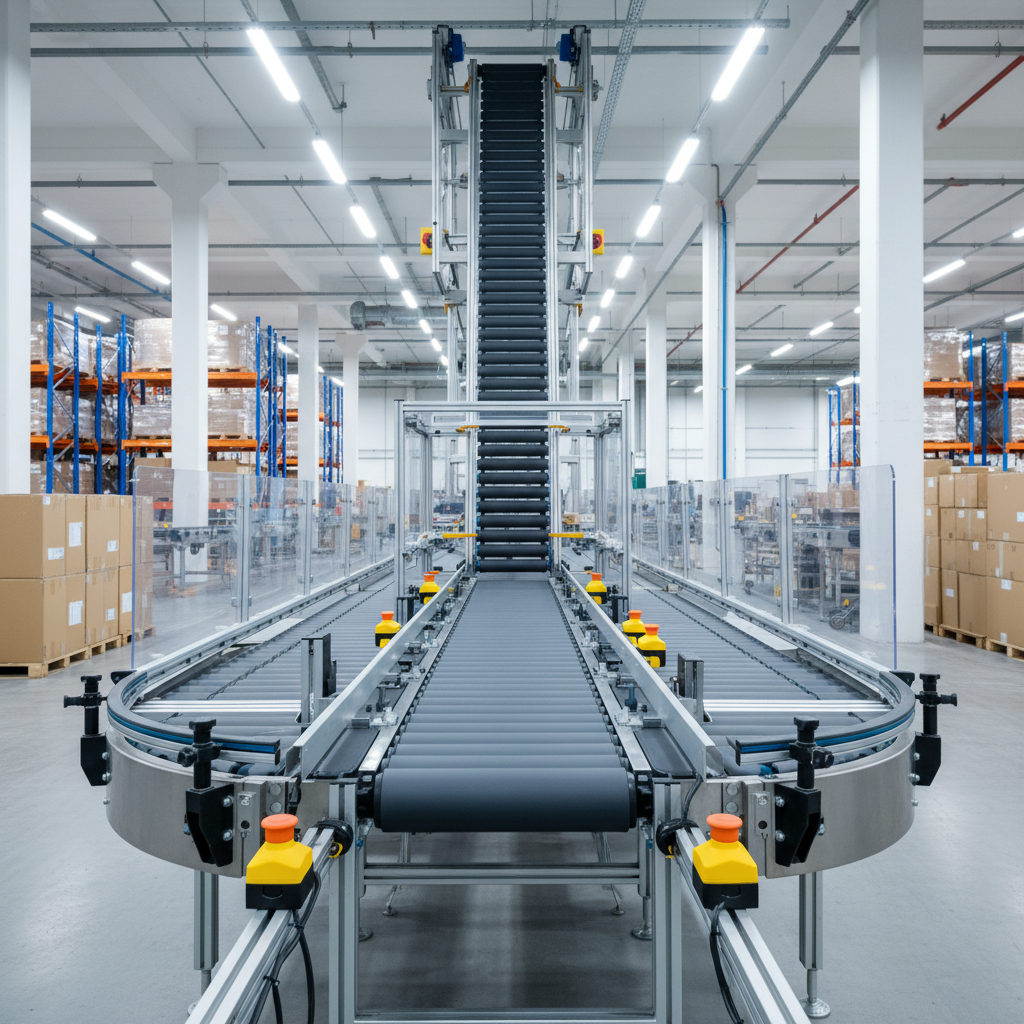
In the bustling logistics hubs of the Benelux—from the ports of Antwerp and Rotterdam to the inland distribution centers in Luxembourg—efficiency is paramount. However, this drive for speed cannot come at the cost of worker safety and well-being. Conveyor systems are the arteries of these facilities, and their design directly impacts both operational output and human health. Integrating robust ergonomics and uncompromising safety is not just a regulatory requirement; it's a strategic business decision that pays dividends in productivity, employee retention, and profitability.
Definition
Conveyor Ergonomics and Safety refers to the practice of designing and implementing conveyor systems that minimize physical strain on workers and mitigate all potential operational hazards. It involves adhering to established standards (like the EU Machinery Directive) to prevent accidents, reduce musculoskeletal disorders (MSDs), and create a safe, efficient, and human-centric work environment.
Key Numbers
| Metric | Typical Range (EU 2026) | Notes |
|---|---|---|
| Adjustable Height Range | 750 mm - 1,100 mm | Accommodates ~95% of the European workforce for standing tasks. |
| Cost of Ergonomic Retrofit | €5,000 - €25,000 per station | Includes adjustable stands, anti-fatigue mats, and task lighting. |
| Injury Reduction Rate | 40% - 60% | Reduction in MSD-related incidents within 24 months of implementation. |
| Operational Noise Level | 60 dB - 70 dB | Target for new systems to avoid hearing damage and improve communication. |
| ROI on Safety Measures | 1.5 - 3 years | Calculated from reduced absenteeism, insurance premiums, and higher productivity. |
| Training Time per Employee | 4 - 8 hours | Initial safety and operational training for new conveyor systems. |
Core Principles of Conveyor Ergonomics
Ergonomics is the science of fitting the workplace to the worker. In a conveyor-driven environment, this means minimizing awkward postures, repetitive motions, and excessive forces that lead to fatigue and injury. A well-designed system allows for a natural, comfortable posture, which directly translates to higher concentration and efficiency.
Adjustable Workstations and Optimal Reach
One of the most effective ergonomic interventions is the adjustable-height workstation. Since operators vary in height, a fixed-height conveyor will inevitably be too high for some and too low for others. An ideal system allows for height adjustment, typically between 750 mm and 1,100 mm, to suit the individual and the task. Furthermore, the conveyor width should be designed to keep all items within easy reach—generally no more than 500 mm from the operator—to prevent over-stretching and back strain.
Mandatory Safety Standards in the Benelux (EU)
All conveyor systems installed and operated within the European Union, including the Benelux countries, must comply with the Machinery Directive 2006/42/EC. This directive mandates that machinery must be designed and constructed to be safe. For conveyors, the harmonized standard that provides a presumption of conformity is EN 619:2002+A1:2010, which covers continuous handling equipment and systems.
Decoding EN 619:2002+A1:2010
This critical standard outlines the specific technical requirements to mitigate risks associated with conveyor systems. Key points include:
- Guarding: All moving parts, such as drive chains, gears, and rollers where entanglement is possible, must be protected by fixed or interlocked guards.
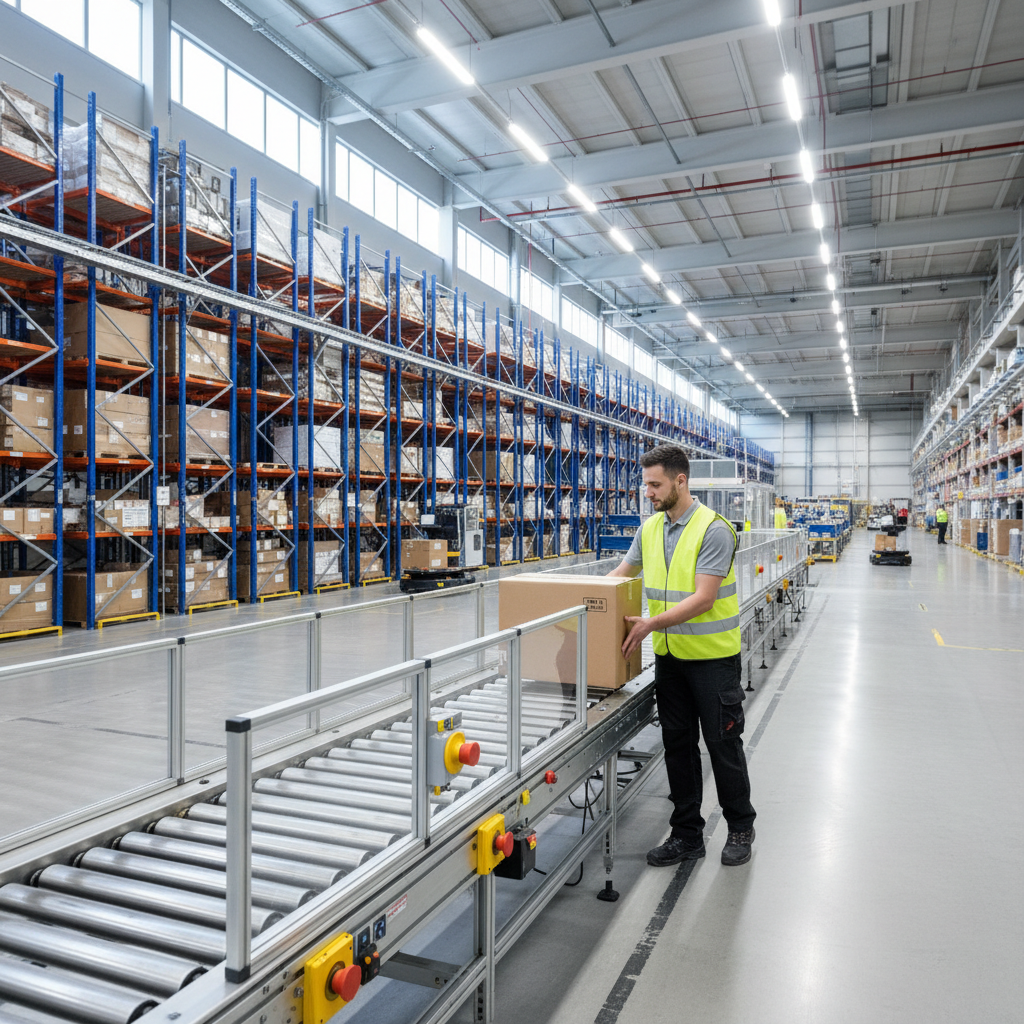
- Emergency Stops: E-stops must be clearly visible, easily accessible, and installed at regular intervals (typically every 10-15 meters) and at all operator stations.
- Electrical Safety: Systems must comply with EN 60204-1, ensuring protection against electric shock and safe control circuits.
- Warning Labels: Clear pictograms must be used to warn of residual risks, like pinch points or automatic start-up.
Whether it's a simple belt conveyor for assembly tasks or a complex sorting system, these rules are non-negotiable and form the basis of any safety audit.
Common Conveyor Hazards and Mitigation Strategies
Identifying potential hazards is the first step toward preventing them. In a warehouse environment, these hazards are well-documented, and so are the solutions. For a deeper dive into conveyor types, our Roller Conveyor Guide provides essential information.
| Hazard | Primary Risk | Mitigation Strategy | Estimated Cost per Meter |
|---|---|---|---|
| Pinch/Nip Points | Entanglement of fingers, hair, or clothing in rollers, belts, or chains. | Install fixed physical guards or light curtains. Use pop-out rollers in at-risk zones. | €150 - €400 |
| Manual Handling | Musculoskeletal injuries (back/shoulder strain) from lifting, lowering, or carrying items. | Use height-adjustable conveyors, turntables, and lift assists. Ensure conveyor height matches the work surface. | €200 - €600 (for lift assist integration) |
| Falling Objects | Items falling from elevated or high-speed conveyors, causing impact injuries. | Install side guards (minimum 50 mm higher than product) and netting under elevated sections. | €50 - €150 |
| Automatic Start-up | Unexpected movement during maintenance or after a jam. | Implement a robust Lockout-Tagout (LOTO) procedure. Install pre-start audio/visual alarms. | €1,000+ (for system-wide integration) |
Understanding the specific risks of different systems, such as roller conveyors versus belt conveyors, is crucial for effective risk mitigation.
The Role of Technology in Enhancing Safety
Modern technology offers powerful tools to improve both safety and ergonomics. The adoption of Motorized Drive Roller (MDR) technology, for instance, allows for zero-pressure accumulation, which prevents packages from piling up and creating crushing hazards. This technology also runs on low-voltage (24V DC), drastically reducing electrical risks. Furthermore, advanced Warehouse Control Systems (WCS) can monitor conveyor status in real-time, predicting potential failures and scheduling preventive maintenance before a hazardous breakdown occurs.
Conducting a Risk Assessment: A Step-by-Step Approach
A systematic risk assessment is a legal requirement and a practical necessity. It should be a living document, reviewed annually or whenever a change is made.
- Identify Hazards: Walk the entire conveyor path. Look for mechanical hazards (pinch points), electrical hazards, noise, and ergonomic strains (awkward postures, repetitive tasks).
- Identify Who is at Risk: Consider operators, maintenance staff, and even cleaners or visitors who may come near the system.
- Evaluate the Risk: For each hazard, determine the likelihood and severity of potential harm. Use a risk matrix to prioritize issues. A risk score of 15+ (on a 1-25 scale) might require immediate action.
- Implement Control Measures: Apply the hierarchy of controls: first, try to eliminate the hazard entirely. If not possible, substitute it, engineer a control (e.g., guarding), apply administrative controls (training, signage), and finally, provide Personal Protective Equipment (PPE).
- Record and Review: Document your findings, the actions taken, and schedule a future date for review.
Why Easy Systems is Your Trusted Partner for Safe and Ergonomic Conveyors
At Easy Systems, we understand that a conveyor is more than just a piece of equipment; it's an integral part of your operational ecosystem and a direct interface with your most valuable asset—your employees. We design and build modular conveyor solutions with a safety-first, human-centric approach that is deeply embedded in our engineering philosophy. Our systems are not only compliant with all relevant EU and Benelux standards but are also designed for optimal ergonomic performance, from adjustable heights to low-noise MDR technology.
Many companies find that as they expand, their internal processes struggle to keep up, often leading to safety and efficiency bottlenecks. As detailed in our analysis on how business processes lag behind growth, scaling operations requires a foundational rethink of material flow. We partner with you to conduct thorough risk assessments and design a system that grows with you, ensuring your logistics operations remain safe, ergonomic, and highly efficient for years to come. Choose a partner who builds for both throughput and people.
Frequently asked questions
What is the ideal working height for a conveyor in the Benelux?+
The ideal ergonomic working height for a conveyor depends on the task, but a common range is between 800 mm and 1,100 mm. For tasks requiring precision, a slightly higher position is better, while tasks involving force are better performed at a lower height. Adjustable-height systems offer the best solution, accommodating different operators and tasks, which can boost productivity by 10-15%.
How much can ergonomic improvements reduce absenteeism?+
Implementing ergonomic solutions, such as adjustable workstations and anti-fatigue mats, can significantly reduce work-related musculoskeletal disorders. Studies in European warehouses have shown this can lower absenteeism rates by as much as 25% within the first two years, as employee strain and injuries decrease.
What is the main cause of conveyor accidents in warehouses?+
The primary cause of conveyor accidents, accounting for over 50% of incidents, is inadequate or missing guarding around moving parts like rollers, belts, and drive chains. Entanglement and pinch points are major risks. Proper physical guards and emergency stop systems are the most effective preventive measures.
How often should conveyor safety training be conducted?+
In the Benelux, conveyor safety training should be conducted for all new employees before they begin work. Refresher training is recommended annually, or whenever a new system is installed or a process is modified. This regular training ensures safety awareness remains high and can reduce operator errors by up to 40%.
What is the maximum permissible noise level for a conveyor system?+
According to EU directive 2003/10/EC, employers must take action when noise exposure exceeds 80 dB(A). For new conveyor systems, the goal is to design for levels below 70 dB(A) at the operator's position to ensure a comfortable and safe working environment without requiring hearing protection.
What is the average cost for a modular conveyor safety guard in Europe?+
The cost for modular safety guarding for conveyor systems in Europe typically ranges from €150 to €300 per linear meter. The final price depends on the material (e.g., steel mesh vs. polycarbonate), complexity of the layout, and the number of access gates required for maintenance.

The Easy Systems editorial desk reviews and fact-checks every Conveyor-Design article against Benelux project experience. Editors translate engineering decisions — throughput, peak factors, layout, integration — into plain-language guides for operations managers, project leads and decision-makers.
- Warehouse layout & slotting
- Order-profile analysis
- Vendor-neutral comparison
- Benelux logistics market