Conveyor Ergonomics & Safety: A Benelux Guide (2026)
This guide focuses on conveyor ergonomics and safety within the Benelux, detailing how compliance with local regulations like the Arbowet can reduce injuries and boost productivity. Discover practical solutions and technologies for a safer warehouse.
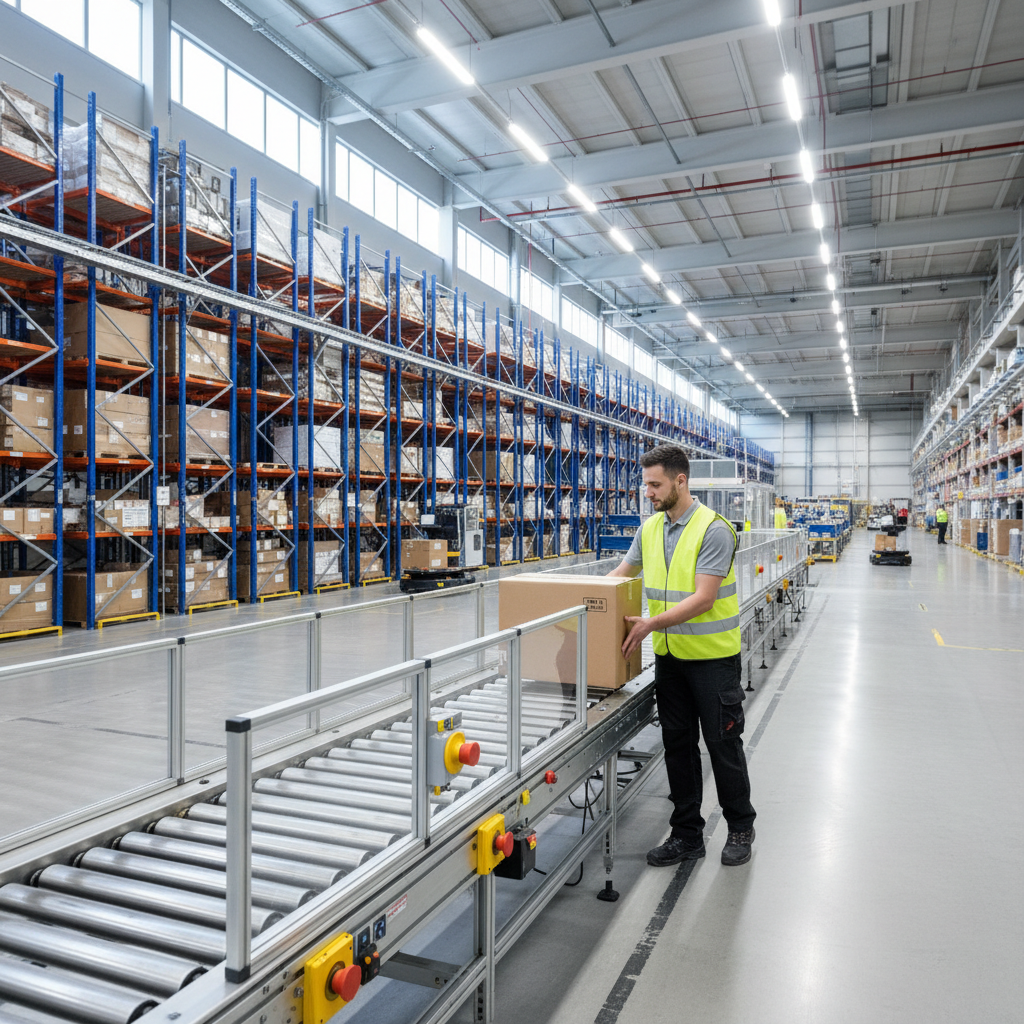
In the high-throughput logistics hubs of Belgium, the Netherlands, and Luxembourg, conveyor systems are the arteries of modern commerce. However, their efficiency is directly tied to the well-being of the people who operate them. A poorly designed system not only poses serious safety risks but also drains productivity through operator fatigue and injury. This guide provides a comprehensive overview of conveyor ergonomics and safety, with a specific focus on the legal and practical landscape of the Benelux region.
Definition
Conveyor ergonomics is the science of designing the conveyor system and its associated workspace to fit the capabilities and limitations of the human operator, aiming to reduce musculoskeletal stress and improve efficiency. Conveyor safety involves the engineering and procedural controls implemented to protect personnel from hazards such as pinch points, entanglement, and falling objects, ensuring compliance with legal standards.
Key Numbers: Ergonomics & Safety in Benelux Warehouses (2026)
| Metric | Typical Range (EU 2026) | Notes |
|---|---|---|
| Investment in Ergonomic/Safety Upgrades | €150 - €500 per meter | Cost varies with complexity (e.g., adding guards vs. installing a height-adjustable system). |
| Reportable Incident Reduction | 30% - 70% | Directly correlated with the quality of risk assessment and implementation of controls. |
| Productivity Increase (Post-Implementation) | 15% - 25% | Stems from reduced fatigue, fewer micro-breaks, and faster, more comfortable movements. |
| ROI on Ergonomic Interventions | 1.5 - 3 years | Calculated based on reduced absenteeism, lower insurance premiums, and higher throughput. |
| Ergonomic Working Height | 850 mm - 1,100 mm | Optimal height is at elbow level, which varies per operator and task (picking vs. packing). |
| Max. Noise Level (8-hour exposure) | < 80 dB(A) | Benelux regulations mandate hearing protection and mitigation measures above this level. |
The Legal Framework: Navigating Benelux Safety Regulations
Compliance is non-negotiable. In the Benelux, several key pieces of legislation govern workplace safety, directly impacting conveyor system design and operation. While based on the EU’s Machinery Directive (2006/42/EC), each country has its own specific implementation and enforcement body.
- The Netherlands: The Arbeidsomstandighedenwet (Arbowet) is the primary legislation. It requires employers to conduct a Risk Inventory and Evaluation (RI&E) for all equipment, including conveyors. The Nederlands Arbeidsinspectie enforces these rules, with fines for non-compliance easily reaching €10,000 - €50,000 per violation.
- Belgium: The Code sur le bien-être au travail / Codex over het welzijn op het werk outlines similar requirements. It places a strong emphasis on a hierarchical approach to risk mitigation: first eliminate the risk, then substitute, then use engineering controls, administrative controls, and finally, Personal Protective Equipment (PPE).
- Luxembourg: The Code du Travail mandates that employers ensure the health and safety of their workers in every aspect related to their work. The Inspection du Travail et des Mines (ITM) is the regulatory authority.
Across all three countries, the core principle is the same: employers are legally obligated to provide a safe working environment, and this starts with a thorough risk assessment of every piece of machinery.
Common Ergonomic Risks at the Conveyor Belt
Repetitive tasks at a fixed-position conveyor are a primary source of Musculoskeletal Disorders (MSDs), which account for a significant portion of work-related health issues in the EU logistics sector. Key risks include:
Repetitive Strain and Awkward Postures
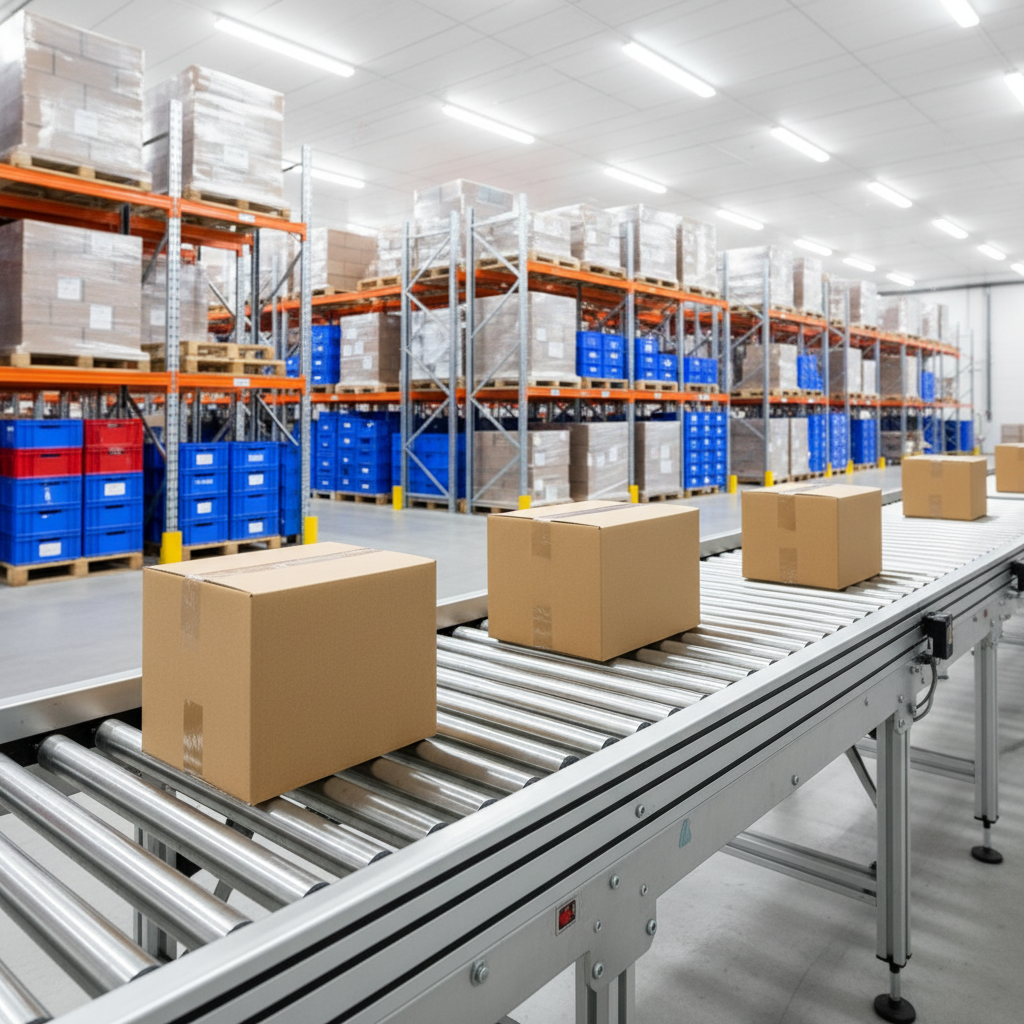
Operators picking, packing, or scanning items on a continuous belt conveyor may perform the same motions thousands of times per shift. If the conveyor is too high, too low, or too wide, it forces them into awkward postures:
- Reaching: A conveyor wider than 650 mm often forces operators to over-extend their arms, straining the shoulders and back.
- Bending: A conveyor height below 850 mm can cause constant bending of the waist, leading to lower back pain.
- Lifting Shoulders: A conveyor height above 1,100 mm forces operators to raise their arms and shoulders, causing neck and shoulder strain.
Identifying and Mitigating Major Safety Hazards
Beyond ergonomics, conveyors present significant acute safety risks. A robust safety strategy identifies and mitigates these hazards through smart design and clear procedures.
Pinch Points and Entanglement
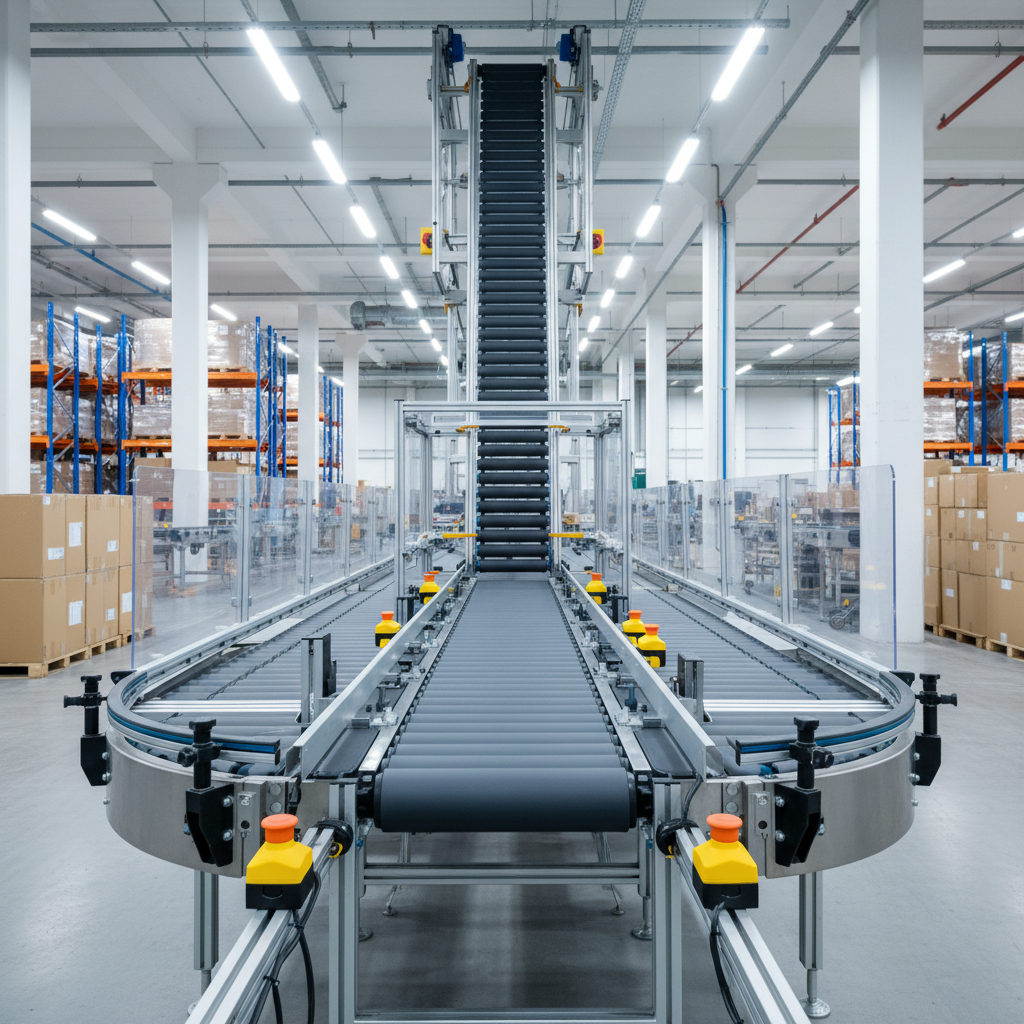
Anywhere the belt meets a roller, pulley, or frame is a potential pinch point. Loose clothing, hair, or jewelry can get caught, leading to severe injuries. Mitigation is primarily achieved through physical guarding. All moving parts of the drive, transmission, and take-up systems must be fully enclosed. The ISO 13857 standard provides specific guidance on the required size and placement of these guards to prevent human access.
Emergency Stops (E-stops)
Strategically placed, easily accessible E-stops are mandatory. These are typically mushroom-head push buttons or pull-cords that run the entire length of the conveyor. According to EN ISO 13850, an E-stop must bring the system to a safe stop as quickly as possible (Category 0 or 1 stop) and remain engaged until manually reset. In the Benelux, regulators expect E-stops to be placed at every operator station and at regular intervals (typically every 10-15 meters) along the conveyor line.
Ergonomic Conveyor Design: Practical Solutions
Good design is proactive, not reactive. Integrating ergonomics from the start is far more effective and less costly than retrofitting. For an in-depth look at conveyor types, our Pillar Guide on Roller Conveyors is a great resource.
A core challenge in warehouse logistics is that "companies grow, but their processes don't always grow with them," a problem that often manifests in suboptimal ergonomic setups. Read more on how to tackle this on our partner's blog: Bedrijven groeien, maar hun processen groeien niet altijd mee.
Height-Adjustable Conveyors
The single most effective ergonomic feature is the height-adjustable conveyor. These systems use electric or hydraulic actuators to change their height, allowing operators to position the belt at their ideal elbow height. This simple adjustment can accommodate different workers and different tasks, drastically reducing strain. The investment, typically €800-€2,000 per adjustable section, often pays for itself within two years through reduced absenteeism and higher productivity.
Technology's Role: Safety & Ergonomic Innovations
Modern technology offers powerful tools to enhance both safety and ergonomics.
Zero-Pressure Accumulation (ZPA)
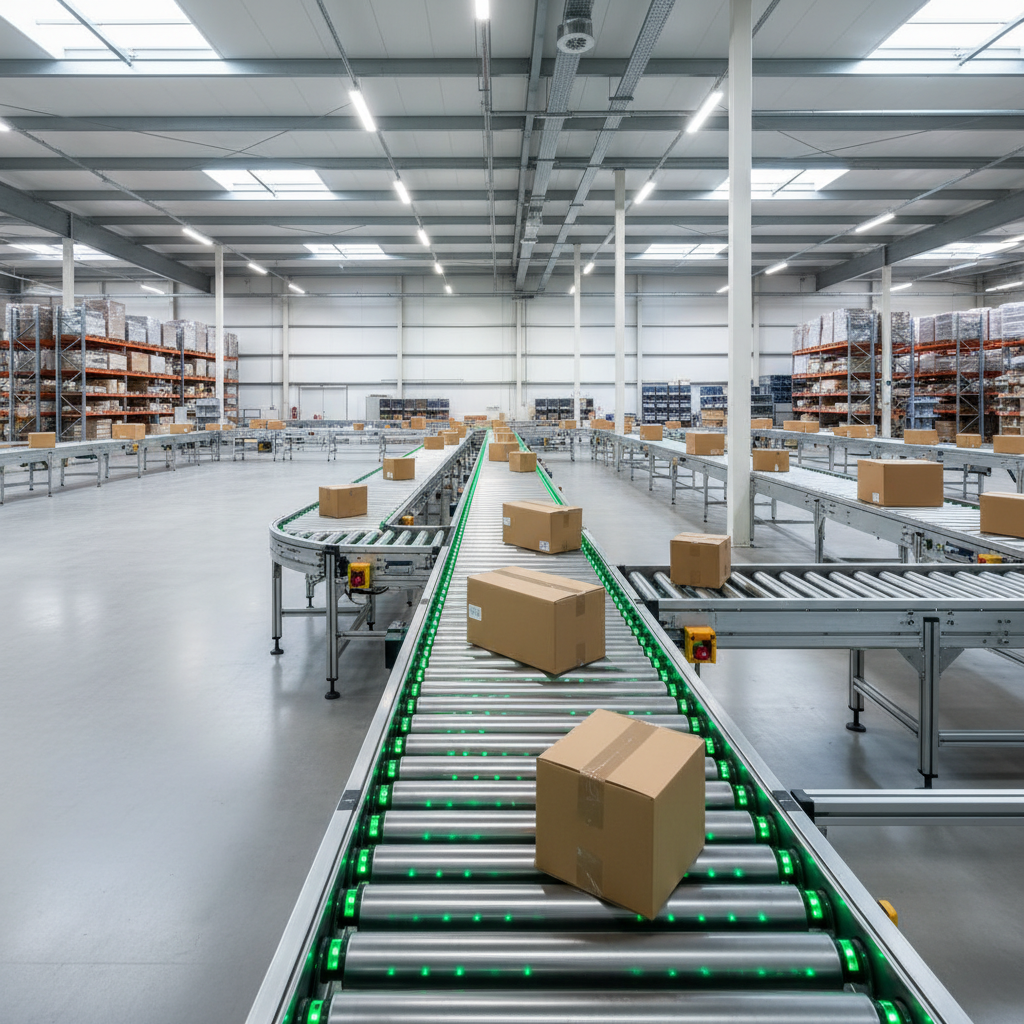
In traditional conveyors, packages can pile up, creating pressure that can lead to product damage and create unsafe conditions for operators trying to clear a jam. Zero-pressure accumulation (ZPA) systems use sensors to create zones along the conveyor. A zone will only move a product forward if the next zone is clear. This prevents package pile-ups, reduces wear on the system, and creates a much safer environment for operators, as items can be picked up without the pressure of other boxes pushing from behind. It's a standard feature in modern sortation and picking lines for a reason.
Comparative Analysis: Safety Guarding Solutions
Choosing the right guarding solution depends on the specific risk, operational needs, and budget. While physical guards are the baseline, more advanced technologies offer greater flexibility.
| Guarding Type | Effectiveness | Cost per zone | Operational Impact |
|---|---|---|---|
| Fixed Physical Guarding (Mesh/Polycarbonate) | High (Prevents all access) | €100 - €300 | Low. Can hinder maintenance access if not designed to be removable. |
| Light Curtains (Photo-electric sensors) | High (Stops system on entry) | €700 - €1,500 | Medium. Allows easy access for operators but can cause nuisance trips if not configured correctly. |
| Safety Area Scanners (Laser-based) | Very High (Creates warning/stop zones) | €1,500 - €4,000 | Low. Highly flexible, can adapt zones dynamically, but requires expert installation and higher initial investment. |
Why Easy Systems is Your Trusted Partner for Safe and Ergonomic Conveyor Solutions
At Easy Systems, we understand that warehouse efficiency and employee well-being are two sides of the same coin. With deep roots in the Benelux region, we design and implement conveyor solutions that are not only compliant with the strictest interpretations of the Arbowet and Code du bien-être, but are also built around your people. Our modular conveyor systems, including belt, roller, and chain conveyors, are designed with ergonomics and safety as core principles. From adjustable-height frames to the seamless integration of zero-pressure accumulation logic and advanced guarding, we build systems that protect your team and your bottom line. We don't just sell conveyors; we deliver productive, safe, and sustainable material handling environments. Contact us to discuss a risk assessment for your Benelux operations.
Frequently asked questions
What is the ideal working height for a conveyor belt in a warehouse?+
The ideal ergonomic height for a conveyor belt is at the operator's elbow level, which typically falls between 850 mm and 1,100 mm from the floor. For tasks requiring downward force, the ideal height is slightly lower. Height-adjustable conveyors are the best solution to accommodate different operators and tasks.
How much does it cost to make a conveyor system safer in the Benelux?+
The cost varies, but basic upgrades like adding physical guards or E-stops can range from €150 to €300 per meter. Implementing advanced features like light curtains or ZPA logic can increase the cost to €500-€1,000 per meter or zone, but the ROI from injury prevention is typically realized within 3 years.
What are the main legal safety requirements for conveyors in the Netherlands?+
In the Netherlands, the Arbowet requires employers to perform a Risk Inventory & Evaluation (RI&E) for all machinery. This means identifying all potential hazards (pinch points, entanglement, etc.) and implementing effective controls, such as proper guarding, accessible E-stops, and clear safety markings.
Can ergonomics really improve conveyor throughput?+
Yes. By reducing physical strain, operators can maintain a consistent pace with fewer unofficial breaks. Studies and practical applications show that ergonomic improvements can increase individual operator productivity by 15-25%. A comfortable worker is a more focused and efficient worker.
What is the difference between a safety light curtain and a physical guard?+
A physical guard is a permanent barrier (like a mesh cage) that prevents access to a hazard zone. A light curtain is an electronic sensor that creates an invisible infrared barrier. If the barrier is broken, it sends a stop signal to the machine. Light curtains offer more operational flexibility but at a higher cost, typically over €700 per installation.
How often should safety features on a conveyor be checked?+
Daily visual checks by operators are recommended. A more thorough functional test of all safety devices, especially E-stops and light curtains, should be conducted at least monthly and documented. A comprehensive annual inspection by a qualified person is a legal requirement in many Benelux facilities.

The Easy Systems editorial desk reviews and fact-checks every Conveyor-Design article against Benelux project experience. Editors translate engineering decisions — throughput, peak factors, layout, integration — into plain-language guides for operations managers, project leads and decision-makers.
- Warehouse layout & slotting
- Order-profile analysis
- Vendor-neutral comparison
- Benelux logistics market