Predictive Maintenance for Conveyors: A Benelux Guide
Predictive maintenance uses sensor data and AI to forecast equipment failures in conveyor systems before they happen. This guide explains how Benelux logistics hubs can leverage this Industry 4.0 strategy to minimize downtime and extend asset lifespan.
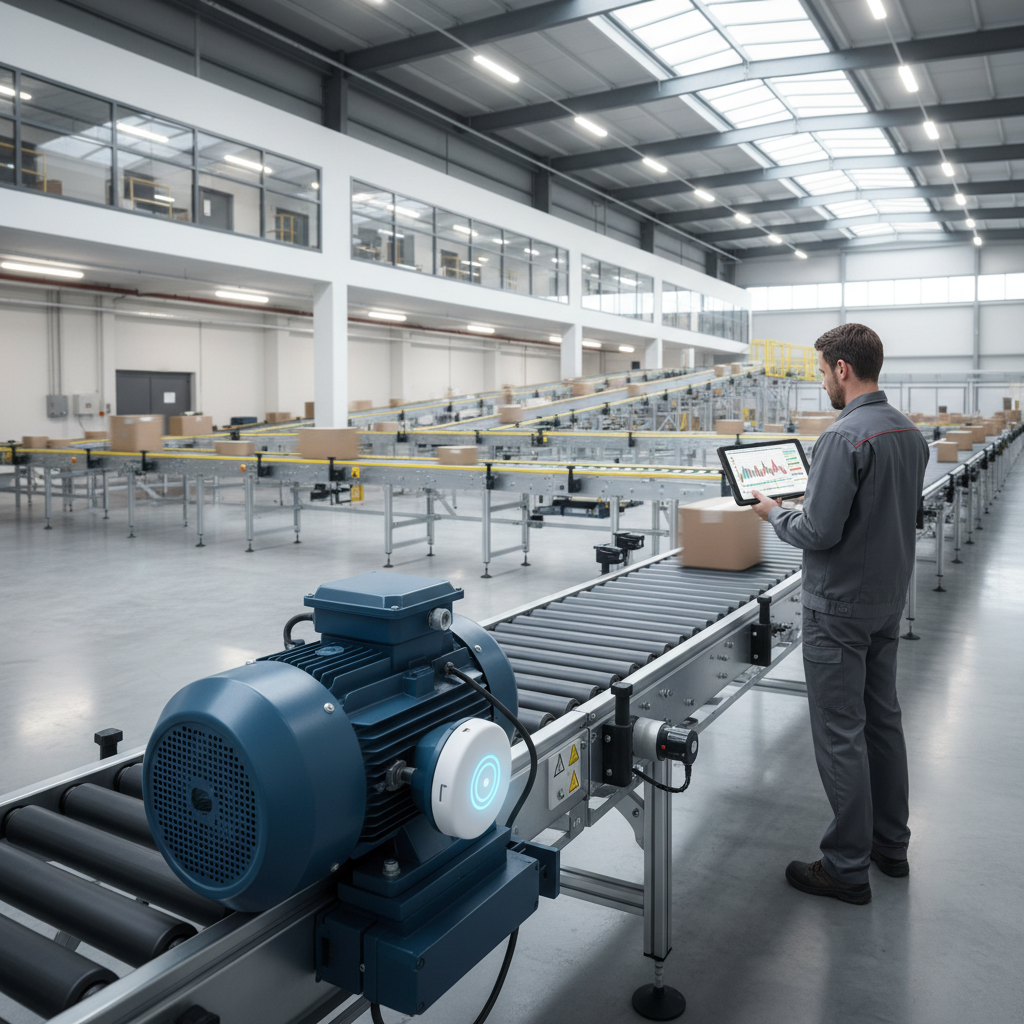
In the high-stakes logistics landscape of the Benelux—a crucial gateway to Europe—every minute of operational uptime counts. The hum of conveyor systems is the heartbeat of a distribution center, but when that heartbeat stops unexpectedly, the financial and reputational costs are immediate and severe. This is why leading operators are moving beyond traditional maintenance schedules towards predictive maintenance (PdM), an Industry 4.0 strategy that transforms asset management from a reactive chore into a proactive, data-driven science.
Definition
Predictive Maintenance (PdM) for conveyor systems is a proactive maintenance strategy that utilizes condition-monitoring sensors and data analysis to detect signs of degradation and predict equipment failures before they occur. This allows maintenance tasks to be scheduled precisely when needed, minimizing disruption and maximizing the operational lifespan of components.
Key Numbers
| Metric | Typical range (EU 2026) | Notes |
|---|---|---|
| Unplanned Downtime Reduction | 30% - 50% | Compared to reactive maintenance strategies. |
| Maintenance Cost Reduction | 20% - 40% | Fewer unnecessary part replacements and more efficient labour allocation. |
| Initial Investment (per 100m line) | €8,000 - €25,000 | Includes sensors, gateways, and basic software subscription. |
| Return on Investment (ROI) | 18 - 36 months | Faster for high-throughput 24/7 operations. |
| Component Lifespan Extension | 15% - 30% | By addressing minor issues before they cause catastrophic failure. |
| Energy Savings per Motor | 2% - 5% kWh/hour | Well-maintained motors and bearings operate more efficiently. |
The Evolution: From Reactive to Predictive
For decades, warehouse maintenance has fallen into two camps:
- Reactive Maintenance: The "if it ain't broke, don't fix it" approach. Maintenance is only performed when a conveyor breaks down, causing immediate and costly operational halts.
- Preventive Maintenance: A time-based strategy. Parts are replaced on a fixed schedule (e.g., every 2,000 operating hours) regardless of their actual condition. This is safer than reactive maintenance but often leads to unnecessary spending, as healthy components are discarded prematurely.
Predictive maintenance represents the next logical step. By using technology to listen to the "health" of the equipment, it enables a condition-based approach. You're no longer guessing when a motor might fail; you're acting on data that indicates its probability of failure within a specific timeframe.
Core Technologies Driving PdM in Logistics
A successful PdM program is built on a foundation of modern hardware and software. These technologies work in concert to turn physical signals into actionable business intelligence.
Key Sensor Types
- Vibration Analysis: These sensors are the cornerstone of PdM for rotating equipment like motors, bearings, and gearboxes on a belt conveyor. They detect minute changes in vibration patterns that signal issues like imbalance, misalignment, or wear long before they become audible or visible.
- Thermal Imaging: Infrared cameras or fixed sensors monitor the temperature of critical components. Overheating is a classic sign of electrical issues, friction, or lubrication problems. An anomaly might trigger an alert to inspect a specific Motor Driven Roller (MDR).
- Acoustic Analysis: Sensitive microphones can detect changes in the sound profile of a system, such as the grinding of a failing bearing or the slap of a damaged belt.
- Oil Analysis: For conveyors with gearboxes, sensors can analyze the quality and composition of lubricating oil in real-time, detecting contaminants or degradation that point to internal wear.
The Role of IIoT and AI
Sensors generate a massive amount of data. The Industrial Internet of Things (IIoT) provides the network infrastructure to collect this data and send it to a central platform, often cloud-based. This is where Artificial Intelligence (AI) and Machine Learning (ML) come in. ML algorithms are trained on historical and real-time data to distinguish between normal operational "noise" and patterns indicative of an impending failure. They can even predict the Remaining Useful Life (RUL) of a component with increasing accuracy.
Comparing Predictive Maintenance Technologies
Choosing the right sensor technology depends on the conveyor components you need to monitor and your budget. Each has its strengths and ideal use cases.
| Technology | Best For Monitoring | Typical Cost per Point | Key Advantage |
|---|---|---|---|
| Vibration Analysis | Motors, bearings, gearboxes, rollers | €150 - €500 | Earliest detection of mechanical wear |
| Thermal Imaging | Motor casings, control panels, high-friction areas | €80 - €300 | Excellent for electrical faults and friction |
| Acoustic Analysis | Bearings, belt tracking, chain systems | €100 - €250 | Detects high-frequency stress not visible otherwise |
| Power Consumption Monitoring | Drive motors | €50 - €150 | Simple indicator of increased load or inefficiency |
The Business Case for PdM in the Benelux
For logistics hubs in and around the ports of Antwerp and Rotterdam, or air cargo facilities like Schiphol and Liège, reliability is non-negotiable. A breakdown during peak season can jeopardize OTIF (On-Time In-Full) delivery rates and damage customer trust.
Consider a typical e-commerce fulfillment center in the Netherlands processing 10,000 parcels per hour. An hour of downtime on a main sortation line can easily result in a backlog of thousands of items, requiring expensive overtime to clear. As detailed in our analysis on why business processes fail to scale, a system's resilience is critical for growth. PdM provides this resilience. The investment in a system that prevents even a single major outage a year often pays for itself.
Moreover, a well-documented PdM strategy improves workplace safety by preventing catastrophic equipment failures. This is a significant factor for attracting and retaining skilled technicians in a competitive Benelux labor market.
For broader insights into optimizing warehouse flows, consider exploring our comprehensive Guide to Sortation Systems.
Implementation Challenges
Transitioning to PdM is not without hurdles. The primary challenge is often data integration. A modern warehouse may have conveyors from multiple manufacturers, each with its own control system or PLC. Creating a unified data platform that can ingest information from various sensors and systems is a critical first step. Another challenge is the skills gap; maintenance teams need to be trained to trust data and act on algorithmic recommendations rather than traditional schedules.
Your Partner for Intelligent Conveyor Systems
At Easy Systems, we understand that modern material handling is about more than just moving boxes; it's about moving data and turning it into a competitive advantage. We design and build robust, modular conveyor solutions with connectivity in mind. Our systems are engineered to facilitate the easy integration of third-party PdM sensors and platforms, providing a solid foundation for your Industry 4.0 initiatives.
We work with logistics operators across the Benelux and Europe to create systems that are not only efficient on day one but are also future-proofed for the data-driven era of predictive maintenance. From initial design to long-term support, we are your trusted partner in building resilient, intelligent, and scalable warehouse automation.
Frequently asked questions
What is the real cost of conveyor downtime in a Benelux warehouse?+
The cost of conveyor downtime in a busy Benelux e-commerce hub can be staggering, often ranging from €10,000 to over €50,000 per hour. This includes lost productivity, delayed orders, potential SLA penalties, and the cost of idle labor, making uptime a critical financial metric.
How does predictive maintenance differ from preventive maintenance?+
Preventive maintenance is time-based (e.g., service every 500 hours), regardless of the component's actual condition. Predictive maintenance is condition-based; it uses real-time sensor data to predict failure, so maintenance is only performed when necessary, saving time and money.
What sensors are used for conveyor predictive maintenance?+
Common sensors include vibration analyzers to detect motor/bearing wear, thermal cameras to spot overheating components, acoustic sensors for noise anomalies, and oil analysis sensors for gearbox health. For a typical 100-meter conveyor line, an initial sensor package can cost between €5,000 and €15,000.
Can I retrofit predictive maintenance on my existing conveyor system?+
Yes, most modern predictive maintenance solutions are designed for retrofitting. Wireless IoT sensors can be attached to critical components like motors, gearboxes, and bearings on older belt conveyors or roller conveyors with minimal operational disruption. The key is integrating their data output.
What is the typical ROI for a predictive maintenance project in logistics?+
For a medium-sized distribution center in the Netherlands or Belgium, the Return on Investment (ROI) for a predictive maintenance program is typically seen within 18 to 36 months. This is driven by significant reductions in unplanned downtime, extended equipment life, and more efficient use of maintenance resources.
How does AI help in predictive maintenance for conveyors?+
AI and machine learning algorithms analyze vast amounts of sensor data to identify complex patterns that precede a failure. They can distinguish normal operational wear from a developing fault, improving prediction accuracy far beyond simple threshold alerts and reducing false positives to below 5%.

The Easy Systems editorial desk reviews and fact-checks every Conveyor-Design article against Benelux project experience. Editors translate engineering decisions — throughput, peak factors, layout, integration — into plain-language guides for operations managers, project leads and decision-makers.
- Warehouse layout & slotting
- Order-profile analysis
- Vendor-neutral comparison
- Benelux logistics market