Predictive Maintenance for Conveyor Systems: A Benelux Guide
Predictive maintenance uses IoT sensors and AI to forecast equipment failures before they happen. This guide explains how Benelux logistics hubs can implement PdM to reduce downtime and maximize the lifespan of their conveyor systems.
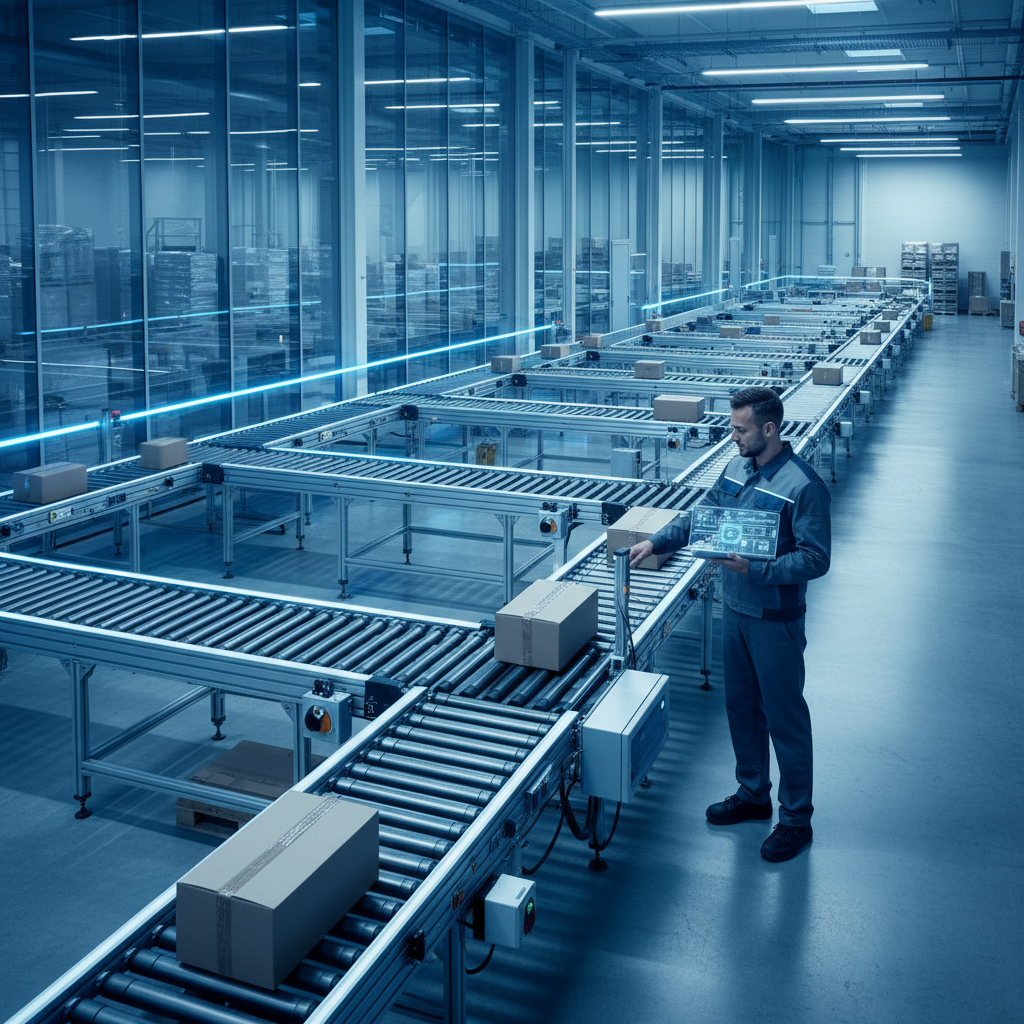
In the high-stakes, fast-paced logistics landscape of the Benelux, conveyor system downtime is not just an inconvenience; it's a critical business failure. Every minute a line is stopped costs thousands of euros in delayed orders, idle labour, and potential SLA penalties. Predictive Maintenance (PdM) offers a data-driven solution, shifting the paradigm from reacting to failures or adhering to rigid schedules to proactively addressing issues before they occur. This guide details how to implement PdM for your conveyor systems and why it's essential for survival and growth in the European market.
Definition
Predictive Maintenance (PdM) is an industrial maintenance strategy that uses real-time data from sensors and advanced analytics to predict when a piece of equipment, such as a conveyor system, is likely to fail. Instead of performing maintenance based on a fixed schedule (preventive) or after a breakdown (reactive), PdM allows maintenance to be scheduled at the most opportune and cost-effective moment: right before a failure is projected to occur.
Key Numbers
| Metric | Typical range (EU 2026) | Notes |
|---|---|---|
| Downtime Reduction | 50 - 75% | Compared to a purely reactive maintenance strategy. |
| Maintenance Cost Reduction | 25 - 30% | Reduced overtime, optimised technician time, fewer unnecessary part replacements. |
| Initial Investment (per system) | €5,000 - €25,000 | Includes sensors, software, and integration for a critical conveyor line (e.g., 50-100m). |
| Typical ROI | 1.5 - 3 years | Highly dependent on the cost of downtime at the specific facility. |
| Component Lifespan Extension | 20 - 40% | For critical components like motors, gearboxes, and bearings. |
| Energy Savings | 5 - 10% | Resulting from optimally performing equipment (e.g., correct belt tension, clean motors). |
Why Predictive Maintenance is Crucial in Benelux Logistics
The Benelux region, with its major ports like Antwerp and Rotterdam, is the logistical heart of Europe. Competition is fierce, and efficiency is paramount. The high cost of labour and real estate means that every square meter and every working hour must be maximised. Unplanned downtime on a central belt conveyor can bring an entire distribution center to a standstill, with costs quickly escalating from €5,000 to over €20,000 per hour during peak times.
PdM directly addresses these challenges by:
- Maximising Uptime: By forecasting failures, maintenance can be scheduled during planned non-operational hours, preserving productivity.
- Optimising Labour: Technicians are dispatched to fix specific, known issues, rather than spending hours troubleshooting a failed line or performing routine checks on healthy equipment.
- Reducing Spare Parts Inventory: Instead of stocking a vast range of "just-in-case" parts, facilities can maintain a smaller, more targeted inventory based on predictive insights.
Predictive vs. Preventive vs. Reactive Maintenance
Understanding the difference between maintenance strategies is key to appreciating the value of PdM. While most modern facilities use a mix of strategies, shifting towards a predictive model offers the greatest operational and financial benefits.
| Strategy | Trigger | Goal | Typical Cost |
|---|---|---|---|
| Reactive Maintenance | Equipment failure | Restore functionality ASAP | Very High (downtime, overtime, collateral damage) |
| Preventive Maintenance | Fixed schedule (time or usage) | Prevent failures from occurring | Medium (unnecessary part replacements, scheduled downtime) |
| Predictive Maintenance (PdM) | Data-driven forecast of failure | Perform maintenance just in time | Low (optimised labour, minimal downtime, parts on demand) |
The Problem with "If it ain't broke, don't fix it"
The reactive approach is the most expensive strategy. A failed motor on a roller conveyor doesn't just stop the line; it can lead to product damage, create safety hazards, and cause cascading delays that impact the entire supply chain. Preventive maintenance is an improvement, but it often leads to replacing components that have significant useful life remaining, which is wasteful and costly.
Implementing a Predictive Maintenance Strategy
Transitioning to PdM is a strategic project that involves several key stages. It's often best to start with a pilot project on a single, critical conveyor line before a full-scale rollout.
1. Asset Assessment & Data Sources
First, identify the most critical conveyor systems—those where failure would cause the most significant disruption. For each system, identify the key failure points (motors, bearings, gearboxes, belts). Then, determine the data sources. Modern conveyor systems may already have data available via their PLC (Programmable Logic Controller), which can be integrated. For older systems, retrofitting is necessary.
2. Sensor Selection and Installation
The core of PdM is data collection. Common sensors for conveyors include:
- Vibration Sensors: Detect imbalances, misalignments, and bearing wear. A change in vibration signature is a classic sign of an impending mechanical failure.
- Thermal Sensors (Infrared): Monitor the temperature of motors, electrical cabinets, and bearings. Overheating is a clear indicator of stress, friction, or electrical faults.
- Acoustic Sensors: Listen for changes in the sound patterns of machinery, which can indicate issues like inadequate lubrication or bearing cracks.
- Power Consumption Monitors: An increase in the energy required to run a conveyor can signal increased friction or a struggling motor.
3. Platform and Analytics
Sensor data must be collected, stored, and analysed. This typically involves an IoT platform—either cloud-based or on-premise—that uses machine learning algorithms. These algorithms learn the normal operating "fingerprint" of your equipment and then flag any deviations or patterns that have historically led to failures. The goal is to receive a clear alert, e.g., "Motor on sorter line 3 has an 85% probability of failure within the next 72 hours due to bearing vibration." More information on integration can be found in our guide on WMS/WCS integration.
Calculating the ROI in a Benelux Context
The business case for PdM is compelling. Consider a medium-sized e-commerce fulfillment center in the Netherlands that experiences 5 hours of unplanned conveyor downtime per month. At a conservative cost of €10,000/hour, this amounts to €600,000 in lost revenue and productivity annually. If a PdM investment of €75,000 can reduce this downtime by 70%, the annual saving is €420,000, leading to an ROI in less than three months. As detailed in a recent analysis, many companies find that their internal processes are a bottleneck to growth; PdM is a direct solution to this challenge. Read more on the topic: companies grow, but their processes don't always keep up.
Easy Systems: Your Partner in Future-Proof Conveyor Systems
At Easy Systems, we don't just build conveyor systems; we design the arteries of your logistical operation. We understand that in the modern era, uptime and total cost of ownership (TCO) are more important than initial price. That’s why our modular conveyor solutions are designed with maintainability and data connectivity in mind. We build systems that are not only efficient and reliable today but are also ready for the integration of smart technologies like Predictive Maintenance. We act as your trusted partner, helping you design a system that avoids future bottlenecks and grows with your business, ensuring your operations in the Benelux and beyond remain competitive and highly efficient.
Frequently asked questions
What is the first step to start with predictive maintenance on conveyors?+
The first step is a criticality analysis. Identify the single most critical conveyor line in your operation—the one whose failure would cause the most damage—and start there. A pilot project on one line, costing between €5,000 and €15,000, is much more manageable and helps prove the concept before a full-scale rollout.
How much does a predictive maintenance system cost in the Benelux?+
For a typical conveyor system, the initial investment can range from €5,000 to €25,000 per critical line. This includes sensors, basic software, and integration. While this seems significant, it pales in comparison to the cost of a single major downtime event, which can easily exceed €50,000 in a matter of hours.
Can predictive maintenance be retrofitted to older conveyor systems?+
Absolutely. One of the biggest advantages of modern PdM technology is the availability of non-invasive sensors that can be attached to existing machinery. Retrofitting a 50-meter conveyor line with vibration and thermal sensors can often be completed in a single day, with minimal disruption to operations.
What's the real difference between predictive and preventive maintenance?+
Preventive maintenance is time-based: 'Change this belt every 6 months.' Predictive maintenance is condition-based: 'The data suggests this belt has a 90% chance of failing in the next 2 weeks.' This data-driven approach avoids replacing healthy parts and prevents unexpected failures that might occur before a scheduled check-up.
How long does it take to see an ROI on conveyor predictive maintenance?+
In the high-cost, high-volume logistics environment of the Benelux, the ROI is surprisingly fast. For most facilities, the payback period is between 1.5 and 3 years. In critical applications where downtime costs are extremely high (over €20,000/hour), the ROI can be realised in under 12 months.

The Easy Systems engineering team designs, integrates and commissions conveyor systems and warehouse automation across Belgium, the Netherlands and Luxembourg. Combined experience covers roller and belt conveyors, sorters, AGV/AMR fleets, AutoStore, shuttle AS/RS and WMS/WCS integration for distribution centers and e-commerce fulfillment operations.
- Conveyor design (roller, belt, modular plastic)
- Sortation & merge logic
- AGV / AMR fleet integration
- AutoStore & shuttle AS/RS
- WMS / WCS integration