Modular Conveyor Systems: Key to Rapid Scalability in the Benelux
Modular conveyor systems offer unparalleled flexibility for businesses in the Benelux, enabling rapid scaling of logistics operations. These systems use interchangeable, pre-engineered units to adapt to changing needs, reducing downtime and future-proofing investments.
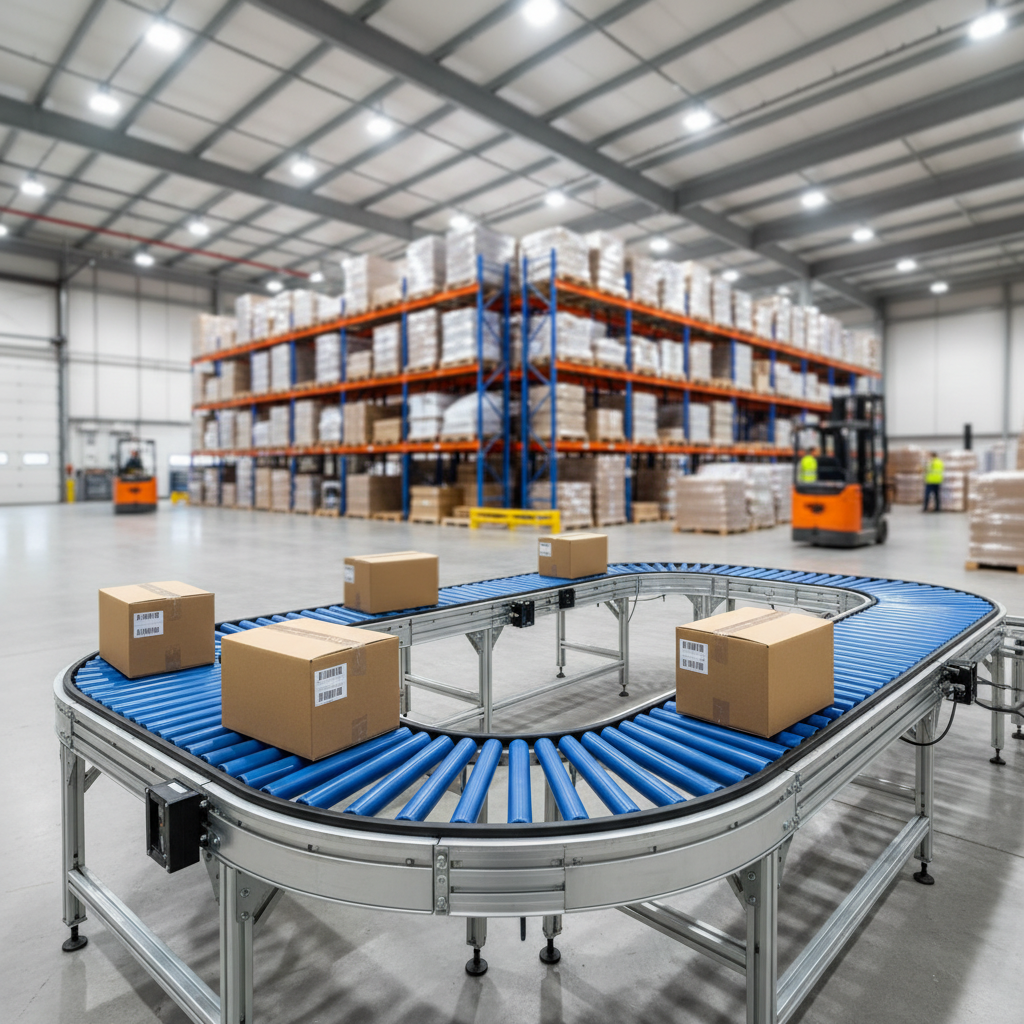
Key numbers
| Metric | Typical range (EU 2026) | Notes |
|---|---|---|
| Installation Time | 4-8 weeks | Compared to 10-16 weeks for custom systems. Dependent on project scale. |
| Reconfiguration Cost | 5-15% of initial cost | For significant layout changes. Traditional systems often require 50-80%. |
| Initial Investment vs. Traditional | +10% to +20% | Reflects pre-engineered components and is offset by lower Total Cost of Ownership (TCO). |
| System Lifespan | 15-20 years | With proper maintenance. Individual modules can be replaced to extend life. |
| Return on Investment (ROI) | 2-4 years | In high-labor-cost regions like the Benelux, driven by efficiency and uptime. |
| Line Throughput | 1,500 - 4,000 parcels/hour | Per line, depending on module type (e.g., belt, roller) and item size. |
In the hyper-competitive logistics landscape of the Benelux—a region defined by its high density and central role in European trade—the ability to adapt and grow is not just an advantage; it's a necessity. Traditional, monolithic conveyor systems often lack the flexibility to meet this challenge. Enter modular conveyor systems, an agile and future-proof solution designed for rapid scalability and operational excellence.
Definition
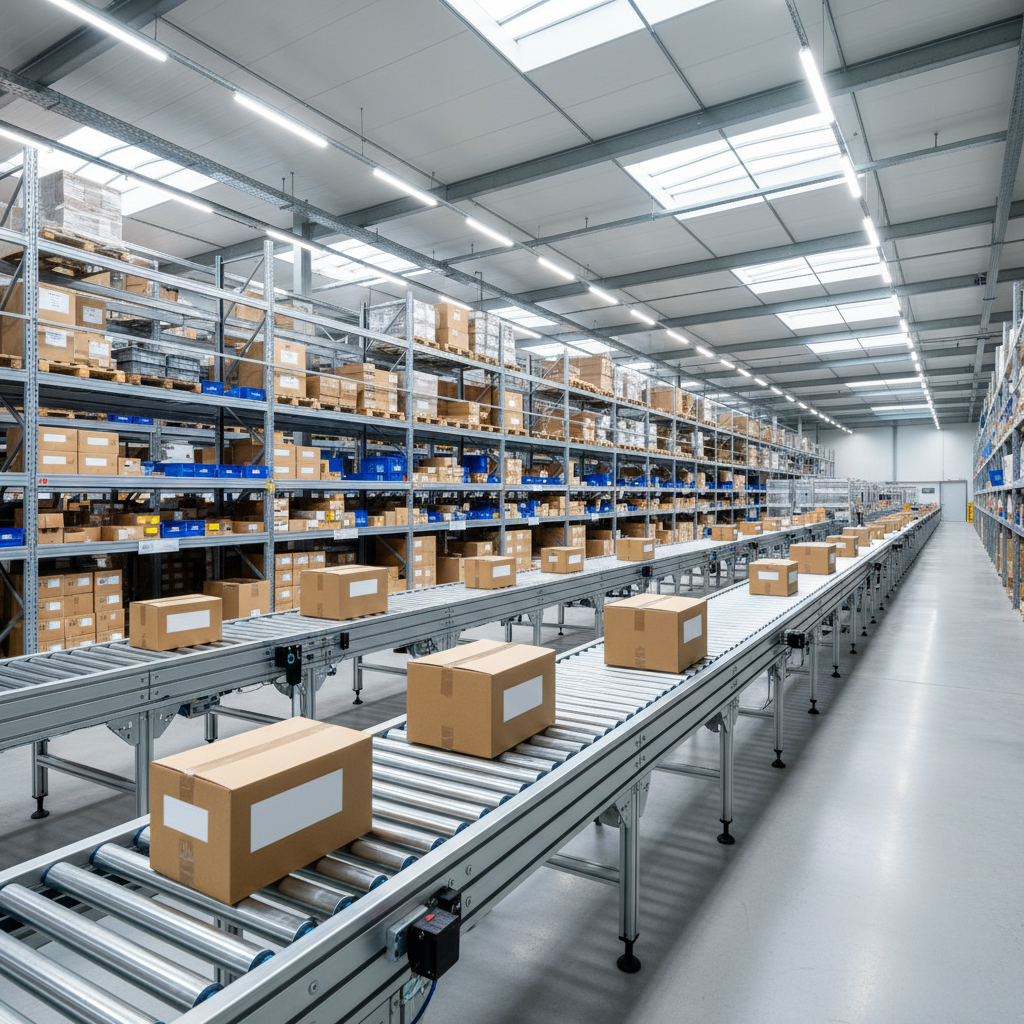
A modular conveyor system is a material handling solution built from a series of standardized, pre-engineered, and interchangeable modules. Unlike custom-fabricated, one-piece systems, modular designs allow for easy assembly, reconfiguration, and expansion, much like building with LEGO® bricks. These modules can include straight sections, curves, junctions, inclines, and specialized units like sorters or workstations.
Why Modularity is Critical in the Benelux Context
The Benelux region (Belgium, the Netherlands, Luxembourg) is Europe's logistical heart. Its strategic ports, dense road networks, and proximity to major consumer markets create a unique set of challenges and opportunities. Modular conveyor systems are particularly well-suited to this environment for several key reasons:
H3: E-commerce Growth & Demand Fluctuation
The e-commerce market in the Benelux is forecasted to grow significantly, leading to unpredictable peaks in demand (e.g., Black Friday, holidays). A modular system allows a 3PL or e-commerce distribution center to quickly add sorting destinations, extend accumulation lines, or reroute flows to handle a sudden 30-50% increase in order volume without a complete system overhaul.
H3: High Cost of Labor and Space
With some of the highest labor and real estate costs in Europe, efficient use of resources is paramount. Modular systems can be designed to maximize vertical space using solutions like a spiral conveyor and reduce reliance on manual transport. The inherent efficiency and automation of these systems provide a strong ROI in a high-cost environment, a familiar issue for many expanding companies. As noted in a recent analysis, many businesses find their processes haven't kept pace with their growth, a problem modularity directly addresses.
H3: Rapid Deployment for Market Agility
In a fast-moving market, a six-month lead time for a new conveyor line can mean a missed opportunity. Because modular components are pre-engineered and often in stock, deployment times are drastically reduced. A new line can often be installed and commissioned in a matter of weeks, not months, allowing businesses to react swiftly to new customer contracts or market shifts.
Traditional vs. Modular Conveyors: A Comparison
The choice between a traditional (monolithic) and a modular conveyor system has significant long-term implications for a company's operational flexibility and budget. The following table breaks down the key differences:
| Feature | Traditional Conveyor System | Modular Conveyor System |
|---|---|---|
| Installation Time | 10-16 weeks (custom design, on-site welding) | 4-8 weeks (pre-engineered, plug-and-play assembly) |
| Scalability | Low; requires significant downtime and cost | High; modules can be added, removed, or changed easily |
| Initial Cost | Can be lower for very simple, fixed layouts | Often 10-20% higher initial investment |
| Total Cost of Ownership (TCO) | Higher due to reconfiguration costs and longer downtime | Lower due to flexibility, reuse of parts, and reduced downtime |
| Typical Speed | Fixed, e.g., 0.5 m/s | Variable, often using MDR for zone control (0.1 to 1.5 m/s) |
| Reconfiguration Cost (as % of initial) | 60-90% | 10-30% |
Core Components of a Modular System
The strength of a modular system lies in its components. While the exact parts depend on the application, most systems are built from a combination of the following:
- Straight Sections: The most common module, available in standard lengths (e.g., 500 mm, 1000 mm, 2000 mm, 3000 mm). These can be either a roller conveyor or a belt conveyor.
- Curves: 45-degree or 90-degree curved sections to navigate corners. They can be belt or roller-based.
- Junctions & Merges: Modules that allow two lines to merge into one or one line to split into two, often using 30 or 45-degree spurs.
- Transfers: Right-angle transfer units that pop up between rollers to move items perpendicularly, essential for creating complex routing logic.
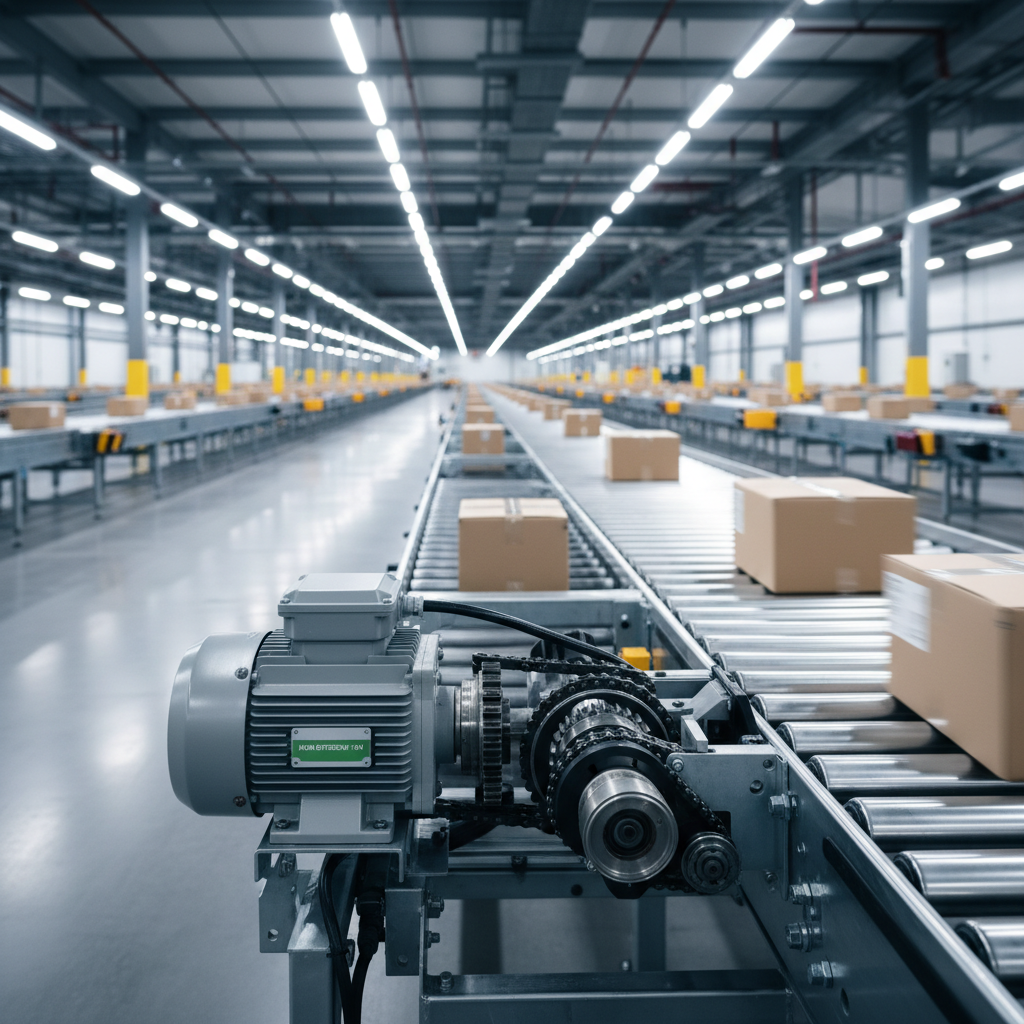
- Power & Drive: The use of Motor Driven Rollers (MDR) is a key enabler of modularity. Each zone is powered independently, allowing for plug-and-play electrical connections and sophisticated control, like zero-pressure accumulation.
Scenario: Scaling an E-commerce Warehouse in the Netherlands
H3: The Initial Setup
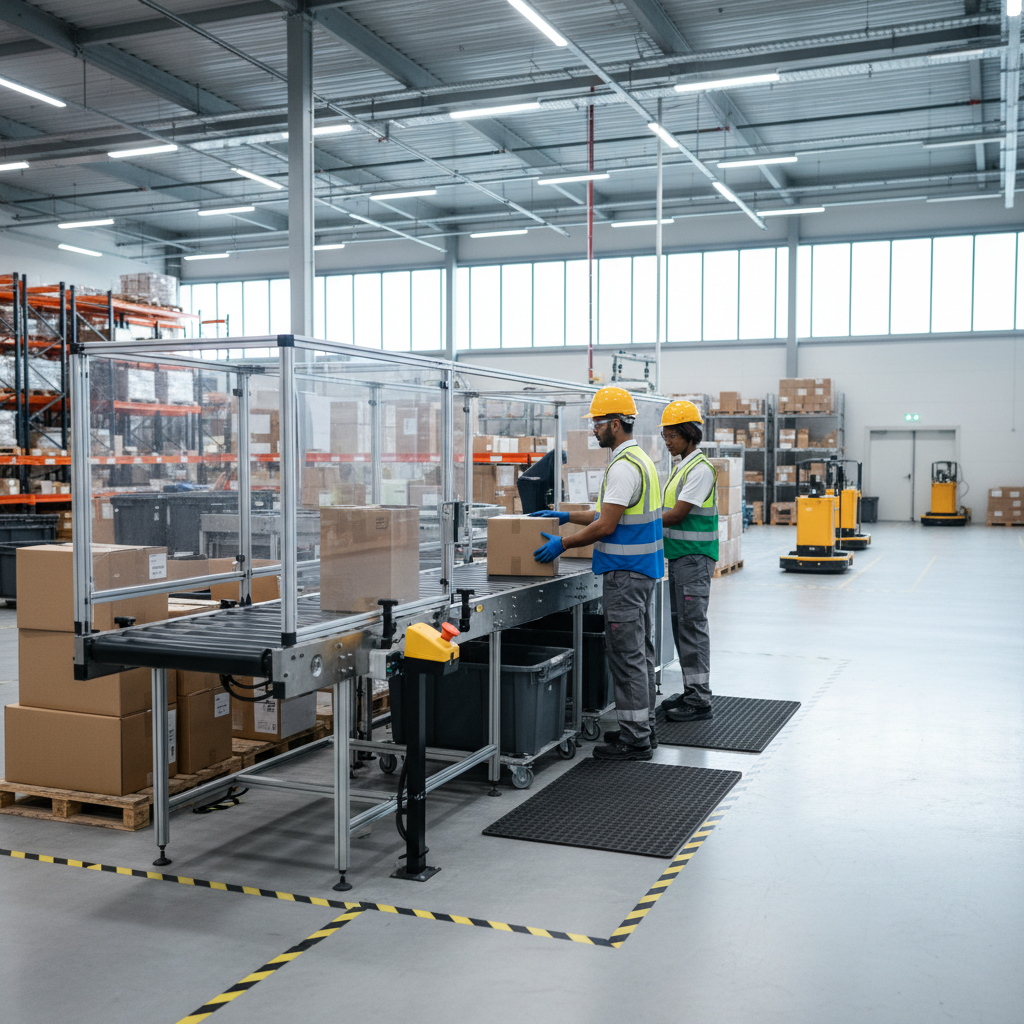
A new e-commerce fulfillment center in the Amsterdam region starts with a 50-meter modular conveyor line. It transports packed boxes from 5 packing stations to a single outbound shipping lane. The system uses MDR technology and has a capacity of 800 boxes per hour, with an average weight of 5 kg per box.
H3: The Scaling Event
After one year, the company secures a new client and needs to double its throughput to 1,600 boxes per hour and service two different carriers (e.g., PostNL and DHL). With a modular system, the scaling process is structured:
- Planning: The new layout is planned in CAD. It involves adding a T-junction (merge) and a high-speed shoe sorter module to divert packages to two new shipping lanes.
- Procurement: The required standard modules (1 sorter, 2 curves, 20 meters of straight conveyor) are ordered. Lead time is 3-4 weeks.
- Implementation: The installation happens over a single weekend (48 hours) to minimize disruption. The existing line is disconnected, the new sorter module is inserted, and the new outbound lanes are connected. The "plug-and-play" nature of the MDR wiring means electrical setup is fast.
- Go-Live: On Monday morning, the expanded system is operational. Total downtime was less than 48 hours, and over 80% of the original investment was preserved.
This rapid adaptation would be impossible and prohibitively expensive with a traditional, welded-frame conveyor, which would have required scrapping large portions of the original line.
Easy Systems: Your Partner for Modular Conveyor Solutions
In the dynamic European market, especially within the logistics-intensive Benelux, choosing the right automation partner is crucial. Easy Systems specializes in designing and deploying high-quality modular conveyor systems tailored to the unique needs of warehouses, distribution centers, and manufacturing facilities. Our deep experience in the European context means we understand the challenges of space constraints, labor costs, and the demand for operational agility. We provide robust, scalable, and cost-effective solutions—from single modules to complete, integrated systems—that empower your business to grow without limits. Partner with us to build a logistical backbone that’s as flexible and ambitious as your business plan.
Frequently asked questions
What is the primary advantage of a modular conveyor system?+
The main advantage is flexibility. Modular systems can be reconfigured in as little as 1-2 weeks to meet new operational needs. This agility allows businesses to handle demand spikes of 30-50% without major system overhauls, protecting the initial investment and reducing long-term adaptation costs.
Are modular conveyors more expensive than traditional ones?+
The initial purchase price of a modular conveyor can be 10-20% higher than a simple, traditional system. However, their Total Cost of Ownership (TCO) is significantly lower due to reduced installation time, lower reconfiguration costs, and minimal downtime, ensuring a better long-term financial outcome.
How quickly can a modular conveyor system be deployed?+
A standard modular system can be fully installed and commissioned in just 4 to 8 weeks. This is a significant improvement over the 10-16 weeks typical for custom-fabricated systems. This rapid deployment allows businesses to react swiftly to new customer contracts or market changes, providing a key competitive advantage.
What is the typical return on investment (ROI) for a modular system?+
In a high-labor-cost region like the Benelux, businesses often achieve a full return on investment within 2 to 4 years. The ROI is driven by reduced installation costs, higher uptime (often exceeding 99%), and improved labor efficiency, making it a sound investment over its 15-20 year lifespan.
Can modular systems handle the specific demands of e-commerce?+
Yes, they are ideal for the fluctuating demands of e-commerce and 3PL operations. A modular design allows for rapid scaling to handle peak season order volumes, which can increase by over 50%. Specialized modules like high-speed sorters can be easily integrated to manage complex order profiles for fast fulfillment.

The Easy Systems engineering team designs, integrates and commissions conveyor systems and warehouse automation across Belgium, the Netherlands and Luxembourg. Combined experience covers roller and belt conveyors, sorters, AGV/AMR fleets, AutoStore, shuttle AS/RS and WMS/WCS integration for distribution centers and e-commerce fulfillment operations.
- Conveyor design (roller, belt, modular plastic)
- Sortation & merge logic
- AGV / AMR fleet integration
- AutoStore & shuttle AS/RS
- WMS / WCS integration