Micro-Fulfillment Centers in the Benelux: The Role of Flexible Conveyors
Micro-Fulfillment Centers (MFCs) are compact, automated warehouses enabling rapid urban delivery. Flexible conveyor systems are essential, connecting dense storage with packing stations to achieve delivery times under 2 hours in cities like Amsterdam and Brussels.
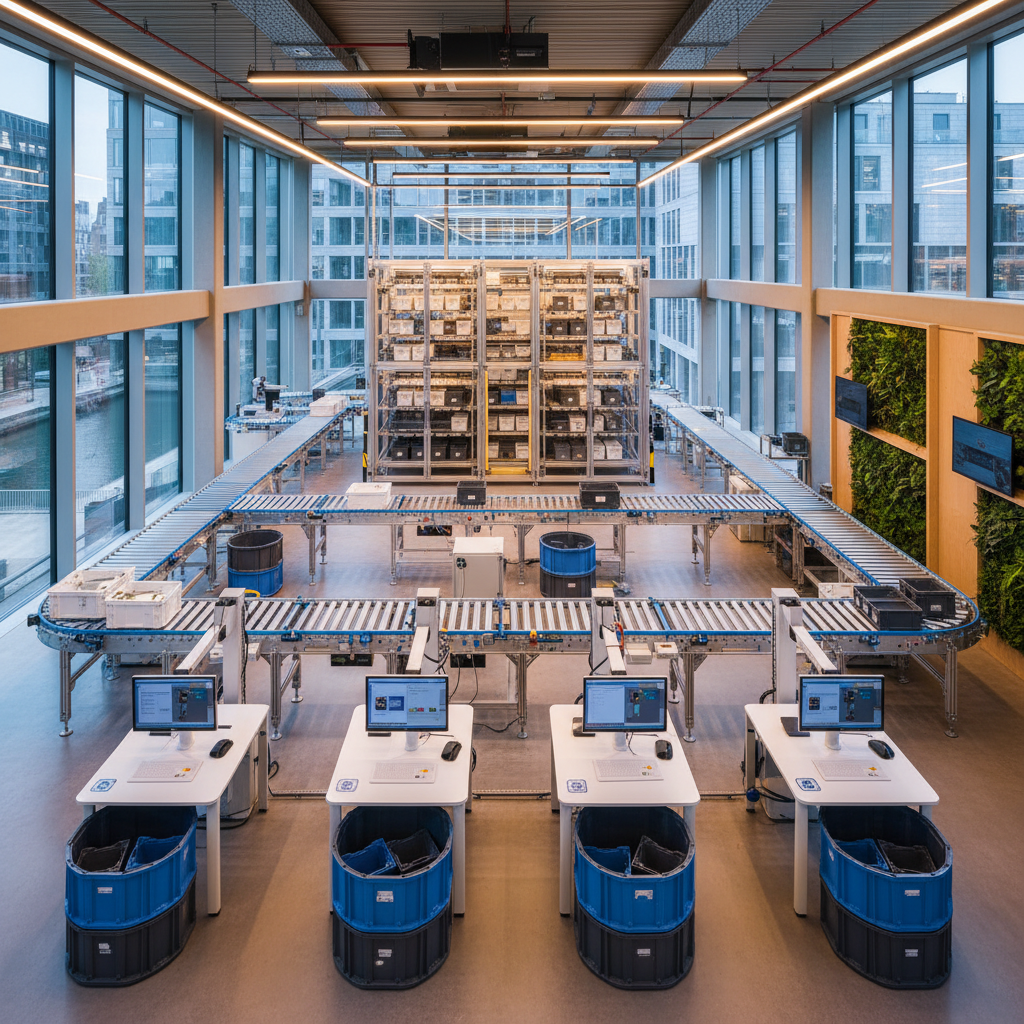
As e-commerce giants promise ever-faster delivery, the logistical battleground has moved from sprawling out-of-town warehouses to the heart of our cities. In densely populated regions like the Benelux (Belgium, Netherlands, Luxembourg), Micro-Fulfillment Centers (MFCs) have emerged as the definitive solution for ultra-fast urban delivery. These compact, highly automated facilities depend on one critical element to function: flexible, intelligent conveyor systems that can navigate tight spaces with precision and speed.
Definition
A Micro-Fulfillment Center (MFC) is a small-scale, highly automated warehouse or fulfillment center located inside or on the edge of a dense urban area. Its primary purpose is to move inventory closer to the end consumer to drastically reduce last-mile delivery times and costs.
Key Numbers
| Metric | Typical range (Benelux 2026) | Notes |
|---|---|---|
| Footprint | 500 - 2,000 m² | Often located in repurposed retail spaces, basements, or dark stores. |
| Throughput (Orders/Day) | 1,000 - 4,000 | Highly dependent on the level of automation, particularly the AS/RS speed. |
| Total Investment | €2,000,000 - €7,000,000 | Includes automation (AS/RS, conveyors), software (WMS/WES), and real estate fit-out. |
| Conveyor Speed | 0.5 - 1.5 m/s | Slower speeds for accumulation, higher for transport lines between zones. |
| Order Fulfillment Time | 5 - 15 minutes | Time from order receipt to a packed parcel being ready for dispatch. |
| ROI | 3 - 5 years | Achieved through reduced delivery costs, increased order volume, and higher customer retention. |
| Energy Consumption (Conveyor) | 0.8 - 2.5 kWh/hour | Motorized Drive Roller (MDR) systems are at the lower end of this range. |
Why Benelux is a Prime Market for MFCs
The Benelux region presents a unique combination of factors that make it an ideal environment for MFC proliferation:
- High Population Density: The Netherlands and Belgium are among the most densely populated countries in Europe, creating a high concentration of e-commerce customers in cities like Amsterdam, Rotterdam, Brussels, and Antwerp.
- High E-commerce Penetration: Consumers in the region are digitally mature and have high expectations for service speed and convenience.
- Traffic & Congestion: Urban traffic makes last-mile delivery from out-of-town distribution centers slow and expensive. MFCs mitigate this by starting the delivery journey within the city itself.
- Real Estate Challenges: High costs and scarcity of large industrial plots near cities force a shift towards smaller, more vertically-oriented and space-efficient logistics models.
The Central Role of Flexible Conveyor Systems
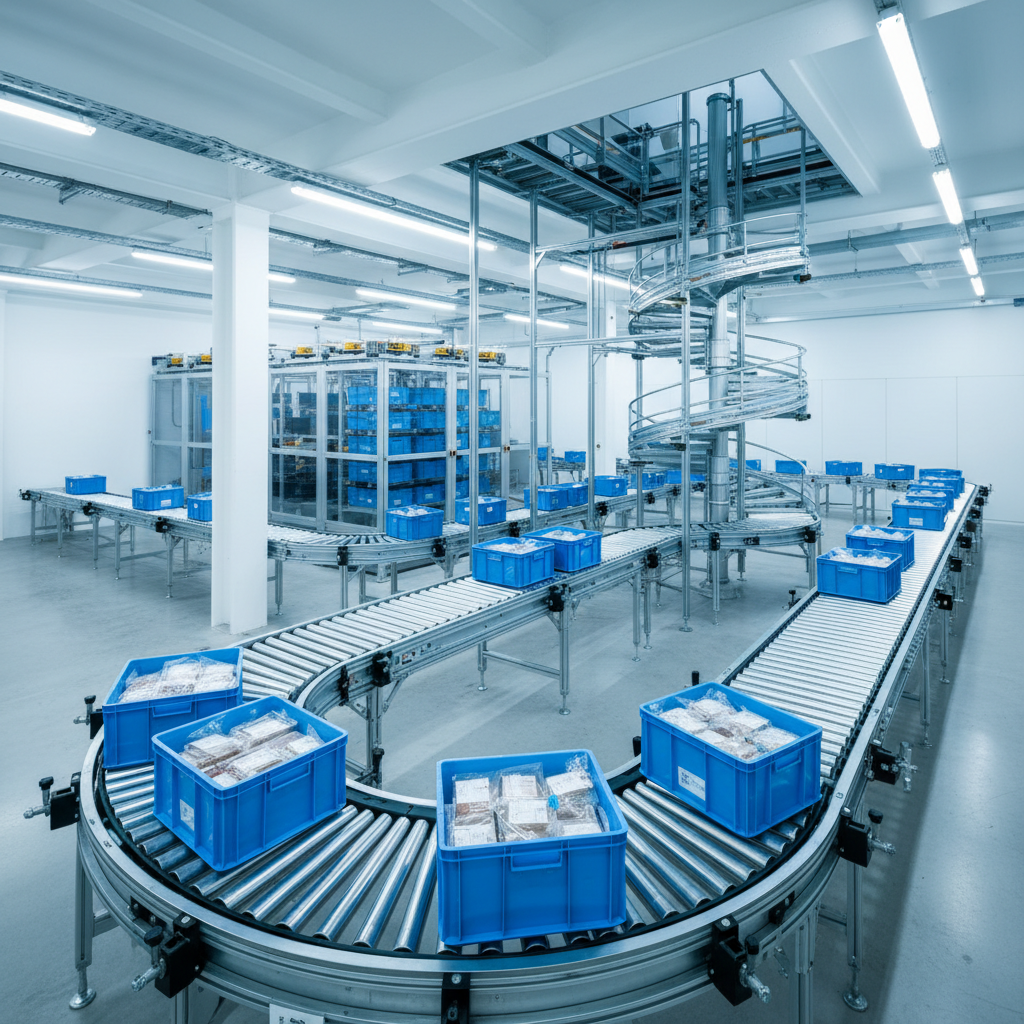
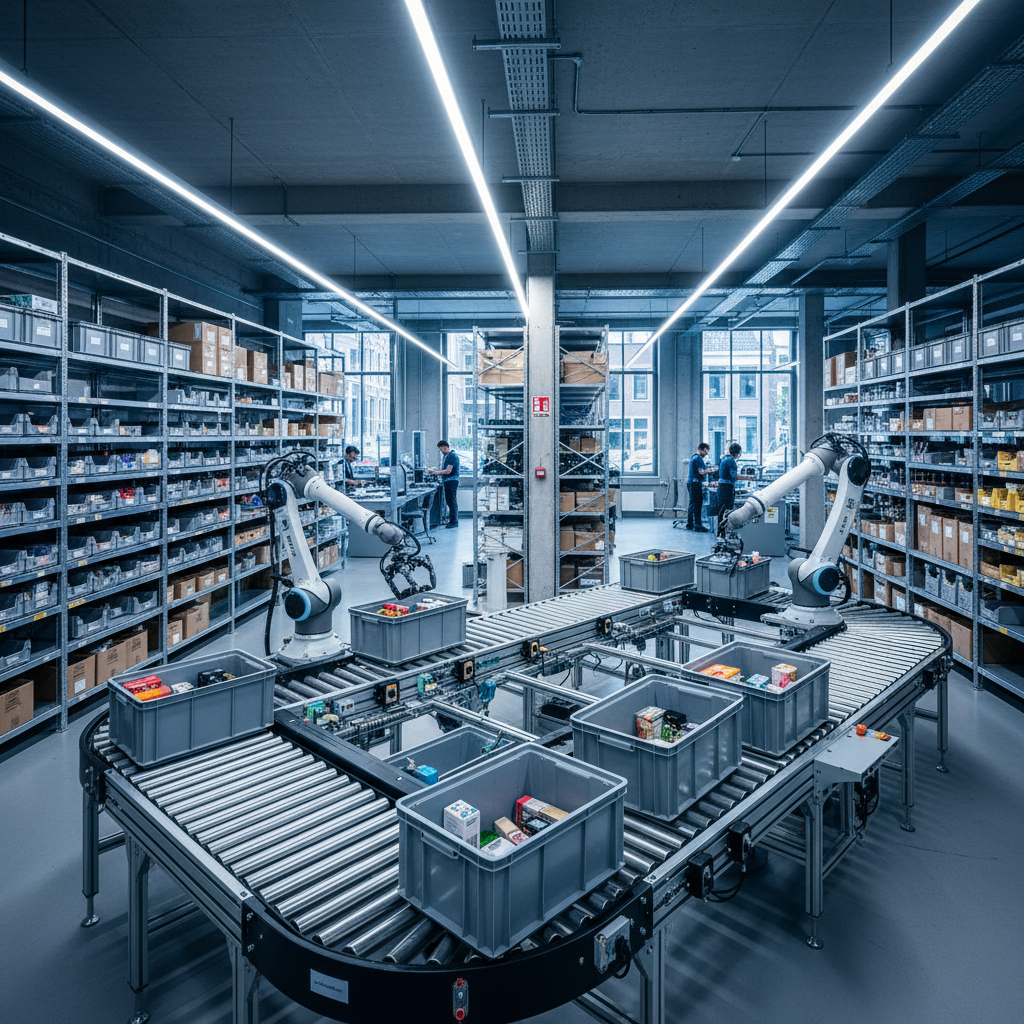
In an MFC, space is the ultimate luxury. Unlike vast warehouses with long, straight conveyor lines, MFCs require systems that are compact, modular, and adaptable. Flexible conveyors are the arteries of the MFC, connecting the dense storage heart of the operation to all other functional areas.
Connecting Storage to People
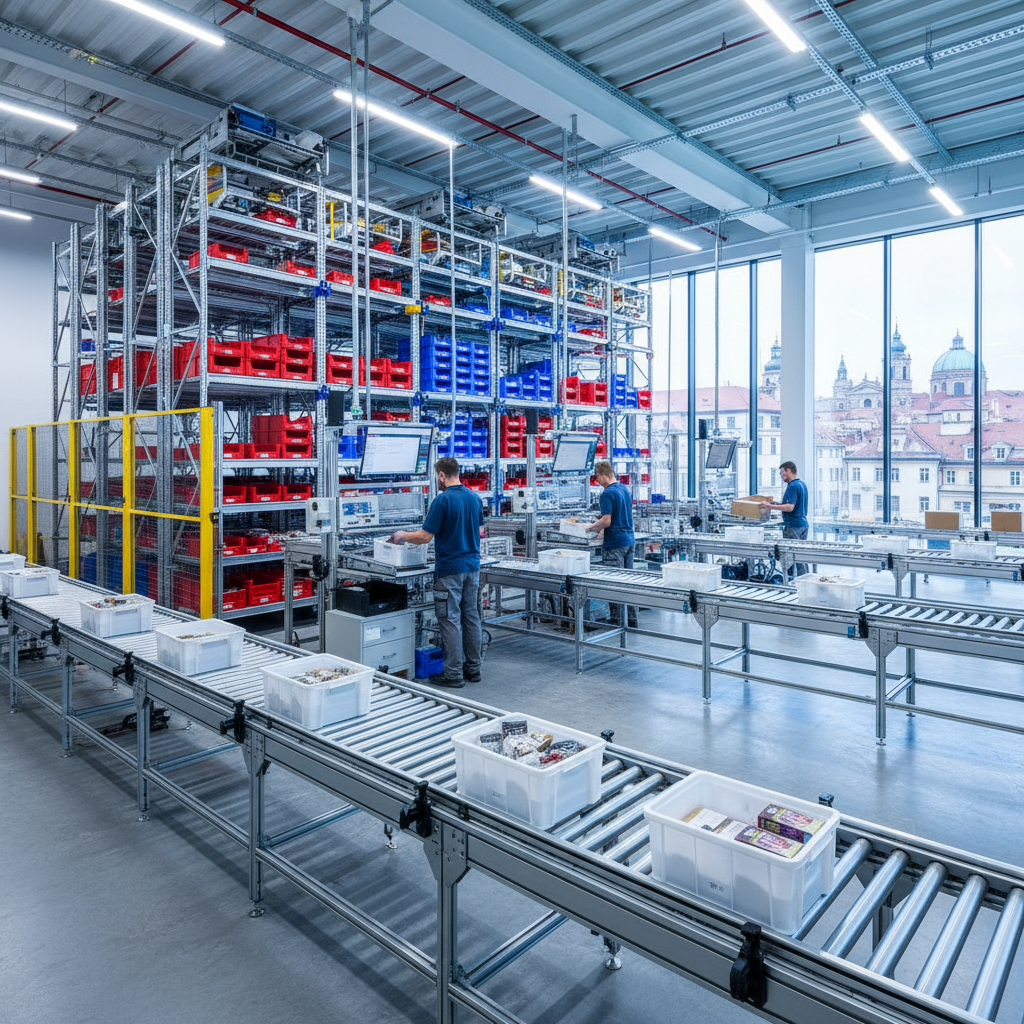
The core of most MFCs is a high-density automated storage and retrieval system (AS/RS), such as a shuttle system or a grid-based solution like AutoStore. While the AS/RS is brilliant for storage, it needs support. This is where conveyors come in. They receive totes or bins filled with ordered items from the AS/RS output ports and transport them to Goods-to-Person (GTP) workstations where human operators perform the final pick and pack tasks. This seamless handover is crucial for maintaining high throughput. For more details on integrating various warehouse systems, see our guide on WMS, WCS, and WES integration.
Types of Conveyors Used in Benelux MFCs
Not all conveyors are created equal. MFCs utilize a specific mix of technologies tailored to their unique constraints.
| Conveyor Type | Primary Use Case in MFC | Key Advantages for MFCs | Typical Cost (€/m) |
|---|---|---|---|
| Motorized Drive Roller (MDR) | Zoned transport, accumulation lines | Energy efficient (runs on demand), quiet, safe (24V DC), highly modular for easy layout changes. | €900 - €1,500 |
| Modular Plastic Belt | Curves, inclines, handling diverse items | Durable, easy to clean, can handle irregularly shaped items, tight turning radius. | €1,100 - €1,800 |
| Spiral Conveyor | Vertical transport between floors | Extremely space-efficient for vertical movement, continuous flow. | €25,000 - €60,000 (per unit) |
| Mini-Belt Conveyor | Workstation integration, dunnage removal | Compact footprint, ideal for short distances at packing or sorting stations. | €600 - €1,100 |
Zero-Pressure Accumulation: The Unsung Hero
A critical feature for MFC conveyors is Zero-Pressure Accumulation (ZPA). ZPA allows totes and parcels to buffer on the conveyor without touching each other. This prevents product damage, protects the integrity of sorted orders, and creates a smooth, regulated flow of goods to packing stations, avoiding bottlenecks. If one station is temporarily busy, the conveyor simply holds the incoming totes in preceding zones until the station is free, ensuring the entire system doesn't grind to a halt.
Integration and Modularity: The Keys to Success
An MFC is a complex ecosystem of hardware and software. The conveyor system must integrate flawlessly with the Warehouse Management System (WMS) and Warehouse Execution System (WES) to ensure orders are routed correctly. The WES often directs the conveyor logic, activating specific MDR zones to move a tote from the AS/RS output to a specific packing station where the order is being fulfilled.
Modularity is equally important. As a business grows or its product mix changes, the MFC layout may need to adapt. Modular conveyor systems can be reconfigured, extended, or moved with relative ease compared to traditional, welded-frame systems. This adaptability is vital for future-proofing the investment. Many businesses find that as they expand, their internal processes struggle to keep up, a challenge detailed in how processes must evolve with company growth.
Easy Systems: Your Partner for Flexible MFC Conveyor Solutions
At Easy Systems, we specialize in designing and manufacturing the modular, flexible conveyor systems that power the next generation of urban logistics. Our deep experience in the European market, particularly the Benelux, means we understand the unique challenges of space, speed, and reliability that MFCs present. Our range of MDR, belt, and modular conveyors provides the building blocks for a robust and scalable MFC transport solution. We work with integrators and end-users to engineer systems that are not just efficient today, but are ready for the demands of tomorrow, ensuring your investment delivers value for years to come. We help turn the promise of ultra-fast delivery into a logistical reality.
Frequently asked questions
What is the average cost to build a micro-fulfillment center in the Benelux?+
The total investment for a micro-fulfillment center in the Benelux typically ranges from €2 million to €7 million. This includes costs for automation like AS/RS and conveyors, software (WMS/WES), and real estate fit-out. The final cost depends heavily on the size, throughput, and level of automation.
How much space does a typical MFC require?+
A typical MFC has a footprint between 500 and 2,000 square meters. This is significantly smaller than a traditional distribution center and allows them to be located in dense urban areas, often by repurposing existing spaces like the back of a retail store or a small industrial unit.
What conveyor technology is best for an MFC?+
Motorized Drive Roller (MDR) conveyors are often the best choice for the main transport lines in an MFC. They are energy-efficient, consuming up to 50% less power, modular for easy layout changes, and offer quiet, safe 24V DC operation, which is ideal for small, often mixed-use urban locations.
How fast can an MFC process an order?+
A highly automated MFC can process an online order—from digital receipt to a packed parcel ready for dispatch—in as little as 5 to 15 minutes. This incredible speed is what enables retailers to offer sub-2-hour delivery services to their local customer base.
What is the role of an AS/RS in a micro-fulfillment center?+
An Automated Storage and Retrieval System (AS/RS) is the heart of most MFCs. It provides extremely dense storage for thousands of SKUs in a minimal footprint. The AS/RS is responsible for retrieving the specific items for an order and delivering them to a conveyor system, which then transports them to a packing station.
Can MFCs handle fresh groceries?+
Yes, many MFCs are specifically designed for online grocery fulfillment. These facilities use refrigerated or multi-temperature zones within the AS/RS and along the conveyor paths to handle fresh and frozen goods, ensuring an unbroken cold chain from storage to the delivery driver.

The Easy Systems engineering team designs, integrates and commissions conveyor systems and warehouse automation across Belgium, the Netherlands and Luxembourg. Combined experience covers roller and belt conveyors, sorters, AGV/AMR fleets, AutoStore, shuttle AS/RS and WMS/WCS integration for distribution centers and e-commerce fulfillment operations.
- Conveyor design (roller, belt, modular plastic)
- Sortation & merge logic
- AGV / AMR fleet integration
- AutoStore & shuttle AS/RS
- WMS / WCS integration