Micro-Fulfillment Centers in Benelux: The Role of Compact Conveyors
Micro-Fulfillment Centers (MFCs) are transforming urban logistics in the Benelux. Discover the pivotal role of compact, modular conveyor systems in enabling rapid, cost-effective last-mile delivery for e-commerce, right from the city center.
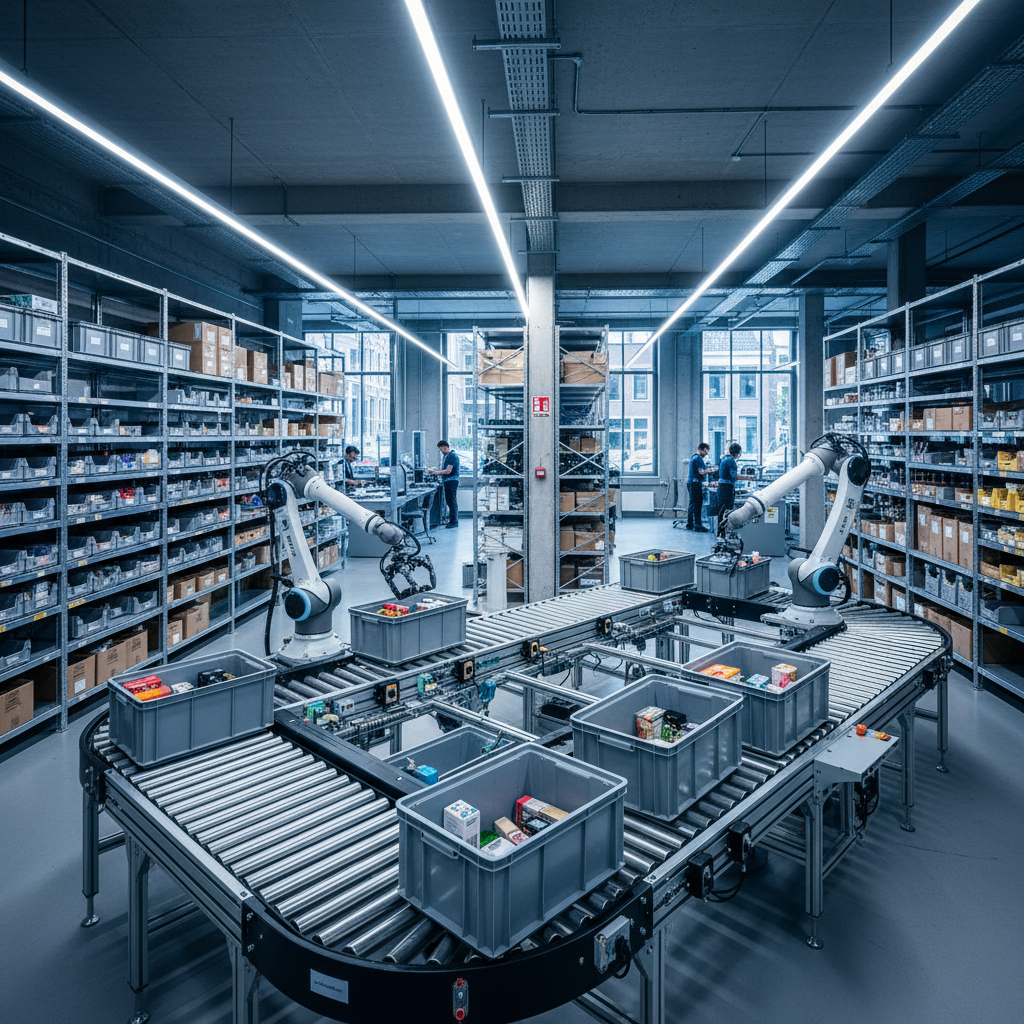
The rapid growth of e-commerce has put immense pressure on last-mile delivery, especially in the densely populated Benelux region. Consumers demand faster, more flexible delivery options, a challenge traditional, large-scale fulfillment centers on the urban periphery cannot meet. Enter the Micro-Fulfillment Center (MFC): a compact, highly automated facility strategically placed within city limits. This article explores the rise of MFCs in the Benelux and demonstrates why compact, modular conveyor systems are the technological backbone of this urban logistics revolution.
Definition
A Micro-Fulfillment Center (MFC) is a small-scale, highly automated warehouse or fulfillment facility located inside or on the immediate edge of dense urban areas. Its primary purpose is to position high-demand inventory closer to the end consumer, enabling significantly faster and cheaper last-mile delivery for e-commerce orders.
Key Numbers
| Metric | Typical range (EU 2026) | Notes |
|---|---|---|
| Footprint | 500 - 2,000 m² | Often integrated into existing retail stores or dark stores. |
| Investment (Conveyor System) | €400 - €1,200 per meter | Depends on complexity, width, and motor technology (e.g., MDR). |
| Throughput (Totes/Hour) | 300 - 1,200 CPH | Capacity for a typical compact conveyor line within an MFC. |
| Order Fulfillment Time | 15 - 60 minutes | From order placement to ready-for-dispatch. |
| Energy Consumption (Conveyor) | 0.1 - 0.4 kWh per hour | For a typical 10-meter modular system, thanks to MDR technology. |
| Typical ROI | 2 - 4 years | Based on reduced last-mile costs and increased order volume. |
| SKU Capacity | 5,000 - 15,000 SKUs | Highly dependent on the chosen storage system (e.g., AutoStore vs. shelving). |
Why MFCs are Dominating Benelux Urban Logistics
The Benelux, with its high population density and affluent, tech-savvy consumers, is a prime market for MFCs. Cities like Amsterdam, Brussels, and Luxembourg present a "last-mile challenge" where traffic congestion, environmental regulations, and high real estate costs make traditional logistics inefficient. MFCs address these issues directly:
- Speed: By being closer to customers, MFCs enable delivery windows of less than two hours, a key competitive advantage.
- Cost Reduction: They drastically cut last-mile transportation costs, which can account for over 50% of total shipping expenses.
- Sustainability: Shorter delivery routes mean reduced CO2 emissions, often using electric vehicles or cargo bikes for the final leg.
As companies navigate the complexities of urban expansion, many find that their internal processes lag behind their growth ambitions. The transition to an MFC model is a clear example of where operational processes must evolve to match strategic goals, a challenge detailed in how processes must grow with the company.
The Central Role of Compact Conveyor Systems
Space is the ultimate luxury in an MFC. Every square meter must be optimized for storage density and operational flow. This is where compact, modular conveyor systems become indispensable. Unlike bulky, traditional systems, modern conveyors for MFCs are designed for maximum efficiency in minimal space.
Key Technologies in MFC Conveyors
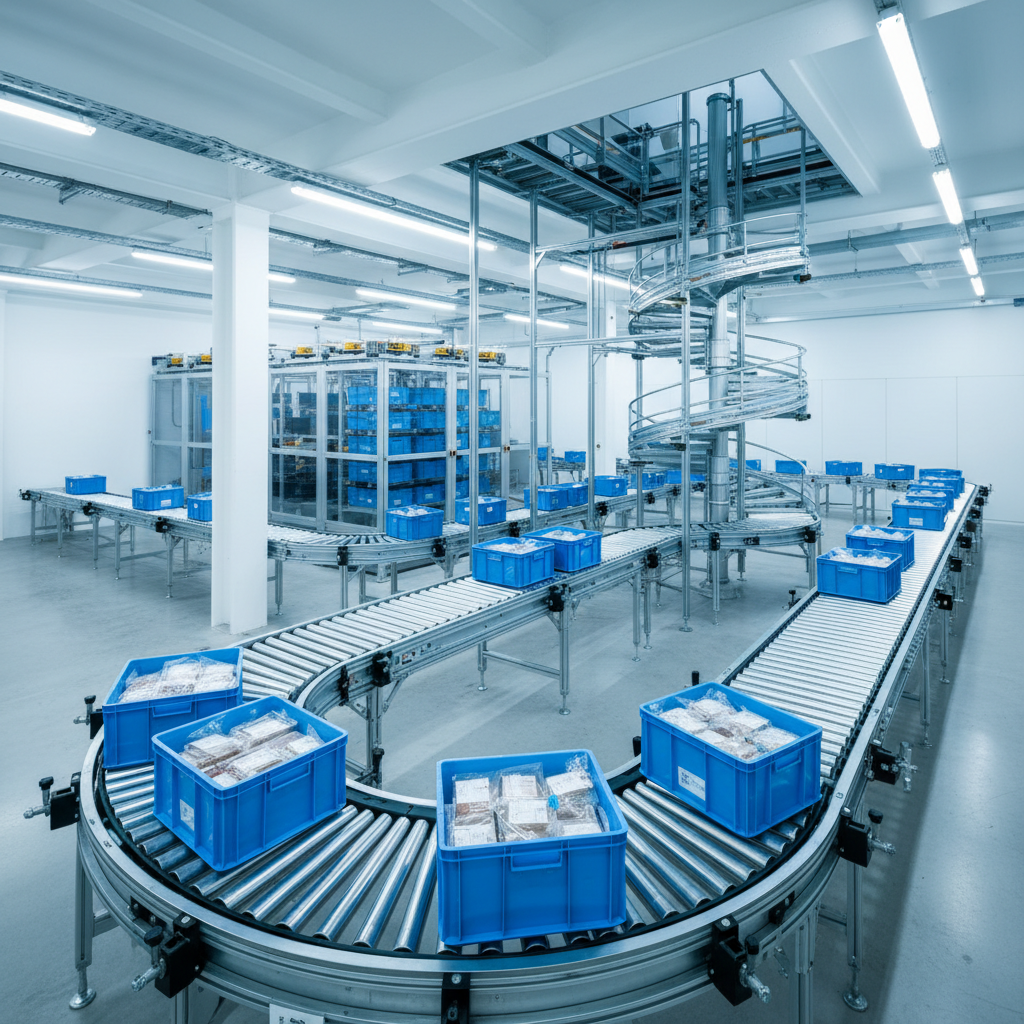
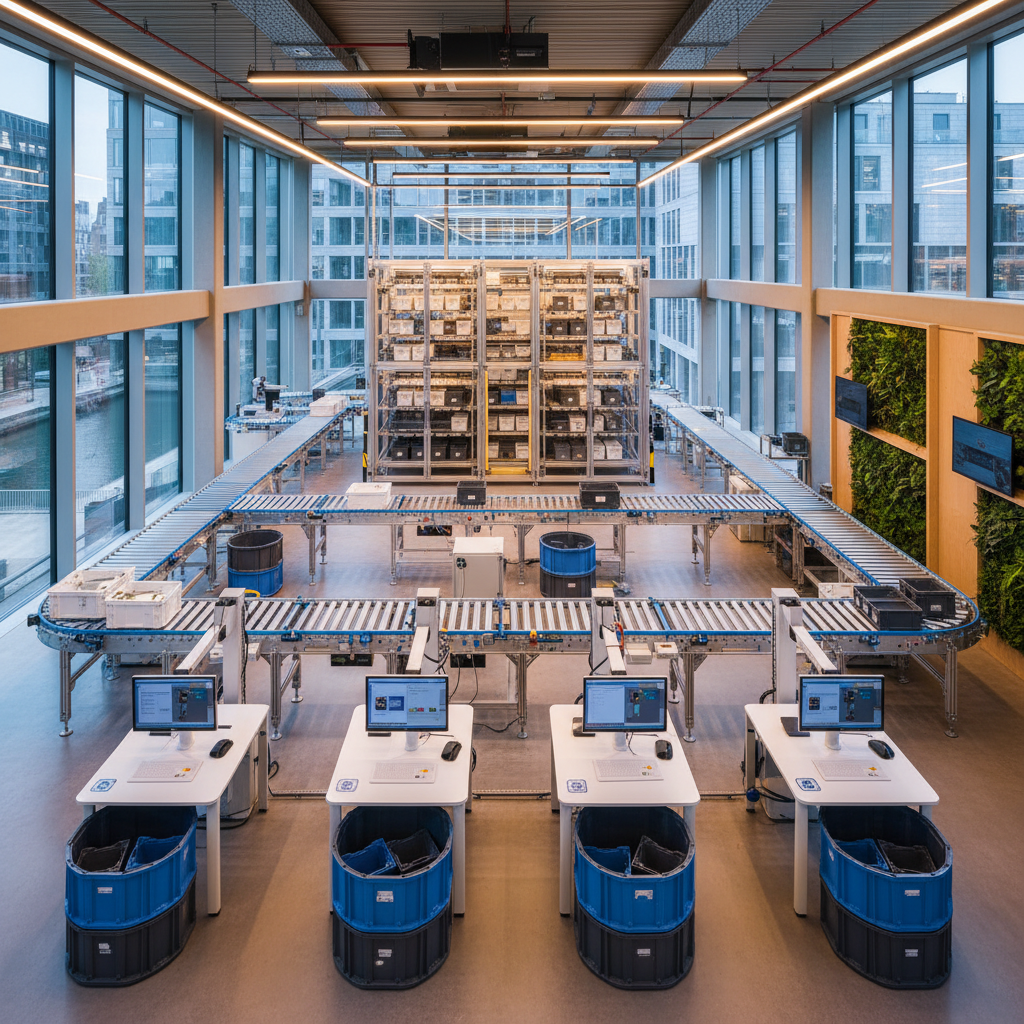
The effectiveness of an MFC hinges on rapid and accurate order processing. Compact conveyors form the circulatory system that connects different zones: storage, picking, packing, and dispatch. The primary workhorse is the roller conveyor, often powered by Motorized Drive Roller (MDR) technology.
These systems offer several advantages:
- Modularity: Conveyor sections can be easily configured and reconfigured, adapting to the specific layout of a small, often irregularly shaped, urban space.
- Zero-Pressure Accumulation: Zero-Pressure Accumulation (ZPA) capabilities are standard, allowing totes and parcels to buffer without contact, preventing damage and ensuring a smooth flow to packing stations.
- Energy Efficiency: 24V DC MDR technology is incredibly energy-efficient, as motors only run when a product needs to be moved, significantly lowering operational costs.
- Low Profile: Compact conveyors have a low-profile design, with frame heights often below 150 mm, allowing them to be installed under platforms or in tight spaces where traditional conveyors wouldn't fit.
From Picking to Dispatch: The Conveyor's Journey
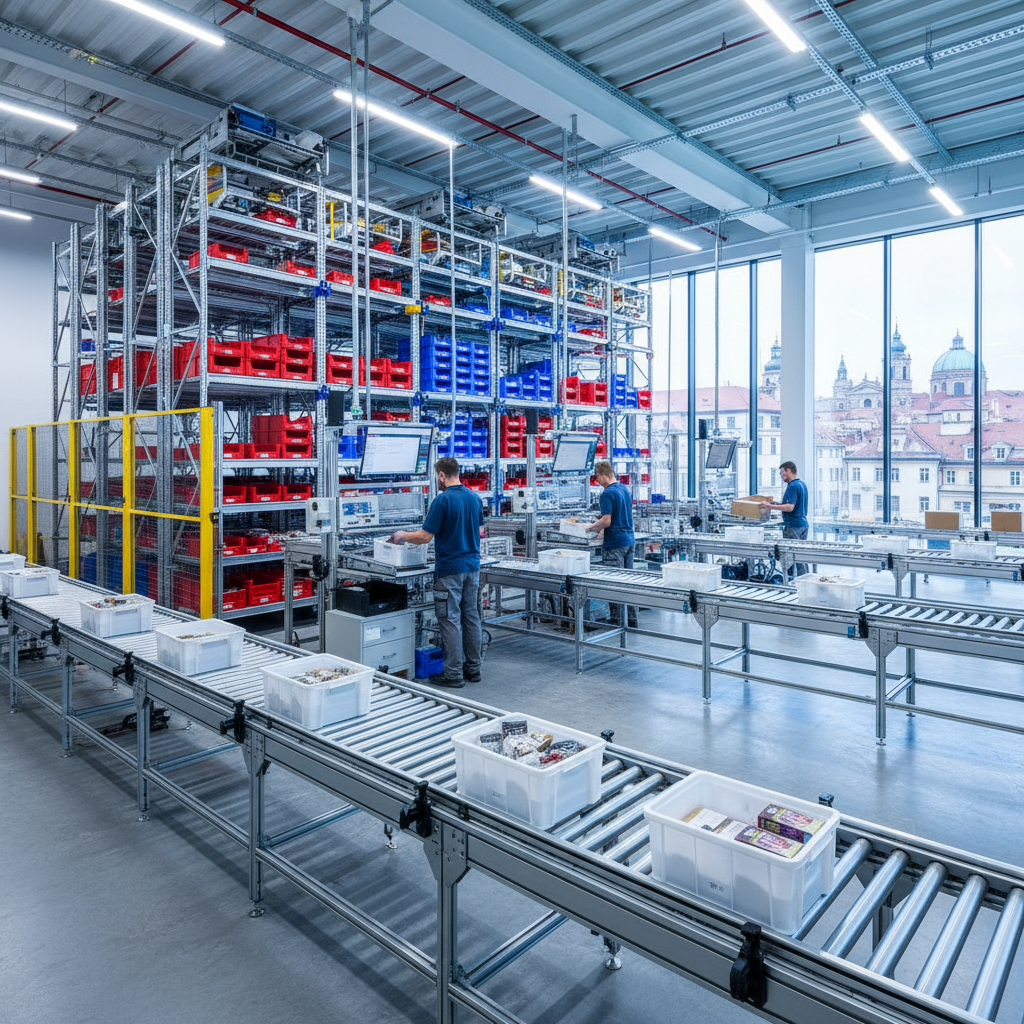
An order's journey through an MFC is a masterclass in automation. It typically begins at a Goods-to-Person (G2P) station, often powered by an AS/RS like AutoStore or a shuttle system. Here, an operator picks items and places them into an order tote. This tote is then inducted onto the conveyor system. The conveyor transports the tote through zones for quality control, documentation insertion, and finally to a packing station. Once packed, the parcel is conveyed to a sorting area for dispatch, often using a small pop-up sorter or diverter arm to route it to the correct outbound lane for a specific delivery route.
Comparing Conveyor Technologies for MFCs
While roller conveyors are dominant, other types may be used for specific tasks within an MFC. The choice depends on the product being handled, the required throughput, and the available space.
| Conveyor Type | Primary Use Case in MFC | Speed | Footprint | Cost Indicator |
|---|---|---|---|---|
| MDR Roller Conveyor | Main transport lines, accumulation, zone routing | 0.2 - 1.5 m/s | Low profile, highly modular | €€ |
| Belt Conveyor | Incline/decline sections, handling irregular items | 0.5 - 2.0 m/s | Low to medium | €€ |
| Modular Plastic Belt | Curved sections, wash-down areas (grocery) | 0.3 - 1.0 m/s | Flexible, but wider turning radius | €€€ |
| Spiral Conveyor | Vertical transport between levels | Up to 1.0 m/s | Very small, highly vertical | €€€€ |
Integration: The Digital Glue
A successful MFC is not just about hardware; it's about seamless software integration. A Warehouse Control System (WCS) is essential for managing the flow of goods on the conveyors. The WCS acts as the bridge between the high-level Warehouse Management System (WMS) and the low-level Programmable Logic Controllers (PLCs) that control the conveyor motors and sensors. This integration ensures that every tote is tracked in real-time, enabling dynamic routing and providing valuable data for performance analysis and optimization.
The Future: Scalability and Hyper-Local Hubs
The MFC model is set to become even more granular. We are witnessing the rise of "hyper-local" hubs, sometimes as small as 200 m², located in the basements of apartment buildings or former retail shops. This trend further amplifies the need for ultra-compact, scalable, and easy-to-install conveyor solutions. The modularity of systems like those offered by Easy Systems allows a company to start with a small, semi-automated setup and add more automation and conveyor lines as order volume grows, providing a future-proof investment.
Easy Systems: Your Partner for Compact MFC Automation
In the competitive Benelux market, speed and efficiency are not just goals; they are survival requirements. At Easy Systems, we specialize in designing and implementing compact, modular conveyor systems that are the engine of modern micro-fulfillment. Our solutions, built on state-of-the-art 24V DC MDR technology, are specifically engineered for the space constraints and high-throughput demands of urban logistics. We provide the robust, scalable, and energy-efficient infrastructure you need to win the last-mile race, ensuring your fulfillment process is as agile and responsive as your customers expect. Partner with us to build the future of e-commerce, one compact conveyor at a time.
Frequently asked questions
What is the average cost to set up a micro-fulfillment center in the Benelux?+
The total cost varies widely, but for the automation component, a compact conveyor system for a 500-1,000 m² MFC can range from €50,000 to over €300,000. This depends on length, complexity, and the level of sorting and control technology implemented.
How much space is needed for a conveyor system in an MFC?+
Modern compact conveyors are designed for minimal footprints. A standard 600 mm wide roller conveyor line requires a corridor of about 800 mm. Thanks to their low profile (under 150 mm), they can even be installed under other equipment to maximize vertical space.
What is the typical throughput of an MFC conveyor system?+
A well-designed compact conveyor system in an MFC can typically handle between 300 and 1,200 totes or parcels per hour (CPH). This capacity is sufficient to process orders for sub-2-hour delivery in a dense urban area.
Can conveyor systems handle fresh groceries in an MFC?+
Yes, specific conveyor types are designed for grocery fulfillment. Modular plastic belts and stainless steel frames are often used as they are easy to clean and can operate in refrigerated environments, ensuring food safety standards are met.
How long does it take to install a conveyor system in an MFC?+
Thanks to their modular design, installation is remarkably fast. A typical system in a 500 m² facility can often be installed and commissioned in 1-3 weeks, compared to several months for traditional systems, minimizing disruption.

The Easy Systems editorial desk reviews and fact-checks every Conveyor-Design article against Benelux project experience. Editors translate engineering decisions — throughput, peak factors, layout, integration — into plain-language guides for operations managers, project leads and decision-makers.
- Warehouse layout & slotting
- Order-profile analysis
- Vendor-neutral comparison
- Benelux logistics market