Micro-Fulfillment in the Benelux: Flexible Conveyors in Urban Logistics
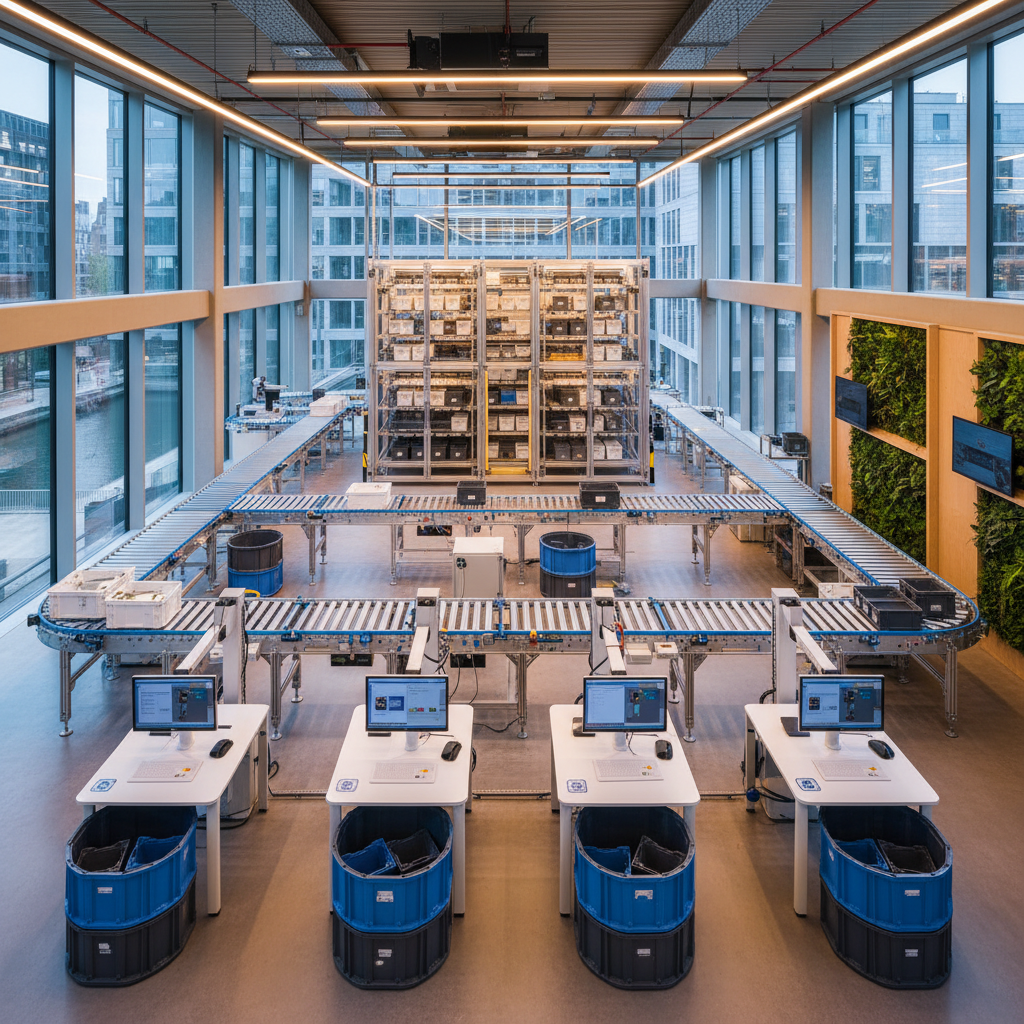
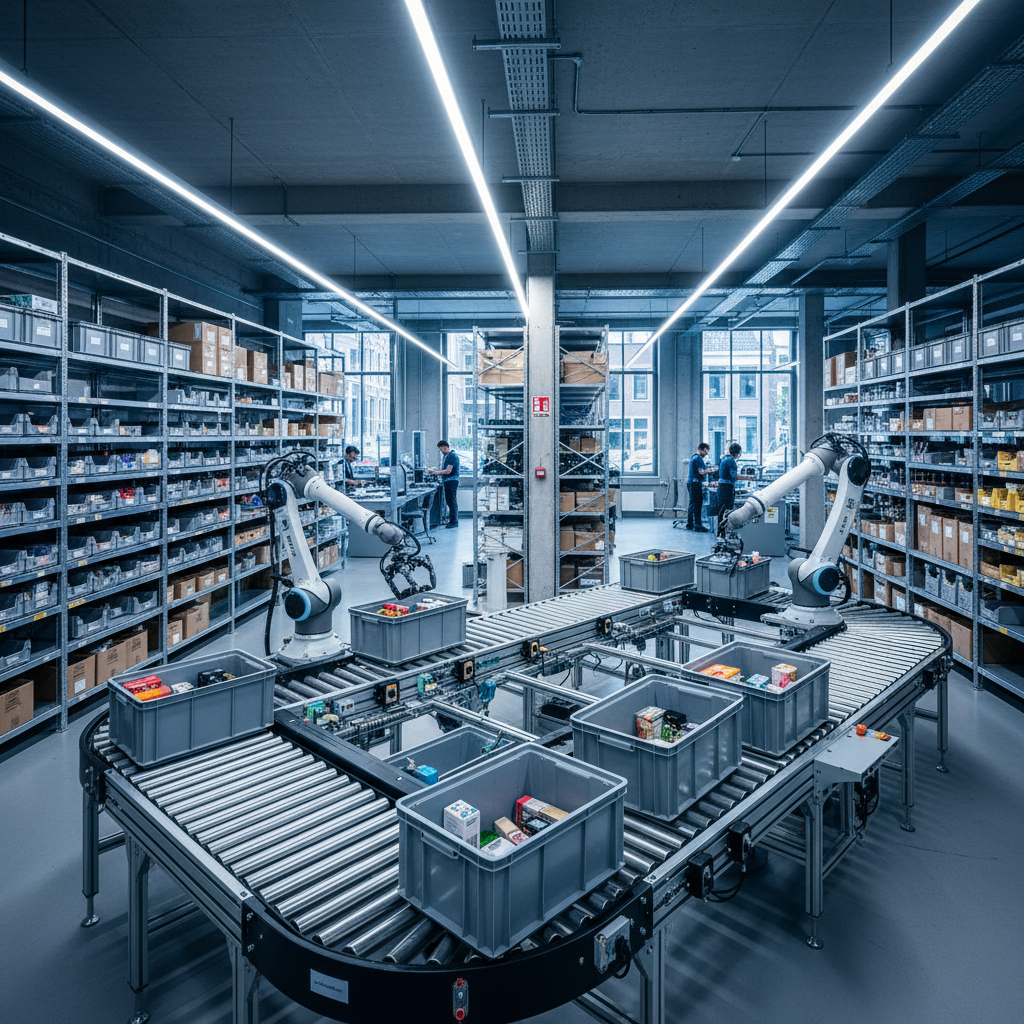
Micro-Fulfillment Centers (MFCs) in the Benelux rely on flexible, modular conveyor systems to achieve rapid urban delivery. These compact systems, often using MDR technology, are essential for navigating limited space and meeting the demand for same-day delivery.
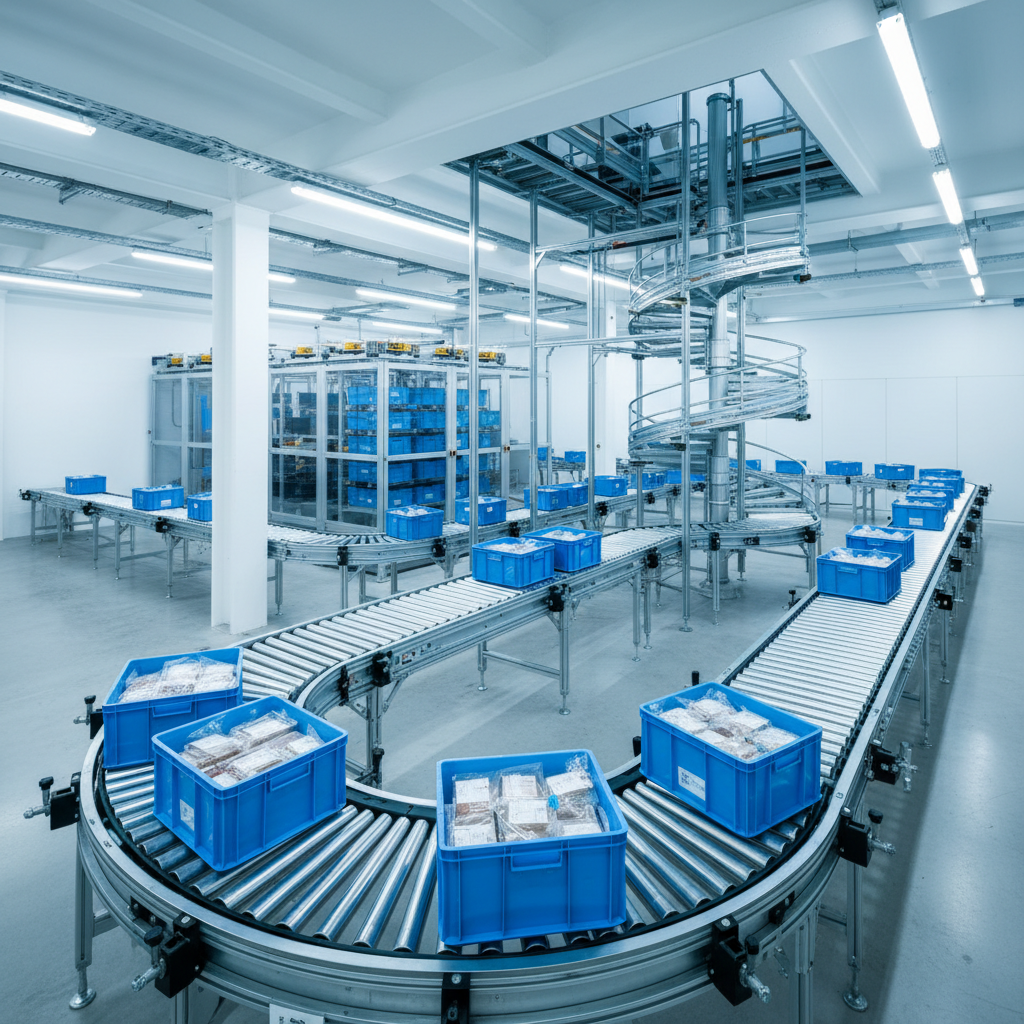
The explosive growth of e-commerce has reshaped consumer expectations, particularly in the densely populated Benelux region. Shoppers in cities like Amsterdam, Brussels, and Luxembourg now demand near-instant delivery. This has given rise to the Micro-Fulfillment Center (MFC), a compact, highly automated logistics hub located within urban areas. At the heart of these facilities are flexible conveyor systems, the critical arteries that enable the speed, accuracy, and efficiency required to win the last-mile delivery race.
Definition
A Micro-Fulfillment Center (MFC) is a small-scale, highly automated warehouse or fulfillment facility strategically located in a dense urban area to be closer to the end customer. Its primary purpose is to enable ultra-fast order fulfillment, often within a few hours, by combining automation technologies like conveyor systems and robotics with a compact real estate footprint, typically ranging from 300 to 1,500 m².
Key Numbers
| Metric | Typical range (EU 2026) | Notes |
|---|---|---|
| MFC Footprint | 300 - 1,500 m² | Often located in repurposed retail spaces or dark stores. |
| Investment (Conveyor System) | €75,000 - €300,000 | Dependent on complexity, length, and level of automation (e.g., MDR). |
| Throughput (Order Lines) | 150 - 500 CPH per station | Driven by Goods-to-Person (G2P) and conveyor efficiency. |
| Conveyor Speed | 0.3 - 1.5 m/s | Variable speeds are used for accumulation, sorting, and transport zones. |
| Order Fulfillment Time | 5 - 15 minutes | Time from order receipt to ready-for-dispatch. |
| ROI | 2 - 4 years | Achieved through reduced labor costs and lower last-mile delivery expenses. |
| Energy Consumption (MDR Conveyor) | 0.1 - 0.5 kWh/hour | Significantly lower than traditional AC motor-driven systems. |
The Strategic Importance of MFCs in the Benelux
The Benelux countries, with their high population density and affluent, tech-savvy consumers, are a prime market for MFCs. Real estate in city centers is scarce and expensive, making traditional, large-scale warehouses unfeasible. MFCs solve this by placing fulfillment capabilities directly within the urban fabric. This proximity to the customer is the cornerstone of rapid delivery services like Gorillas, Flink, and the e-commerce giants' same-day promises. By shortening the final leg of the journey, companies can dramatically reduce last-mile delivery costs, which often represent over 50% of total shipping expenses.
Challenges of the Urban Environment
Operating in a city is not without its challenges. MFCs must contend with:
- Space Constraints: Limited square meterage demands vertical thinking and compact equipment.
- Building Irregularities: Repurposed retail spaces or basements often have unconventional layouts, columns, and varying ceiling heights.
- Noise and Operational Restrictions: Urban locations often have stricter regulations on noise and operating hours.
- High Throughput Demands: The need for speed requires systems that can process a high volume of small, multi-item orders quickly and accurately.
The Role of Flexible Conveyor Systems
Standard, one-size-fits-all conveyor solutions are ill-suited for the unique constraints of MFCs. This is where flexible, modular systems become indispensable. They are not just about moving goods; they are about orchestrating a complex flow of items in a confined space with maximum efficiency.
Key Conveyor Technologies for MFCs
The modern MFC relies on a combination of specialised conveyor types to create a cohesive material handling ecosystem. The goal is to move items from storage to packing and dispatch with minimal human intervention and maximum speed.
Modular Roller Conveyors
The backbone of many MFCs is the modular roller conveyor. Their key advantage is adaptability. Systems using Motorized Drive Roller (MDR) technology are particularly popular. These 24V DC-powered rollers allow for fine-grained control, creating zones that can start, stop, and accumulate items independently. This Zero-Pressure Accumulation capability is critical for buffering items before they are sent to a packing station, preventing damage and ensuring a smooth, continuous flow without bottlenecks.
Spiral Conveyors
When space is at a premium, building vertically is the only option. Spiral conveyors are the perfect solution for moving totes, bins, or parcels between different levels of an MFC. They offer a continuous flow and a much smaller footprint compared to traditional incline belt conveyors, which would require extensive horizontal space to achieve the same elevation change. A spiral conveyor might only need a 2.5m x 2.5m area to elevate goods by 4 meters.
Belt and Modular Plastic Belt Conveyors
While roller conveyors handle rigid totes and boxes well, belt conveyors are used for items with irregular shapes, small sizes, or flexible packaging. Modular plastic belts offer even greater versatility and are easier to clean and maintain, a key consideration in grocery or pharmacy MFCs.
System Comparison for Urban Logistics
| Conveyor Type | Primary Use Case in MFC | Key Advantage | Typical Cost per Meter (EU) |
|---|---|---|---|
| MDR Roller Conveyor | Transport, accumulation, zoning | Energy efficiency, zone control, quiet operation | €600 - €1,200 |
| Spiral Conveyor | Vertical transport between floors | Extremely small footprint, continuous flow | €25,000 - €50,000 (per unit) |
| Belt Conveyor | Handling irregular items, inclines | Versatility for various product types | €500 - €900 |
| Modular Plastic Belt | Food/grocery handling, tight transfers | Durability, easy maintenance | €700 - €1,300 |
Integration with Automation
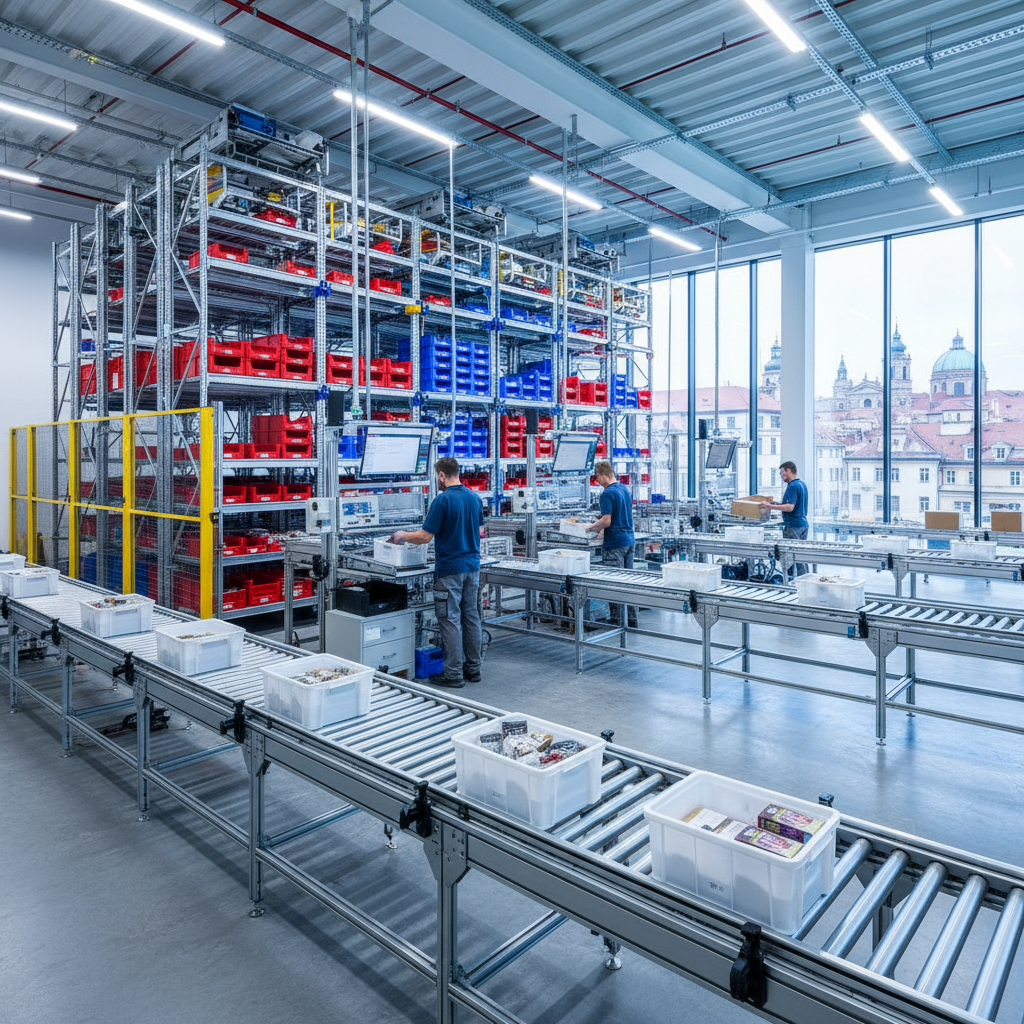
Flexible conveyors are most powerful when integrated into a larger automation strategy. In a typical MFC workflow, an automated storage and retrieval system (AS/RS), such as a shuttle system or a cube-based solution like AutoStore, retrieves a tote containing the required SKUs. This tote is then placed onto the conveyor network.
The conveyor system routes the tote to a Goods-to-Person (G2P) picking station. Here, an operator, guided by pick-to-light systems, takes the required items from the storage tote and places them into an order-specific tote. Once the order is complete, the conveyor whisks the tote away to a packing station, and finally to a dispatch area where it is handed off to a courier. This seamless integration is often managed by a Warehouse Control System (WCS) or Warehouse Execution System (WES), which orchestrates the hardware in real-time. For any business, scaling up operations often reveals process inefficiencies, as processes don't always scale with growth; automation via conveyors is a direct solution to this challenge.
Choosing the Right Partner for MFC Conveyor Systems
Implementing a conveyor system in a Benelux MFC requires a partner with deep expertise in modular design and urban logistics. The ideal partner understands that off-the-shelf solutions are rarely a good fit. They must be able to conduct a thorough site survey, accounting for every column, low ceiling, and tight corner. The solution must be truly modular, allowing for future adjustments, scaling, or even relocation as business needs evolve.
Easy Systems specialises in designing and implementing flexible, modular conveyor solutions tailored to the unique demands of Micro-Fulfillment Centers and other compact logistics operations. Our plug-and-play systems, based on robust and proven technologies like MDR, are designed for rapid deployment and easy reconfiguration. We work closely with Benelux clients to transform challenging urban spaces into highly efficient fulfillment engines, ensuring they can meet customer expectations for speed and reliability. By focusing on smart, adaptable design, we deliver systems that provide a rapid return on investment and form the foundation for future growth.
Frequently asked questions
What is the average cost of a conveyor system for an MFC in the Benelux?+
A complete flexible conveyor system for a Micro-Fulfillment Center (MFC) in the Benelux typically costs between €75,000 and €300,000. The final price depends on the total length, the inclusion of specialized modules like spirals or sorters, and the level of automation, such as using MDR technology.
How much space is needed for an MFC conveyor system?+
While the MFC itself may be 300-1,500 m², the conveyor system is designed to be extremely space-efficient. By using vertical spiral conveyors, which can have a footprint as small as 2.5m x 2.5m, and compact modular designs, these systems can be installed in tight, irregular spaces often found in urban centers.
What is the typical throughput of an MFC?+
A well-designed MFC can achieve very high throughputs. At a single Goods-to-Person picking station supported by an efficient conveyor system, operators can typically process between 150 and 500 order lines per hour. This speed is essential for enabling 1-hour delivery services.
Why is MDR conveyor technology good for MFCs?+
Motorized Drive Roller (MDR) technology is ideal for MFCs because it is energy-efficient, quiet, and highly controllable. Its ability to create zero-pressure accumulation zones prevents product damage and ensures a smooth flow of goods to packing stations, which is critical in a high-speed, small-space environment. Power consumption can be as low as 0.1 kWh per hour.
Can conveyor systems be installed in existing buildings?+
Yes, absolutely. Modular conveyor systems are specifically designed for retrofitting into existing buildings. Their plug-and-play nature and adaptable components allow for installation around columns, through tight corridors, and on multiple levels, making them perfect for repurposed retail stores or basements used as MFCs.

The Easy Systems editorial desk reviews and fact-checks every Conveyor-Design article against Benelux project experience. Editors translate engineering decisions — throughput, peak factors, layout, integration — into plain-language guides for operations managers, project leads and decision-makers.
- Warehouse layout & slotting
- Order-profile analysis
- Vendor-neutral comparison
- Benelux logistics market