Micro-Fulfillment Centres in the Benelux: The Role of Compact Conveyor Systems
Micro-fulfillment centres (MFCs) are revolutionizing last-mile delivery in the Benelux. Discover how compact, modular conveyor systems are the key to unlocking efficiency, achieving ROIs of 2-3 years, and enabling sub-60-minute delivery.
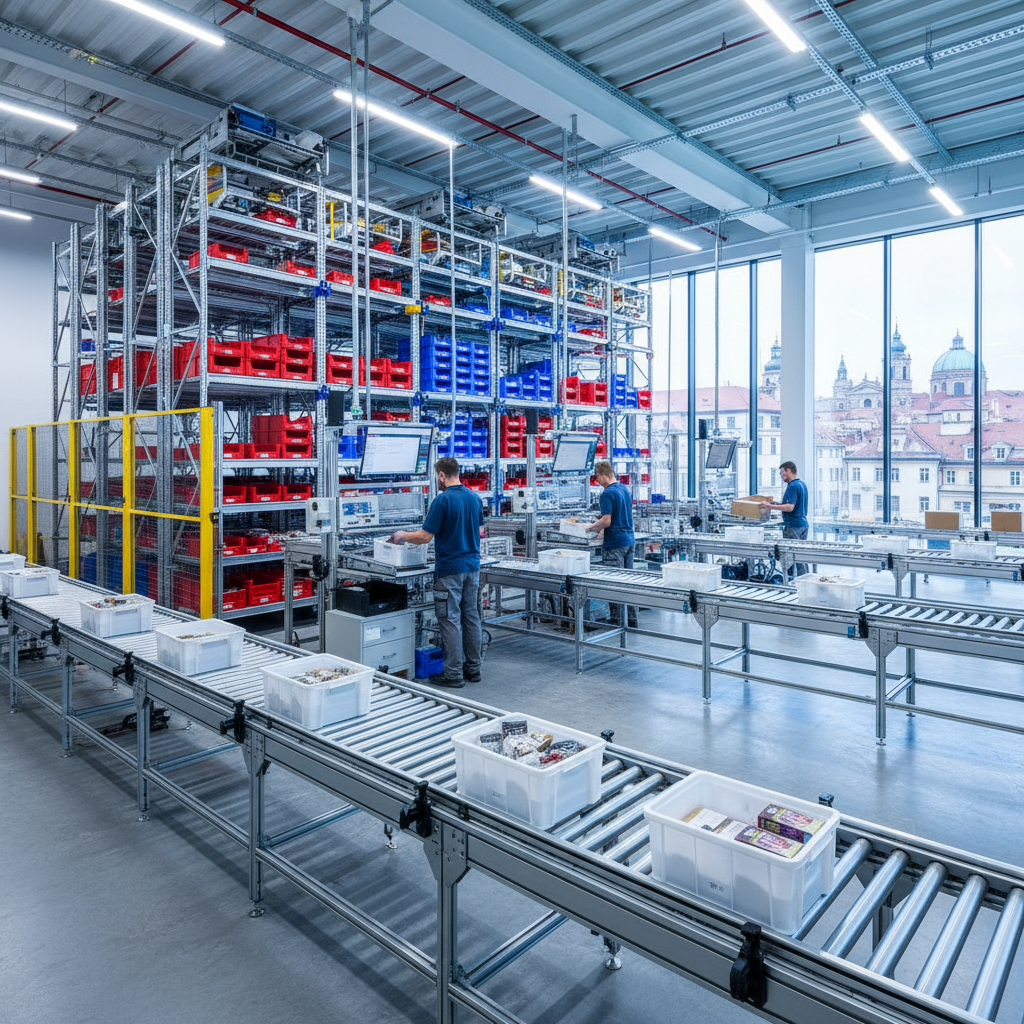
The explosive growth of e-commerce and rising consumer expectations for instant delivery have created a major logistical challenge in the densely populated Benelux region. Retailers are increasingly turning to micro-fulfillment centres (MFCs)—small, highly automated warehouses strategically located in urban areas—as the solution. At the heart of these facilities, compact conveyor systems are the unsung heroes, making rapid and cost-effective last-mile delivery a reality.
Definition
A Micro-Fulfillment Centre (MFC) is a small-scale warehouse or fulfillment hub, typically ranging from 500 to 2,000 square meters, situated within an urban or densely populated area. It uses high levels of automation to quickly assemble online orders for local delivery, often within hours or even minutes.
Key Numbers
| Metric | Typical range (EU 2026) | Notes |
|---|---|---|
| Investment (Conveyor System) | €15,000 – €150,000 | Per MFC, highly dependent on complexity and length. |
| System Throughput | 800 - 1,500 CPH | Represents combined order lines processed per hour. |
| Footprint | 500 - 2,000 m² | Total facility size, often retrofitted into existing retail spaces. |
| ROI for Automation | 2 - 3 years | Driven by reduced labor costs and increased order accuracy. |
| Conveyor Speed | 0.3 – 1.0 m/s | Optimized for small, lightweight totes and parcels. |
| Energy Consumption (MDR) | 0.05 – 0.2 kWh/hour | Per 10m section; significantly lower than traditional systems. |
Why MFCs are Dominating Benelux Urban Logistics
The Benelux, with its high population density and affluent, tech-savvy consumers, is a prime market for MFCs. Cities like Amsterdam, Brussels, Rotterdam, and Antwerp present the dual challenge of high customer expectations and severe traffic congestion. Traditional, large-scale distribution centres located on the city outskirts can no longer meet the demand for same-day or even one-hour delivery. MFCs address this by moving inventory closer to the end consumer, drastically cutting down on last-mile delivery times and costs, which can account for over 50% of total shipping expenses.
The Business Case: Speed, Cost, and Accuracy
The strategic advantage of an MFC lies in its ability to process online orders at a fraction of the cost of manual, in-store picking. Automation is the engine that makes this possible. By using compact conveyor systems, automated storage and retrieval systems (AS/RS), and sophisticated software, MFCs can:
- Increase Picking Speed: Automated systems can pick and pack an order of 40-50 items in under 30 minutes, compared to 60-75 minutes for manual in-store picking.
- Improve Order Accuracy: Automation reduces human error, pushing order accuracy rates above 99.8%.
- Maximize Space: By utilizing vertical space and dense storage solutions, MFCs can hold significant inventory in a small footprint, a crucial advantage in expensive urban real estate markets.
The Role of Compact Conveyor Systems in MFCs
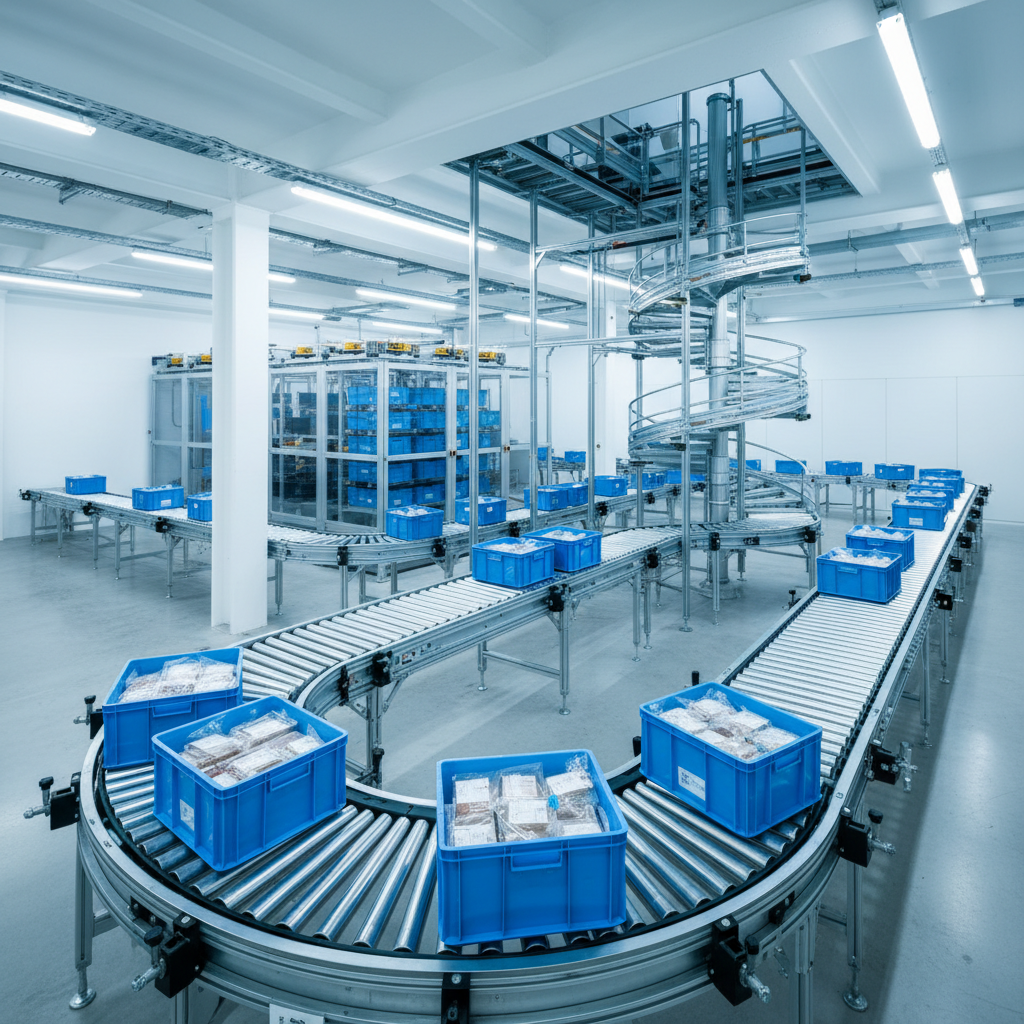
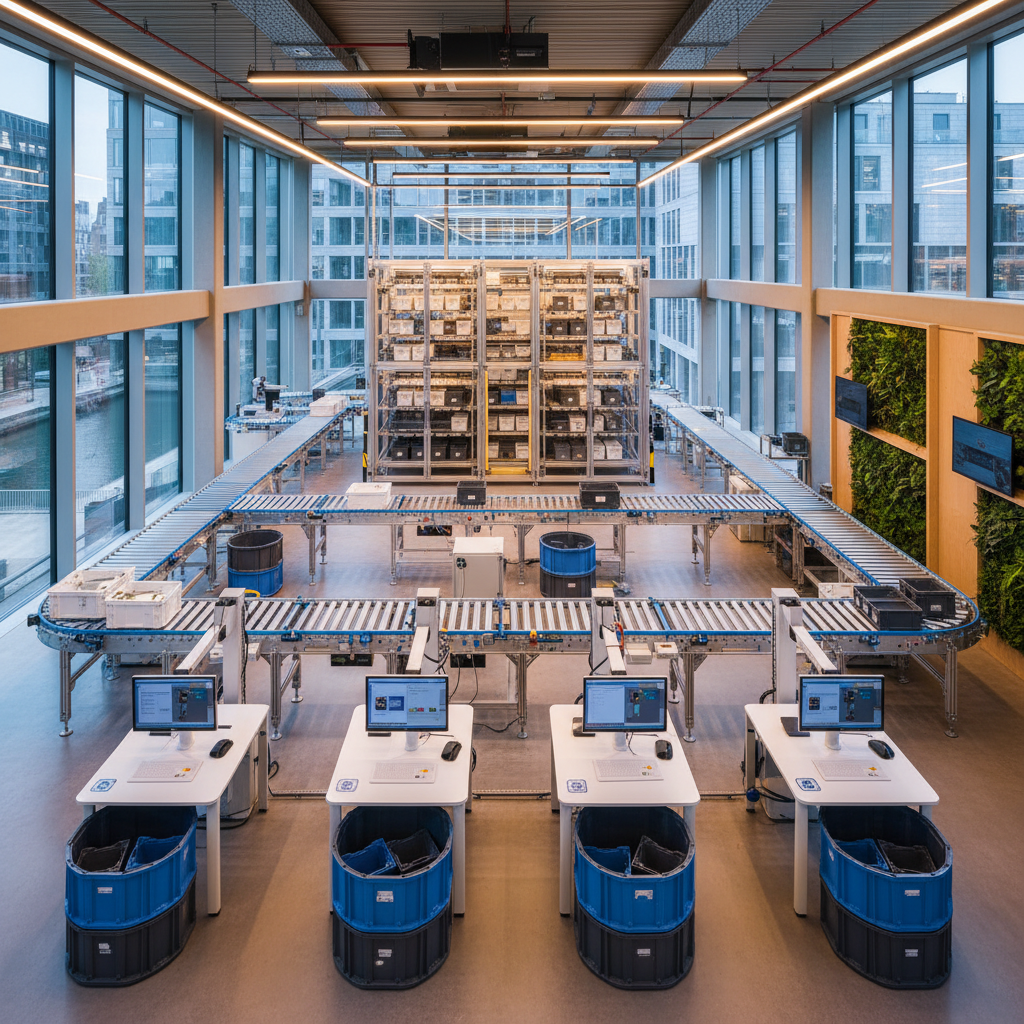
In the tight confines of an MFC, space is the ultimate luxury. Standard-sized conveyor systems are often too bulky and inefficient. This is where compact, modular conveyors shine. They act as the circulatory system of the MFC, connecting various automation islands—from storage to packing—into one cohesive, high-speed operation. Their primary role is to transport order totes, individual items, and completed parcels efficiently and reliably. A well-designed conveyor network is fundamental to achieving high throughput and minimizing bottlenecks.
Key Conveyor Technologies for the Modern MFC
Not all conveyors are created equal. The specific needs of micro-fulfillment—small product sizes, lightweight totes, and the necessity for quiet, energy-efficient operation—call for specialized technologies. For a deeper dive into roller conveyor specifics, our comprehensive roller conveyor guide offers more detail.
| Conveyor Type | Primary Use Case in MFC | Key Advantages | Typical Cost (€/m) |
|---|---|---|---|
| Mini Roller Conveyor (MDR) | Transporting totes between zones | Zero-pressure accumulation, quiet, energy-efficient (run-on-demand) | €400 - €800 |
| Modular Belt Conveyor | Incline/decline, product handling | Versatile, easy to clean, handles various shapes/sizes | €350 - €700 |
| Spiral Conveyor | Vertical transport between floors | Continuous flow, small footprint compared to incline conveyors | €25,000 - €60,000 (per unit) |
| Ball Transfer Table | Manual workstations, packing | Multi-directional movement for easy handling | €500 - €1,200 (per m²) |
Integration is Everything: WMS, WCS, and Conveyors
A conveyor system is only as smart as the software that controls it. In an MFC, the integration between the Warehouse Management System (WMS) and a Warehouse Execution System (WES) or Warehouse Control System (WCS) is critical. The WMS manages inventory and orders, while the WES/WCS directs the hardware in real-time. This includes activating specific conveyor zones, routing totes to the correct picking or packing station, and balancing workflow to prevent jams. This level of integration is essential for the dynamic, on-demand nature of micro-fulfillment.
Designing a Conveyor System for a Benelux MFC
Designing a conveyor layout for an MFC requires a different mindset. The goal is maximum utility in minimum space. Key considerations include:
- Modularity: The system must be easily adaptable. As business needs change, it should be possible to reconfigure, extend, or shrink the conveyor layout with minimal downtime.
- Verticality: Using spiral conveyors or small incline belts to move products between levels is crucial for making the most of the building's height.
- Zero-Pressure Accumulation: This is a must-have feature, typically achieved with Motor Driven Roller (MDR) technology. It allows totes to buffer without touching, preventing product damage and ensuring a smooth flow to downstream processes like packing.
- Energy Efficiency: Given high energy costs in the Benelux and corporate sustainability goals, run-on-demand technology like MDR is the default choice. It ensures conveyor sections only run when a product is present, reducing energy consumption by up to 70% compared to traditional systems.
Many businesses find that while their sales grow, their internal processes struggle to keep up, leading to bottlenecks in fulfillment. As detailed in a recent analysis on our sister site, processes don't always scale with business growth, making scalable automation a forward-thinking investment.
The Future: Hyper-Local and Fully Autonomous
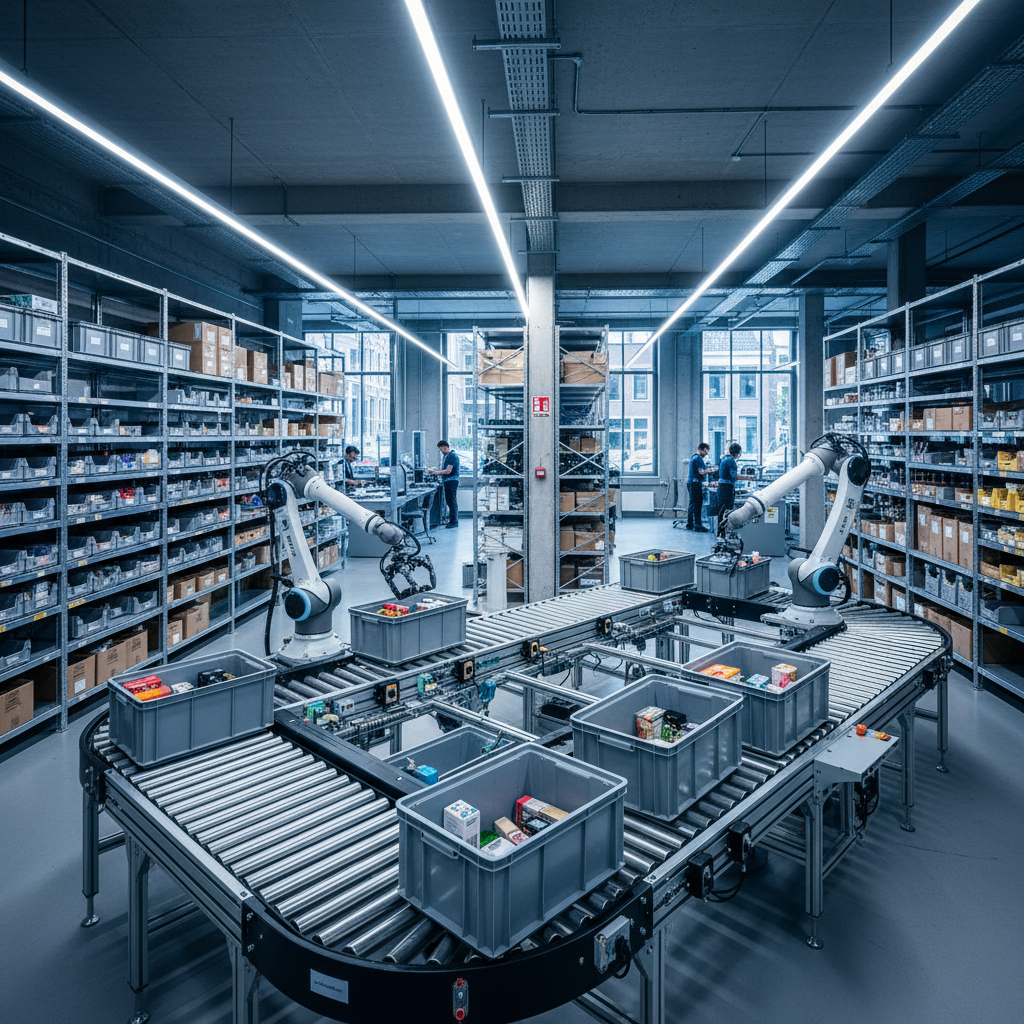
The trend is towards even smaller, more localized fulfillment nodes, sometimes called "nano-fulfillment centres," located in the back of existing supermarkets or dark stores. In this environment, the role of compact, intelligent conveyors becomes even more pronounced. We will see tighter integration with robotic picking (goods-to-person systems) and autonomous mobile robots (AMRs) that handle the final transport to the dispatch area. The goal is a fully "lights-out" operation where orders are fulfilled with minimal human intervention, enabling 24/7 service.
Your Trusted Partner for MFC Conveyor Solutions
The theoretical benefits of micro-fulfillment can only be realized through flawless execution. Selecting the right automation partner is as critical as choosing the right location. At Easy Systems, part of the BOA Concept group, we specialize in designing and implementing smart, compact, and modular conveyor systems tailored for the unique challenges of MFCs. Our deep experience in the European market ensures that your system is not only efficient and reliable but also compliant with all local standards. We provide pragmatic, cost-effective solutions that deliver a rapid ROI and scale with your business, turning your micro-fulfillment vision into a competitive advantage.
Frequently asked questions
What is the typical cost of a compact conveyor system for an MFC in the Benelux?+
The cost for a conveyor system in a Benelux MFC typically ranges from €15,000 to €150,000. The final price depends on the length of the conveyor, the complexity of the layout, and the level of control software required to integrate with other automation like an AS/RS.
How much space is needed for a micro-fulfillment centre?+
A typical micro-fulfillment centre occupies between 500 and 2,000 square meters. These facilities are often retrofitted into existing urban real estate, such as the back of a retail store, a small warehouse, or an underground car park, to be close to customers.
What is the ROI for automating a micro-fulfillment centre?+
The return on investment (ROI) for the automation inside an MFC, including conveyors and storage systems, is generally between 2 to 3 years. This rapid return is driven by significant savings in labor costs, increased order throughput, and higher levels of accuracy.
Which conveyor type is best for transporting totes in an MFC?+
Motor Driven Roller (MDR) or 24V roller conveyors are ideal for transporting totes in an MFC. They offer zero-pressure accumulation, which is crucial for preventing damage, and are highly energy-efficient, often consuming up to 70% less power than older systems.
Can conveyor systems in an MFC be used for vertical transport?+
Yes, vertical transport is a key part of maximizing space in an MFC. Spiral conveyors are the preferred solution as they provide a continuous flow in a very small footprint. For smaller height differences, compact incline or decline belt conveyors are also used.

The Easy Systems engineering team designs, integrates and commissions conveyor systems and warehouse automation across Belgium, the Netherlands and Luxembourg. Combined experience covers roller and belt conveyors, sorters, AGV/AMR fleets, AutoStore, shuttle AS/RS and WMS/WCS integration for distribution centers and e-commerce fulfillment operations.
- Conveyor design (roller, belt, modular plastic)
- Sortation & merge logic
- AGV / AMR fleet integration
- AutoStore & shuttle AS/RS
- WMS / WCS integration