Micro-Fulfillment Centers in Benelux: The Role of Compact Conveyors
Micro-Fulfillment Centers (MFCs) are transforming urban logistics in the Benelux. This article explores the vital role of compact, modular conveyor systems in enabling these small-footprint warehouses to achieve high throughput and fast, local delivery.
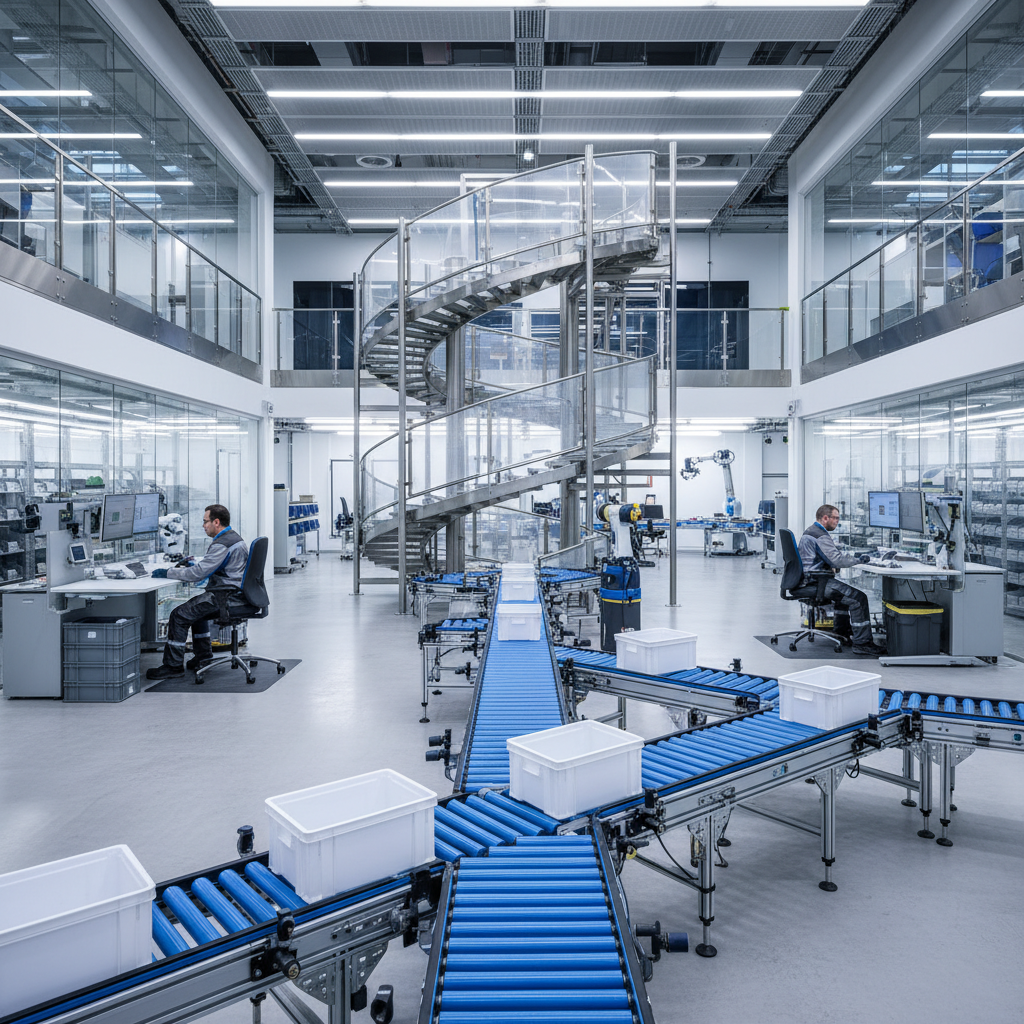
The relentless demand for faster delivery is reshaping the logistics landscape, especially in the densely populated Benelux region. E-commerce giants have set a high bar, making same-day or even sub-two-hour delivery the new consumer expectation. To meet this challenge, retailers are moving away from large, centralized distribution centers towards a more decentralized model: the Micro-Fulfillment Center (MFC). These compact, urban logistics hubs rely on smart automation, and at their core are sophisticated, space-saving conveyor systems that make rapid fulfillment possible.
Definition
A Micro-Fulfillment Center (MFC) is a small-scale, highly automated warehouse or fulfillment facility located within a dense urban area. Its primary purpose is to position high-demand inventory closer to the end consumer, enabling significantly faster and cheaper last-mile delivery compared to traditional, large-scale distribution centers located on the outskirts of cities.
Key Numbers
| Metric | Typical range (Benelux 2026) | Notes |
|---|---|---|
| Footprint | 500 - 2,000 m² | Often retrofitted into existing urban spaces like retail backrooms or parking garages. |
| Initial Investment (Automation) | €250,000 - €2,000,000+ | Depends heavily on the level of automation (e.g., AS/RS, conveyors, robotics). |
| Order Throughput | 300 - 800 CPH (orders) | Designed for high-speed picking of individual items rather than large pallets. |
| Delivery Time (Target) | 30 minutes - 2 hours | The core value proposition for competing in urban markets. |
| Conveyor Speed | 0.3 - 1.5 m/s | Optimized for smaller goods, totes, and parcels; often uses MDR technology. |
| ROI | 2 - 4 years | Achieved through lower last-mile costs and increased order volume/customer loyalty. |
| SKU Capacity | 5,000 - 15,000 | Focused on high-velocity SKUs (fast-moving consumer goods). |
The Strategic Imperative for MFCs in the Benelux
The Benelux countries—Belgium, the Netherlands, and Luxembourg—are among the most densely populated regions in Europe. Cities like Amsterdam, Rotterdam, Brussels, Antwerp, and Luxembourg City present a significant logistical challenge: high consumer demand concentrated in areas with traffic congestion, limited space, and increasing environmental regulations (low-emission zones). Traditional logistics models, which rely on large warehouses far from city centers, are ill-suited for the demands of Q-commerce (Quick Commerce).
MFCs offer a direct solution. By placing fulfillment operations within or at the edge of the city, companies can:
- Reduce Last-Mile Delivery Costs: The final leg of delivery is notoriously the most expensive, often accounting for over 50% of total shipping costs. MFCs drastically shorten this distance, enabling the use of cheaper and greener transport modes like cargo bikes and electric vans.
- Enable Ultra-Fast Delivery: Proximity is key. An order can be picked, packed, and out for delivery within minutes, making 1-hour delivery a viable service offering.
- Increase Inventory Agility: MFCs allow businesses to dynamically position inventory based on local demand patterns, improving availability and reducing the risk of stockouts.
This model is particularly effective for groceries, convenience items, pharmaceuticals, and fast-moving electronics, where consumer immediacy is a primary driver of purchasing decisions.
The Central Role of Compact Conveyor Systems
Space is the ultimate luxury in an urban environment. An MFC must maximize every square meter, and this is where compact, modular conveyor systems become indispensable. Unlike the sprawling systems seen in 100,000 m² distribution centers, conveyors in an MFC must be dense, efficient, and vertically integrated.
Key Conveyor Technologies in an MFC
The "nervous system" of an MFC is its material handling equipment. The goal is to move items from a high-density storage system to a packing station and then to dispatch with minimal human travel. This is typically achieved with a combination of:
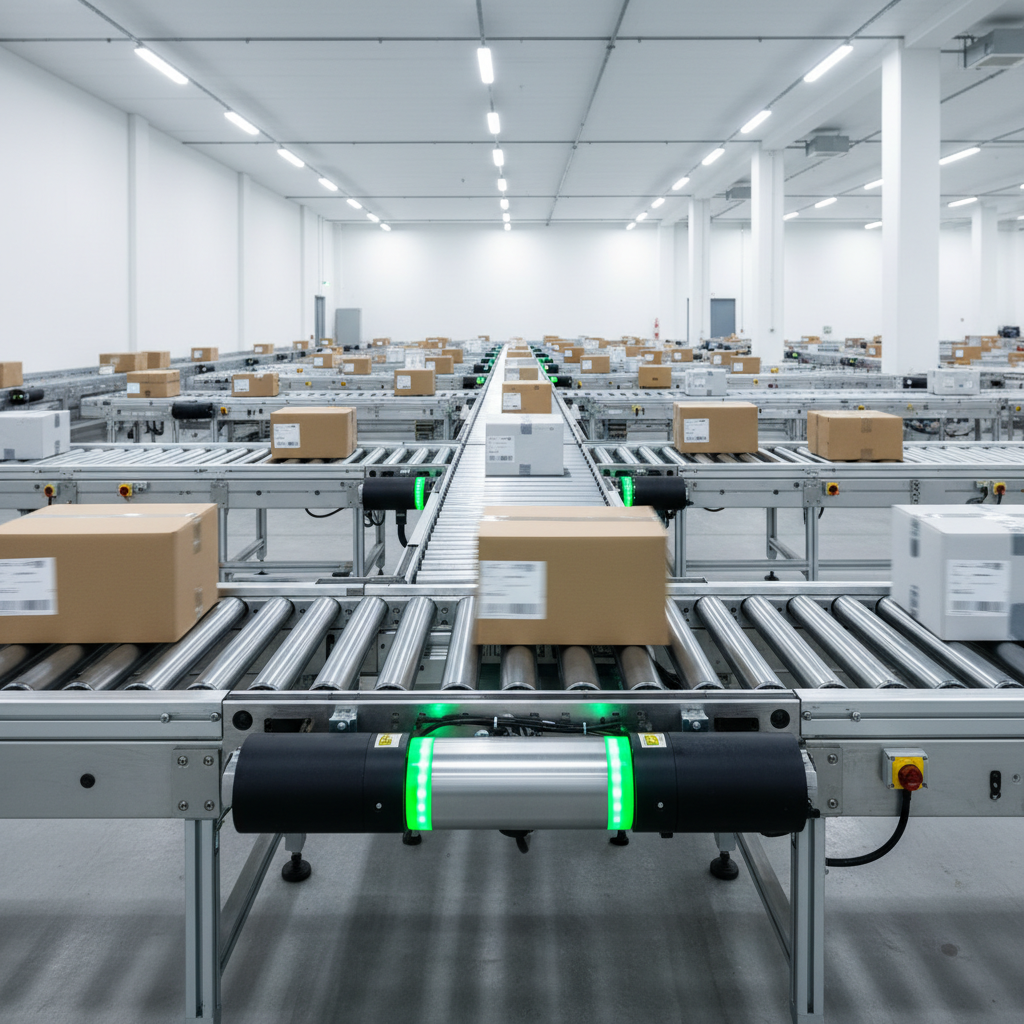
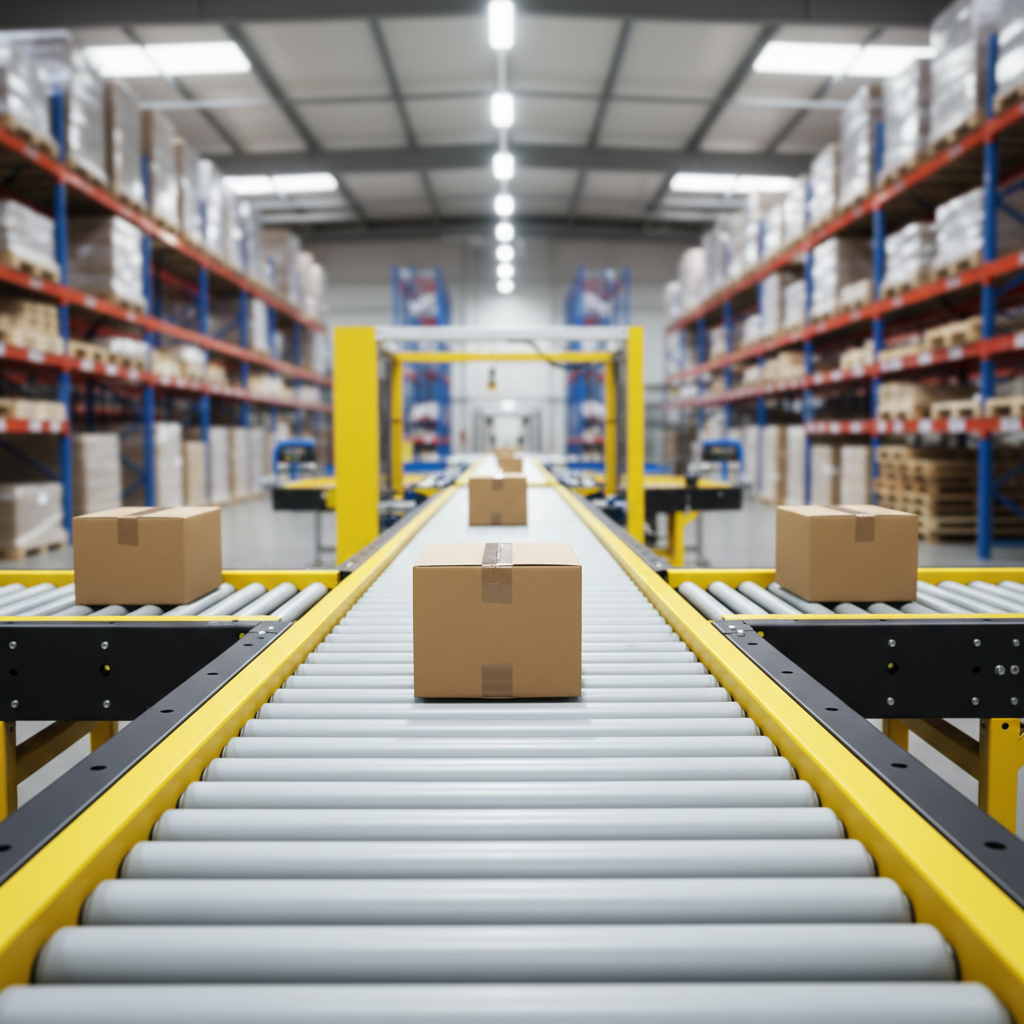
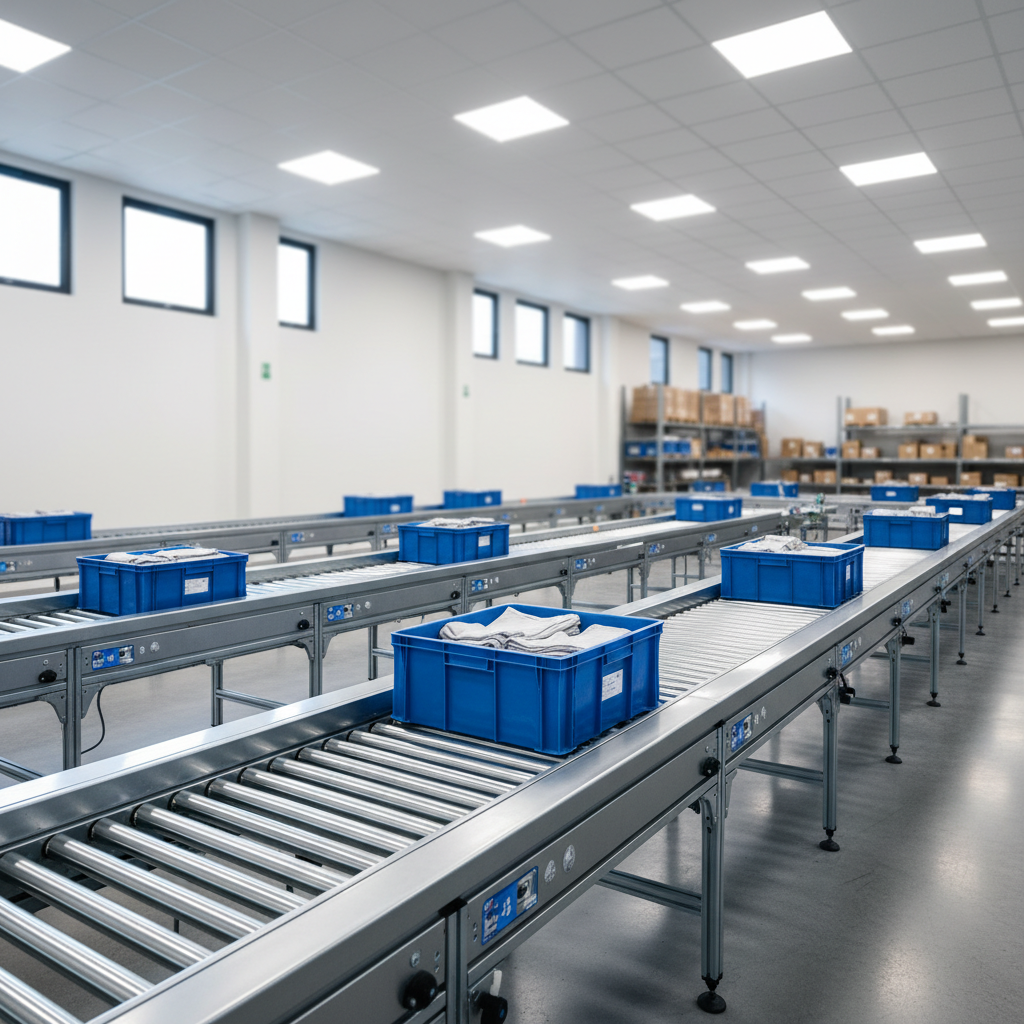
- Modular Roller Conveyors: These are the workhorses for transporting totes and parcels horizontally. Systems using Motor Driven Roller (MDR) technology are particularly popular due to their energy efficiency, quiet operation, and ability to create zero-pressure accumulation zones, which is crucial for preventing product damage in a high-speed environment. Explore more in our comprehensive guide to roller conveyors.
- Spiral Conveyors: Vertical transportation is critical for utilizing the full height of a facility. Spiral conveyors offer a continuous flow of goods between different levels, with a much smaller footprint than traditional incline belt conveyors. They are essential for linking mezzanine levels or connecting storage systems to ground-floor packing stations.
- Belt Conveyors: While roller conveyors are ideal for rigid containers, small belt conveyors are used for handling individual, irregularly shaped items, or for incline/decline sections where grip is required.
- Automated Sorting Systems: Even in a small facility, orders must be sorted for dispatch. Compact tilt-tray or pusher sorters can be integrated to route packages to specific delivery courier bins or gig-worker pickup points.
These systems are orchestrated by a Warehouse Execution System (WES), which manages the flow of tasks and equipment in real-time, ensuring a seamless journey from click to dispatch.
Comparing MFC Automation Technologies
While conveyors are the arteries, the heart of an MFC is often a high-density storage system. The choice of technology depends on budget, required throughput, and SKU density.
| Technology | Typical Footprint | Throughput (Picks/Hour) | Best For | Integration |
|---|---|---|---|---|
| Shuttle-based AS/RS | Medium | 400 - 1,000+ | Very high throughput, medium SKU diversity. Groceries and high-volume e-commerce. | Integrates directly with conveyor in- and out-feed stations for tote handling. |
| Robotic Cube Storage (e.g., AutoStore) | Smallest | 200 - 600 | Highest storage density, high SKU diversity, moderate throughput. Ideal for retrofits. | Robots deliver bins to picking ports, which then connect to takeaway conveyors. |
| AMR-based Goods-to-Person | Flexible / Large | 100 - 400 | High flexibility, easy to scale, moderate SKU density. Apparel and general merchandise. | AMRs bring mobile shelving to stations; conveyors then move picked orders to packing. |
| Multi-level Shelving with Conveyors | Large | 100 - 250 | Lower cost, human-centric picking. Best for lower volume or startup operations. | Conveyors run along pick aisles to transport totes between zones and to packing. |
Integration and Modularity: The Keys to Success
An MFC cannot be a static environment. Demand patterns change, product assortments evolve, and businesses grow. The automation within must be able to adapt. This is why modularity is a critical design principle. Modular conveyor systems, like those from Easy Systems, can be reconfigured, expanded, or upgraded with minimal disruption. A system designed for 5,000 SKUs and 300 CPH today might need to handle 8,000 SKUs and 500 CPH in a year. Using standardized components and plug-and-play MDR modules allows for this scalability.
Furthermore, seamless software integration is non-negotiable. The Warehouse Management System (WMS), Warehouse Execution System (WES), and the conveyor control systems must communicate flawlessly to ensure real-time visibility and control. This tight integration is a common challenge for many businesses, as processes often fail to scale with growth. Modern systems using standards like OPC UA facilitate this interoperability between different hardware and software vendors.
Future Outlook for MFCs in Europe
The trend towards micro-fulfillment is accelerating. As cities in the Benelux and across Europe continue to implement stricter environmental and traffic regulations, the business case for MFCs becomes even stronger. We can expect to see further innovation in this space, including:
- Hyper-specialization: MFCs dedicated exclusively to frozen goods, fresh produce, or pharmaceuticals.
- Automation-as-a-Service (AaaS): Third-party companies that own and operate MFCs, selling fulfillment services to multiple retailers from a single location.
- Dark Store Integration: The line between a retail backroom and an MFC will blur, with more stores using their physical footprint for automated online order fulfillment.
For all these future models, compact, intelligent, and modular conveyor systems will remain the enabling technology, quietly and efficiently powering the next generation of urban logistics.
Easy Systems: Your Partner for Compact Conveyor Solutions
At Easy Systems, part of the BOA Concept group, we specialize in designing and implementing modular, intelligent conveyor systems tailored for the unique challenges of modern logistics. Our solutions are perfectly suited for the high-density, high-throughput demands of Micro-Fulfillment Centers. With extensive experience in the European market, we understand the need for space optimization, energy efficiency (MDR), and scalability. Whether you are retrofitting an existing urban space or building a new MFC from the ground up, our team provides the engineering expertise and robust hardware to create a reliable and future-proof material handling backbone for your urban fulfillment strategy. We deliver not just conveyors, but a competitive advantage in the fast-paced world of Q-commerce.
Frequently asked questions
What is the average cost to set up a Micro-Fulfillment Center in the Benelux?+
The cost varies widely, but for a typical 1,000 m² MFC in the Benelux, the initial investment in automation (conveyors, storage systems, software) generally falls between €500,000 and €2 million. The final cost depends on the required throughput and level of technology, such as AS/RS systems.
How much space is needed for a conveyor system in an MFC?+
Conveyor systems in MFCs are designed to be extremely space-efficient. A typical modular roller conveyor line is only 500-800 mm wide. By using vertical space with spiral conveyors, which can have a footprint as small as 2m x 2m, a complete multi-level system can be installed within a very compact area.
What kind of throughput can an MFC conveyor system handle?+
Compact conveyor systems in a well-designed MFC can typically handle a throughput of 300 to 800 cases or totes per hour (CPH). This speed is essential for processing a high volume of small, multi-line orders quickly to meet sub-2-hour delivery targets in urban areas.
Are MFCs only for large retailers?+
No, while large retailers were early adopters, the rise of modular automation and third-party logistics (3PL) providers offering MFC services is making this model accessible to smaller and mid-sized businesses. A starting investment for a basic conveyor and shelving system can be as low as €250,000.
How do MFCs contribute to sustainable logistics in cities?+
By being located inside cities, MFCs drastically reduce the distance for last-mile delivery. This allows for the use of eco-friendly transport like electric vans and cargo bikes, cutting CO2 emissions per delivery by an estimated 25-50%. Their smaller footprint also requires less energy for heating and lighting than a massive warehouse.
What is the role of a WES in an MFC conveyor system?+
A Warehouse Execution System (WES) acts as the traffic controller for the MFC. It synchronizes the high-density storage system (like an AS/RS) with the conveyor system in real-time. The WES releases orders and directs the flow of totes to ensure a smooth, balanced workload, preventing bottlenecks and maximizing the throughput of the entire facility.

The Easy Systems engineering team designs, integrates and commissions conveyor systems and warehouse automation across Belgium, the Netherlands and Luxembourg. Combined experience covers roller and belt conveyors, sorters, AGV/AMR fleets, AutoStore, shuttle AS/RS and WMS/WCS integration for distribution centers and e-commerce fulfillment operations.
- Conveyor design (roller, belt, modular plastic)
- Sortation & merge logic
- AGV / AMR fleet integration
- AutoStore & shuttle AS/RS
- WMS / WCS integration