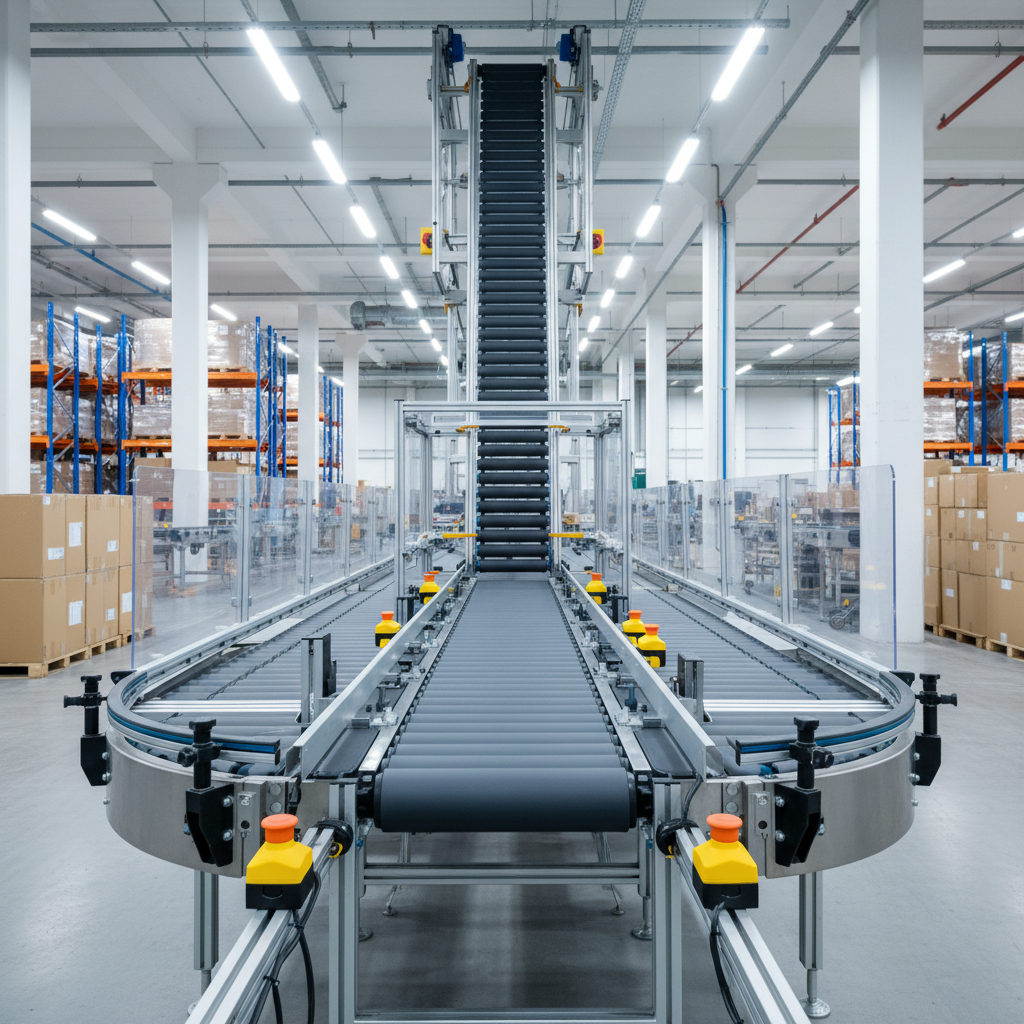
Intelligent Sensors: Powering Predictive Maintenance in Conveyors
Intelligent sensors are revolutionizing conveyor systems by enabling real-time data collection for predictive maintenance. This significantly reduces costly downtime and boosts operational efficiency in modern warehouses, particularly within the competitive Benelux region.

Key numbers
| Metric | Typical range (EU 2026) | Notes |
|---|---|---|
| Reduction in Unplanned Downtime | 30% - 50% | Achieved by detecting faults like bearing wear or motor strain weeks in advance. |
| Annual Maintenance Cost Savings | 15% - 25% | By shifting from scheduled/reactive work to condition-based interventions. |
| Typical ROI Period | 9 - 18 months | Faster for high-throughput facilities where hourly downtime costs exceed €10,000. |
| Increase in OEE | 5% - 10% | Gains from improved availability and performance of the conveyor line. |
| Cost per Monitored Point | €150 - €400 per year | Includes sensor hardware, software subscription, and connectivity. |
| Average Downtime Cost (Main Line) | €5,000 - €20,000 per hour | For a main sorting line in a large parcel or e-commerce distribution center. |
In the high-stakes, fast-paced logistics landscape of the Benelux—a crucial gateway to Europe—every second counts. Unplanned downtime in a distribution center in Venlo or a fulfillment hub near Antwerp can cost thousands of euros per hour. This is where intelligent sensors on conveyor systems are shifting from a luxury to a necessity, forming the bedrock of modern predictive maintenance and operational efficiency strategies.
Definition
An intelligent sensor, or smart sensor, in the context of conveyor systems, is a device that not only detects a condition (like temperature, vibration, or object presence) but also possesses onboard processing and communication capabilities. Unlike a traditional sensor that simply outputs a binary on/off signal, a smart sensor can analyze data at the source and transmit detailed information to a higher-level control system like a PLC or WCS.
From Reactive Repairs to Predictive Power
Traditionally, maintenance strategies have been reactive (fixing things when they break) or preventive (servicing equipment on a fixed schedule, regardless of actual need). Both have significant drawbacks:
- Reactive Maintenance: Leads to maximum downtime, often during peak operations. It also risks secondary damage to other components, inflating repair costs.
- Preventive Maintenance: More stable, but often inefficient. Parts are replaced based on averages, meaning healthy components are discarded early, while others might fail before their scheduled check-up.
Predictive Maintenance (PdM), powered by intelligent sensors, changes the game. By continuously monitoring the actual condition of equipment, it allows maintenance to be scheduled precisely when needed, just before a fault occurs. This minimizes downtime and maximizes component lifespan.
The Data That Matters
Intelligent sensors on a conveyor system collect a range of valuable data points:
- Vibration Analysis: A change in a motor's or roller's vibration signature is a primary indicator of impending bearing failure or misalignment. Early detection can prevent a catastrophic belt-shredding breakdown.
- Temperature Monitoring: Overheating motors, gearboxes, or electrical panels are clear signs of trouble. Sensors can flag anomalies long before they become critical failures, preventing fire hazards and costly replacements.
- Acoustic Analysis: Listening for changes in the sound profile of a system can also indicate wear and tear on components like chains or bearings.
- Current & Power Draw: An unexpected increase in the electricity consumed by a motor can indicate excessive friction, an overloaded belt, or mechanical strain.
Key Sensor Types for Conveyor Systems
Choosing the right sensor is critical for an effective PdM strategy. While numerous types exist, a few are fundamental for modern conveyor applications in European warehouses.
| Sensor Type | Primary Function (for PdM) | Typical Cost (per unit) | Impact on Efficiency |
|---|---|---|---|
| Vibration Sensor | Detects bearing wear, motor imbalance, misalignment. | €150 - €600 | Highest impact on preventing mechanical failure and major downtime. |
| Temperature Sensor | Monitors motor/gearbox overheating, friction points. | €50 - €250 | Critical for preventing electrical faults and fire hazards. |
| Photoelectric Sensor (Smart) | Monitors throughput, object gaps, and flow for performance anomalies that may indicate upstream/downstream issues. | €80 - €300 | Key for operational efficiency, less for direct mechanical PdM but essential for system health. |
| Motor Current Sensor | Measures power draw to detect overload or strain. | €100 - €400 | Excellent for diagnosing issues in MDR-driven or loaded systems. |
The Benelux Advantage: Speed, Reliability, and Cost Control
In the logistics hotspots of Belgium, the Netherlands, and Luxembourg, with their high labor costs and immense throughput demands from ports like Rotterdam and Antwerp, automation isn't just about replacing manual labor; it's about maximizing asset utilization. A conveyor system that runs without interruption is a massive competitive advantage. A company whose processes are not optimized will inevitably lag. As noted in our Dutch blog, "Bedrijven groeien, maar hun processen groeien niet altijd mee" (Companies grow, but their processes don't always keep up), scaling operations requires robust, intelligent systems.
By implementing sensor-based predictive maintenance, a 3PL provider in Tilburg can promise more reliable OTIF (On-Time, In-Full) deliveries, or an e-commerce fulfillment center in Brussels can handle peak season demand without fear of crippling system failure. The ROI is not just in saved maintenance hours; it's in preserved client trust and contract renewals.
Beyond Maintenance: Efficiency Gains
Intelligent sensors also drive energy efficiency. Consider a Zero-Pressure Accumulation (ZPA) conveyor. Smart sensors ensure that only the zones carrying packages are active. This can reduce energy consumption by up to 50% compared to a continuously running conveyor. Data on package flow and gaps can be used to dynamically adjust conveyor speeds, balancing throughput needs with energy usage, a critical factor given volatile European energy prices.
Integration is Everything: Connecting Sensors to Strategy
Collecting data is only half the battle. To be effective, sensor data must be integrated into your warehouse software ecosystem. Data flows from the sensor, often via industrial communication protocols like OPC UA, to the Warehouse Control System (WCS) or Warehouse Execution System (WES). For a deeper dive into this architecture, our guide on WMS/WCS integration is a great resource.
The workflow looks like this:
- A vibration sensor detects a deviation from the baseline on a motor.
- It sends an alert to the WCS.
- The WCS translates this into a maintenance request in the CMMS (Computerized Maintenance Management System), flagging the specific motor and the nature of the problem.
- A maintenance technician is dispatched with full knowledge of the issue before even arriving at the machine.
This seamless flow of information turns raw data into actionable intelligence, preventing downtime and optimizing labor.
Easy Systems: Your Partner for Intelligent Conveyor Solutions
At Easy Systems, we understand the unique pressures of the Benelux and wider European logistics market. We don't just build conveyors; we engineer intelligent material handling solutions. Our expertise lies in designing systems with sensor technology integrated from the ground up, tailored to your specific operational needs for predictive maintenance and efficiency. We select the right sensors, ensure seamless integration with your WCS/WES, and configure the data dashboards you need to stay in control. By partnering with us, you invest not just in steel and motors, but in the reliability, efficiency, and future-proof intelligence that modern logistics demands.
Frequently asked questions
What is the main difference between a smart sensor and a regular sensor?+
A regular sensor offers a simple binary signal (e.g., on/off). An intelligent sensor has onboard processing to analyze data locally and transmit detailed metrics, like a temperature reading accurate to within 0.5°C. This provides richer data for predictive maintenance algorithms and enables response times under 500ms, eliminating the need for a separate data acquisition system.
What is the typical ROI for installing a predictive maintenance sensor system?+
The typical Return on Investment (ROI) for a predictive maintenance sensor system is between 9 and 18 months. This is achieved by reducing unexpected downtime costs, which can exceed €10,000 per hour for a critical conveyor line. Further savings come from cutting premature parts replacement by up to 30% and optimizing maintenance schedules, directly boosting profitability.
Can intelligent sensors be retrofitted onto older conveyor systems?+
Absolutely. Most PdM sensors are designed for retrofitting. Wireless vibration and temperature sensors, which often have a battery life of 3-5 years, can be magnetically mounted to motors or gearboxes in minutes. This avoids complex wiring, allowing a facility to deploy a monitoring solution across hundreds of critical assets in a matter of days with minimal operational disruption.
How much data does a typical smart sensor system generate?+
A single vibration sensor might send a detailed reading every 15-30 minutes. For a system with 200 sensors, this can amount to over 50,000 data points per day. However, modern edge and cloud platforms are built to handle this volume, using algorithms to flag only the significant deviations that require human attention, preventing data overload for the maintenance team.
What is the biggest challenge when implementing a sensor-based PdM system?+
The primary challenge is operational, not technical. It requires shifting from a scheduled maintenance mindset to a data-driven one. This involves training technicians to trust the data and integrating new workflows. A successful implementation typically involves a pilot phase on 10-20 critical assets to demonstrate value and refine processes before a full-scale rollout across the facility.

The Easy Systems engineering team designs, integrates and commissions conveyor systems and warehouse automation across Belgium, the Netherlands and Luxembourg. Combined experience covers roller and belt conveyors, sorters, AGV/AMR fleets, AutoStore, shuttle AS/RS and WMS/WCS integration for distribution centers and e-commerce fulfillment operations.
- Conveyor design (roller, belt, modular plastic)
- Sortation & merge logic
- AGV / AMR fleet integration
- AutoStore & shuttle AS/RS
- WMS / WCS integration