Integrating AGVs & AMRs with Conveyors: A Benelux Guide
Discover how to seamlessly integrate AGVs and AMRs with your existing conveyor infrastructure. This guide for Benelux warehouse managers covers practical steps, cost-benefit analysis, and key technologies for a successful implementation.
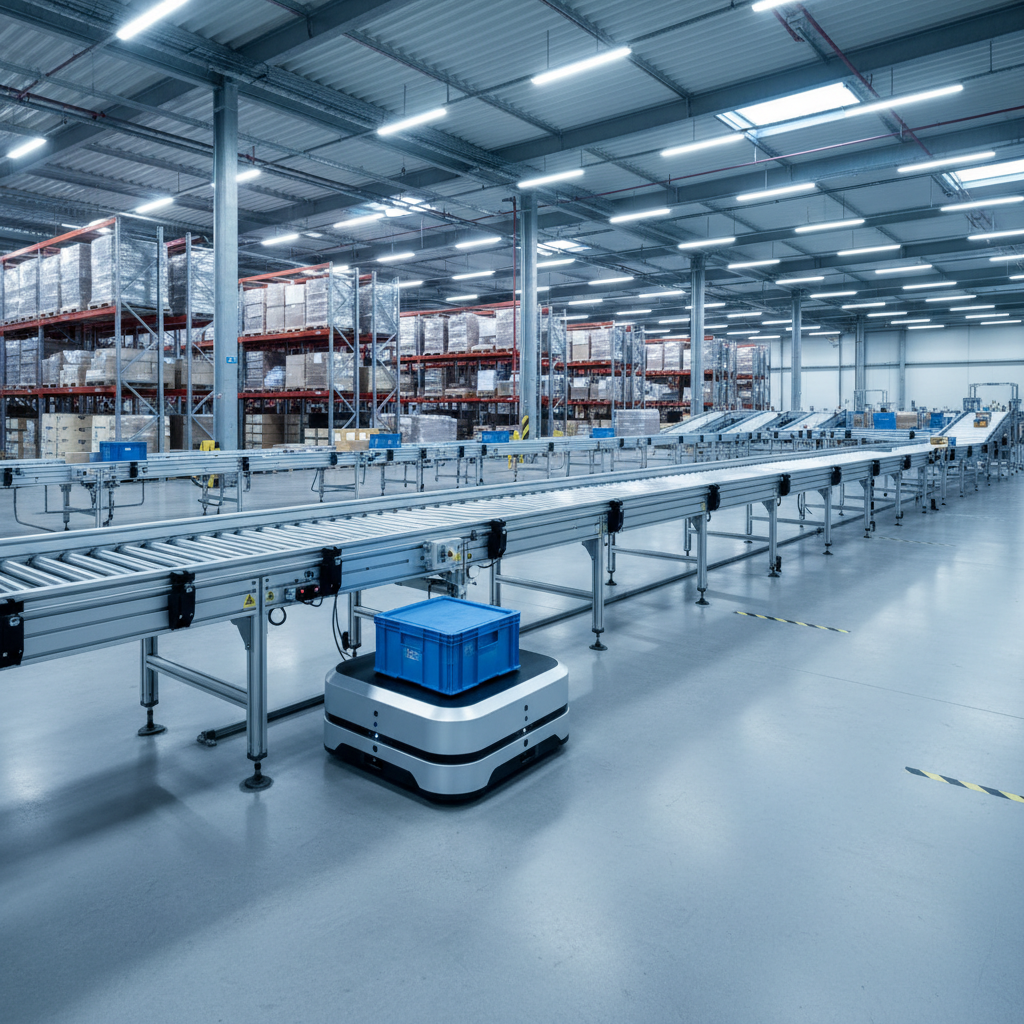
As warehouses across the Benelux face pressures from labour shortages and rising customer expectations, many are looking beyond traditional automation. Instead of a complete overhaul, a powerful strategy is emerging: augmenting existing conveyor systems with the flexibility of Automated Guided Vehicles (AGVs) and Autonomous Mobile Robots (AMRs). This practical guide explores how to successfully merge these two worlds, creating a future-proof logistics operation.
Definition
The integration of AGVs and AMRs with conveyor systems is the process of creating a unified material handling ecosystem where fixed conveyors and mobile robots work in concert. This is orchestrated by a central software layer, typically a Warehouse Execution System (WES), which manages the seamless handover of goods between the two systems to optimize flow and flexibility.
Key Numbers for Benelux Warehouse Integration (2026)
| Metric | Typical Range (EU 2026) | Notes |
|---|---|---|
| Initial Investment (System) | €80,000 – €350,000+ | Includes a small fleet (3-5 units), software (WES), and integration services. |
| AGV/AMR Unit Cost | €15,000 – €60,000 | Depends heavily on payload, navigation tech (SLAM vs. magnetic tape), and brand. |
| Return on Investment (ROI) | 2 – 3 years | Based on 2-shift operations; faster ROI with higher labour costs and throughput. |
| Throughput Increase | +15% to +30% | Depends on the specific application (e.g., pallet transport, goods-to-person). |
| Typical AMR Speed | 1.0 – 2.0 m/s | AGVs are generally slower (around 1.0 m/s) for safety and navigation reasons. |
| Integration Project Duration | 4 – 9 months | From initial analysis and simulation to full go-live and testing. |
| WES Software License | €25,000 – €100,000 | Often the most critical component for successful, dynamic task allocation. |
Why Integrate? The Limits of Conveyors-Only Automation
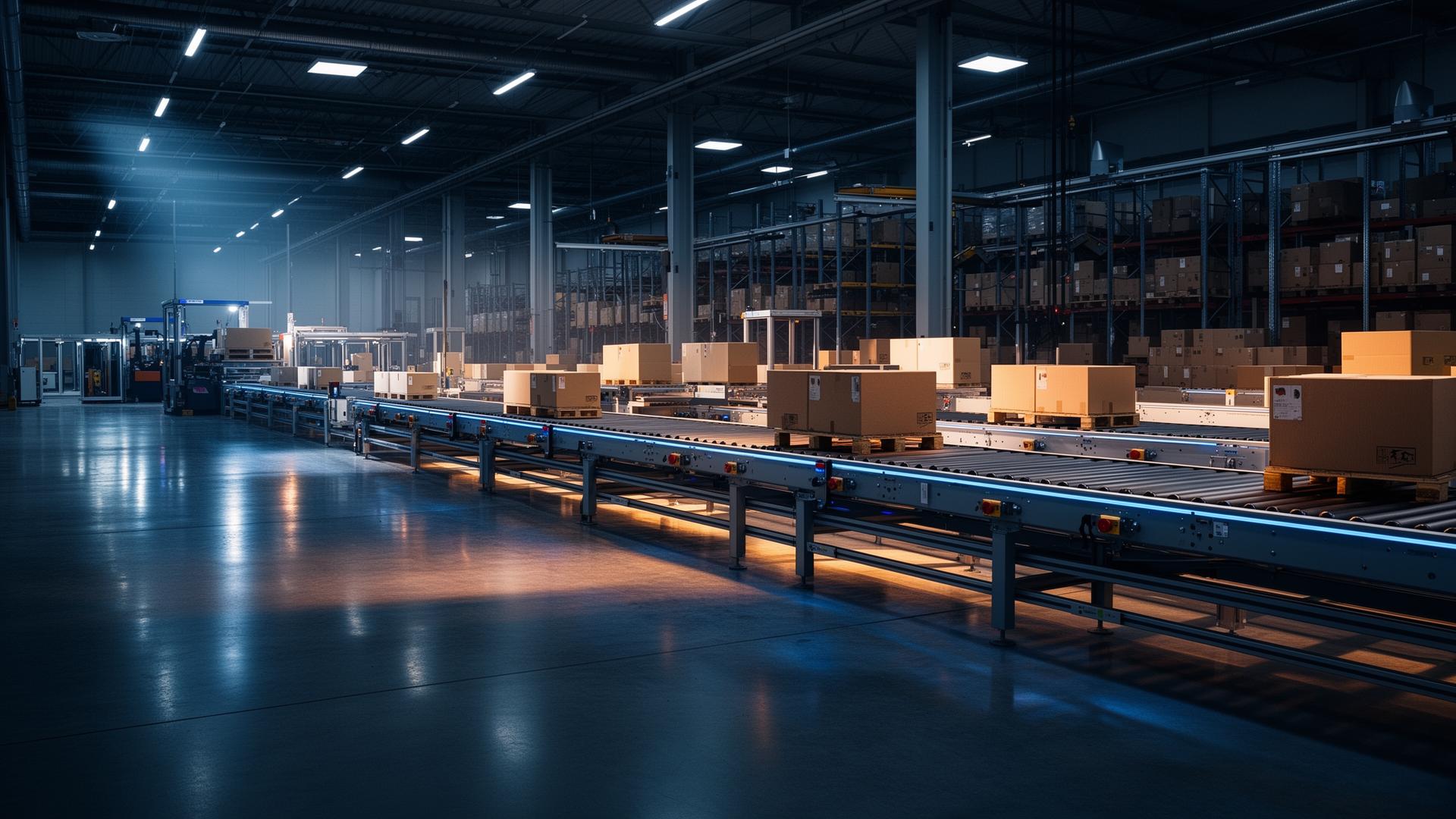
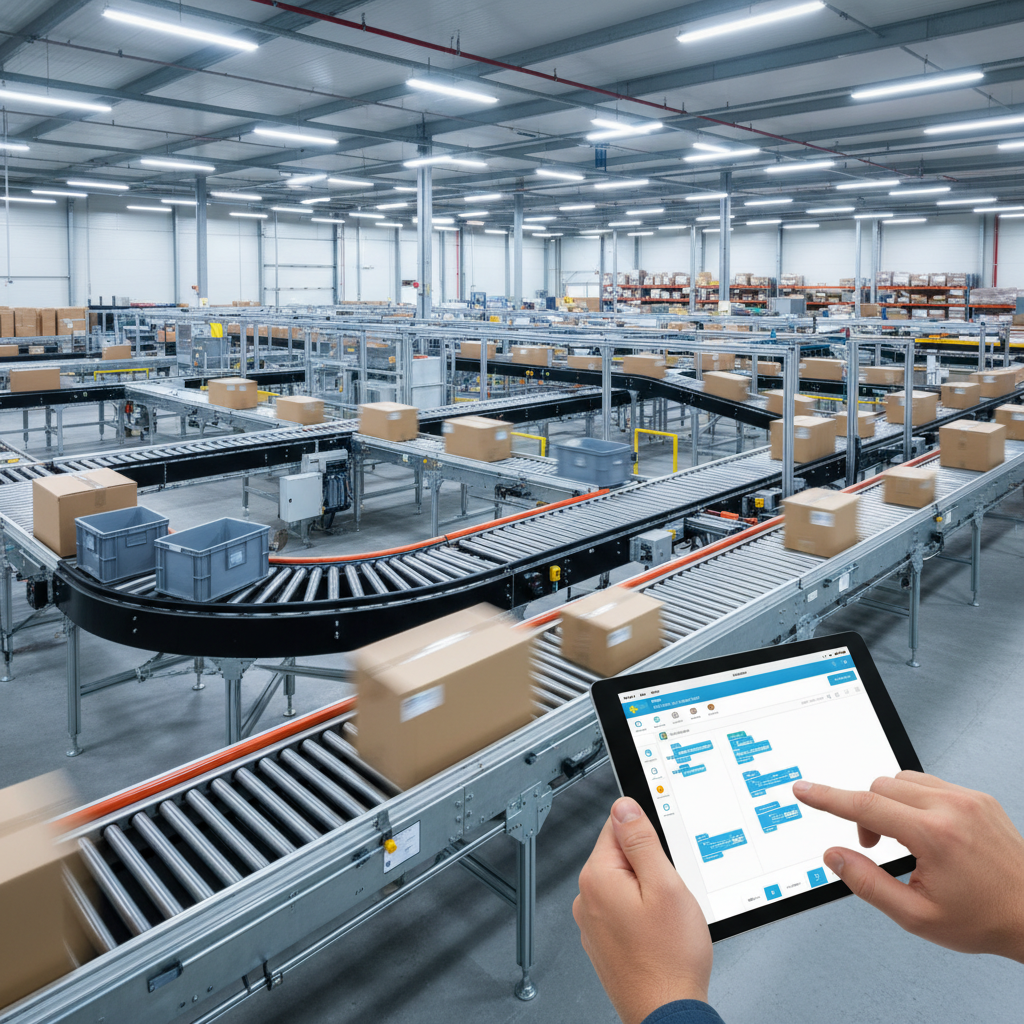
Fixed conveyor systems are the backbone of many warehouses, offering unparalleled speed and reliability for high-volume, predictable routes. A roller conveyor line can move hundreds or thousands of totes per hour from point A to B with unmatched efficiency. However, their fixed nature is also their greatest weakness. Routes are inflexible, scaling requires significant mechanical and electrical work, and they struggle with tasks outside of pure conveyance, like servicing picking stations or moving goods to ad-hoc storage zones.
This is where mobile robots provide a crucial extension. AGVs and AMRs introduce the flexibility that conveyors lack. They can navigate complex floor plans, adapt to changing layouts, and perform a variety of tasks, effectively bridging the "islands of automation" that fixed conveyors often create. This hybrid approach allows warehouses to retain their high-speed core while adding a layer of intelligent, adaptable transport.
The Strategic Advantages of a Hybrid System
- Flexibility and Scalability: Add new robots to increase capacity or deploy them to new zones without massive infrastructure changes. This is a game-changer compared to extending a conveyor line, which can take weeks and cause significant disruption.
- Reduced Walking Time: In picking or put-away operations, AMRs can transport goods between pickers and a central takeaway conveyor, drastically reducing non-value-added travel time for employees.
- Improved Space Utilization: AMRs can navigate to temporary storage locations or feed packing stations that are not directly connected to the main conveyor network, optimizing floor space.
- Resilience: If an AMR unit fails, others can be dynamically rerouted to take over its tasks. A mechanical failure on a critical conveyor line can shut down the entire operation.
AGV vs. AMR: Choosing the Right Robot for Integration
While often used interchangeably, AGVs and AMRs have fundamental differences that impact how they integrate with conveyors. The choice depends entirely on the environment and the specific task.
| Feature | Automated Guided Vehicle (AGV) | Autonomous Mobile Robot (AMR) |
|---|---|---|
| Navigation | Follows predefined paths (magnetic tape, wires, QR codes). Low intelligence on board. | Navigates dynamically using onboard maps and sensors (SLAM technology). High intelligence. |
| Flexibility | Low. Rerouting requires changing the physical guide paths. | High. Can calculate new routes around obstacles in real-time. |
| Integration Complexity | Simpler for basic A-to-B transfers to/from a fixed conveyor point. Predictable. | More complex software integration (WES) needed to manage its dynamic nature. |
| Best Use Case with Conveyors | Repetitive pallet transfers from end-of-line palletizer to a stretch wrapper or outbound conveyor. | Dynamic transport of totes/bins from a goods-to-person station or sorter chute to various packing stations. |
| Cost per Unit | €15,000 - €40,000 | €25,000 - €60,000 |
For a Benelux logistics hub focused on high-volume pallet handling, an AGV might be the most cost-effective solution to automate transfers from a production line to a pallet conveyor. Conversely, an e-commerce fulfillment center with fluctuating order profiles would benefit more from a fleet of AMRs to dynamically move picked orders from aisles to packing stations fed by a central conveyor. Refer to our in-depth guide on AGV vs. AMR for more details.
The Central Role of Software: WMS, WCS, and WES
Successful integration is less about the hardware and more about the software that controls it. Three systems are key:
- Warehouse Management System (WMS): The brain of the operation. It manages inventory, orders, and overall stock location. It gives the high-level commands, like "move pallet X from receiving to location Y."
- Warehouse Control System (WCS): The a manager for mechanical equipment. It directly controls the conveyors, sorters, and other fixed automation, managing speeds and routing based on commands from the WMS.
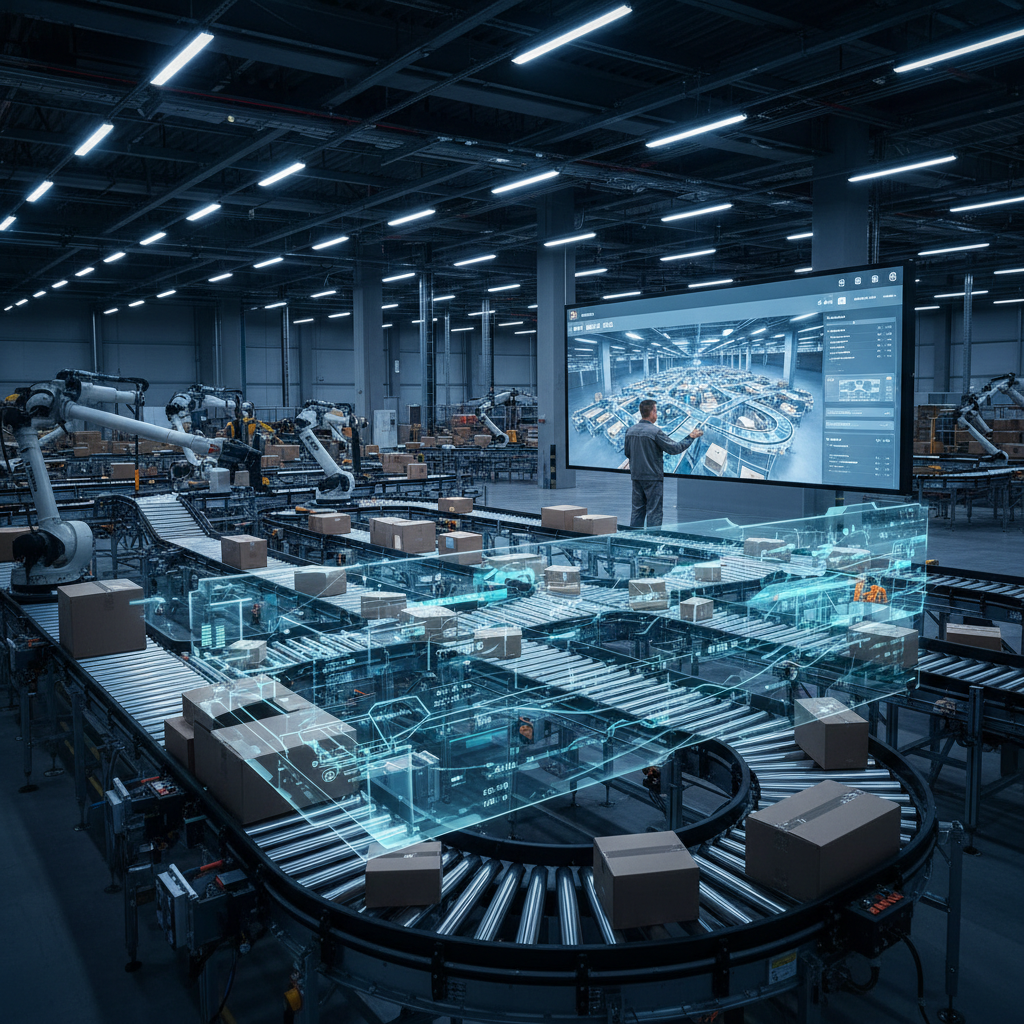
- Warehouse Execution System (WES): The crucial link. A modern WES often combines WCS functions with advanced logic to manage both fixed and mobile automation assets in real-time. It acts as the traffic controller, deciding whether a conveyor or an AMR is the best asset to complete a task issued by the WMS. It tells the AMR *where* to go and the conveyor *what* to expect.
In a hybrid system, the WMS might send an order to the WES. The WES then directs a conveyor to move a tote to a specific hand-off point. It simultaneously dispatches an AMR to that exact point, instructing it to pick up the tote and deliver it to a specific packing station. The WES ensures the timing is perfect, avoiding congestion and maximizing flow. As many companies find, their processes don't always scale with their growth, making a WES a critical investment for scalable automation.
Physical Integration Points: Where Robots Meet Conveyors
The physical handshake between robot and conveyor must be seamless and reliable. Several common methods exist:
Top Modules and Lifts
The most common method involves outfitting the AMR/AGV with a powered conveyor top module. This allows the robot to dock precisely with a fixed conveyor and transfer a tote or pallet directly. This requires high precision and communication between the systems.
- AGV Docking: An AGV follows its path to a precise stopping point. Sensors confirm its position, and the WCS/WES activates both the AGV's conveyor module and the fixed conveyor section to perform the transfer.
- AMR Docking: An AMR uses its SLAM navigation and visual markers (like a Fiducial marker) to align itself with the conveyor. This is more flexible but requires more sophisticated sensor technology.
Stands and Pick/Deposit (P&D) Stations
For simpler applications, robots can deliver goods to non-powered stands. A conveyor with a sensor then "sees" the item and pulls it onto the main line, or an operator might manually slide it on. This is less automated but cheaper and easier to implement. These P&D stations serve as a simple buffer and decouple the robot’s task from the conveyor’s operation.
A Phased Approach to Integration
A "big bang" integration is risky and rarely recommended. A phased approach allows for learning, adjustment, and better budget management.
- Phase 1: Pilot Project (1-3 Months): Identify a single, contained process. For example, moving finished goods from one production line to a quality control station. Deploy 2-3 AMRs and integrate them with a short, isolated conveyor section. Measure KPIs meticulously.
- Phase 2: Zone Expansion (3-6 Months): Based on the pilot's success, expand the system to an entire zone, such as the full outbound packing area. Integrate the AMR fleet with the main outbound sorter takeaway conveyor. This requires more advanced WES logic for task allocation.
- Phase 3: Facility-Wide Rollout (6-12 Months): Extend the hybrid system across multiple departments, such as receiving, put-away, and picking. This involves full integration with the WMS and a larger, mixed fleet of potentially different types of robots, all managed by the central WES.
Positioning Easy Systems as Your Integration Partner
Successfully merging mobile robots with fixed conveyor systems requires deep expertise in both domains. At Easy Systems, we are not just a conveyor manufacturer; we are automation integrators with decades of experience in the European logistics landscape. Our strength lies in understanding material flow at a granular level. We design and build robust, modular conveyor systems—from roller and belt conveyors to complex sorting solutions—that are specifically engineered for seamless integration with third-party technologies like AGVs and AMRs. Our PLC-level controls and open-architecture approach ensure that our conveyor systems can communicate effectively with any modern WES, providing the reliability you need and the flexibility you desire. We partner with leading robot manufacturers and WES providers to deliver a truly unified, efficient, and scalable automation solution for your Benelux warehouse.
Frequently asked questions
What is the average cost to integrate AMRs with my existing conveyors in the Netherlands?+
For a small to medium-sized warehouse in the Netherlands, a pilot project to integrate 3-5 AMRs with an existing conveyor line typically costs between €80,000 and €150,000. This includes the robots, a basic WES software module, and integration services. Full-scale integration can exceed €500,000.
How much efficiency can I gain by adding AGVs to my conveyor system?+
By automating repetitive pallet or tote movements, you can typically increase overall process efficiency by 15-30%. The biggest gains come from reducing employee walking time and creating a more consistent, predictable flow of goods between your automated islands and manual process areas.
Which software do I need to connect AMRs to my conveyors?+
A Warehouse Execution System (WES) is the essential software layer. While your WMS manages inventory, the WES acts as the real-time traffic controller, dispatching tasks to both your conveyors and your AMRs to ensure they work together seamlessly and without creating bottlenecks.
Can any conveyor system be integrated with AGVs?+
Most modern conveyor systems with PLC controls and sensor-based logic can be integrated. The key is the ability to create a controlled hand-off point. Older, continuously running conveyors without zone logic may require upgrades, such as adding a zero-pressure accumulation section, which can cost €2,000 - €5,000 per zone.
What is the difference between AGV and AMR integration?+
AGV integration is typically simpler and point-to-point, as the AGV follows a fixed path to a predefined conveyor location. AMR integration is more complex and dynamic; the AMR uses onboard mapping to find the most efficient path, requiring a more sophisticated WES to manage its flexible movements and coordinate hand-offs in real-time.
How long does an AGV/AMR integration project take in Belgium?+
A typical pilot project in a Belgian warehouse, from initial design to go-live, takes about 4 to 6 months. A full-scale, facility-wide rollout can take anywhere from 9 to 18 months, depending on the complexity, the number of systems being integrated, and the maturity of the client's existing software stack.

The Easy Systems editorial desk reviews and fact-checks every Conveyor-Design article against Benelux project experience. Editors translate engineering decisions — throughput, peak factors, layout, integration — into plain-language guides for operations managers, project leads and decision-makers.
- Warehouse layout & slotting
- Order-profile analysis
- Vendor-neutral comparison
- Benelux logistics market