Digital Twins for Conveyor Systems: Virtual Simulation in Benelux
A Digital Twin for your conveyor system is a virtual replica that allows for simulation and analysis, leading to optimized throughput and reduced operational costs. This guide explores the benefits and implementation process for warehouses in the Benelux.
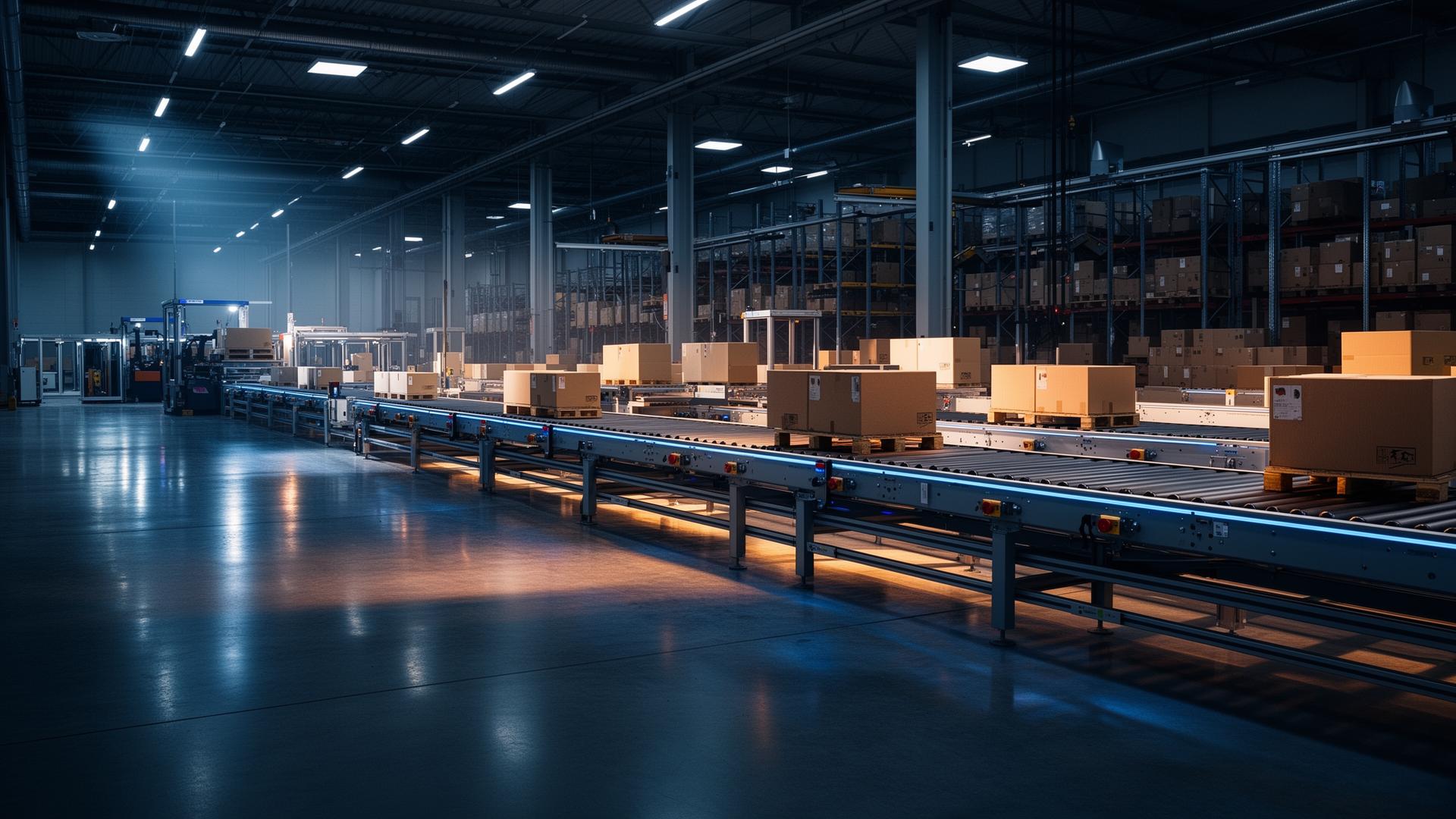
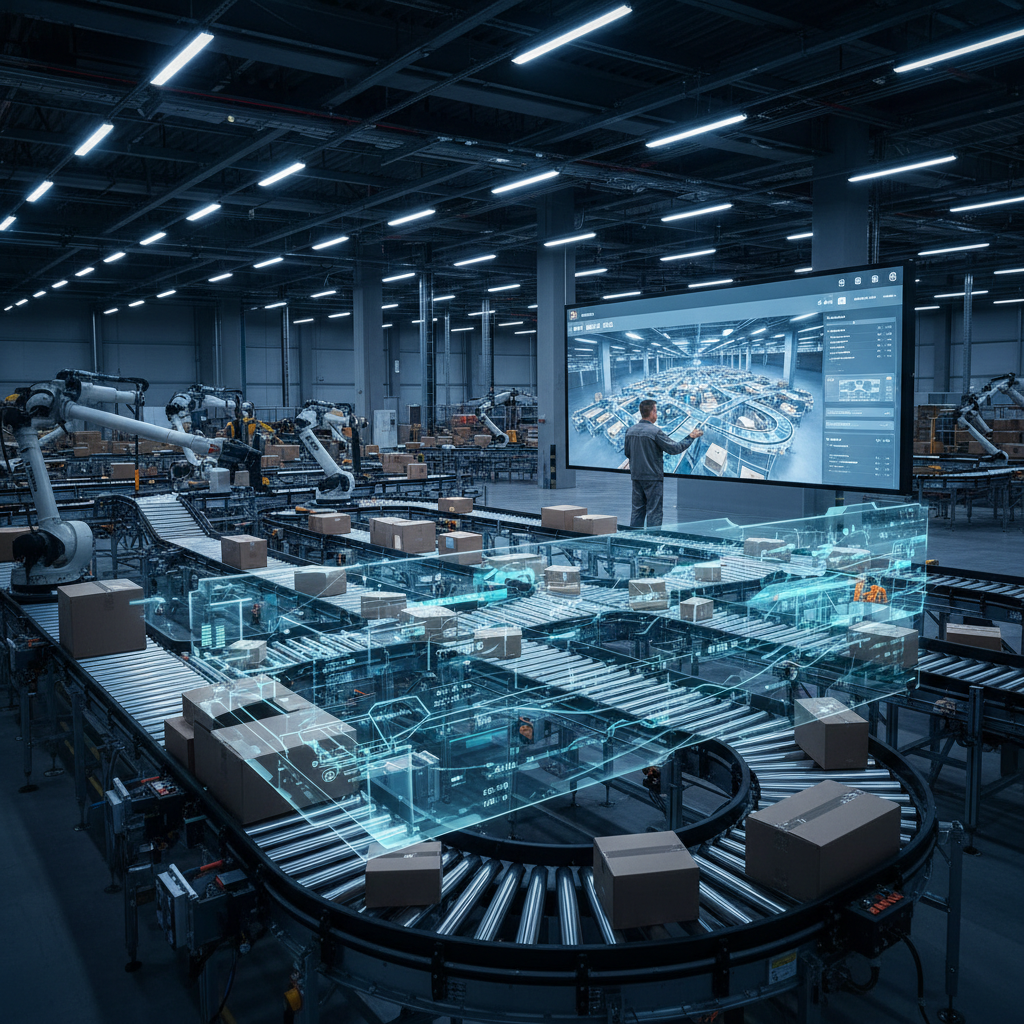
In the hyper-competitive logistics landscape of the Benelux, where every square meter and every second counts, gaining an operational edge is paramount. Warehouse managers are increasingly looking beyond physical hardware for optimization. Enter the Digital Twin: a dynamic virtual simulation of your entire conveyor system. This technology allows you to test, validate, and optimize your material handling processes in a risk-free environment, unlocking significant gains in efficiency, throughput, and resilience before a single physical component is installed or modified.
Definition
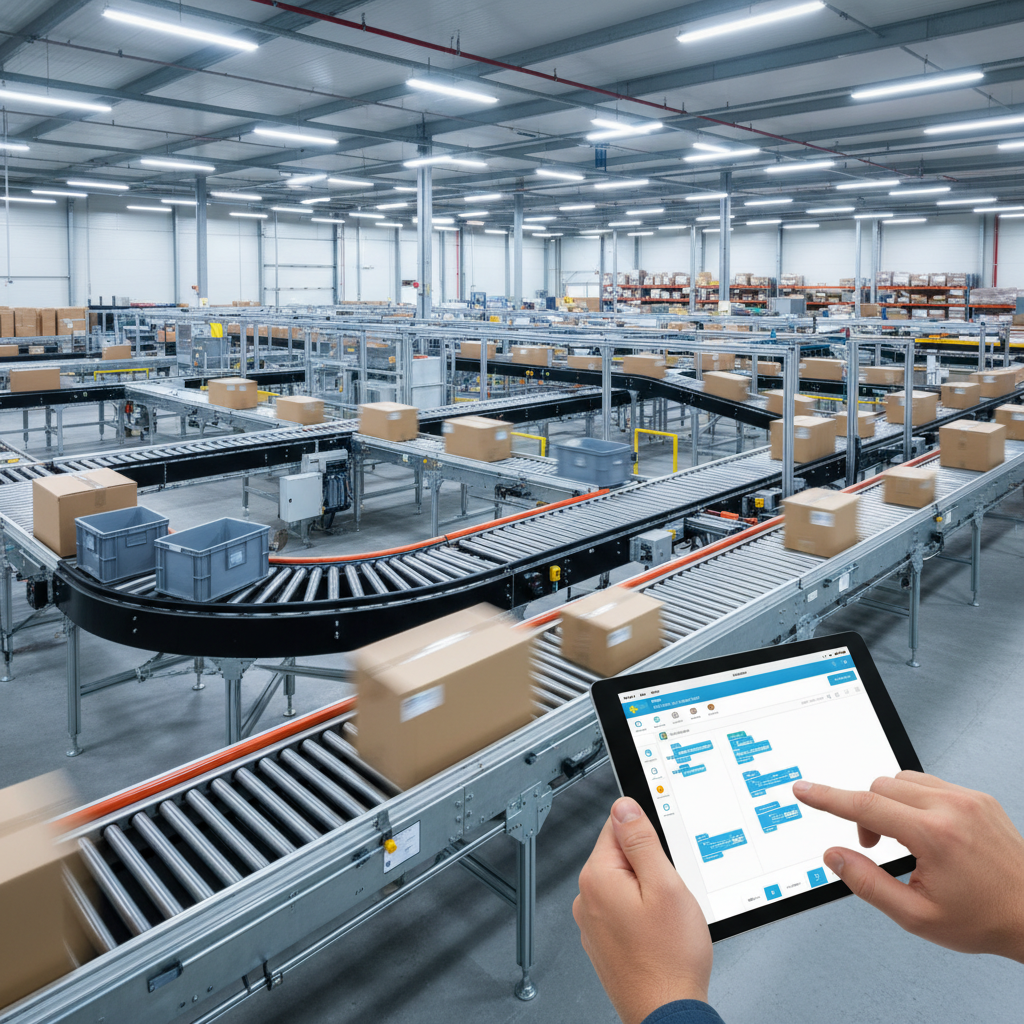
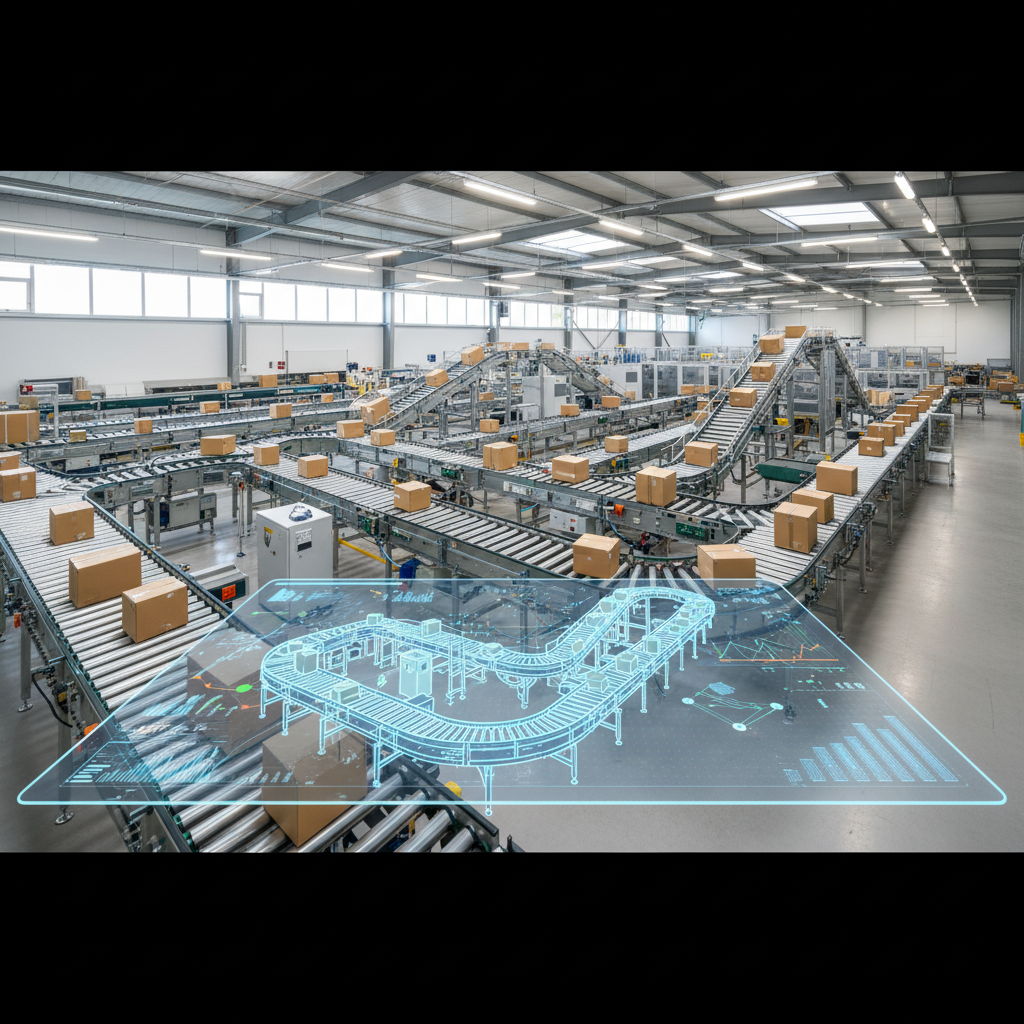
A Digital Twin in the context of conveyor systems is a precise, virtual 3D model of a physical conveyor installation, which is dynamically updated with real-time data from sensors and the Warehouse Control System (WCS). It mirrors the system's behavior, allowing for detailed simulation, performance analysis, bottleneck identification, and predictive maintenance.
Key Numbers for Conveyor Digital Twins
| Metric | Typical Range (Benelux 2026) | Notes |
|---|---|---|
| Initial Investment (Software & Integration) | €25,000 - €150,000 | Depends on system complexity and scale. |
| Reduction in On-site Commissioning Time | 20% - 40% | Virtual testing drastically reduces physical setup and debugging time. |
| Throughput Increase (Post-Optimization) | 5% - 15% | Achieved by identifying and resolving virtual bottlenecks. |
| Predictive Maintenance Accuracy | 85% - 95% | Reduces unplanned downtime by predicting component failure. |
| Annual Operational Cost Savings | 10% - 20% | From reduced downtime, energy optimization, and lower labor costs. |
| ROI Payback Period | 1.5 - 3 years | Faster ROI in complex systems with high throughput demands. |
| Data Integration Latency | < 100 ms | Near real-time sync between the physical system and its digital twin. |
Why the Benelux is a Prime Market for Digital Twins
The logistics ecosystem in Belgium, the Netherlands, and Luxembourg is characterized by high operational costs, a dense and demanding consumer market, and its role as a primary gateway to Europe. These factors create a fertile ground for Digital Twin adoption:
- High Labor Costs: Automation is key, and Digital Twins ensure that automated systems like conveyors perform at peak efficiency from day one, maximizing the return on investment.
- Space Constraints: With premium real estate costs, especially around major hubs like Antwerp, Rotterdam, and Liège, conveyor footprints must be perfectly designed. Simulation allows for layout optimization without physical trial-and-error.
- Peak Season Volatility: The e-commerce market demands systems that can handle extreme peaks. A Digital Twin allows you to stress-test your system against projected Black Friday or holiday volumes, ensuring you can meet demand.
- Sustainability Goals: European regulations and corporate responsibility are pushing for greener logistics. Simulations can model energy consumption, helping to design more energy-efficient systems (e.g., using Motorized Drive Rollers) and reduce the carbon footprint.
Core Applications of a Conveyor Digital Twin
The benefits of a virtual model extend across the entire lifecycle of a conveyor system.
1. Virtual Commissioning
Traditionally, testing the control logic (PLC code) and WCS integration happens on-site after the physical installation. This is time-consuming and costly. With a Digital Twin, you can connect your actual PLC and WCS to the virtual model. This allows you to debug and validate 90% of the control software in a simulated environment, drastically cutting down on-site commissioning time and risk. For a project in Ghent, this could mean reducing on-site time from 4 weeks to just one.
2. Throughput and Bottleneck Analysis
Your conveyor system is only as fast as its slowest point. A Digital Twin, fed with real or simulated order data, can visualize the flow of goods and automatically flag bottlenecks. You can see where parcels accumulate, where sorters get overwhelmed, or where merges are inefficient. This allows you to test solutions—like changing conveyor speeds, adjusting merge logic, or adding an accumulation buffer—virtually before committing to expensive physical changes.
3. Predictive Maintenance
By analyzing real-time data (e.g., motor current, vibration, temperature) and historical performance, the Digital Twin can predict component failures before they happen. For example, an increase in a motor's energy draw might indicate bearing wear. The system can automatically schedule a maintenance task, turning unplanned downtime into a planned, brief intervention, which is crucial for maintaining high OTIF (On-Time In-Full) rates.
Comparing Simulation Platforms
Choosing the right software is critical for a successful Digital Twin implementation. Different platforms offer varying levels of detail, integration capabilities, and cost.
| Platform Type | Typical Use Case | Key Strengths | Potential Weaknesses | Example Vendor |
|---|---|---|---|---|
| High-Fidelity Physics Emulators | Detailed mechanical & PLC testing | Extremely realistic physics, 1:1 hardware emulation | High cost, requires expert users, can be slow to run | Emulate3D (Rockwell) |
| Discrete-Event Simulators | System-level flow & bottleneck analysis | Fast simulation speeds, good for large systems, lower cost | Less detailed physics, not ideal for PLC code debugging | FlexSim, AnyLogic |
| CAD-Integrated Tools | Layout planning and basic flow | Easy to use for engineers, integrated with design workflow | Limited simulation logic and data integration | Autodesk Inventor, SolidWorks |
Implementing Your Conveyor Digital Twin
A Step-by-Step Approach
Creating a valuable Digital Twin involves more than just a 3D model. It requires a structured approach to data integration and process modeling.
- Data & Model Aggregation: The process starts by consolidating all available data: 3D CAD models of the conveyor components, PLC control logic, and specifications for motors, sensors, and products (dimensions, weight).
- Environment Modeling: Using a simulation platform, these assets are assembled into a virtual environment that mirrors the physical layout of the warehouse.
- Physics & Logic Definition: The physical properties (friction, gravity, motor torque) and control logic (sensor triggers, routing decisions, accumulation behavior) are defined within the simulation software.
- Data Connectivity: A crucial step is connecting the Digital Twin to real-world data sources. This is often done using standards like OPC UA to link the simulation to the WCS and PLCs for real-time data exchange.
- Validation and Calibration: The final step is to run the simulation and compare its behavior to the real system. The model is then calibrated and refined until its virtual performance accurately reflects its physical counterpart.
For many businesses, navigating the complexities of automation and digital integration can be challenging. As detailed in our analysis, companies often grow faster than their processes, leading to inefficiencies that a Digital Twin can help solve. A detailed simulation can provide the roadmap for scaling operations effectively.
Easy Systems: Your Partner in Digital-First Conveyor Design
At Easy Systems, we believe that modern conveyor solutions should be born digital. Our engineering process is rooted in simulation and modeling, ensuring that the system we design for you is optimized for your specific needs from the very beginning. We don't just sell hardware; we provide intelligent, future-proof material handling solutions. By leveraging principles of virtual simulation, we help our clients in the Benelux and across Europe de-risk their investment, guarantee performance, and build resilient warehouse operations. Our modular conveyor systems are designed to be easily and accurately represented in a digital environment, making the transition to a fully realized Digital Twin seamless. Partner with us to build not just a conveyor system, but a strategic asset for your logistics operation. Explore our comprehensive guide on WMS and WCS integration to understand how the software backbone drives these advanced systems.
Frequently asked questions
What is the main benefit of a Digital Twin for a conveyor system in an e-commerce warehouse?+
The main benefit is risk-free optimization. You can test software updates, simulate peak season volumes like Black Friday (e.g., handling 20,000 parcels per hour instead of the usual 8,000), and validate layout changes in the virtual world before applying them, preventing costly physical downtime.
How much does a Digital Twin for a conveyor system cost in the Netherlands?+
The initial cost for software and integration for a medium-sized warehouse in the Netherlands typically ranges from €30,000 to €100,000. While this seems significant, the ROI is often realized within 2 years through reduced commissioning time and operational cost savings of 10-15% annually.
Can a Digital Twin predict when a conveyor belt needs to be replaced?+
Yes. By analyzing data from motor sensors for increased power draw and vibration sensors for anomalies, a Digital Twin can predict future failures. It can flag a specific 15-meter belt section for replacement weeks in advance, preventing a catastrophic tear during peak operations.
Is a Digital Twin only useful for new conveyor systems?+
No, it is highly valuable for both new (greenfield) and existing (brownfield) systems. For new systems, it enables virtual commissioning. For existing systems, it allows for performance analysis, bottleneck removal, and "what-if" scenarios to improve a system that may be 5-10 years old.
What data is needed to build an accurate Digital Twin?+
You need 3D CAD files of the conveyor modules, the PLC/WCS control logic, and real-time data feeds from sensors via a protocol like OPC UA. This data includes parcel locations, motor status, and sensor triggers, with a typical data refresh rate of under 100 milliseconds for accurate simulation.

The Easy Systems editorial desk reviews and fact-checks every Conveyor-Design article against Benelux project experience. Editors translate engineering decisions — throughput, peak factors, layout, integration — into plain-language guides for operations managers, project leads and decision-makers.
- Warehouse layout & slotting
- Order-profile analysis
- Vendor-neutral comparison
- Benelux logistics market