Digital Twins for Conveyor Systems: From Design to Optimization
Unlock the power of Digital Twins for your Benelux warehouse. This guide details how virtual replicas of conveyor systems can reduce commissioning times by up to 30%, cut operational costs by 15-25%, and increase system throughput by 20% through predictive maintenance and real-time optimization.
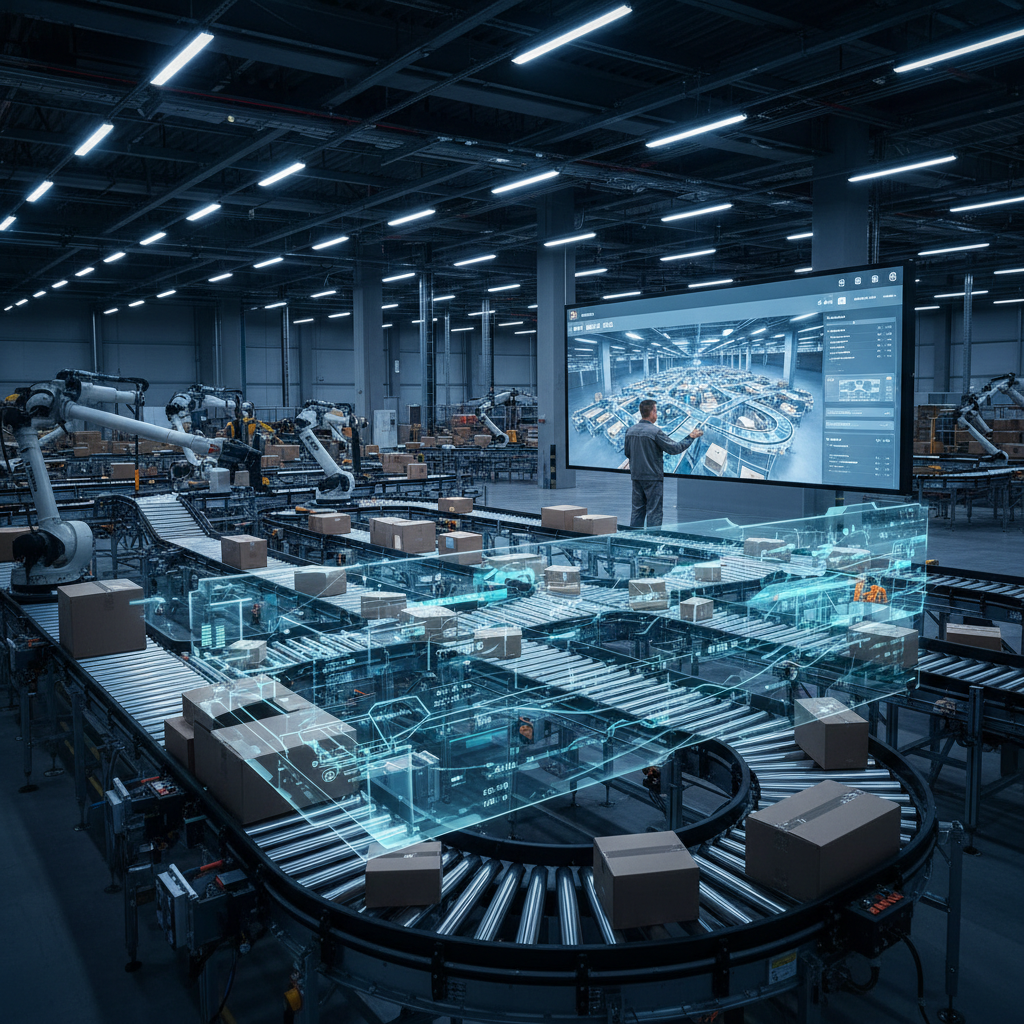
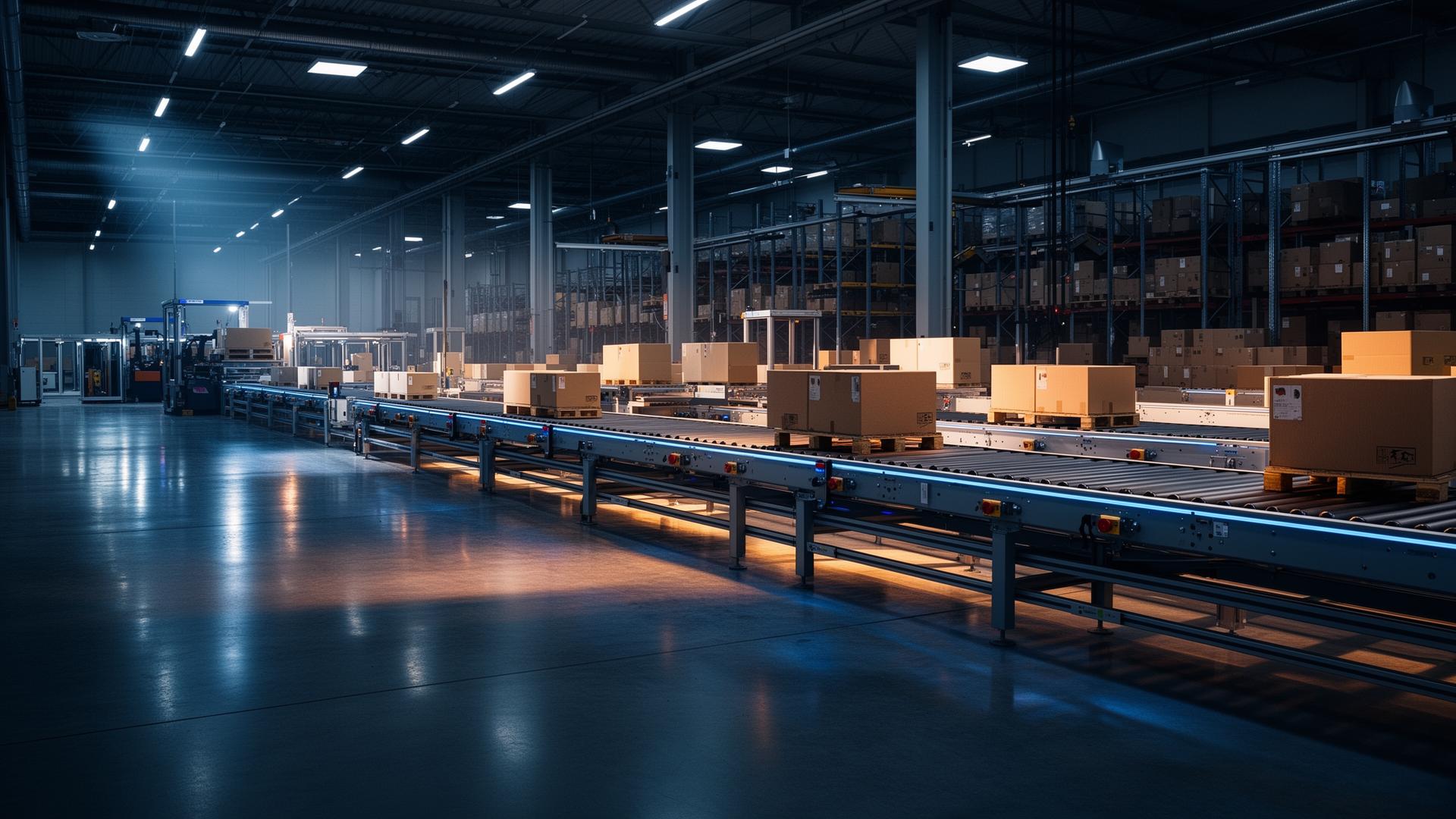
In the competitive logistics landscape of the Benelux, where every square meter and every second counts, warehouse operators are turning to advanced technology to gain an edge. The Digital Twin—a dynamic virtual replica of a physical asset—is emerging as a transformative tool for conveyor systems, moving beyond a simple 3D model to a live, data-driven simulation that optimizes performance from the initial design to daily operations.
Definition
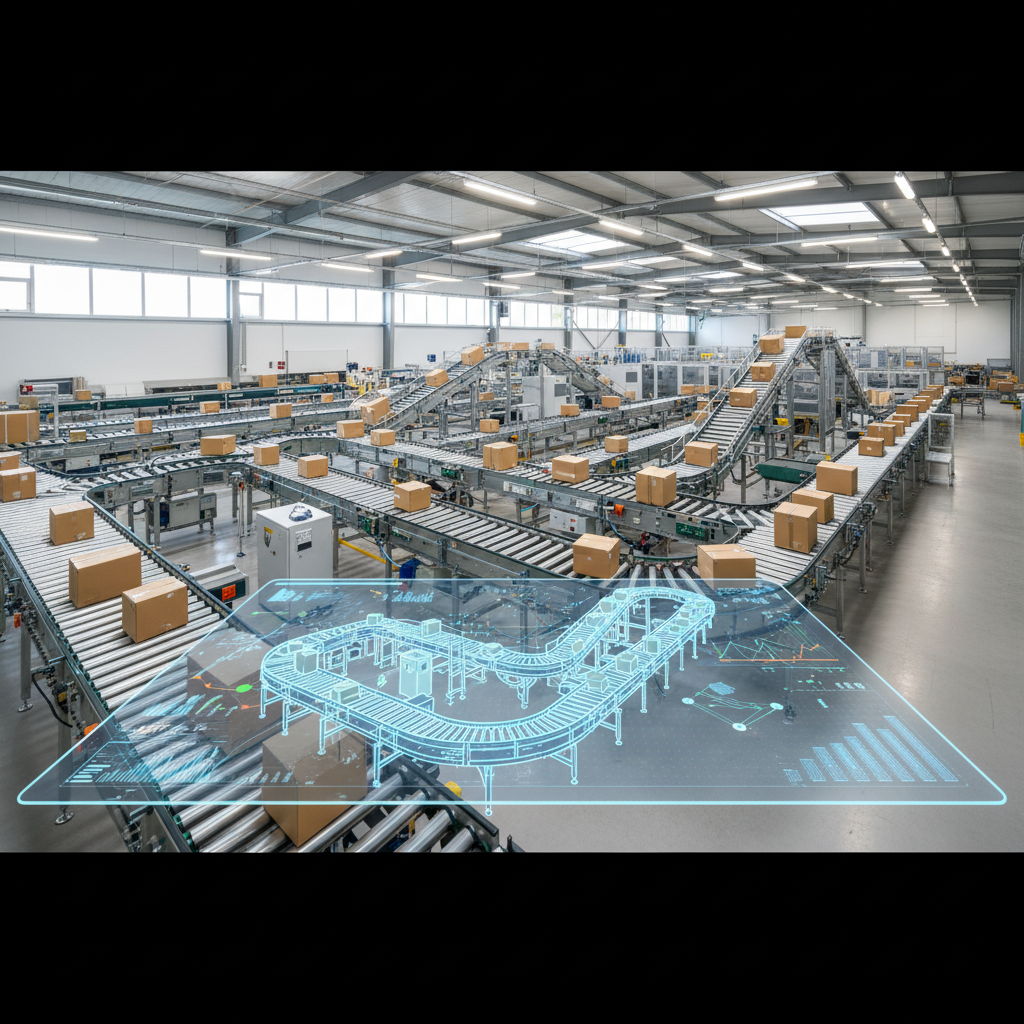
A Digital Twin is a high-fidelity virtual model of a physical object, process, or system, such as a warehouse conveyor network. It is continuously updated with real-time data from sensors on its physical counterpart, allowing for in-depth analysis, simulation of future scenarios, and optimization of performance without physical intervention.
Key Numbers for Digital Twin Implementation (Benelux, 2026 Projections)
| Metric | Typical range (EU 2026) | Notes |
|---|---|---|
| Initial Investment | €50,000 - €150,000 | For a medium-sized (200-500m) conveyor system. |
| Commissioning Time Reduction | 20% - 30% | Virtual testing reduces physical setup and debugging time significantly. |
| Throughput Increase | 10% - 20% | Achieved via bottleneck removal and flow optimization. |
| Predictive Maintenance Accuracy | >95% | Reduces unplanned downtime by predicting failures before they occur. |
| Operational Cost Reduction | 15% - 25% | Includes savings on energy, maintenance, and labor. |
| ROI Period | 1.5 - 3 years | Dependent on system complexity and operational intensity. |
| Data Integration Cost | €10,000 - €30,000 | Cost for integrating with existing WMS/WCS and sensor networks. |
Phase 1: Design and Virtual Commissioning
The journey with a Digital Twin begins long before the first physical component is installed. During the design phase, engineers use the twin to create a dynamic, 1:1 scale model of the proposed conveyor system. This virtual environment allows for extensive testing and validation that is impossible in the physical world.
Virtual Prototyping and Scenario Modeling
Instead of relying solely on static CAD drawings, designers can simulate the actual flow of goods—boxes, totes, or pallets—through the virtual conveyor. They can test different layouts, speeds, and logic for a zero-pressure accumulation conveyor, for instance, to identify potential bottlenecks. What happens during a peak season surge? How does the system handle a mix of 80% small parcels and 20% oversized items? These scenarios can be simulated thousands of times, generating data that informs the optimal design. For example, a simulation might show that adding a small bypass conveyor section for €15,000 could prevent a major bottleneck, increasing peak throughput by 12% and justifying the cost immediately.
This virtual commissioning phase also involves connecting the Digital Twin to the real PLC (Programmable Logic Controller) code that will run the system. This allows for debugging and testing the control logic in a safe, simulated environment, drastically reducing the time and risks associated with on-site commissioning. Problems that would typically take hours or days to solve on the warehouse floor can be identified and fixed in minutes in the virtual world.
Phase 2: Real-time Operational Optimization
Once the conveyor system is operational, the Digital Twin evolves from a design tool into a live management console. Fed by a constant stream of data from IoT sensors, PLCs, and the Warehouse Execution System (WMS/WCS), the twin provides a complete, real-time overview of the system's health and performance.
Live Performance Dashboard and Bottleneck Analysis
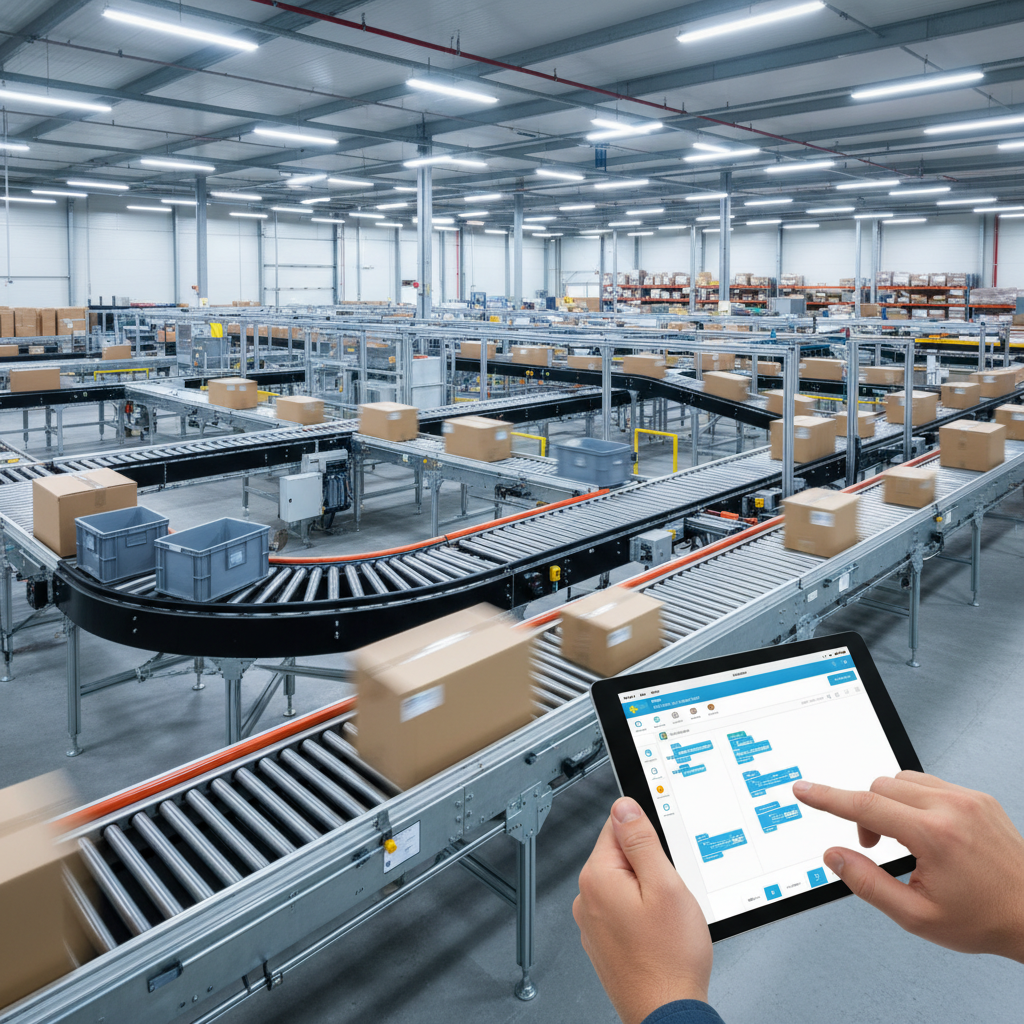
Imagine a central dashboard that doesn’t just show abstract KPIs, but a live, visual representation of your entire conveyor network. Operators can see product flow in real-time, identify areas of congestion, and pinpoint underutilized sections. If a specific sorting chute is nearing its capacity of 3,000 CPH, the system can flag it. The Digital Twin can then be used to run "what-if" scenarios on the fly: "What if we reroute 15% of parcels for postcode 2000-2999 to sorter B? How does that affect overall system throughput and delivery times?" This empowers supervisors to make proactive, data-driven decisions rather than reacting to problems after they occur.
Phase 3: Predictive and Prescriptive Maintenance
One of the most significant value propositions of a Digital Twin is its ability to revolutionize maintenance strategies, moving from a reactive or preventive model to a predictive and even prescriptive one.
From Preventive to Predictive
Traditional preventive maintenance involves servicing equipment at fixed intervals (e.g., "replace motor bearings every 4,000 operating hours"). This is often inefficient, leading to unnecessary servicing of healthy components or, conversely, failing to prevent unexpected breakdowns. A Digital Twin, however, monitors the actual condition of components. Sensors measuring vibration, temperature, and energy consumption on a motor can feed data to the twin. An AI/ML algorithm can learn the normal operating signature of that motor and detect subtle deviations that signal impending failure. Instead of a generic alert, it can provide a specific warning: "Motor 7 on incline belt conveyor 3 shows a 12% increase in vibration and a 5% increase in energy consumption. Probability of bearing failure within 72 hours is 90%."
| Strategy | Description | Cost | Downtime | Typical Use Case |
|---|---|---|---|---|
| Reactive Maintenance | "Run-to-failure." Fix components only after they break down. | High (unplanned downtime, overtime labor) | High & Unpredictable | Non-critical, low-cost components. |
| Preventive Maintenance | Scheduled maintenance based on time or usage intervals. | Medium (unnecessary parts/labor) | Low & Planned | Standard industry practice for critical machinery. |
| Predictive Maintenance (with Digital Twin) | Condition-based maintenance triggered by real-time data analysis. | Low (just-in-time service, minimal waste) | Minimal & Planned | High-value, high-throughput systems like automated conveyors. |
Prescriptive Insights
The twin can go a step further by offering prescriptive advice. It might not only predict the failure but also suggest the optimal response: "Schedule maintenance for Motor 7 during the scheduled low-traffic window at 02:00 AM. Required parts: 2x Type-B bearings, 1L lubricant. Estimated technician time: 90 minutes." This level of foresight allows for just-in-time parts ordering and efficient scheduling, minimizing operational disruption.
Implementation Challenges in the Benelux Market
While the benefits are clear, implementing a Digital Twin is a significant undertaking. Key challenges for businesses in Belgium, the Netherlands, and Luxembourg include:
- Data Integration: Aggregating clean, high-quality data from disparate sources (old PLCs, modern IoT sensors, various software systems) is often the biggest hurdle. A robust data infrastructure and clear protocols like OPC UA are essential.
- Initial Investment: The upfront cost, ranging from €50,000 to over €150,000, can be a barrier for SMEs, although the ROI is typically compelling.
- Skills Gap: Operating and leveraging a Digital Twin requires new skills in data analysis and simulation. Companies must invest in training their existing workforce or hiring new talent. As internal processes evolve, so must the capabilities of the team managing them.
Positioning for the Future: Easy Systems as Your Partner
Successfully implementing a Digital Twin for your conveyor system requires a partner with deep expertise in both the physical mechanics of material handling and the digital intricacies of modern automation. At Easy Systems, we bridge this gap. Our modular, robust conveyor solutions are designed from the ground up to be "Digital Twin-ready," incorporating smart components and standardized data interfaces that facilitate seamless integration.
We don’t just sell hardware; we provide intelligent, future-proof logistics solutions. Our team of engineers works with you to design a system that is not only efficient from day one but is also prepared for the next wave of optimization. By choosing Easy Systems, you are investing in a conveyor platform that can grow and adapt with your business, leveraging powerful tools like Digital Twins to ensure you remain competitive in the fast-paced Benelux market and beyond. We help you transform data into decisions and motion into profit.
Frequently asked questions
What is the primary benefit of a digital twin for a conveyor system?+
The primary benefit is risk-free optimization. A digital twin allows you to test changes to layout, speed, or software logic in a virtual environment. This can improve throughput by 10-20% without interrupting physical operations or investing in hardware that may not work as expected.
How much does a digital twin for a warehouse in the Netherlands cost?+
For a medium-sized conveyor system (200-500 meters) in the Netherlands or Belgium, the initial investment for a digital twin typically ranges from €50,000 to €150,000. This cost depends on the complexity of the system and the level of integration with existing WMS/WCS software.
Can a digital twin predict when a conveyor motor will fail?+
Yes, this is a core function called predictive maintenance. By analyzing real-time data like vibration, temperature, and power usage, the digital twin's algorithm can predict a potential failure with over 95% accuracy, often providing a 48-72 hour warning to schedule maintenance and avoid costly unplanned downtime.
How does a digital twin speed up the installation of a new conveyor system?+
It uses 'virtual commissioning.' The control software (PLC code) is tested on the digital twin before the physical system is even built. This allows engineers to find and fix up to 90% of software bugs virtually, reducing on-site commissioning time by 20-30% and saving significant costs.
Is a digital twin the same as a 3D CAD model?+
No. A 3D CAD model is a static, geometric representation. A digital twin is a dynamic, live model that is connected to the physical conveyor system. It's constantly updated with real-time operational data, allowing it to simulate, analyze, and predict behavior.

The Easy Systems editorial desk reviews and fact-checks every Conveyor-Design article against Benelux project experience. Editors translate engineering decisions — throughput, peak factors, layout, integration — into plain-language guides for operations managers, project leads and decision-makers.
- Warehouse layout & slotting
- Order-profile analysis
- Vendor-neutral comparison
- Benelux logistics market