Energy Management in Benelux Sustainable Conveyor Systems
Discover how strategic energy management for conveyor systems in the Benelux can cut operational costs by up to 30% and significantly lower your carbon footprint. This guide explores key technologies, ROI, and local regulations.
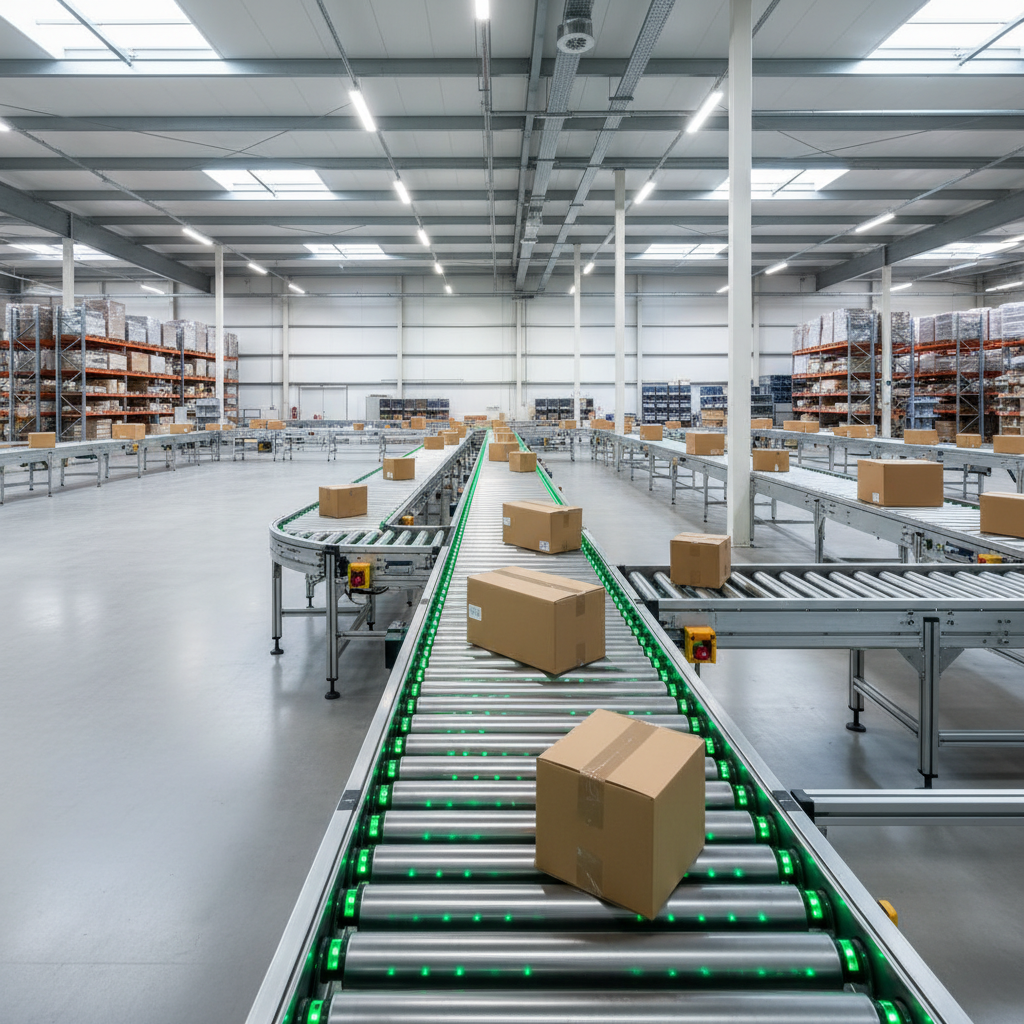
In the high-stakes, fast-paced logistics landscape of the Benelux, warehouse efficiency is paramount. While speed and throughput have traditionally dominated the conversation, sustainability and operational costs are rapidly gaining importance. Energy consumption, particularly from extensive conveyor networks, represents a significant operational expenditure and a major component of a facility's carbon footprint. This article explores the critical role of energy management in designing and operating sustainable transportband systems, focusing on practical strategies and technologies for the Belgian, Dutch, and Luxembourg markets.
Definition
Energy management in the context of conveyor systems refers to the strategic use of technology and control logic to minimize electricity consumption without compromising performance. It involves deploying energy-efficient hardware, such as advanced motors and controllers, and implementing software-driven strategies like run-on-demand and predictive maintenance to ensure power is consumed only when and where it is needed for transport.
Key Numbers
| Metric | Typical range (EU 2026) | Notes |
|---|---|---|
| Energy Savings Potential | 30-75% | Compared to legacy continuously running AC motor systems. |
| Investment (Energy-Efficient Tech) | €1,200 - €2,500 per metre | For systems like 24V MDR conveyors, depending on complexity. |
| Return on Investment (ROI) | 2-4 years | Based on energy savings, reduced maintenance, and potential subsidies. |
| Energy Consumption (MDR line) | 0.02 - 0.05 kWh per hour | Per zone, under typical load conditions (run-on-demand). |
| Energy Consumption (AC Motor) | 0.75 - 1.5 kWh per hour | Per motor, often running continuously regardless of load. |
| Noise Level Reduction | 5-10 dB | Switching from traditional chain/belt drives to MDR improves workplace ergonomics. |
Why Energy Efficiency is Critical in the Benelux
The Benelux region is a logistical hub for Europe, but it's also an area with high energy costs and ambitious environmental targets driven by the European Green Deal. For warehouse and distribution center operators in the Netherlands, Belgium, and Luxembourg, focusing on energy management is not just an ecological choice but a strong financial imperative. Reducing the power consumption of material handling equipment directly translates to lower operational expenditure (OpEx) and improved profitability. Furthermore, demonstrating a commitment to sustainability can enhance corporate reputation and is increasingly becoming a requirement in supply chain partnerships.
Core Technologies for Sustainable Conveying
At the heart of modern, energy-efficient conveyor design are a few key technologies that have revolutionized how power is consumed. The move away from large, centralized AC motors that run continuously is the single most important shift.
Motor Driven Roller (MDR) Technology
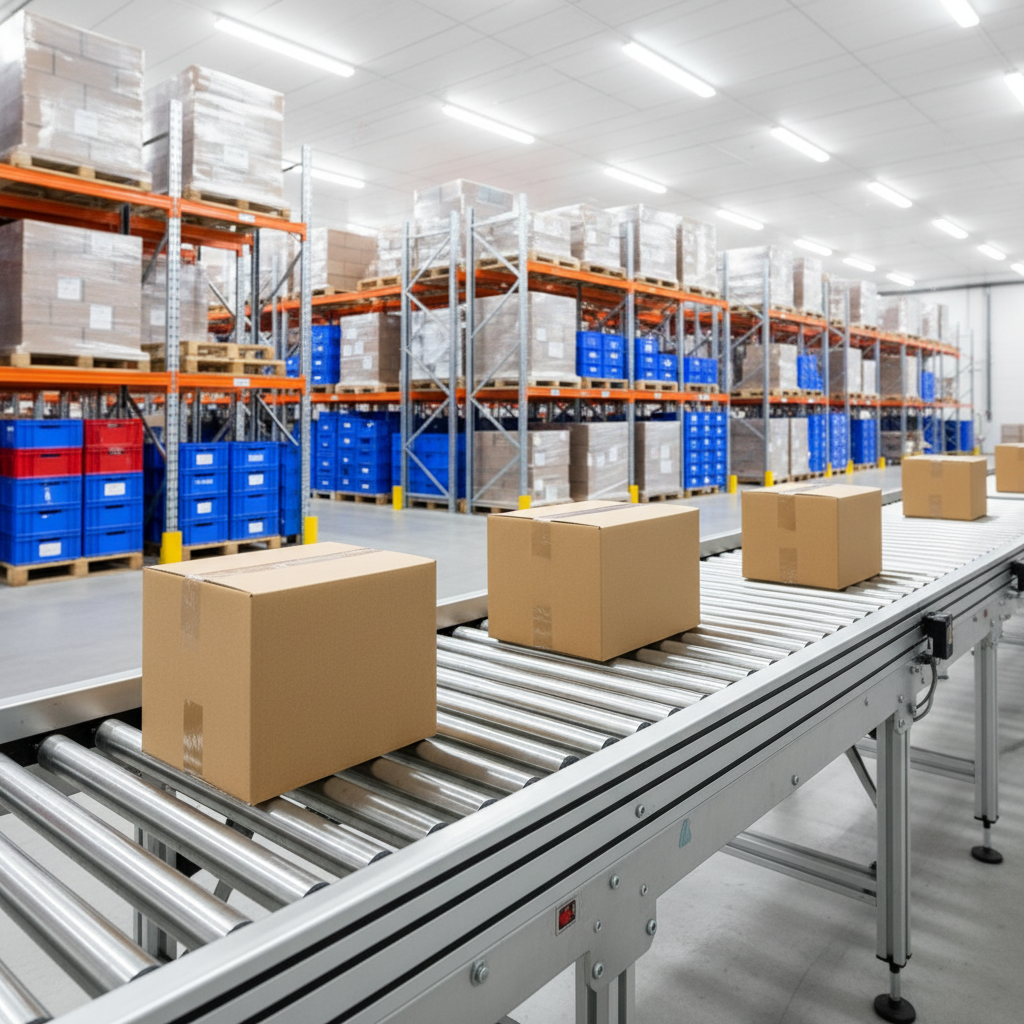
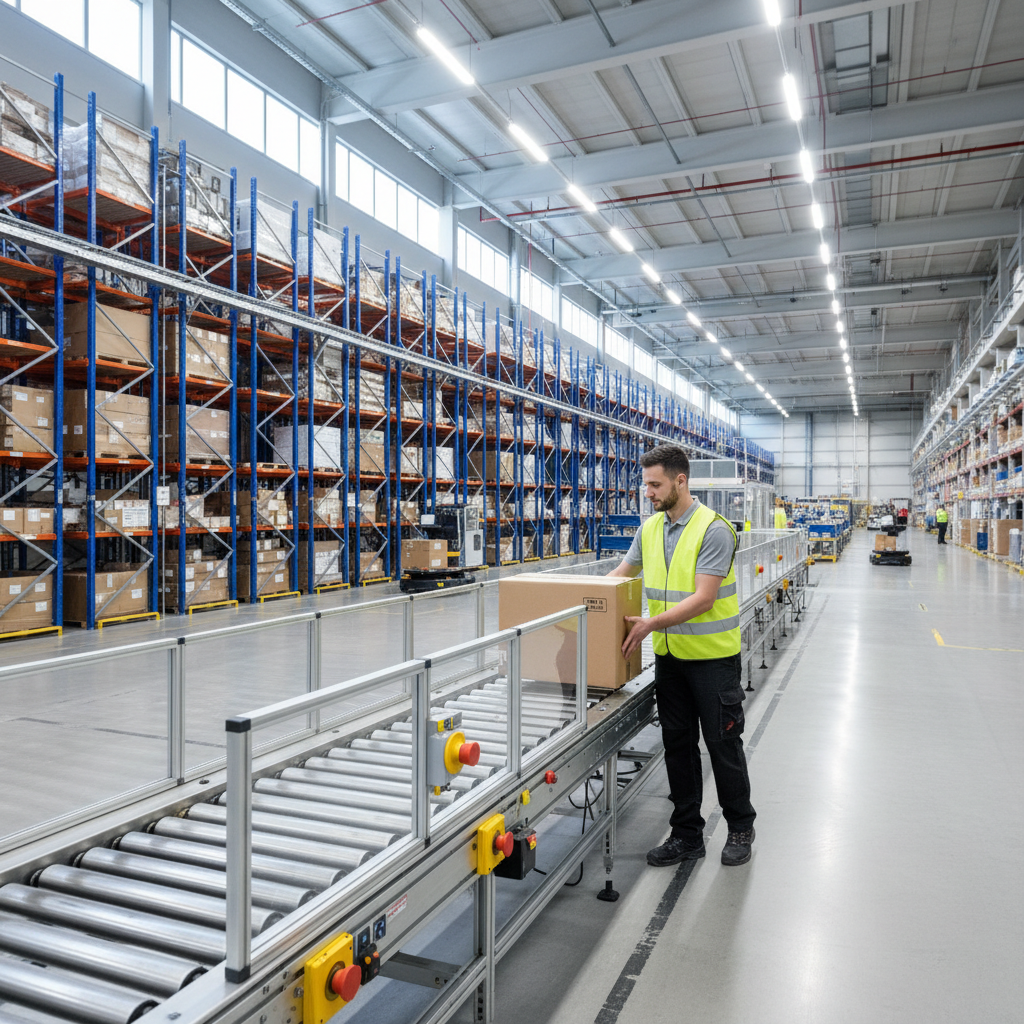
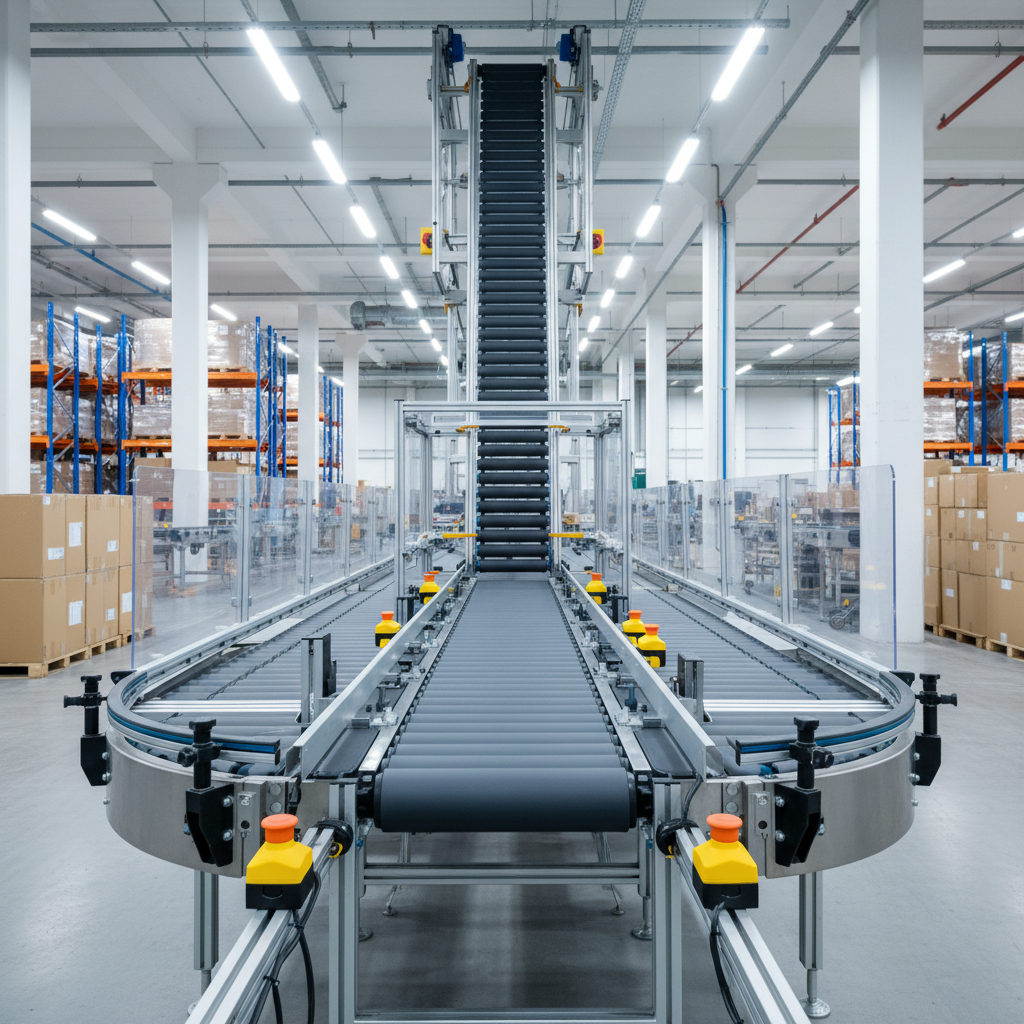
The standout technology is the Motor Driven Roller (MDR), often referred to as 24V DC technology. In an MDR system, conveyors are divided into manageable sections or zones. Each zone is powered by one or more rollers with an integrated, low-voltage DC motor. Sensors at the start of each zone detect the presence of a product. The zone powers on to move the carton and then powers off immediately after the carton has been handed over to the next zone. This ‘run-on-demand’ principle is the foundation of its efficiency, ensuring that 90% of the conveyor can be idle at any given moment, consuming virtually no power. This approach is fundamental to systems like zero-pressure accumulation conveyors.
Smart Controls and PLCs
The hardware is only half the story. Intelligent control logic, managed by a PLC (Programmable Logic Controller) or a higher-level Warehouse Control System (WCS), is essential. This software layer orchestrates the behaviour of the MDR zones based on the overall flow of the warehouse. For example, if a downstream sorter or packing station is paused, the WCS can place all upstream conveyor lines into a 'sleep mode', preventing product accumulation and unnecessary energy use. This level of granular control is impossible with traditional, constantly running systems. For a deeper understanding of how these systems interact, our WMS, WCS, and WES integration guide provides more detail.
Comparing Conveyor Power Systems
The choice of motor and drive technology has the most significant impact on a conveyor system's energy profile. The table below compares the established technology with the modern standard.
| Feature | Traditional AC Motor Systems | 24V DC Motor Driven Roller (MDR) |
|---|---|---|
| Energy Consumption | High; motor runs continuously | Low; runs on demand, saving up to 75% energy |
| Control Granularity | Minimal; typically on/off for the entire line | High; individual zone control for sleep modes and variable speeds |
| Noise Level | Higher (65-75 dB) due to motor, chains, and belts | Lower (55-65 dB) due to decentralized motors and fewer moving parts |
| Installation & Modularity | Complex; requires specialist electrical installation | Simple; low-voltage plug-and-play components, easily reconfigurable |
| Maintenance | Requires regular maintenance (belt tensioning, gearbox oil) | Virtually maintenance-free; sealed-for-life motor rollers |
| Initial Cost | Lower initial hardware cost per metre | Higher initial hardware cost, but lower Total Cost of Ownership (TCO) |
Strategies for Optimizing Energy Use
Beyond hardware selection, operational strategies are key to maximizing energy savings.
1. Implement Run-on-Demand Logic
The primary strategy is to ensure conveyors only run when a product is present. This is the default mode for MDR systems but can also be retrofitted to some older systems using photo-eye sensors and additional logic, though with less efficiency.
2. Zone-Based Sleep Modes
Program the control system to put entire sections of the conveyor network into a "sleep" state during periods of low activity or predictable downtime, such as shift changes or lunch breaks. A WCS can automate this based on real-time order flow.
3. Right-Sizing Equipment
Over-specifying motors is a common source of energy waste. Modern design tools allow engineers to calculate the precise torque and speed requirements for each application, ensuring motors operate in their most efficient range. Using a 1 kW motor for a task that only requires 0.3 kW results in significant electrical inefficiency.
4. Predictive Maintenance
Worn bearings, improperly tensioned belts, or damaged rollers increase friction, forcing motors to draw more power to achieve the same speed. A predictive maintenance schedule, aided by sensors monitoring motor current and vibration, can identify and resolve these issues before they waste significant energy. As detailed in a recent analysis, many companies find their processes haven't scaled efficiently with their growth, leading to such inefficiencies.
Benelux Regulations and Incentives
Governments in the Benelux region actively encourage investment in energy-efficient technologies through various schemes. For example:
- The Netherlands: The Energie-investeringsaftrek (EIA) allows companies to deduct a percentage of the investment costs for energy-saving equipment from their taxable profits.
- Belgium: Various regions (Flanders, Wallonia, Brussels) offer subsidies and tax deductions for ecological investments that reduce energy consumption.
- Luxembourg: The "Fit 4 Sustainability" program helps companies analyze their carbon footprint and provides financial support for implementing measures to improve energy efficiency.
Easy Systems: Your Partner in Sustainable Warehouse Automation
Navigating the complexities of energy-efficient system design, calculating ROI, and integrating smart controls requires specialized expertise. At Easy Systems, we are dedicated to designing and delivering modular, future-proof conveyor solutions tailored to the specific needs of the Benelux market. Our deep experience with 24V DC MDR technology and intelligent WCS integration ensures that your material handling system is not only powerful and reliable but also exceptionally energy-efficient. We don't just sell conveyors; we partner with you to build a sustainable, cost-effective, and scalable logistics operation. From initial energy audits to final commissioning and leveraging local subsidies, we provide a complete solution that lowers your carbon footprint and boosts your bottom line. Trust Easy Systems to make your warehouse a model of efficiency and sustainability.
Frequently asked questions
How much energy does an industrial conveyor system use?+
A traditional, continuously running conveyor with a 0.75 kW AC motor can use over 6,000 kWh per year. In contrast, a modern MDR (Motor Driven Roller) system handling the same workload might use only 1,500-2,000 kWh, representing a 70% reduction in energy consumption.
What is the most energy-efficient type of conveyor system?+
The most energy-efficient systems available today are those based on 24V Motor Driven Roller (MDR) technology. Their 'run-on-demand' principle, where conveyor zones are powered only when a product is present, drastically reduces electricity usage compared to systems with constantly running AC motors.
Are there government subsidies for green logistics in the Netherlands or Belgium?+
Yes. The Netherlands offers the Energie-investeringsaftrek (EIA), allowing a 40% deduction on investment costs. Belgium provides similar incentives through its regional governments (e.g., ecology premium+ in Flanders), which can cover a significant portion of the upfront cost for energy-saving equipment like MDR conveyors.
How do you calculate the ROI for an energy-efficient conveyor?+
To calculate the ROI, you sum the annual energy savings (kWh saved * cost per kWh), reduced maintenance costs, and any government subsidies. Divide the total initial investment by this sum. For most Benelux warehouse upgrades to MDR, the ROI is typically between 2 and 4 years.
Can I make my existing conveyor system more energy-efficient?+
Retrofitting can be an option. This may involve replacing old, inefficient AC motors with modern, high-efficiency equivalents and installing sensors and PLC logic for basic start/stop control. However, a full replacement with a native 24V MDR system often yields a much higher and faster return on investment.
How does zero-pressure accumulation (ZPA) save energy?+
Zero-pressure accumulation (ZPA) uses MDR technology and sensors to create buffer zones without products touching. Because it only moves a product into the next free zone and then stops, the motors are idle most of the time. This run-on-demand functionality is the core reason ZPA systems can reduce energy costs by up to 75%.

The Easy Systems editorial desk reviews and fact-checks every Conveyor-Design article against Benelux project experience. Editors translate engineering decisions — throughput, peak factors, layout, integration — into plain-language guides for operations managers, project leads and decision-makers.
- Warehouse layout & slotting
- Order-profile analysis
- Vendor-neutral comparison
- Benelux logistics market