Energy-Efficient Conveyor Systems: A Benelux Buyer's Guide
Switching to an energy-efficient conveyor system, such as one using Motorized Drive Roller (MDR) technology, can slash electricity consumption by up to 75% and significantly lower your Total Cost of Ownership (TCO) in a high-energy-cost region like the Benelux.
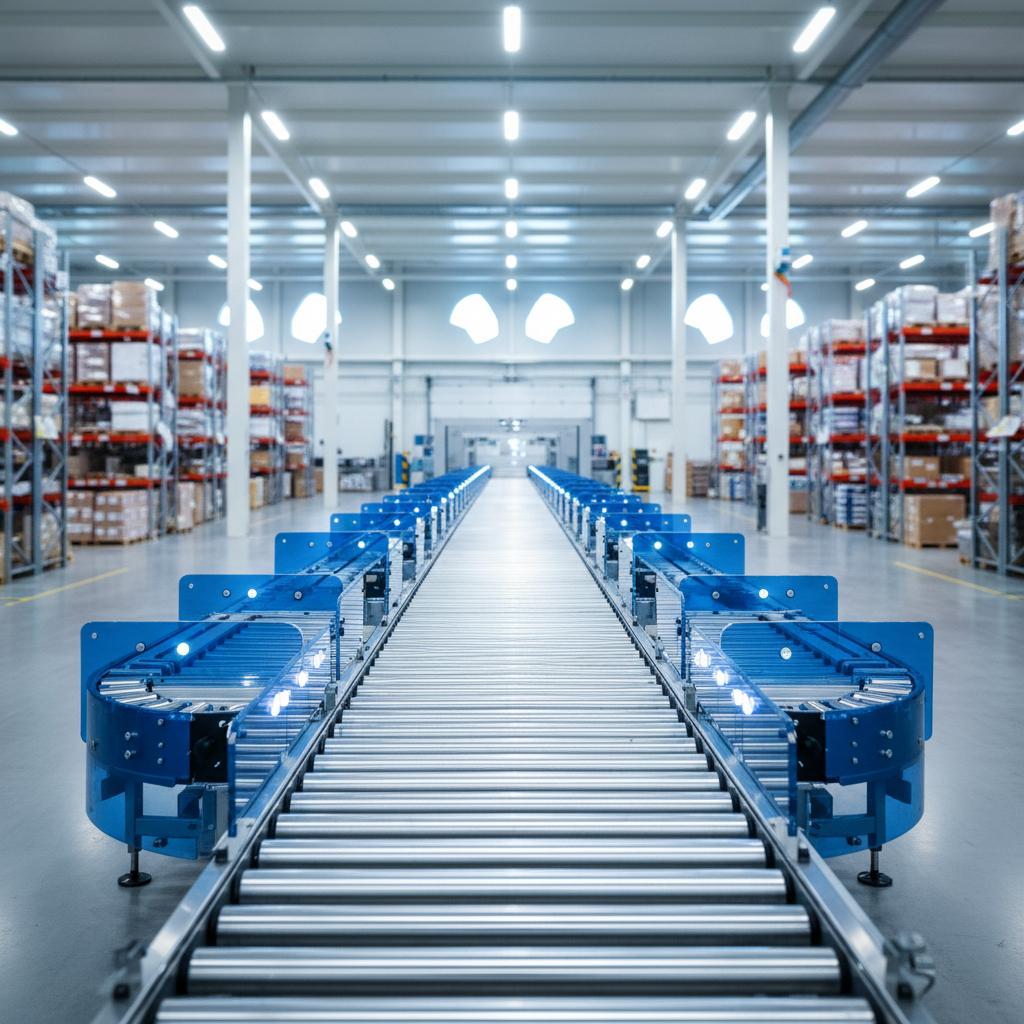
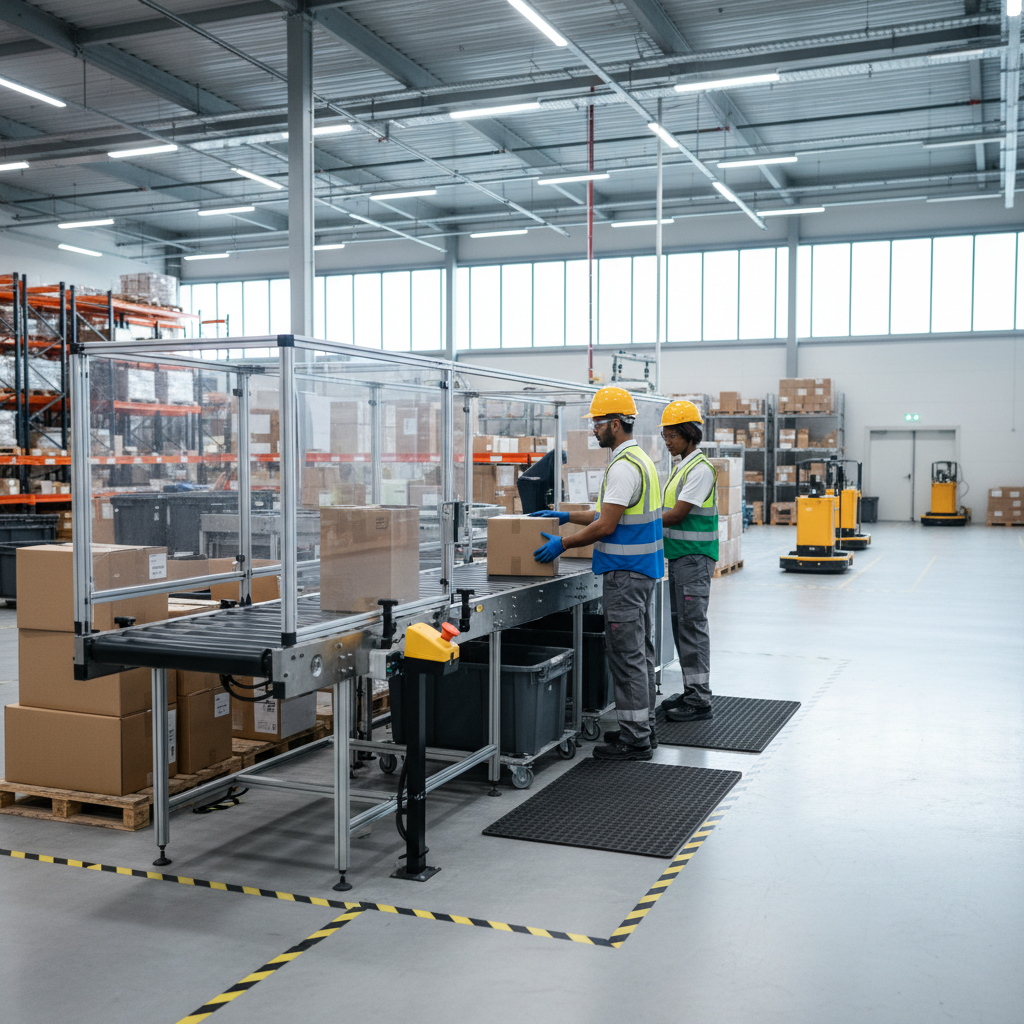
In the high-density logistics landscape of the Benelux, warehouse and distribution center managers are facing a dual challenge: the need for higher throughput and the pressure of soaring energy costs. The selection of a conveyor system is no longer just a matter of capacity and speed; it has become a critical financial and environmental decision. This guide provides a practical framework for evaluating and selecting energy-efficient conveyor systems, focusing on the specific economic and regulatory context of Belgium, the Netherlands, and Luxembourg.
Definition
An energy-efficient conveyor system is an automated transport solution that minimizes electricity consumption through advanced components and intelligent controls. Unlike traditional systems that run continuously, these modern conveyors—often utilizing technologies like 24V Motorized Drive Rollers (MDR)—operate on a "run-on-demand" basis, powering individual sections only when goods are present.
Key Numbers
| Metric | Typical range (EU 2026) | Notes |
|---|---|---|
| Energy Consumption (MDR Roller) | 0.1 - 0.5 kWh/hour | Per 10m section, depends on load and activity. |
| Energy Consumption (AC Belt Conveyor) | 1.5 - 3.0 kWh/hour | Per 10m section, continuous operation. |
| Investment Premium (MDR vs. AC) | +15% to +25% | Higher initial CapEx for advanced MDR technology. |
| Return on Investment (ROI) | 2-4 years | Based on energy savings (€0.25+/kWh) and reduced maintenance. |
| Motor Lifespan (24V MDR) | 20,000 - 30,000 operating hours | Brushless DC motors offer exceptional durability. |
| Maintenance Cost Reduction | 50% - 70% | Compared to chain or belt systems; no tensioning/lubrication needed. |
| Noise Level (MDR) | <60 dB | Significantly quieter, improving workplace ergonomics. |
Why Energy Efficiency Matters in the Benelux
For decades, the primary metrics for conveyor selection were throughput, reliability, and initial cost. Energy consumption was a secondary, often ignored, variable. In the current Benelux market, this has fundamentally changed. With commercial electricity prices frequently surpassing €0.25 per kWh, the operational expenditure (OpEx) associated with a continuously running conveyor system can be substantial. A standard 100-meter belt conveyor line could consume over €20,000 in electricity annually, running 16 hours a day. An equivalent MDR system might consume less than a quarter of that.
Beyond direct costs, European and national regulations, driven by the EU Green Deal, are imposing stricter environmental standards. Companies are increasingly required to report and reduce their carbon footprint, making energy efficiency a key component of corporate social responsibility (CSR) and long-term compliance. A low-energy warehouse is not just cheaper to run; it's also a more marketable and future-proof asset.
Core Technologies Driving Efficiency
The leap in conveyor efficiency is primarily driven by a shift away from centralized, high-voltage AC motors towards decentralized, low-voltage DC power.
Motorized Drive Roller (MDR)
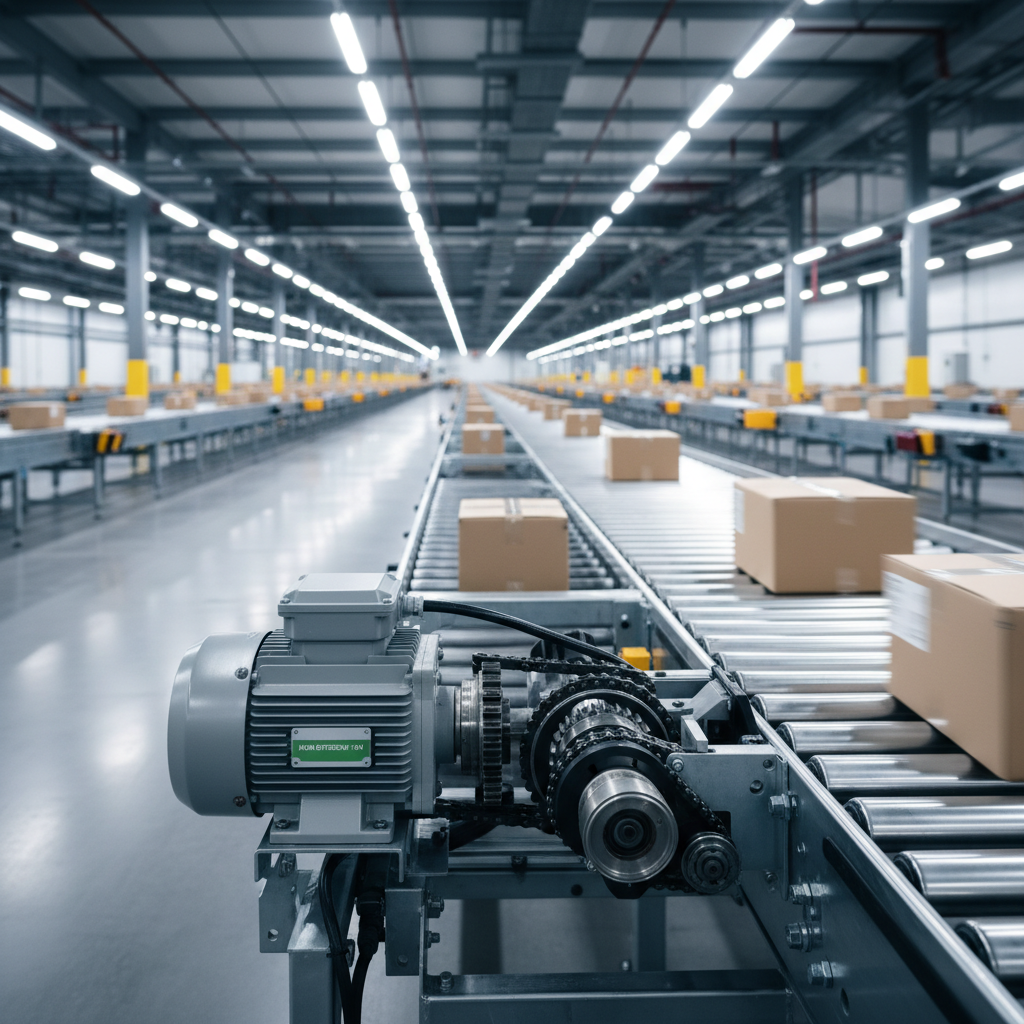
The star of modern logistics is the Motorized Drive Roller (MDR). An MDR is a conveyor roller with a self-contained 24V DC brushless motor embedded within its tube. Each MDR drives a small number of adjacent, unpowered rollers, creating a "zone." These zones are the building blocks of an intelligent system. The key advantage is that each zone operates independently. If there is no product to move, the zone powers down completely. This granular, on-demand operation is the main source of energy savings.
Controls and Zero-Pressure Accumulation
MDR technology is intrinsically linked to intelligent controls. Each zone has a sensor that detects the presence of a product. This sensor communicates with the MDR's control card. This setup enables Zero-Pressure Accumulation (ZPA) logic, a method for buffering products on the conveyor without them touching and causing damage. More importantly for efficiency, ZPA logic dictates that a zone only activates when a product approaches and needs to be moved forward. For a typical warehouse where conveyor lines are not 100% saturated at all times, the cumulative "off-time" across hundreds of zones results in massive energy savings.
Comparing Conveyor Types: An Energy Perspective
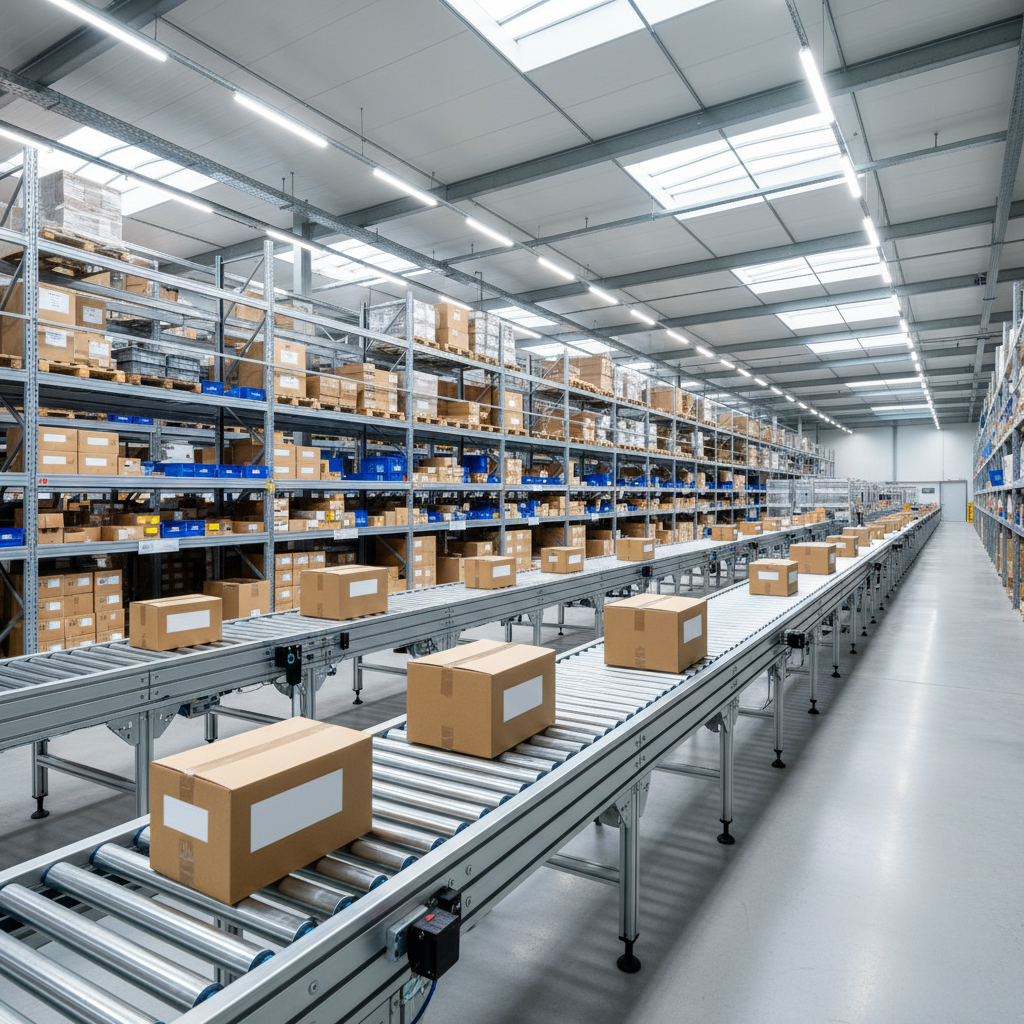
Choosing the right conveyor involves balancing cost, application, and energy use. While traditional systems have their place, their energy profile is a significant disadvantage in the modern warehouse. A detailed overview of roller conveyors can be found in our Roller Conveyor Guide.
| Feature | Motorized Drive Roller (MDR) | Traditional Belt Conveyor (AC Motor) | Chain Conveyor |
|---|---|---|---|
| Energy Model | Run-on-demand (Extremely Low) | Continuous (High) | Continuous (Very High) |
| Typical Application | Cartons, totes, assembly lines, ZPA buffering | Long-distance transport, inclines, bulk items | Pallets, heavy unit loads, harsh environments |
| Avg. Energy Use (per 10m) | ~0.2 kWh/hr | ~2.0 kWh/hr | ~3.5 kWh/hr |
| Maintenance Needs | Very Low (no belts/chains to tension) | Moderate (belt tracking & tensioning) | High (lubrication, chain tensioning) |
| Initial Investment (€/meter) | €350 - €600 | €250 - €500 | €500 - €900 |
| Key Advantage | Lowest TCO, high flexibility, quiet operation | Low CapEx, handles varied item shapes | High load capacity, very robust |
Calculating the Total Cost of Ownership (TCO)
Focusing solely on the initial purchase price (CapEx) is a common but costly mistake. A true assessment must include the Total Cost of Ownership (TCO) over the system's intended lifespan (typically 7-10 years). The formula is simple:
TCO = Initial Investment (CapEx) + Lifetime Energy Costs + Lifetime Maintenance Costs
Example TCO Calculation (50m line, 8 years)
- System A: Traditional Belt Conveyor
- CapEx: 50m * €300/m = €15,000
- Energy: 5 zones * 2.0 kWh * 16 hrs/day * 250 days/yr * €0.25/kWh * 8 yrs = €80,000
- Maintenance: €1,000/yr * 8 yrs = €8,000
- Total TCO: €103,000
- System B: MDR Roller Conveyor
- CapEx: 50m * €450/m = €22,500
- Energy (running 40% of the time): €80,000 * 25% * 40% utilization = €8,000 (Adjusted for much lower base consumption) -> Corrected: 5 zones * 0.4 kWh * 16 hrs * 0.40 * 250 days * €0.25/kWh * 8 yrs = €6,400
- Maintenance: €200/yr * 8 yrs = €1,600
- Total TCO: €30,500
This simplified example shows that despite a 50% higher initial cost, the MDR system offers a lifetime TCO that is less than one-third of the traditional system. The ROI on the extra €7,500 investment is achieved in well under two years.
The Role of Software and Controls
Hardware is only half the story. The intelligence that unlocks true efficiency resides in the control system. A modern WCS (Warehouse Control System) is essential for orchestrating complex logistics. It manages the flow of goods, telling each conveyor zone when to activate or deactivate. This ensures the system uses the absolute minimum energy required to complete its task. Many companies find that as they grow, their processes fail to scale efficiently, leading to bottlenecks and wasted resources. As discussed on the Easy Systems blog, aligning physical automation with smart software is key to sustainable growth. Without this software layer, even an MDR system can be inefficient, with zones running longer than necessary.
Positioning Your Business for a Sustainable Future with Easy Systems
In the competitive Benelux market, operational efficiency is directly linked to profitability and sustainability. Choosing the right conveyor system is a long-term strategic decision that goes far beyond the initial quote. The shift towards energy-efficient technologies like 24V MDR is not a trend; it's a fundamental change in how modern warehouses are designed and operated.
At Easy Systems, we specialize in designing and implementing modular, intelligent conveyor solutions that are built for the demands of the Benelux logistics sector. We don't just sell hardware; we partner with you to analyze your product flow, calculate your potential TCO, and engineer a system that minimizes energy consumption while maximizing throughput. Our expertise in MDR technology and integrated control systems ensures you get a future-proof solution that delivers a rapid return on investment and supports your sustainability goals. Let us help you design a conveyor system that works smarter, not harder.
Frequently asked questions
How much money can an energy-efficient conveyor save?+
In a typical Benelux warehouse, switching to an energy-efficient Motorized Drive Roller (MDR) system can save over €15,000 annually on a 100-meter line. This is due to a reduction in electricity consumption of up to 75% compared to older, continuously running AC-powered systems.
What is the main technology in energy-efficient conveyors?+
The core technology is the 24V Motorized Drive Roller (MDR). This is a self-contained motor inside a conveyor roller that powers a small, independent zone. It allows for 'run-on-demand' operation, where zones only activate when a product is present, which is the primary source of energy savings.
Is an MDR conveyor always better than a belt conveyor?+
Not always. While MDR systems offer superior energy efficiency and lower TCO for carton and tote handling, traditional belt conveyors can be more cost-effective for long, continuous runs or for handling irregularly shaped items. The best choice depends on the specific application, throughput, and product type.
What is the payback period for an energy-efficient conveyor in the Netherlands?+
Given the high electricity prices in the Netherlands, the typical payback period for the 15-25% higher initial investment in an MDR system is between 2 and 4 years. The ROI is driven by substantial savings in both energy consumption and reduced maintenance costs over the system's life.
How do software controls affect conveyor energy consumption?+
Software, typically a Warehouse Control System (WCS), is critical. It provides the intelligence for run-on-demand and Zero-Pressure Accumulation (ZPA) logic. By precisely controlling when each conveyor zone activates and deactivates, a WCS can reduce energy waste by 30-50% over a system with only basic hardware controls.
Do energy-efficient MDR systems require more maintenance?+
No, they require significantly less maintenance. MDR systems have no drive belts or chains to tension, lubricate, or replace. The brushless DC motors are rated for over 20,000 hours of operation. This reliability can reduce annual maintenance costs by 50-70% compared to traditional systems.

The Easy Systems editorial desk reviews and fact-checks every Conveyor-Design article against Benelux project experience. Editors translate engineering decisions — throughput, peak factors, layout, integration — into plain-language guides for operations managers, project leads and decision-makers.
- Warehouse layout & slotting
- Order-profile analysis
- Vendor-neutral comparison
- Benelux logistics market