Circularity in Conveyor Systems: Strategies for Reuse & Recycling
Discover how circular economy principles are transforming conveyor systems in the Benelux. This guide covers sustainable design, reuse, and recycling strategies that reduce environmental impact and operational costs for modern warehouses and distribution centers.
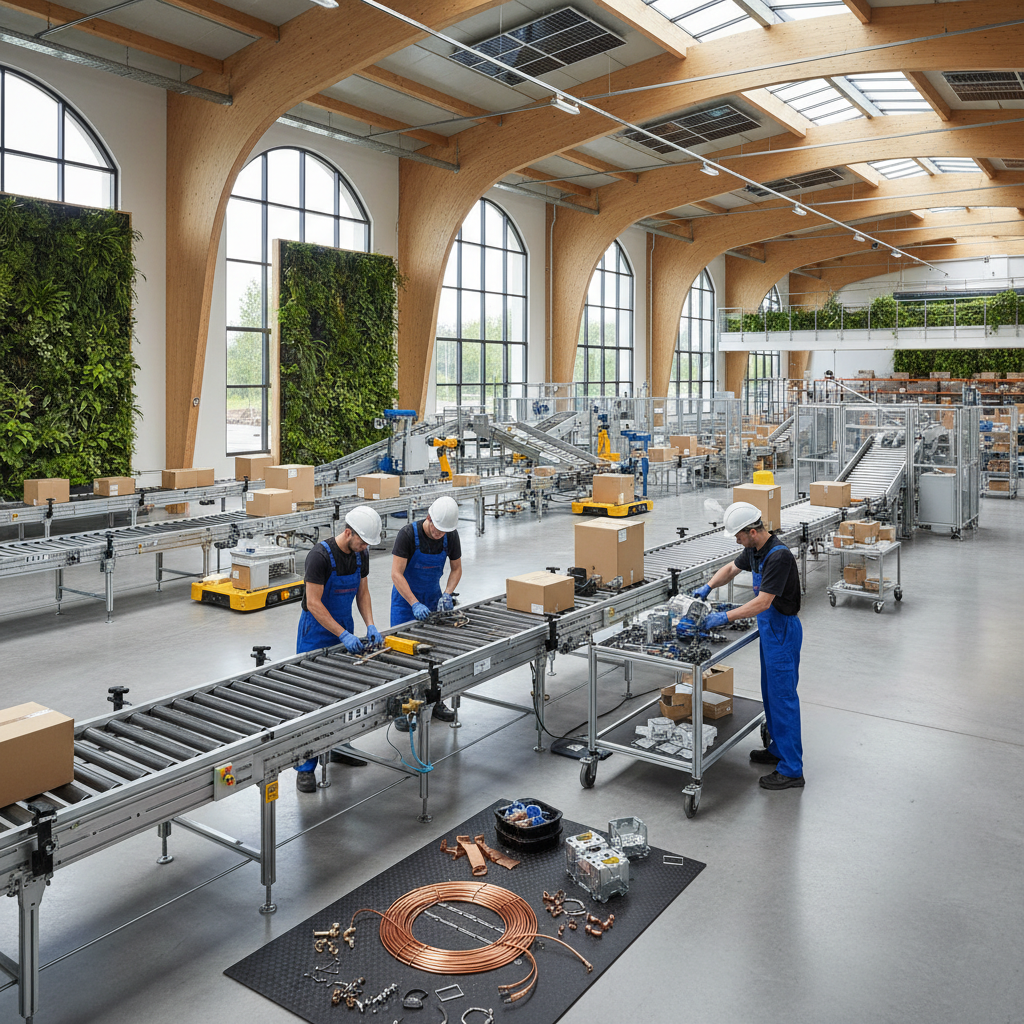
Key numbers
| Metric | Typical range (EU 2026) | Notes |
|---|---|---|
| Cost saving on refurbished parts | 40-60% | Compared to the price of new components (e.g., motors, rollers). |
| Material recovery rate (steel/aluminium) | 95-98% | For systems designed for disassembly (bolted, not welded). |
| System lifespan extension | 5-10 years | Achieved through modularity, refurbishment, and component reuse. |
| Resale value (5-year-old modular system) | 20-40% | Of original purchase price, dependent on condition and technology. |
| CO2 emissions reduction per system | 30-50% | Calculated over a 20-year total lifecycle vs. a linear model. |
| Energy savings from MDR technology | 30-50% | Compared to conveyors with traditional, continuously running AC motors. |
As logistics operations in the Benelux face mounting pressure to become more sustainable, the lifecycle of warehouse hardware is coming under intense scrutiny. Conveyor systems, the arteries of any modern distribution center, represent a significant investment in steel, aluminum, and plastic. A linear "take, make, dispose" model is no longer viable. This article explores practical strategies for implementing circularity in conveyor systems, focusing on reuse, refurbishment, and recycling to create a more sustainable and cost-effective future for material handling in Europe.
Definition
Circularity in conveyor systems is an economic model focused on eliminating waste and promoting the continual use of resources. It involves designing conveyors for durability, easy disassembly, and component reuse, as well as refurbishing parts and recycling materials at the end of their service life to minimize environmental impact.
The Business Case for Circularity in Benelux Logistics
The Benelux countries—Belgium, the Netherlands, and Luxembourg—are at the forefront of the European Union's push for a circular economy. With ambitious goals like the Netherlands' aim to be fully circular by 2050, regulations and market expectations are shifting rapidly. For warehouse operators, this translates into a clear business case for sustainability.
Adopting circular principles is not just about environmental compliance. It offers tangible financial benefits. Extending the life of a conveyor system through strategic reuse and refurbishment can defer capital expenditure significantly. A remanufactured motor or a set of reused support stands can cost 40-60% less than new parts. Furthermore, a well-documented circularity strategy enhances corporate image, attracting eco-conscious clients and talent. As companies grow, their processes must evolve sustainably, a challenge highlighted by the fact that business growth often outpaces process optimization, leading to inefficiencies that circular models can address directly.
Core Principles of Circular Conveyor Design
Circularity begins on the drawing board. Designing conveyor systems with their entire lifecycle in mind is fundamental. This means moving away from bespoke, welded structures towards modular and standardized solutions.
Key Design Principles:
- Modularity: Using standardized, interchangeable components (e.g., straight sections of a roller conveyor, curves, motors) allows for easy reconfiguration, repair, and replacement. A 10-meter line can be shortened to 8 meters, and the remaining 2-meter section can be used elsewhere.
- Design for Disassembly (DfD): Employing bolts and fasteners instead of welded joints is crucial. This ensures that at the end of its life, the system can be taken apart quickly and non-destructively, preserving the value of its components.
- Material Selection: Opting for high-quality, recyclable materials is key. Using powder-coated steel instead of painted steel, for instance, simplifies the recycling process. For motorised rollers, selecting MDR technology with high energy efficiency (up to 50% less consumption than traditional drives) and long design life is another critical choice.
- Durability: Building robust systems that can withstand the rigors of 24/7 operation reduces the frequency of replacement and repair, forming the first line of defense against waste.
Practical Strategies for Conveyor Reuse
Before recycling, the most sustainable and economically sound strategy is reuse. A robust internal or external market for second-hand conveyor parts is emerging in Europe.
Hierarchy of Reuse:
- Internal Redeployment: The simplest form of reuse. When a process line is decommissioned, its conveyor modules are audited, inventoried, and stored for future projects within the same facility or another company site. A spiral conveyor used for a seasonal peak can be disassembled and stored, freeing up over 15 square meters of floor space.
- Refurbishment & Remanufacturing: This involves professionally restoring components to their original specifications. A drive motor can be fitted with new bearings and electronics, a belt conveyor can get a new belt, or rollers can be replaced. This certified process often comes with a warranty and ensures performance is on-par with new equipment.
- Secondary Market Sales: Selling decommissioned but functional conveyor sections to other users via specialized resellers. This extends the product's life and provides a return on the initial investment. A standard 5-meter belt conveyor section can retain 30-50% of its value on the secondary market if in good condition.
To learn more about the specifics of different conveyor types that can be reused, review our comprehensive guide to roller conveyors, which are among the most modular and reusable systems available.
Advanced Recycling for End-of-Life Conveyors
When a conveyor component can no longer be reused, recycling is the final step in a circular strategy. The goal is to recover as much raw material as possible at the highest possible grade. The Benelux has a sophisticated recycling infrastructure capable of processing the materials commonly found in conveyor systems.
Material-Specific Recycling Processes
The main materials include steel, aluminum, plastics, and rubber. Each requires a different approach to maximize recovery.
| Material | Typical Recovery Rate | Recycling Method | Value of Recycled Material (€/tonne) |
|---|---|---|---|
| Steel (Frames, Supports) | >95% | Shredding, magnetic separation, and smelting in an Electric Arc Furnace. | €300 - €450 |
| Aluminum (Side Guides, Profiles) | >90% | Shredding, eddy current separation, and remelting. Requires only 5% of the energy of primary production. | €1,200 - €1,800 |
| Plastics (Modular Belts, Rollers) | 40-80% | Grinding, washing, and re-pelletizing. Quality depends heavily on sorting (e.g., separating POM from PP). | €400 - €900 |
| Rubber (Belts) | 30-70% | Grinding for use as filler material or pyrolysis to recover chemical constituents. | €50 - €150 |
Measuring the Impact: KPIs for a Circular Strategy
To manage a circularity program effectively, you need to measure its success. Key Performance Indicators (KPIs) help quantify the financial and environmental benefits.
Essential KPIs:
- Reuse Rate (%): The percentage of decommissioned conveyor components that are redeployed internally or sold for reuse. A target of 60-70% is achievable for modular systems.
- Recycling Rate (%): The percentage of weight from end-of-life components sent to certified recyclers, broken down by material.
- Waste Diversion Rate (%): The combined reuse and recycling rate, indicating the proportion of material diverted from landfills or incineration. The EU target for packaging waste is 65% by 2025; industrial equipment should aim higher.
- Cost Avoidance (€): The monetary value of using refurbished or second-hand parts instead of new ones. This is a powerful metric for demonstrating ROI to management.
- Carbon Footprint Reduction (kg CO2e): Calculating the embodied carbon saved by avoiding the production of new materials. Recycling steel, for example, saves around 1.5 kg of CO2e for every kg of steel recycled.
Easy Systems: Your Partner in Circular Conveyor Solutions
Successfully implementing a circular strategy requires more than just good intentions; it requires the right partner. At Easy Systems, we are deeply committed to the principles of the circular economy. Our conveyor systems are designed from the ground up to be modular, durable, and easy to disassemble. We prioritize the use of high-quality, recyclable materials and standardized components to ensure our clients can easily adapt, reconfigure, and extend the life of their material handling investments.
We work closely with businesses across the Benelux to develop sustainable logistics solutions. Whether it’s designing a new system with future reuse in mind, helping to redeploy existing modules during a warehouse reconfiguration, or advising on the best end-of-life processing, we provide the expertise needed to make circularity a reality. We help you reduce your environmental footprint while improving your bottom line, positioning your operations for a sustainable and profitable future.
Frequently asked questions
What is the circular economy in the context of conveyor systems?+
It's a model focused on eliminating waste. Conveyors are designed for modularity and easy disassembly, allowing over 90% of components to be reused or refurbished. This can extend the system's life by 5-10 years. At the end of service, materials like steel and aluminum are recycled, drastically reducing landfill waste and the need for virgin resources.
Why is the Benelux a focal point for sustainable logistics?+
The Benelux leads due to ambitious targets, like the Netherlands' goal of 100% circularity by 2050. Favorable regulations and advanced recycling facilities mean that over 95% of industrial steel can be recovered. Its high port density and logistics focus make it a testbed for sustainable practices, pushing circularity from a choice to a competitive necessity.
Which conveyor parts are most suitable for reuse and recycling?+
Metals have the highest potential. Steel frames and aluminum profiles can be recycled with over 95% efficiency. Mechanical components like rollers and MDR motors are ideal for refurbishment, costing 40-60% less than new. Plastic parts like belts are more challenging but can be reground for other uses if sorted correctly.
How does modular design contribute to circularity?+
Modular design is fundamental. It uses standardized, interchangeable sections that are bolted, not welded. This allows a system to be easily reconfigured or repaired with minimal waste, extending its useful life by over 5 years. A 10-meter line can become an 8-meter line, with the 2-meter surplus being redeployed. This approach simplifies final disassembly for recycling.
What are the main financial benefits of a circular approach for conveyors?+
The primary benefit is reduced capital expenditure. Reusing and refurbishing components can cut hardware costs by 40-60%. A modular system also retains a higher resale value, often 20-40% of its original price after 5 years. Further savings come from lower energy bills, as modern 24V DC motors can use up to 50% less electricity than older AC-powered systems.

The Easy Systems engineering team designs, integrates and commissions conveyor systems and warehouse automation across Belgium, the Netherlands and Luxembourg. Combined experience covers roller and belt conveyors, sorters, AGV/AMR fleets, AutoStore, shuttle AS/RS and WMS/WCS integration for distribution centers and e-commerce fulfillment operations.
- Conveyor design (roller, belt, modular plastic)
- Sortation & merge logic
- AGV / AMR fleet integration
- AutoStore & shuttle AS/RS
- WMS / WCS integration