Low-Code/No-Code for Conveyor Controls in Benelux
Low-code/no-code platforms enable rapid development and deployment of conveyor control systems in Benelux warehouses, bypassing traditional PLC programming bottlenecks and empowering on-site teams to manage and adapt their automation.
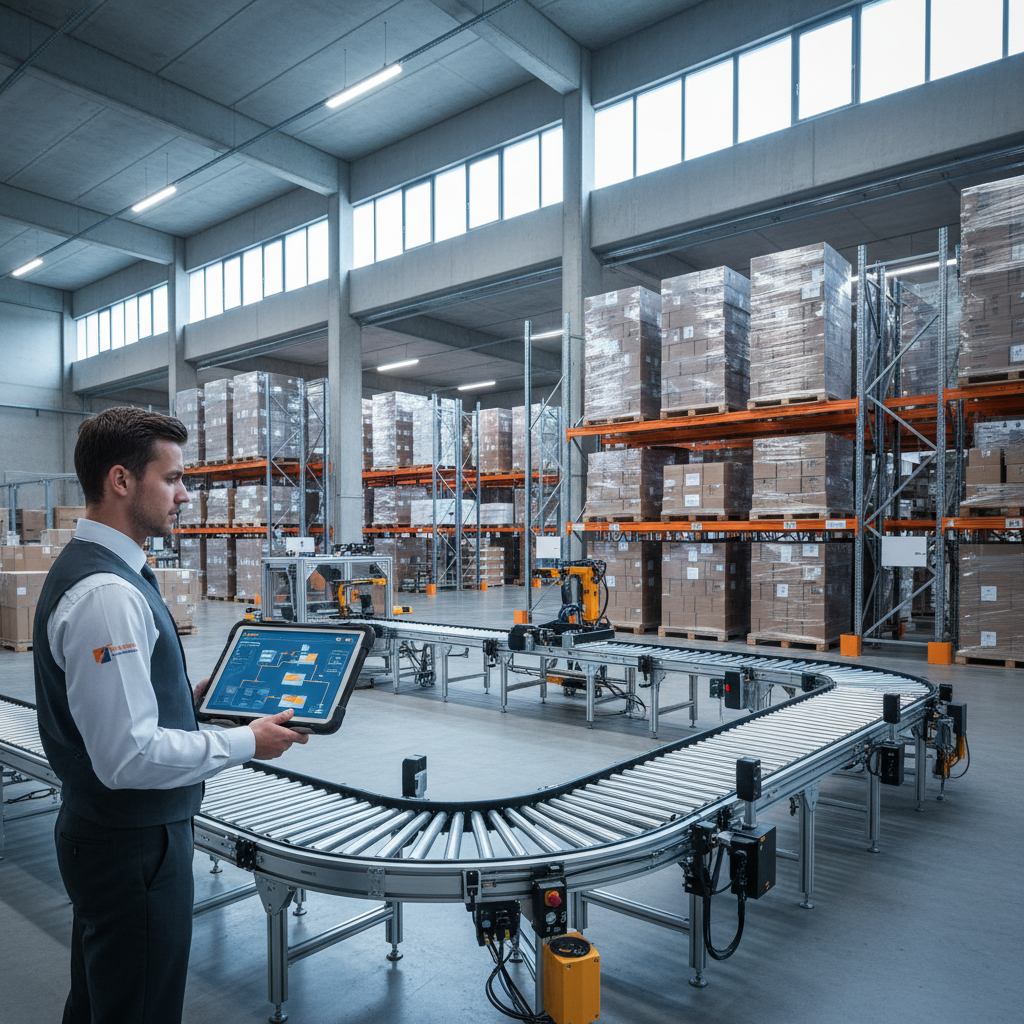
The logistics backbone of Europe, the Benelux region, thrives on efficiency. From the bustling ports of Antwerp and Rotterdam to the central distribution hubs in Venlo, speed and adaptability are paramount. Yet, the very systems designed to provide this speed—conveyor belts—are often held back by the traditional, complex methods of control system programming. A new paradigm is emerging: low-code and no-code platforms are democratizing conveyor control, offering a powerful alternative for warehouse managers seeking greater agility and lower costs.
Definition
In the context of warehouse automation, low-code/no-code platforms are visual software development environments that allow users to create, modify, and deploy control logic for conveyor systems with minimal to no traditional programming. Instead of writing thousands of lines of specialized code for a PLC (Programmable Logic Controller), engineers and even on-site technicians can use drag-and-drop interfaces, pre-built modules, and graphical flowcharts to define how conveyors should behave.
The Traditional Choke Point: PLC Programming
For decades, PLCs have been the brains behind industrial automation. These ruggedized computers are incredibly reliable but require a very specialized skillset. Programming them involves languages like Ladder Logic or Structured Text, which are known only to a dwindling pool of experienced automation engineers.
The Process
A typical implementation process would look like this:
- Specification: A systems analyst defines the required conveyor behaviour (e.g., routing, sorting, accumulation).
- Development: A PLC programmer translates these requirements into complex code, a process that can take weeks or even months.
- Testing: The code is tested in a simulated environment before being deployed on-site.
- Commissioning: The programmer travels to the warehouse (e.g., in Ghent or Eindhoven) to fine-tune the system, a process often involving costly travel and man-hours.
- Modification: Any change, however small, requires the same programmer (or another expensive specialist) to repeat the process.
This dependency creates a significant bottleneck. In the fast-paced e-commerce and 3PL sectors of the Benelux, waiting weeks for a software change to accommodate a new client or product flow is simply not viable. As many companies discover, their operational processes may be ready for growth, but their underlying control systems are not. This is a common growing pain where physical expansion outpaces the adaptability of the software that runs the facility. For a deeper analysis on this topic, see how business growth can be hampered by inflexible processes.
Low-Code/No-Code: A Paradigm Shift for Benelux Logistics
Low-code platforms provide a layer of abstraction on top of the PLC. The complex code is handled by the platform provider, while the user interacts with a simple, graphical interface. This fundamentally changes the implementation dynamics.
Key Benefits for the Region
- Speed of Deployment: What took weeks now takes days, or even hours. A simple conveyor line for a new packing station can be configured and deployed in an afternoon. This agility is a competitive advantage for 3PLs in Belgium and the Netherlands bidding on short-term contracts.
- Reduced Cost: By minimizing the need for specialist programmers, costs are drastically cut. The savings on travel, hourly rates (€100-€150/hour for a PLC expert), and lengthy project timelines can be substantial.
- Empowerment of On-site Staff: Local maintenance teams can be trained to make modifications themselves. A change in sorting logic or the addition of a new sensor becomes a simple drag-and-drop action, not a multi-thousand-euro project.
- Bridging the Skills Gap: With fewer graduates specializing in industrial programming, low-code provides a sustainable path forward, allowing mechanically-inclined technicians to manage sophisticated automation.
Traditional PLC vs. Low-Code/No-Code Controls
| Feature | Traditional PLC Programming | Low-Code/No-Code Platform |
|---|---|---|
| Required Skillset | Specialized PLC Programmer (e.g., Siemens TIA Portal, Rockwell Studio 5000) | Mechanically-inclined Technician, Process Engineer |
| Implementation Speed | 4-12 weeks for a medium-sized project | 1-3 weeks for a medium-sized project |
| Initial Setup Cost | High (programmer fees dominate, approx. €25,000 - €70,000) | Medium (licensing fees, but lower service cost, approx. €10,000 - €30,000) |
| Flexibility & Changes | Slow and expensive (€1,000+ per small change) | Fast and inexpensive (often zero cost, done in-house) |
| Typical Deployment | Large, static systems (e.g., automotive production lines) | Dynamic environments (e-commerce, 3PL, parcel services) |
| User Interface | Code-based (Ladder Logic, Structured Text) | Graphical, drag-and-drop, flowcharts |
Integration: Connecting the Islands of Automation
A modern warehouse is a complex ecosystem of software. The Warehouse Management System (WMS) holds the inventory data, while the Warehouse Control System (WCS) or Warehouse Execution System (WES) directs the flow of goods. Low-code platforms excel at simplifying the integration between these systems and the physical conveyor hardware.
Simplified WMS/WES Integration
Traditionally, connecting a PLC-controlled conveyor to a WMS required a custom interface, often built by yet another specialist. Low-code platforms, however, are built with modern connectivity in mind. They often feature pre-built connectors for major WMS/WES providers and support standard communication protocols like REST APIs and OPC UA out of the box. This makes it far easier to create a cohesive, data-driven environment where the WMS can seamlessly instruct the conveyor system to, for instance, route a specific tote to a specific packing station. To understand how these systems work together in more detail, explore our guide on WMS, WCS, and WES integration.
Use Cases in the Benelux
E-commerce Fulfillment in the Randstad
A large e-commerce player near Amsterdam needs to constantly adapt its picking and sorting areas for seasonal peaks like Sinterklaas and Black Friday. Using a low-code platform, the on-site manager can reconfigure the sorting logic for a packing sorter in under an hour, directing more volume to the gift-wrapping stations without calling in an external programmer.
3PL Agility in the Port of Antwerp
A Third-Party Logistics provider lands a new 1-year contract to handle distribution for a new fashion brand. They need to set up a 100-meter-long transport and sorting system. Using a no-code conveyor control system, they can purchase modular conveyors and have their own technicians configure the entire line within a week, at a fraction of the cost of a traditional solution, making the short-term contract highly profitable.
Fresh Produce Logistics near Rotterdam
In a facility handling fresh vegetables, speed is critical. A system needs to transport crates from washing to packaging. A low-code platform allows them to fine-tune conveyor speeds (e.g., 0.5 m/s for delicate items, 0.8 m/s for robust ones) and accumulation logic based on the specific product being run that day, all through a simple tablet interface on the factory floor.
Choosing the Right Approach: Low-Code vs. No-Code
While often used interchangeably, there is a distinction:
- No-Code: Truly for citizen developers. It works with pre-defined building blocks and is perfect for standard conveyor applications like simple transport, line-end accumulation, and basic routing. You can't break out of the box.
- Low-Code: Offers the same visual tools but allows a programmer to "drop down" into the code to write custom scripts for more complex logic. This is ideal for systems with unique sorting algorithms, complex integration challenges, or specialized hardware.
Easy Systems: Your Partner for Flexible Conveyor Control
At Easy Systems, we have long recognized the limitations of rigid, traditionally programmed conveyor systems. Our philosophy is built on modularity and flexibility, not just in our physical hardware but in the control systems that power them. We leverage low-code principles and pre-configured software blocks to deliver powerful, scalable conveyor solutions that don't lock you into a cycle of expensive, specialist-dependent support. We believe that Benelux warehouses should be masters of their own operational flow. By providing intuitive control systems, we empower our clients to adapt, grow, and thrive in Europe's most demanding logistics landscape. Our systems are designed to be configured and adapted with minimal fuss, ensuring your investment remains agile and future-proof.
This article is part of the Conveyor-Design knowledge hub, edited by Easy Systems engineers who design conveyor and warehouse automation systems across the Benelux every week.
Frequently asked questions
Can a low-code platform control any type of conveyor?+
Mostly, yes. Low-code platforms can control roller conveyors, belt conveyors, and chain conveyors. Compatibility depends on the underlying controller and I/O modules used. They are particularly effective for modular conveyor systems powered by 24V DC motor rollers.
Is a no-code conveyor system secure?+
Security is handled at the platform and network level. Modern systems use secure protocols like OPC UA and are deployed on protected industrial networks. Since they don't typically require internet access for operation, the attack surface is minimal.
What happens if the low-code platform provider goes out of business?+
This is a valid concern. The best platforms run on standard industrial controllers (PLCs). In a worst-case scenario, the system could be reprogrammed from scratch by a traditional PLC programmer, so the hardware investment is not lost. However, it's crucial to choose an established, reputable provider.
Can I integrate my existing older conveyors with a new low-code system?+
Yes, this is a common application. A new low-code controller can often be retrofitted to control older conveyor lines by replacing the original PLC and updating the I/O wiring. This is a cost-effective way to modernize a part of your facility.