Automated Guided Vehicles (AGVs): A Deep Dive for Benelux Warehouses
Explore the transformative role of Automated Guided Vehicles (AGVs) in modern Benelux warehouses. This in-depth analysis covers AGV types, navigation, implementation costs, and their strategic advantage in the European logistics landscape.
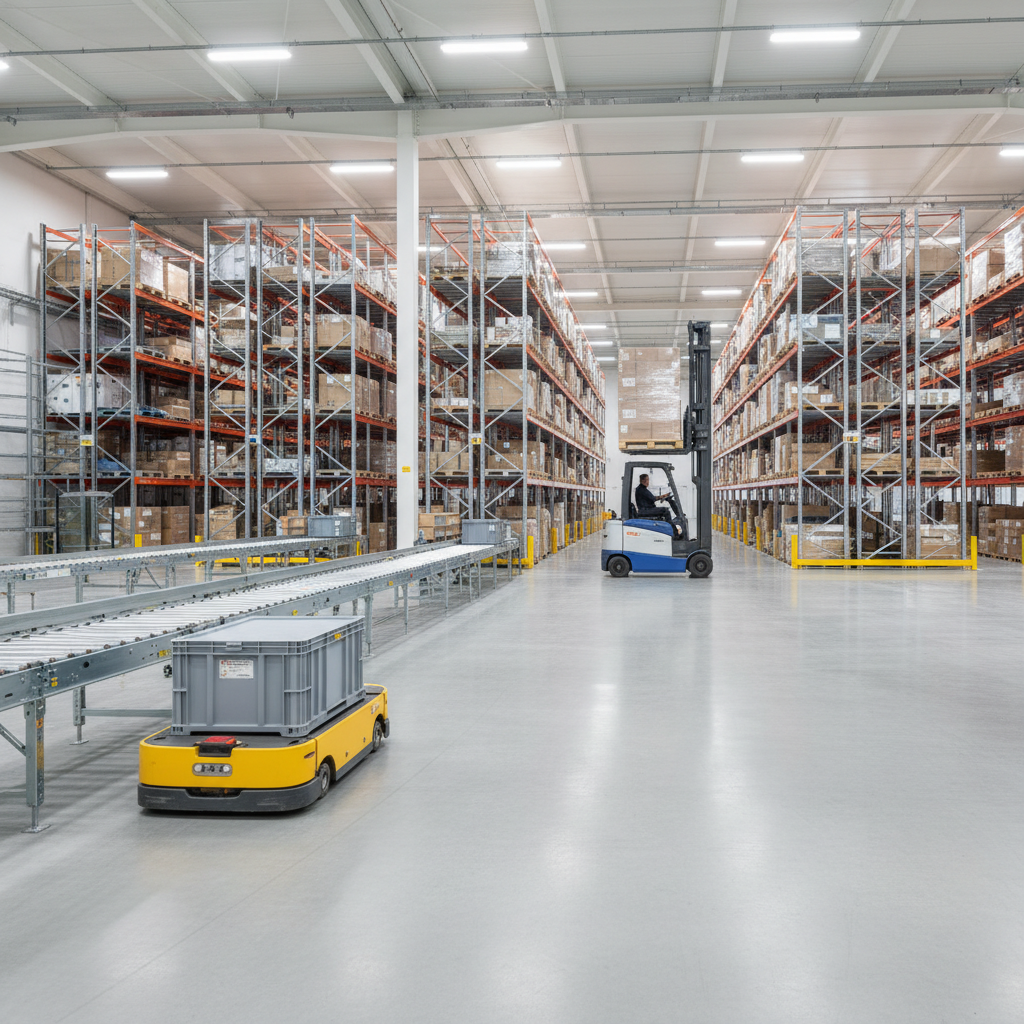
In the bustling logistics hubs of the Benelux—from the Port of Rotterdam to Liège Airport—the relentless pressure for efficiency and the scarcity of skilled labor are accelerating the push towards automation. At the forefront of this transformation are Automated Guided Vehicles (AGVs), the dependable workhorses of the modern warehouse. This article provides an in-depth analysis of their function, types, and strategic value in the specific context of Benelux distribution centers.
Definition
An Automated Guided Vehicle (AGV) is a mobile robot that follows predefined paths or uses sensors and software to transport materials within a warehouse or production environment. Unlike their more flexible cousins, Autonomous Mobile Robots (AMRs), AGVs excel in structured, repetitive tasks, operating along fixed routes defined by wires, magnetic tape, or laser guidance.
The Rise of AGVs in the Benelux Logistics Landscape
The Benelux region, with its high labor costs (averaging over €40 per hour in the logistics sector) and strategic position in European trade, presents a fertile ground for AGV adoption. The primary drivers are clear: a need for 24/7 operational capability, reduction of human error, and improved workplace safety. AGVs directly address these needs by automating the most predictable and physically demanding tasks: moving pallets from receiving to storage, supplying production lines, and transporting finished goods to outbound docks.
Integrating AGVs can lead to a significant reduction in operational expenditure. For a medium-sized warehouse in Belgium or the Netherlands, automating pallet transport can eliminate up to 80% of the labor costs associated with that specific task. This efficiency gain is critical for maintaining a competitive edge in a region that handles a vast portion of Europe's inbound and outbound goods.
Types of AGVs and Their Specific Applications
Choosing the right AGV is critical for maximizing ROI. The selection depends entirely on the load type, transport distance, and required throughput. Here’s a breakdown of the most common types seen in Benelux warehouses.
Forklift AGVs: The Automated Workhorse
Forklift AGVs are one of the most popular types, directly automating the common task of pallet handling. They can pick up and drop off pallets from floor level, racking (up to 10 meters), and conveyor systems. They are ideal for dock-to-stock operations and replenishing forward picking locations. With payloads typically ranging from 1,000 kg to 2,500 kg, they are the backbone of many automated pallet handling processes.
Tugger AGVs: Efficient Line-Side Delivery
Tugger or towing AGVs pull a train of non-powered carts, delivering multiple loads to various stations in a single journey. This is highly efficient for supplying assembly lines in manufacturing plants or for complex order picking routes in large distribution centers. A single tugger AGV with a capacity of 5,000 kg can replace several manual forklift journeys, reducing congestion and improving safety.
Unit Load AGVs: The Backbone of A-to-B Transport
Also known as "top carriers," these AGVs carry a single load, such as a pallet, bin, or large container, on their back. They often feature a lift deck or a conveyor belt on top to automatically transfer the load to and from stands or other conveyor systems. With speeds up to 2.0 m/s and a low profile, they are perfect for simple, high-frequency A-to-B transfers between fixed points.
| AGV Type | Typical Payload (kg) | Average Speed (m/s) | Primary Application | Estimated Cost per Vehicle (€) |
|---|---|---|---|---|
| Forklift AGV | 1,000 - 2,500 kg | 1.2 m/s | Pallet storage/retrieval, dock-to-stock | €45,000 - €80,000 |
| Tugger AGV | 2,000 - 8,000 kg (towing) | 1.0 m/s | Line-side supply, milk-run logistics | €35,000 - €70,000 |
| Unit Load AGV | 500 - 2,000 kg | 1.7 m/s | A-to-B transport, conveyor interface | €25,000 - €60,000 |
AGV Navigation Technologies: From Fixed Paths to Smart Autonomy
An AGV's value is intrinsically linked to its navigation technology. The choice of technology dictates its flexibility, accuracy, and cost.
- Magnetic Tape Navigation: A cost-effective and reliable method where the AGV follows a magnetic tape on the floor. It's easy to install and modify but can be susceptible to damage and debris.
- Laser Target Navigation: The AGV uses a rotating laser to detect reflective targets mounted on walls and columns. This provides high accuracy (±10 mm) and allows for more complex routes without physical floor markings.
- Vision Guidance: The AGV uses cameras to follow painted lines on the floor. This is a step up from magnetic tape but still requires a fixed physical guide.
- Natural Feature Navigation (SLAM): The most advanced AGVs use Simultaneous Localization and Mapping (SLAM) to navigate by recognizing and mapping existing structural features like walls and racking. While this technology blurs the line with AMRs, AGVs using it still tend to operate on more constrained or virtual pathways.
AGV vs. AMR: A Strategic Choice for Benelux Warehouses
The "AGV vs. AMR" debate is a common one in warehouse automation. While both move goods autonomously, their core philosophies differ significantly. AGVs are the seasoned experts for predictable, high-volume flows. They operate in a highly structured manner, which makes their behavior extremely predictable and safe, a key consideration in busy facilities. AMRs, on the other hand, offer flexibility, navigating dynamically around obstacles, making them suitable for environments with high variability. For many Benelux warehouses focused on optimizing repeatable, core processes, the reliability and lower relative cost of an AGV system for a given throughput make it the superior choice. You can learn more about this strategic decision in our detailed AGV vs. AMR guide.
Implementation Deep Dive: Costs, ROI, and Integration
An AGV project is a significant investment. Beyond the vehicle cost (€25k - €80k), budgets must account for the control software, installation, and integration with a Warehouse Management System (WMS). A typical mid-sized project in the Benelux might range from €150,000 to €500,000. However, the return on investment is compelling. With labor savings, reduced product damage, and increased throughput, ROI is often achieved within 24 to 36 months.
A crucial success factor is software integration. The AGV fleet management software must seamlessly communicate with the overarching WMS or Warehouse Execution System (WES) to receive transport orders and report task completion. As companies grow, their processes don't always scale effectively. This is where a well-integrated automation solution becomes vital, turning a collection of standalone vehicles into a cohesive, intelligent material handling system. Read more about how companies can scale their processes with their growth.
Future-Proofing Your Warehouse: The Role of Easy Systems
In the dynamic Benelux market, investing in automation is not just about short-term gains; it’s about building a resilient, future-proof operation. AGVs represent a mature, reliable, and powerful technology to achieve this. They are not a standalone solution but a key component of a larger, integrated intralogistics system that might include conveyor belts, sorting systems, and automated storage.
At Easy Systems, we are not just a supplier; we are an engineering partner specializing in modular and intelligent conveyor systems that form the backbone of automated facilities. We design and implement the fixed infrastructure that AGVs connect to, ensuring a seamless flow of goods from receiving to dispatch. Our expertise lies in creating holistic solutions where every component, from a simple roller conveyor to a complex AGV fleet, works in perfect harmony. We help you analyze your unique material flow to determine where AGVs can provide the most value, ensuring your investment is strategic, scalable, and ready for the challenges of tomorrow.
This article is part of the Conveyor-Design knowledge hub, edited by Easy Systems engineers who design conveyor and warehouse automation systems across the Benelux every week.
Frequently asked questions
What is the main difference between an AGV and an AMR?+
The primary difference is navigation. AGVs (Automated Guided Vehicles) follow fixed, predefined paths (like magnetic tape or lasers), making them ideal for repetitive, structured tasks. AMRs (Autonomous Mobile Robots) navigate dynamically, mapping their environment and avoiding obstacles, which offers more flexibility for complex, changing environments.
What is the typical ROI for an AGV system in the Benelux?+
In the Benelux region, a typical Return on Investment (ROI) for an AGV system is between 2 to 3 years. This is driven by significant savings in labor costs, increased operational efficiency (24/7 capability), and a reduction in product damage and workplace accidents.
Can AGVs work with existing warehouse infrastructure?+
Yes, most AGV systems can be integrated into existing warehouse environments. Laser-guided and SLAM-based AGVs require minimal infrastructure changes. Older technologies like wire or magnetic tape guidance require floor installations. A thorough site assessment is crucial before implementation.
How do AGVs handle safety around human workers?+
AGVs are equipped with advanced safety sensors, including laser scanners, bumpers, and 3D cameras. These systems detect obstacles and people in their path, causing them to slow down or stop completely to prevent collisions, ensuring safe collaboration in a shared workspace.