From Manual to Automated: A Step-by-Step Guide for Benelux Companies Transitioning Their Material Handling
This guide provides Benelux logistics managers with a clear, step-by-step framework for transitioning from manual to automated material handling. Discover how to analyze operations, define objectives, select technology, and ensure a smooth implementation for improved efficiency and ROI.
For logistics and warehouse managers in the Benelux, the pressure has never been higher. Squeezed by rising labor costs, persistent staff shortages, and the demand for ever-faster delivery times, the efficiency of your material handling operation is a critical competitive factor. Moving from a manual, labor-intensive process to a streamlined, automated workflow is no longer a luxury—it's a strategic necessity. This guide provides a step-by-step framework specifically for Benelux companies to navigate this complex but rewarding transition.
Definition
The transition to automated material handling is the strategic, phased process of analyzing, planning, and implementing mechanical and robotic systems to move, store, control, and protect materials and goods throughout a facility, replacing or augmenting manual labor to improve efficiency, safety, and throughput.
Why Automate Now? The Benelux Context
The Benelux region serves as the logistical heart of Europe, but this strategic advantage comes with unique challenges. The "why" behind automation is more pressing here than anywhere else.
- Labor Scarcity & Costs: Finding and retaining qualified warehouse staff in the Netherlands, Belgium, and Luxembourg is increasingly difficult. Labor costs, which can account for up to 60% of a warehouse's operational budget, are consistently rising. Automation directly mitigates this by reducing dependency on manual labor for repetitive tasks.
- High Throughput Demands: As a hub for European distribution, Benelux warehouses must handle immense volumes with high velocity. Manual processes hit a ceiling, capping throughput at around 80-150 picks per person per hour. Automation can multiply this figure several times over.
- Accuracy and Competition: In a crowded market, order accuracy is a key differentiator. Manual picking can have error rates of 1% or higher, leading to costly returns. Automated systems achieve near-perfect accuracy, enhancing customer satisfaction and protecting margins.
- Space Optimization: Real estate costs in this densely populated region are premium. Automated systems, particularly high-density solutions like an AS/RS, allow for much better vertical and horizontal space utilization, postponing or eliminating the need for expensive facility expansion.
Step 1: In-Depth Process Analysis & Data Collection
You cannot optimize what you do not measure. Before a single euro is spent on hardware, a thorough analysis of your current operation is essential. This data-driven foundation will inform every subsequent decision.
H3: Mapping Your Material Flow
Start by flowcharting every process: receiving, put-away, replenishment, picking, packing, sorting, and shipping. Identify every touchpoint where a product is handled manually. Quantify key performance indicators (KPIs) for each step:
- Receiving: Dock-to-stock time (e.g., 4 hours).
- Picking: Picks per hour per person (e.g., 90 PPH), travel time between picks.
- Packing: Orders packed per hour (e.g., 45 OPH).
- Overall: Order processing time from reception to dispatch (e.g., 8 hours), error rates (e.g., 1.2%).
Collect data over a representative period (e.g., one month) to understand peaks, troughs, and average performance. Process mining software can be invaluable here to uncover hidden inefficiencies.
Step 2: Defining Clear Goals & Calculating ROI
With a clear picture of your current state, you can define what success will look like. Vague goals like "improve efficiency" are not enough. Use the SMART (Specific, Measurable, Achievable, Relevant, Time-bound) framework.
Good examples of goals:
- Increase order picking throughput from 90 to 250 picks per hour within 12 months.
- Reduce the order processing error rate from 1.2% to 0.1% within 6 months of go-live.
- Decrease reliance on temporary agency staff by 50% during peak season.
H3: The ROI Calculation
The financial justification is critical. Your Return on Investment (ROI) calculation should include:
- Capital Expenditure (CapEx): The upfront cost of hardware, software, and installation.
- Operational Expenditure (OpEx) Savings: Reduced labor costs, lower error-related costs (returns, rework), reduced damage to products.
- Gains from Increased Throughput: The ability to process more orders with the same or fewer resources, enabling business growth.
A typical automation project in the Benelux, such as implementing a conveyor-based picking system, can show a positive ROI in 2-4 years.
Step 3: Solution Design & Vendor Selection
Now you can begin designing the system. The key is to match the technology to the problems identified in Step 1. Not all automation is created equal. A solution for a 5,000 m² warehouse in Wallonia will differ greatly from a 50,000 m² distribution center near the Port of Rotterdam.
H3: Comparing Automation Levels
The transition can be gradual. Consider these different tiers of technology:
| Technology Level | Typical Throughput (units/hr) | Initial Investment (CapEx) | Labor Dependency | Ideal for Benelux Companies... |
|---|---|---|---|---|
| Manual Handling | 50 - 150 | < €50,000 | High | ...with low order volumes or highly variable product sizes. |
| Semi-Automated (e.g., Conveyors, Pick-to-Light) | 300 - 800 | €100,000 - €750,000 | Medium | ...experiencing growth, seeking to streamline picking routes and reduce travel time. |
| Fully Automated (e.g., AS/RS, AMR) | 1,000+ | > €1,000,000 | Low | ...with high-volume, relatively standardized operations and high real estate costs. |
H3: Choosing the Right Partner
Selecting a vendor is as important as selecting the technology. Look for a partner with a strong presence in the Benelux, proven experience in your sector, and a focus on modular, scalable solutions. A local partner understands regional business practices and can provide responsive on-site support. Crucially, their proposed system must be able to integrate seamlessly with your existing WMS. Explore our comprehensive guide to integrating WMS, WCS, and WES for a deeper understanding of this critical software layer.
Step 4: Phased Implementation & Integration
A "big bang" approach, where the entire manual system is replaced overnight, is extremely risky. A phased implementation is almost always preferable. Start with the area that presents the biggest bottleneck or offers the quickest win—often this is the transport of goods between zones or the final sorting of packed orders.
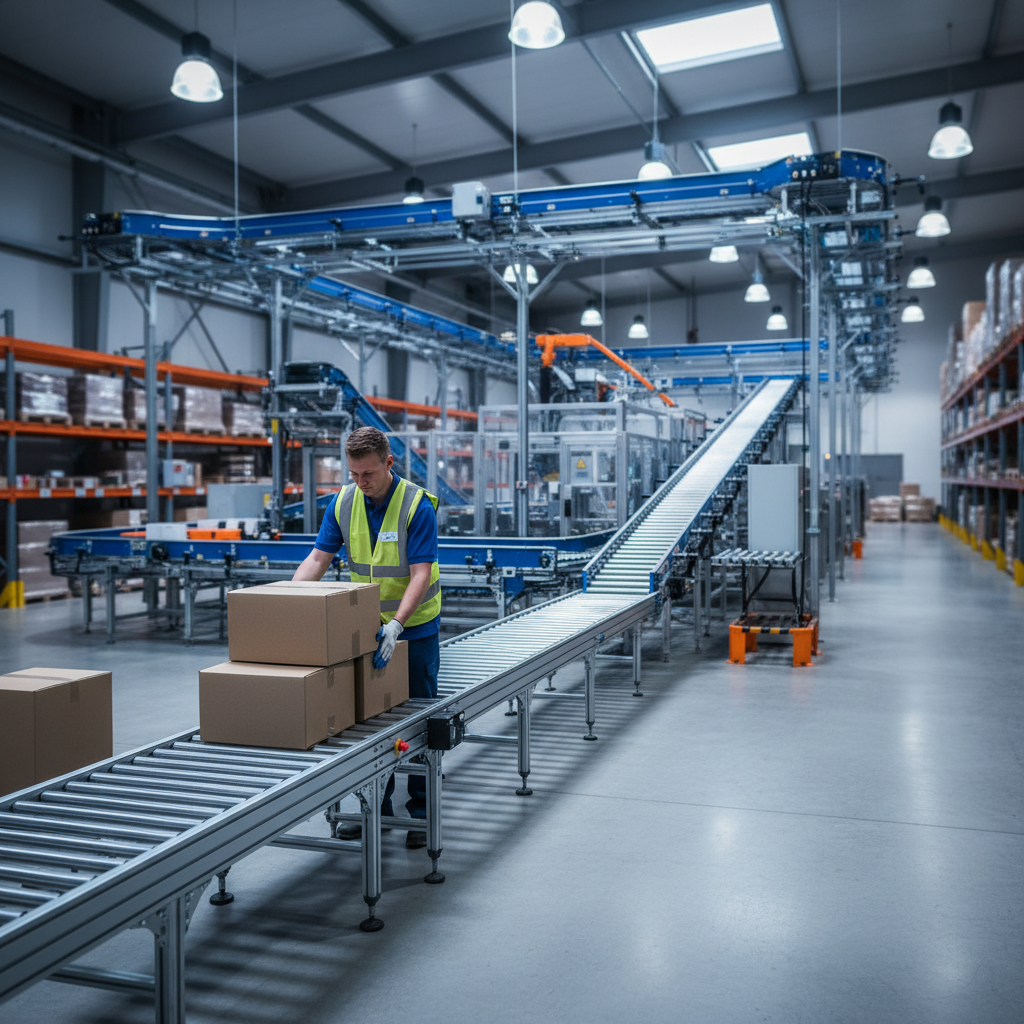
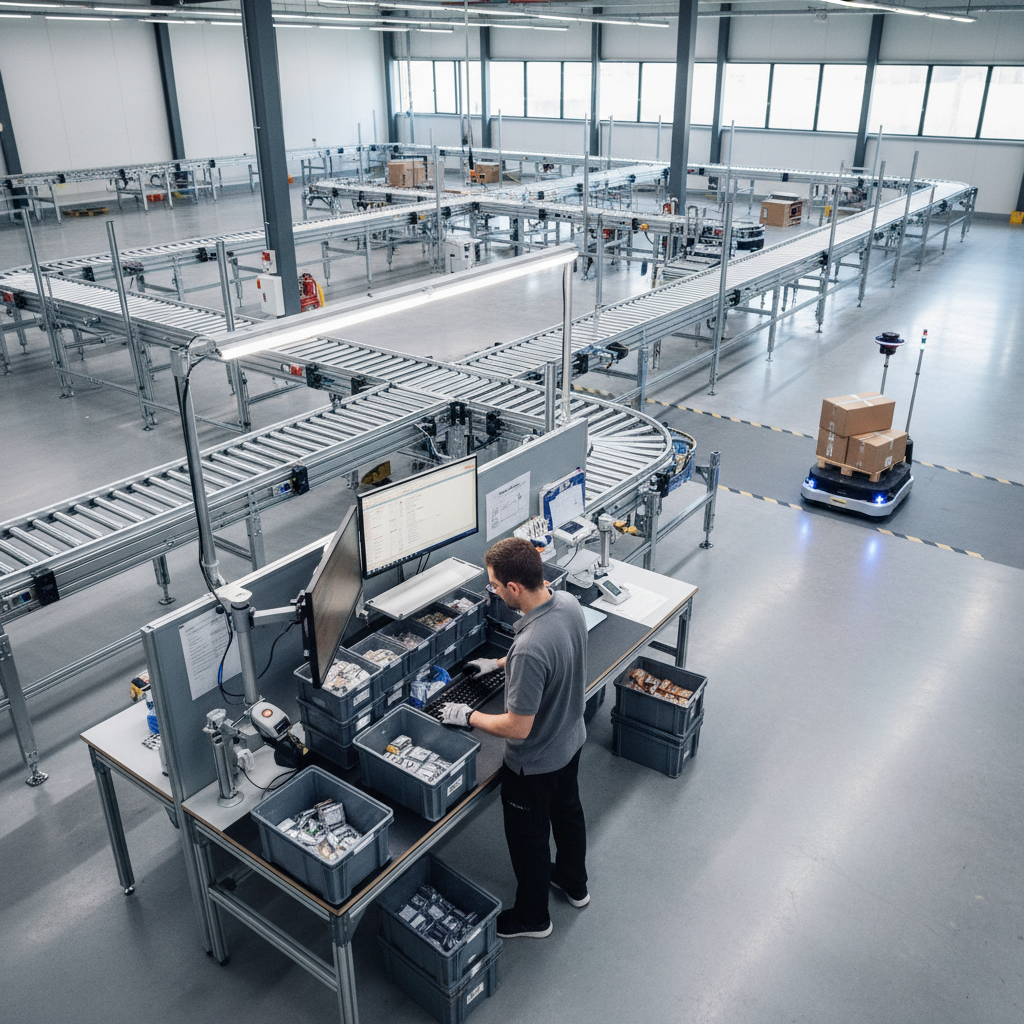
For example, you could first install a simple roller conveyor system to move totes from a manual picking zone to a central packing area. This immediately reduces walking time. In phase two, you could add automated sorting. This approach minimizes operational disruption, allows staff to adapt gradually, and spreads the investment over time.
The technical integration is paramount. The new hardware must communicate flawlessly with your warehouse management software. This is managed by a Warehouse Control System (WCS) or Warehouse Execution System (WES), which acts as the "traffic cop" between your WMS and the conveyors, sorters, and robots.
Step 5: Training, Go-Live & Hypercare
Automation changes roles; it doesn't just eliminate them. Your staff will transition from manual laborers to system operators and maintenance technicians. Invest in comprehensive training long before the system goes live. A well-trained team is less likely to make errors and can handle minor issues without needing to call for external support.
The "Go-Live" should be followed by a "hypercare" period (typically 2-4 weeks) where the integration partner has experts on-site to address any teething problems in real-time, ensuring a smooth ramp-up to full capacity.
Step 6: Continuous Improvement & Scaling
Your automation journey doesn't end at Go-Live. The new system provides a wealth of data. Use the analytics from your WES/WCS to monitor KPIs, identify new bottlenecks, and find opportunities for further optimization. Was the system designed to handle 500 units/hour but you're only achieving 450? The data will tell you why.
Because you chose a modular system in Step 3, you can now scale your automation as your business grows. You can add another picking zone, extend a conveyor line, or introduce new technologies like AMRs to work alongside your existing setup. This allows your material handling capabilities to evolve in lockstep with your business needs.
Easy Systems: Your Automation Partner in the Benelux
Successfully navigating the transition from manual to automated material handling requires a partner who combines technological expertise with a deep understanding of local market dynamics. At Easy Systems, a proud member of the BOA Concept group, we specialize in designing and implementing smart, modular conveyor solutions for Benelux companies. We understand that automation is a journey, not a single destination. Our approach focuses on delivering scalable systems that solve today’s problems while preparing you for tomorrow’s growth. Whether you are taking your first step with a simple belt conveyor or planning a fully integrated system, our team based in the Benelux is ready to help you design a pragmatic and cost-effective solution. To learn more about our specific approach and see our systems in action, visit us at easy-systems.eu.
This article is part of the Conveyor-Design knowledge hub, edited by Easy Systems engineers who design conveyor and warehouse automation systems across the Benelux every week.
Frequently asked questions
What is the typical ROI for a material handling automation project in the Benelux?+
While it varies based on scale and technology, most projects in the Benelux see a return on investment within 2 to 4 years, driven primarily by significant savings in labor costs and efficiency gains from higher throughput.
Can I automate my warehouse in phases instead of all at once?+
Absolutely. A phased approach is highly recommended. It allows you to target the most critical bottlenecks first, manage your investment over time, minimize disruption to ongoing operations, and allow your staff to adapt gradually to new workflows.
What is the essential first step to starting an automation project?+
The most critical first step is a comprehensive, data-driven analysis of your current material handling processes. You must benchmark your existing performance, map material flows, and identify specific bottlenecks to ensure you invest in the right technology to solve your unique challenges.