Future-Proofing Your Warehouse: How Scalable Conveyor Systems Adapt to Growth in the Benelux
Scalable conveyor systems offer the flexibility Benelux warehouses need to manage growth and seasonal peaks. By investing in modular designs, businesses can expand capacity, integrate new technologies, and optimize material flow without costly overhauls.
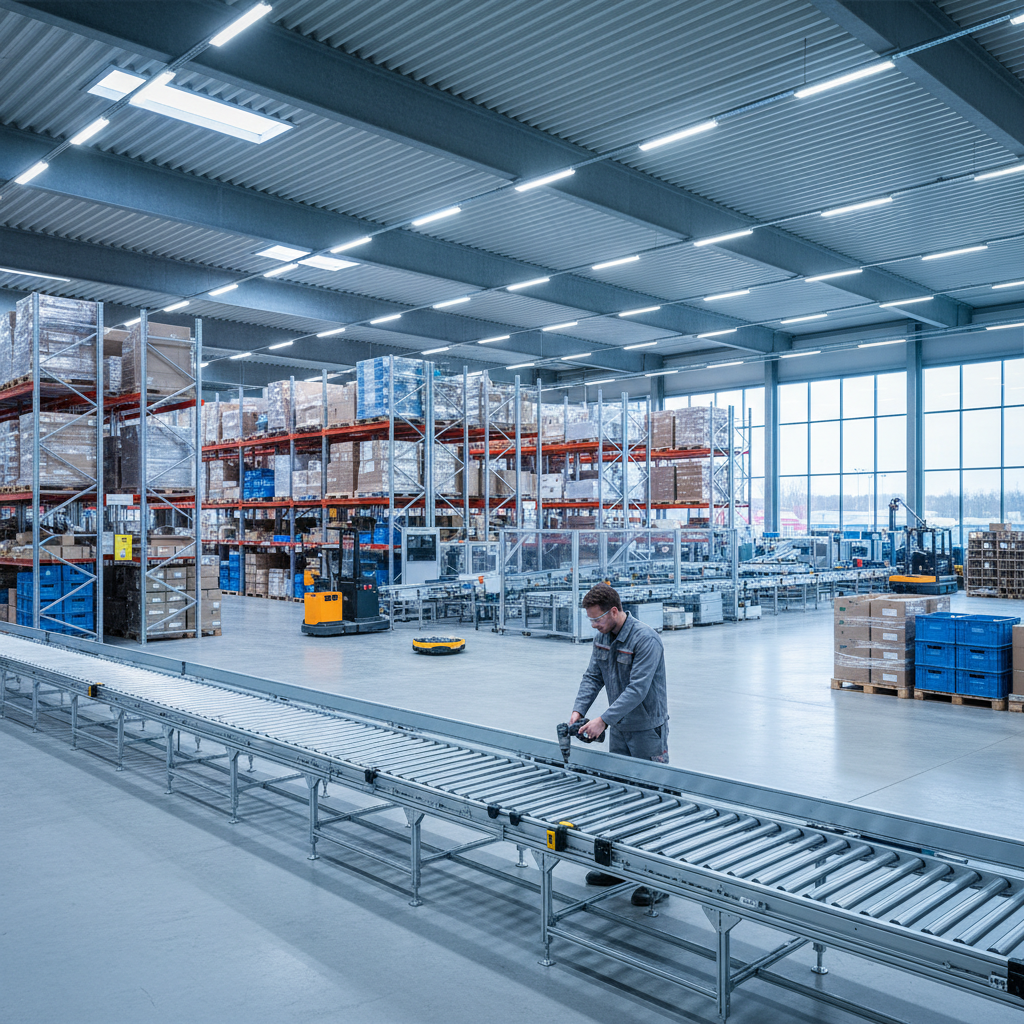
In the hyper-competitive logistics landscape of the Benelux, warehouse managers face a dual challenge: handling today's throughput efficiently while preparing for tomorrow's unknown growth. The volatile nature of e-commerce, seasonal demand spikes, and ever-shrinking delivery windows demand a flexible infrastructure. Investing in a massive, fixed-capacity conveyor system is a risky gamble. This is where scalable conveyor systems offer a strategic advantage, providing a future-proof solution that grows with your business.
Definition
A scalable conveyor system is a material handling solution built from modular components that can be quickly and easily reconfigured, expanded, or upgraded. Unlike traditional, monolithic systems, scalable conveyors are designed for agility, allowing warehouses to adapt their internal logistics to changing throughput requirements without requiring a complete overhaul or significant downtime.
Why Scalability Matters in the Benelux Logistics Landscape
The Benelux (Belgium, the Netherlands, Luxembourg) is one of Europe's most critical logistics hubs, characterized by high population density, major ports like Antwerp and Rotterdam, and steep labor and real estate costs. These factors make operational efficiency paramount. A static warehouse infrastructure can quickly become a bottleneck.
- Managing Growth & Volatility: An e-commerce business might see its order volume double in two years. A scalable system allows it to extend its conveyor lines, add sorting diverts, or integrate new packing stations in phases, matching investment directly to revenue growth.
- Space Optimization: Warehouse space is expensive, often exceeding €70 per square meter annually in prime Dutch locations. Scalable systems, including spiral conveyors for vertical transport, allow for more efficient use of cubic space. Modules can be added or rearranged to navigate tight corners and existing infrastructure.
- Labor Efficiency: With warehouse labor costs in the Netherlands and Belgium among the highest in Europe, automation is key. A scalable system allows for a phased automation journey. A simple transport line can later be upgraded with automated sorting and routing, reducing manual handling and reallocating staff to value-added tasks.
Core Principles of Scalable Conveyor Design
True scalability is built on a foundation of smart design principles. It’s not just about buying conveyors that can be extended; it’s about an integrated approach that considers mechanics, electronics, and software.
Modularity and Standardization
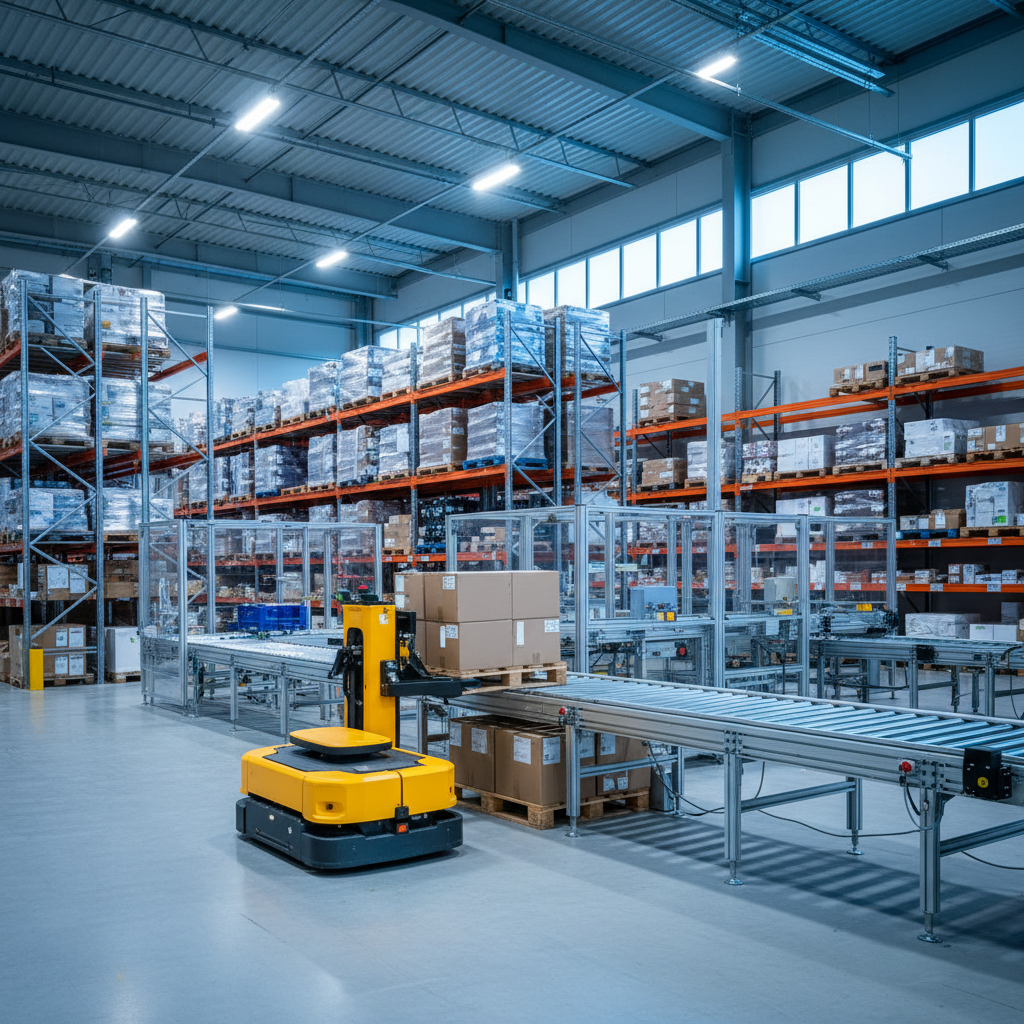
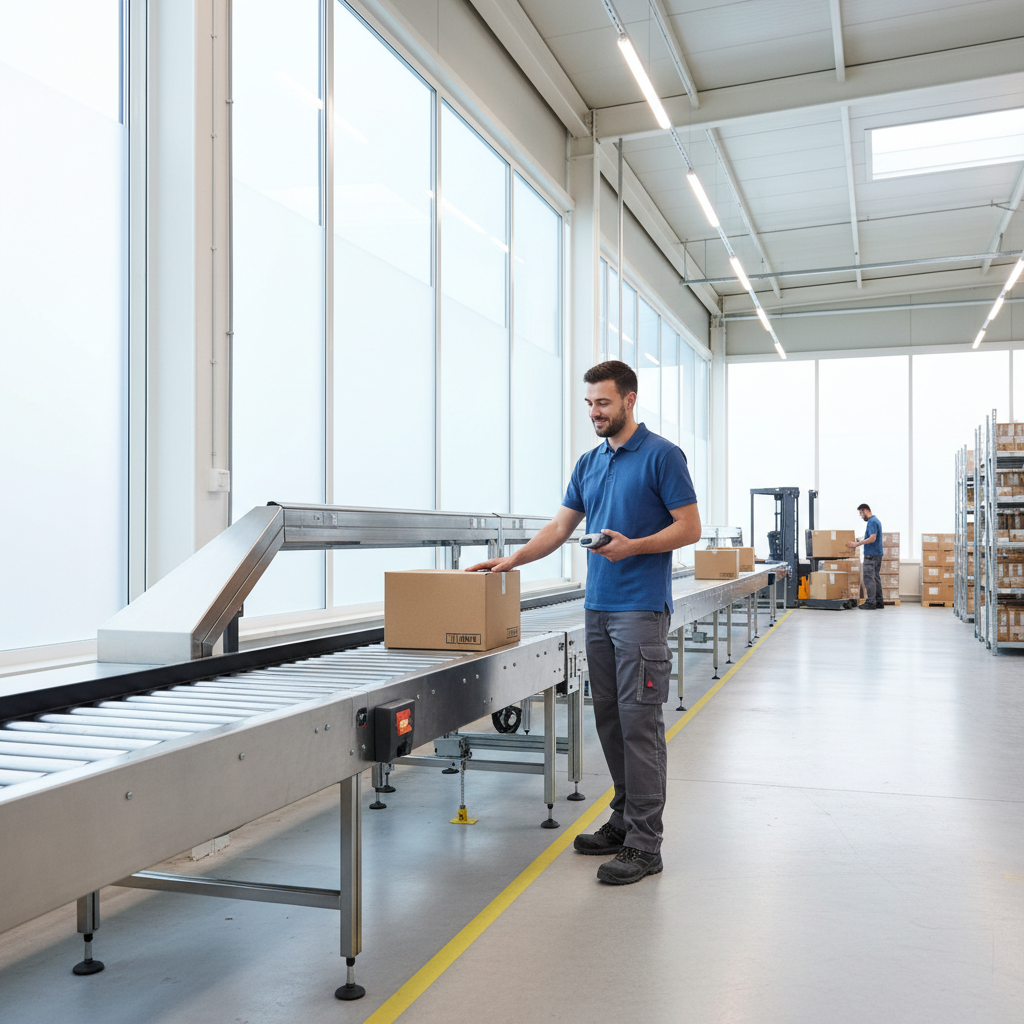
The cornerstone of scalability is modularity. This means using standardized, pre-engineered sections—straight modules, curves, junctions, and inclines—that fit together like building blocks. A standard roller conveyor module might be 2,000 mm long and 600 mm wide. If you need a 10-meter line, you simply connect five modules. If you need to add a 90-degree turn later, you insert a standardized curve module. This plug-and-play approach drastically reduces installation and reconfiguration time.
Decentralized Control
Traditional conveyors often rely on a single, large motor and a complex central PLC to manage the entire line. Modern scalable systems frequently use Motorized Drive Roller (MDR) technology. Each small section or "zone" of the conveyor has its own 24V DC roller motor with integrated logic. This decentralized control makes the system inherently modular. To extend the line, you just add more MDR zones; there is no need to reprogram a central PLC or upgrade a massive motor. This "zoning" also improves energy efficiency, as rollers only run when a product is present.
Comparing Scalable vs. Traditional Conveyor Systems
Choosing between a scalable and a traditional system has long-term financial and operational implications. The initial appeal of a single, large-scale implementation can be overshadowed by its rigidity in the face of change.
| Feature | Scalable Conveyor System | Traditional Conveyor System |
|---|---|---|
| Initial Investment (CapEx) | Lower. Pay for what you need now. (e.g., €50,000 for Phase 1) | Higher. Sized for projected peak capacity in 5 years. (e.g., €250,000 upfront) |
| Flexibility & Reconfiguration | High. Modules can be added, moved, or changed in hours or days. | Low. Major engineering, welding, and reprogramming required. Weeks of downtime. |
| Future-Proofing | Excellent. Easy to integrate new technologies (sorters, robots, vision). | Poor. Integration is complex and costly, may require a full system replacement. |
| Speed (Example) | Adjustable per zone, typically 0.2 m/s to 1.5 m/s. | Fixed speed for the entire line, e.g., 0.5 m/s. |
| Total Cost of Ownership (TCO) | Often lower due to phased investment, energy savings (MDR), and reduced downtime. | Higher due to large initial CapEx, energy use, and high costs of modification. |
A Phased Approach to Scaling Your Conveyor System
Implementing a scalable system allows for a strategic, multi-phase journey that aligns with your budget and operational needs.
- Phase 1: Establish the Core Transport. Start with a basic point-to-point conveyor line for moving goods from receiving to a packing area. A 50-meter MDR system could handle up to 1,200 totes/hour and cost between €40,000 - €60,000.
- Phase 2: Introduce Logic and Accumulation. As volume grows, add sorting capabilities (e.g., diverting to 3-4 packing lanes) and zero-pressure accumulation zones to buffer products and prevent damage. This might involve adding sensor modules and simple logic controllers.
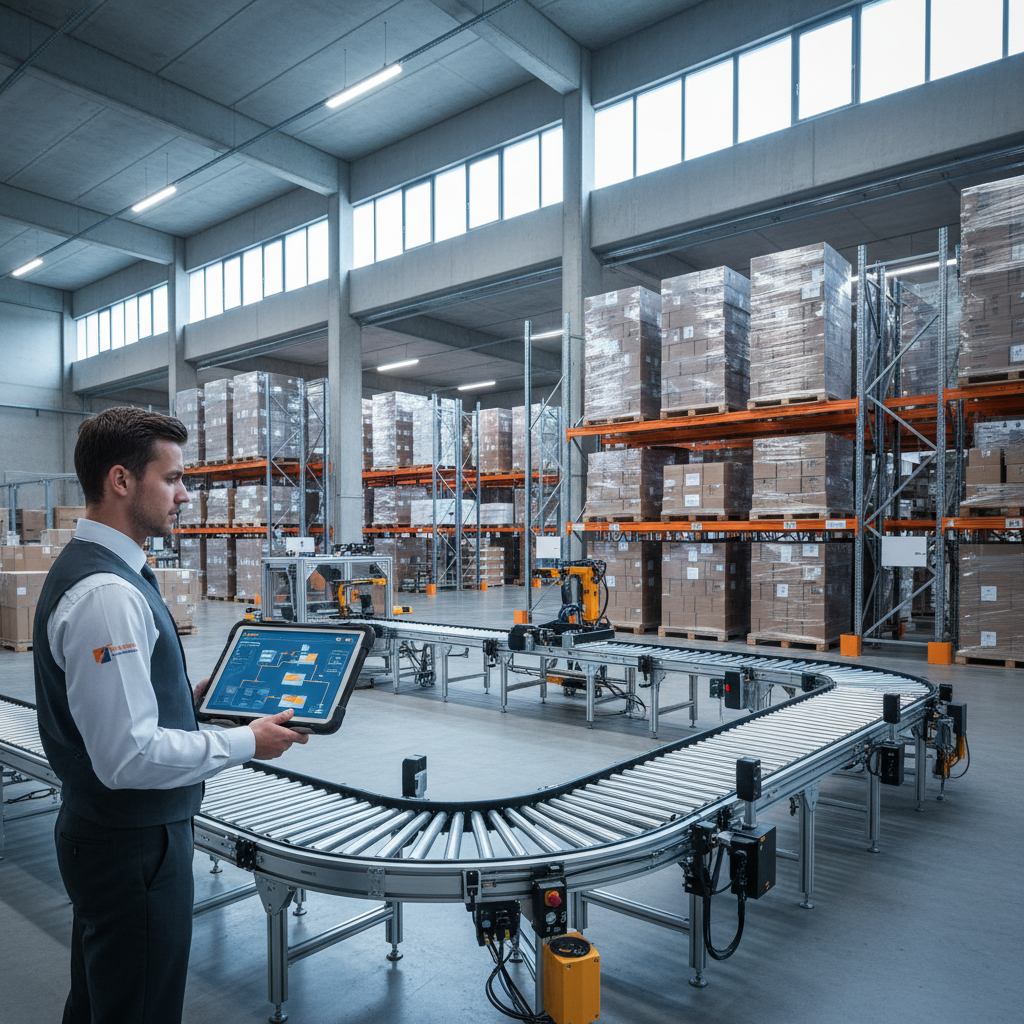
- Phase 3: Full Integration and Optimization. In the final phase, integrate the conveyor system with a Warehouse Execution System (WES) for intelligent, dynamic routing. Add automated systems like a high-speed sorter or integrate with AMRs for flexible transport to and from the conveyor lines. This phase unlocks the highest levels of throughput and efficiency. For more on this topic, read our guide to WMS, WCS, and WES integration.
Calculating ROI for a Scalable System
The business case for scalability becomes clear when looking at the numbers. Consider a 3PL in the Venlo region that anticipates 20% annual growth. Instead of buying a system for Year 5 capacity, they opt for a phased approach.
Their initial investment in a modular system is €100,000, versus €350,000 for a traditional fixed system. This frees up €250,000 in capital. The scalable MDR system consumes an estimated 30-50% less energy. Annually, this translates to €5,000-€8,000 in savings. More importantly, when they need to add a new sorting lane in Year 2, the cost is €25,000 and requires one weekend of downtime, compared to an estimated €80,000 and two weeks of downtime for the traditional system. As companies grow, their processes must grow with them; a scalable system ensures that this process evolution is efficient and cost-effective, directly improving the return on their initial and subsequent investments.
Easy Systems: Your Partner for Scalable Growth
In a dynamic market like the Benelux, your material handling system should be an enabler of growth, not a constraint. At Easy Systems, we specialize in designing and implementing modular, scalable conveyor solutions tailored to the unique challenges of European warehouses. Our systems, built with high-quality components and forward-thinking engineering, are designed to evolve with your business.
Why Choose Easy Systems?
- Benelux Expertise: We understand the local market, from real estate constraints in the Randstad to the cross-border logistics flows through Belgium.
- Modular by Design: Our product portfolio of roller, belt, and chain conveyors is inherently modular, ensuring you can start with what you need and expand with confidence.
- Pragmatic Integration: We ensure our systems communicate seamlessly with your other warehouse technology, from WMS software to robotic cells, using open standards like OPC UA.
Don't let a rigid infrastructure dictate the future of your warehouse. Contact Easy Systems today to discuss how a scalable conveyor solution can provide the foundation for your continued growth and success.
This article is part of the Conveyor-Design knowledge hub, edited by Easy Systems engineers who design conveyor and warehouse automation systems across the Benelux every week.
Frequently asked questions
What is a scalable conveyor system?+
A scalable conveyor system is a material handling solution designed with modular components. These can be easily added, removed, or reconfigured to match a warehouse's changing throughput and process needs, avoiding the need for complete and costly system overhauls.
How much does a scalable conveyor system cost in Europe?+
Initial costs can range from €20,000 for a simple setup to over €500,000 for a complex, multi-level system. The key benefit is phased investment; a basic 50-meter modular MDR line might start around €40,000-€60,000, allowing you to expand as your budget and needs grow.
What are the main benefits of scalability in a conveyor system?+
The main benefits are investment protection, operational flexibility to handle seasonal peaks and growth, reduced initial capital expenditure (CapEx), and the ability to seamlessly integrate future automation technologies like robotics and advanced software without starting from scratch.