Conveyor Ergonomics: Safety & Productivity in Benelux Warehouses
Ergonomically designed conveyor systems are crucial for Benelux warehouses, reducing physical strain on workers, minimizing injury risks, and significantly boosting operational productivity and profitability.
In the high-density logistics landscape of the Benelux, where every square meter and every second counts, warehouse efficiency is paramount. However, true productivity isn't just about speed; it's about sustainability. Poorly designed conveyor systems are a hidden drain on resources, leading to worker injuries, absenteeism, and reduced throughput. This article explores the critical role of conveyor system ergonomics in creating safer, more productive, and more profitable warehouse environments in the Netherlands, Belgium, and Luxembourg.
Definition
Conveyor System Ergonomics is the science of designing and arranging conveyor systems so that they fit the human body and its cognitive abilities. The goal is to optimize the interaction between the worker and the equipment to increase performance while minimizing the risk of musculoskeletal disorders (MSDs) and fatigue.
The High Cost of Poor Ergonomics in Benelux Logistics
In the fast-paced distribution centers of hubs like Antwerp, Rotterdam, and Luxembourg, workers often perform thousands of repetitive motions per shift. When conveyor systems are not ergonomically designed, these tasks lead to strain. According to the European Agency for Safety and Health at Work (EU-OSHA), work-related MSDs are the most common occupational disease in the EU, affecting millions of workers and costing employers billions of euros annually. The primary risk factors—repetitive movements, awkward postures, and heavy lifting—are all prevalent in non-ergonomic warehouse settings. A single case of chronic back or shoulder injury can cost a company over €15,000 in sick leave, replacement staff, and productivity losses, not to mention the potential for fines from national inspectorates like the Dutch NLA or Belgian FOD WASO for non-compliance with health and safety laws.
Key Principles of Ergonomic Conveyor Design
Creating an ergonomic workspace is about eliminating unnecessary strain. For conveyor systems, this boils down to a few core principles rooted in biomechanics.
H3: The "Golden Zone" for Picking and Placing
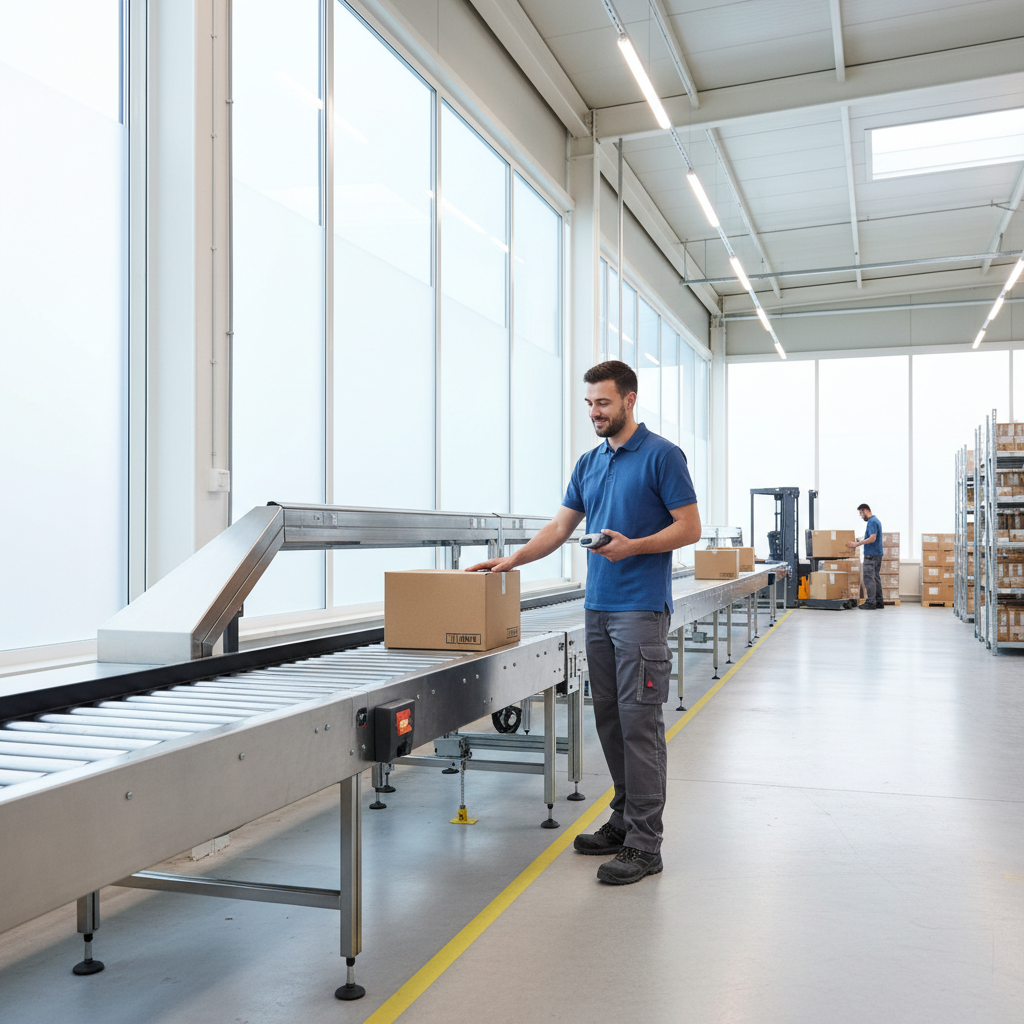
The ideal height for manual material handling is the "golden zone" or "power zone," which is between the worker's knee and shoulder height. Forcing employees to bend down to pick items from a low conveyor or reach up to place them on a high one dramatically increases stress on the lower back and shoulders. An ergonomically designed system positions the conveyor surface at a comfortable height, typically between 750 mm and 1100 mm, allowing workers to maintain a neutral, upright posture. This single adjustment can significantly reduce fatigue and long-term injury risk.
H3: Reducing Reach and Awkward Postures
Every centimeter a worker has to reach or twist adds up. Reaching across a wide belt conveyor to retrieve a package can strain the back, shoulders, and arms. The goal is to keep items within easy reach. For conveyors that require access from one side, the width should ideally not exceed 600 mm. If workers are stationed on both sides, a width of up to 1200 mm can be acceptable, but never should a worker have to reach more than 600 mm. Integrating turntables or pushers can automatically orient packages, presenting them directly to the operator and eliminating awkward twisting motions.
H3: Minimizing Repetitive Motion and Lifting
Repetition is a major contributor to MSDs. While some repetition is unavoidable, its harmful effects can be mitigated. An accumulation conveyor, for example, can buffer products, allowing workers to perform tasks at their own pace rather than being dictated by the continuous flow of the line. For changes in elevation, instead of manual lifting, spiral conveyors or vertical lifts can automate the process, completely removing the physical load from the employee. This is especially critical in multi-level mezzanine operations common in modern e-commerce fulfillment centers.
Ergonomic Conveyor Solutions for Modern Warehouses
Modern conveyor technology offers numerous solutions to build a human-centric workflow. These systems are often modular, allowing for a tailored approach to solving ergonomic challenges.
H3: Adjustable Height Conveyors
In facilities with multiple shifts, the workforce can vary significantly in height. A fixed-height conveyor that is perfect for one worker may be highly un-ergonomic for another. Adjustable-height conveyors, which can be raised or lowered with a manual crank or electric motor, provide a simple and effective solution. They allow each user to set the work surface to their personal "golden zone," making them a valuable investment in flexibility and worker health.
H3: Integrating Ergonomics with Roller Conveyors
Roller conveyors are the backbone of many logistics operations. As detailed in our guide to roller conveyors, designing them ergonomically is key. Using Motor Driven Roller (MDR) technology allows for zone-based control, ensuring packages move in a controlled manner and only when needed. This prevents pile-ups that can force workers into awkward positions to untangle jams. Furthermore, integrating sections with smaller roller pitches at manual workstations can make it easier to slide packages, reducing the force needed to move them.
Comparative Analysis: Ergonomic vs. Non-Ergonomic Setups
The difference between a standard and an ergonomic conveyor setup is stark, both in terms of worker well-being and operational performance.
| Feature | Non-Ergonomic Design | Ergonomic Design | Productivity Impact |
|---|---|---|---|
| Conveyor Height | Fixed at 600 mm | Adjustable, 750 mm - 1100 mm | +15% picks per hour due to reduced fatigue |
| Reach Distance | 800 mm reach across belt | <500 mm reach with tilting station | Up to 3-second reduction in cycle time per item |
| Lifting Requirement | Manual lifting of 15 kg boxes | Automated vacuum lifter or mini-lift | Eliminates high-strain activity, lowers injury risk by >50% |
| Task Repetition | Continuous belt feed at 0.5 m/s | Zero-pressure accumulation zones | Reduces stress, improves quality by allowing worker pacing |
ROI of Ergonomic Investments in the Benelux
Investing in ergonomics is not a cost center; it's a profit driver. Consider a typical Benelux DC with 20 packing stations. An investment of €2,500 per station (€50,000 total) to add adjustable-height features and small vacuum lifters can have a rapid payback. If this investment prevents just three minor MSD-related absences per year (average cost of €5,000 each) and boosts productivity by 10%, the annual return is significant. The reduction in absenteeism saves €15,000. The productivity gain (e.g., from 120 to 132 units per hour per worker) across 20 stations can translate into hundreds of thousands of euros in additional revenue. Companies often see a full return on their ergonomic investments in under 24 months. As many firms discover, their internal processes fail to keep pace with their growth, and investing in scalable, ergonomic infrastructure is a key step to realigning them.
European Regulations and Standards
Ergonomics is not just good practice; it's a legal requirement. The EU's Machinery Directive (2006/42/EC) mandates that machinery must be designed and constructed to avoid any risk of injury or damage to health. This explicitly includes ergonomic principles. Standards like EN ISO 12100 (Safety of machinery) and the EN 614 series (Ergonomic design principles) provide a framework for compliance. Health and safety authorities in the Benelux are increasingly focused on ergonomics during inspections, and failure to provide a safe working environment can result in steep penalties and operational shutdowns.
Easy Systems: Your Partner in Ergonomic Warehouse Design
At Easy Systems, we believe that efficient logistics and worker well-being are two sides of the same coin. We don’t just sell conveyors; we engineer human-centric material handling solutions tailored to the unique demands of the Benelux market. Our modular conveyor systems are designed from the ground up with ergonomics in mind, from adjustable heights and integrated turntables to seamless integration with lifts and robotic cells. We help you analyze your specific workflow to identify ergonomic risks and design a system that boosts productivity, ensures safety, and delivers a tangible return on investment. Partner with us to build a warehouse that is not only faster and more efficient, but also safer and more sustainable for your most valuable asset: your people.
This article is part of the Conveyor-Design knowledge hub, edited by Easy Systems engineers who design conveyor and warehouse automation systems across the Benelux every week.
Frequently asked questions
What is the ideal conveyor height for ergonomics?+
The ideal conveyor height is within the worker's 'golden zone,' typically between 750 mm and 1100 mm from the floor. This allows the worker to handle items between their knee and shoulder height, minimizing bending and reaching.
How does conveyor ergonomics affect productivity?+
Ergonomic improvements can boost productivity by 15-25%. By reducing physical strain and fatigue, workers can maintain a consistent pace with higher accuracy for longer periods, resulting in higher throughput and fewer errors.
Are ergonomic conveyors more expensive?+
While the initial investment for ergonomic features like adjustable height or integrated lifters may be slightly higher (5-15%), the return on investment is rapid. Reduced costs from absenteeism and staff turnover, combined with productivity gains, typically result in a payback period of less than 24 months.
What are common signs of poor ergonomics in a warehouse?+
Common signs include workers frequently bending at the waist, reaching far across conveyor belts, twisting their torso to move items, and reporting frequent back, shoulder, or wrist pain. High staff turnover and absenteeism in specific departments are also strong indicators.