Zero-Emission Intralogistics: A Benelux Warehouse Guide
Transitioning to zero-emission intralogistics is crucial for Benelux warehouses. This guide covers how electric conveyor systems, on-site solar generation, and smart WES can cut operational costs by up to 25% and future-proof your facility against rising carbon taxes.
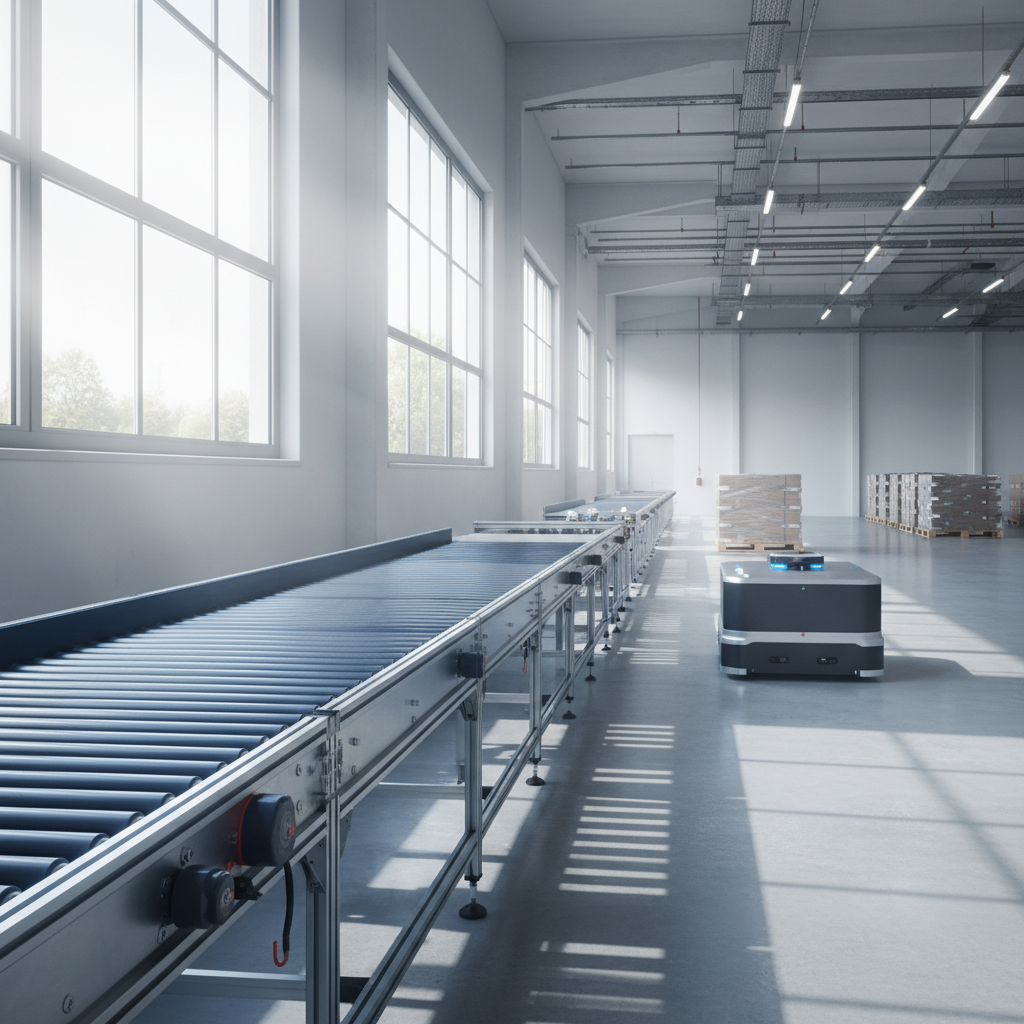
As the European Union doubles down on its Green Deal, warehouses in the logistics-intensive Benelux region face mounting pressure to decarbonize. For many, the path to sustainability runs directly through their intralogistics operations. Transitioning to a zero-emission model, powered by electric conveyor systems and on-site sustainable energy, is no longer a niche concept but a competitive necessity for forward-thinking distribution centers in Belgium, the Netherlands, and Luxembourg.
Definition
Zero-Emission Intralogistics refers to the strategy of powering all internal material handling processes—such as conveying, sorting, and vehicle movement—entirely through electrical systems that are fueled by renewable energy sources, resulting in a net-zero carbon footprint for on-site operations.
Key Numbers
| Metric | Typical Range (Benelux 2026) | Notes |
|---|---|---|
| Electric Conveyor Energy Use | 0.04 - 0.15 kWh/hour per meter | Highly dependent on MDR technology and load. |
| On-site Solar Panel ROI | 5-8 years | Factoring in subsidies and high electricity prices. |
| Investment per Meter (Conveyor) | €900 - €2,800 | Includes MDR rollers, controls, and installation. |
| CO2 Reduction Potential | 15-25 tonnes/year | For a 10,000 m² warehouse replacing gas forklifts & old conveyors. |
| Energy Cost Savings (Opex) | 15% - 35% annually | Compared to a non-electrified, grid-dependent facility. |
| Battery Storage Cost (BESS) | €250 - €450 / kWh | Cost per installed kWh, crucial for energy autonomy. |
The Drive Towards Electrification in Benelux Logistics
The Benelux region, a cornerstone of European logistics, is at the forefront of the green transition. This shift is driven by three main factors:
- Regulatory Pressure: The EU's 'Fit for 55' package aims to reduce GHG emissions by 55% by 2030. This translates into stricter building codes, potential carbon taxes on energy usage, and mandatory corporate sustainability reporting (CSRD).
- Economic Volatility: Fluctuating natural gas and electricity prices have made the predictable, low operational cost of self-generated solar power extremely attractive. Energy independence is now a key strategic advantage.
- Corporate & Customer Demand: Increasingly, major clients and end-consumers prefer to partner with companies that can demonstrate a clear commitment to sustainability, making green credentials a valuable market differentiator.
Core Components of a Zero-Emission Intralogistics System
Achieving total sustainability requires a holistic approach, integrating energy-efficient hardware with intelligent management systems and on-site generation.
1. Energy-Efficient Electric Conveyor Systems
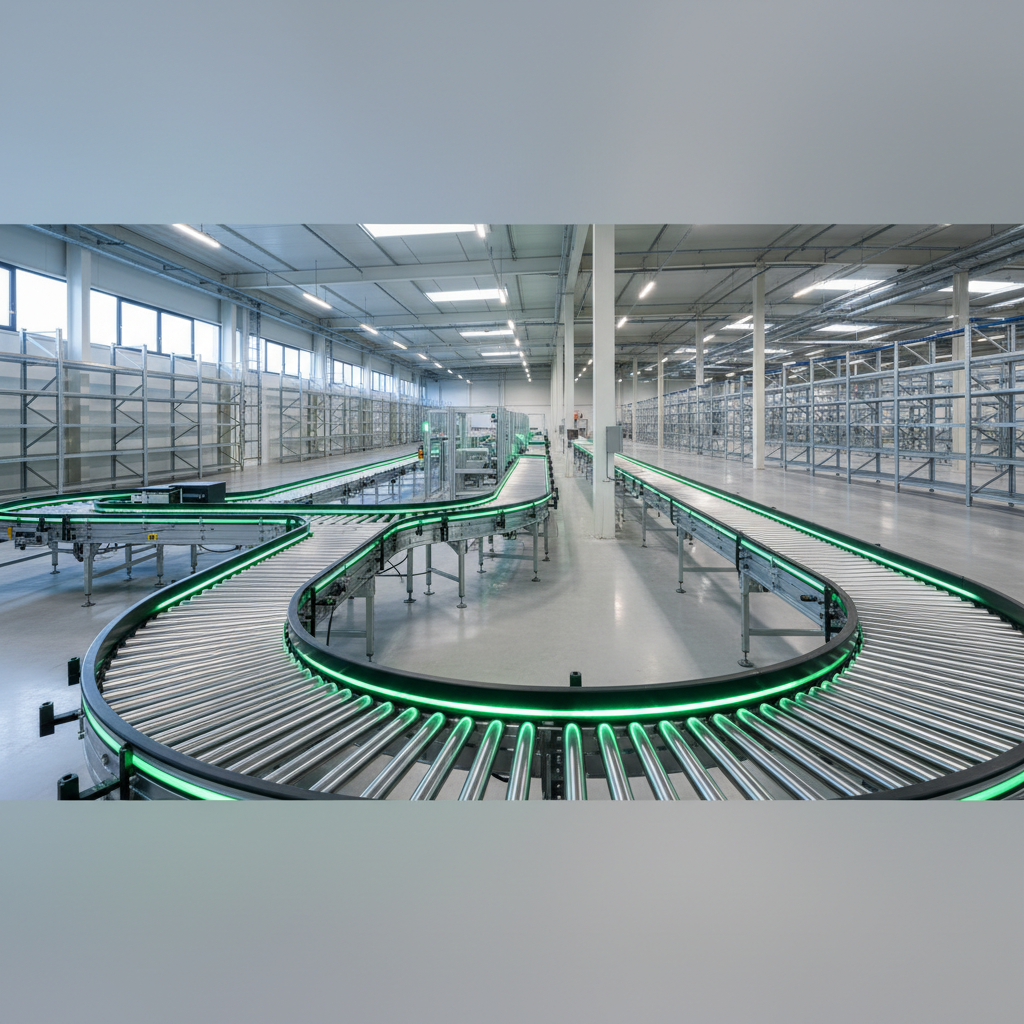
The backbone of any modern warehouse is its conveyor system. The move away from a single, powerful motor driving long stretches of conveyor (a major energy sink) towards decentralized, on-demand power is critical. Motorized Drive Roller (MDR) technology is the key enabler, using 24V or 48V DC rollers that only activate when a product is present.
This approach, often used in zero-pressure accumulation lines, ensures that energy is consumed with surgical precision, drastically lowering baseline power consumption compared to older AC-powered systems.
| Feature | MDR Conveyor System | Traditional Line-Shaft System |
|---|---|---|
| Energy Consumption | Low (activates on-demand) | High (constantly running motor) |
| Energy Savings | Up to 60% reduction | Baseline |
| Noise Level | < 60 dB | 70-80 dB |
| Modularity & Zoning | Excellent, easy to reconfigure | Poor, requires major rework |
| Maintenance | Simple roller replacement | Complex belt/chain tensioning |
2. Electric & Automated Guided Vehicles (AGVs/AMRs)
To eliminate emissions from fossil-fueled vehicles like propane forklifts, warehouses are adopting fully electric fleets. This includes not just electric forklifts and reach trucks but also sophisticated automated systems. The choice between technologies is critical; for an in-depth analysis, see our AGV vs. AMR guide. Autonomous Mobile Robots (AMRs), in particular, offer flexible, scalable solutions for goods-to-person workflows. They can be charged during off-peak hours or opportunistically during periods of high solar generation, further optimizing energy use.
3. On-Site Renewable Energy & Storage
The vast, flat roofs of Benelux warehouses are ideal for large-scale solar photovoltaic (PV) installations. A 10,000 m² roof can easily accommodate a 1 MWp solar array, capable of generating over 900,000 kWh per year—often enough to power the entire intralogistics operation and other building systems. To ensure 24/7 operation and energy resilience, these solar arrays are increasingly paired with on-site Battery Energy Storage Systems (BESS). These batteries store excess solar energy produced during the day for use at night or during peak demand, effectively taking the facility off-grid for large parts of the day.
Integration and Control: The Role of the WES
Hardware alone is not enough. The brain of the zero-emission warehouse is an intelligent software layer, typically a Warehouse Execution System (WES). A modern WES doesn't just manage product flow; it manages energy flow. It can:
- Monitor energy generation: Track real-time solar output and battery charge levels.
- Implement energy-aware routing: Prioritize tasks on conveyors or for AMRs located in zones with the lowest current energy cost.
- Orchestrate charging cycles: Schedule vehicle charging to coincide with peak solar production, avoiding expensive grid power.
- Load-balance: Smooth out energy demand to prevent spikes, reducing peak-load charges from utility providers.
It’s no secret that as businesses expand, their internal processes often struggle to keep pace with their growth. Integrating a WES helps align operational processes with sustainability goals, ensuring growth is both efficient and green.
Future Outlook: Towards Energy-Positive Warehouses
The journey doesn't end at zero-emissions. The next frontier for Benelux DCs is becoming "energy-positive," generating more electricity than they consume. This opens up new revenue streams through Vehicle-to-Grid (V2G) schemes, where the batteries in forklifts and AMRs can feed power back to the grid during high-demand periods. As technology evolves, warehouses will transform from energy consumers into active, profitable participants in the local energy market.
Easy Systems: Your Partner for Sustainable Intralogistics
Achieving zero-emission intralogistics requires a partner that understands both the mechanics of material flow and the dynamics of energy management. At Easy Systems, we specialize in designing and implementing highly efficient, modular conveyor systems that form the foundation of a sustainable warehouse. Our expertise in MDR technology and integration with smart control systems like WES allows us to deliver solutions that significantly reduce your energy consumption and carbon footprint. We help Benelux businesses navigate the transition to cleaner, more profitable logistics, ensuring your operations are ready for the sustainable future.
Frequently asked questions
What is zero-emission intralogistics?+
Zero-emission intralogistics is a strategy where all internal material handling systems, like conveyors and forklifts, are powered by electricity from renewable sources, such as on-site solar panels. This eliminates direct operational carbon emissions, reducing environmental impact and often leading to energy cost savings of over 20%.
How much energy can electric MDR conveyors save?+
Compared to traditional conveyor systems with constantly running AC motors, modern 24V Motorized Drive Roller (MDR) systems can reduce electricity consumption by up to 60%. They operate on-demand, consuming power only when carrying a product, which drastically cuts energy waste in typical warehouse applications.
What is the ROI for solar panels on a Benelux warehouse?+
In the Benelux region, the typical return on investment (ROI) for a commercial rooftop solar installation is between 5 and 8 years. This calculation is accelerated by government subsidies, high grid electricity prices, and the ability to sell surplus energy back to the grid, making it a financially sound investment.
Are there subsidies for green logistics in the Netherlands or Belgium?+
Yes, both countries offer significant incentives. The Netherlands has the MIA\Vamil schemes, and Belgium offers various regional grants for ecological investments. These programs can cover a substantial portion of the initial investment (CAPEX) in energy-efficient equipment and solar installations, often up to 30-40%.
How does a Warehouse Execution System (WES) improve energy efficiency?+
A WES acts as a traffic controller for both goods and energy. It can delay non-critical tasks until periods of high solar generation, orchestrate AMR charging schedules to avoid peak grid prices, and ensure conveyor zones are only active when needed. This intelligent management can reduce peak energy demand by 15-25%.

The Easy Systems editorial desk reviews and fact-checks every Conveyor-Design article against Benelux project experience. Editors translate engineering decisions — throughput, peak factors, layout, integration — into plain-language guides for operations managers, project leads and decision-makers.
- Warehouse layout & slotting
- Order-profile analysis
- Vendor-neutral comparison
- Benelux logistics market