Workplace Ergonomics: How Conveyor Systems Create a Healthier Work Environment
Ergonomic conveyor systems are crucial for modern warehouses, reducing musculoskeletal disorders by up to 60% and improving operator efficiency. This guide explores how adjustable heights, automated transfers, and goods-to-person technologies create safer, more productive work environments.
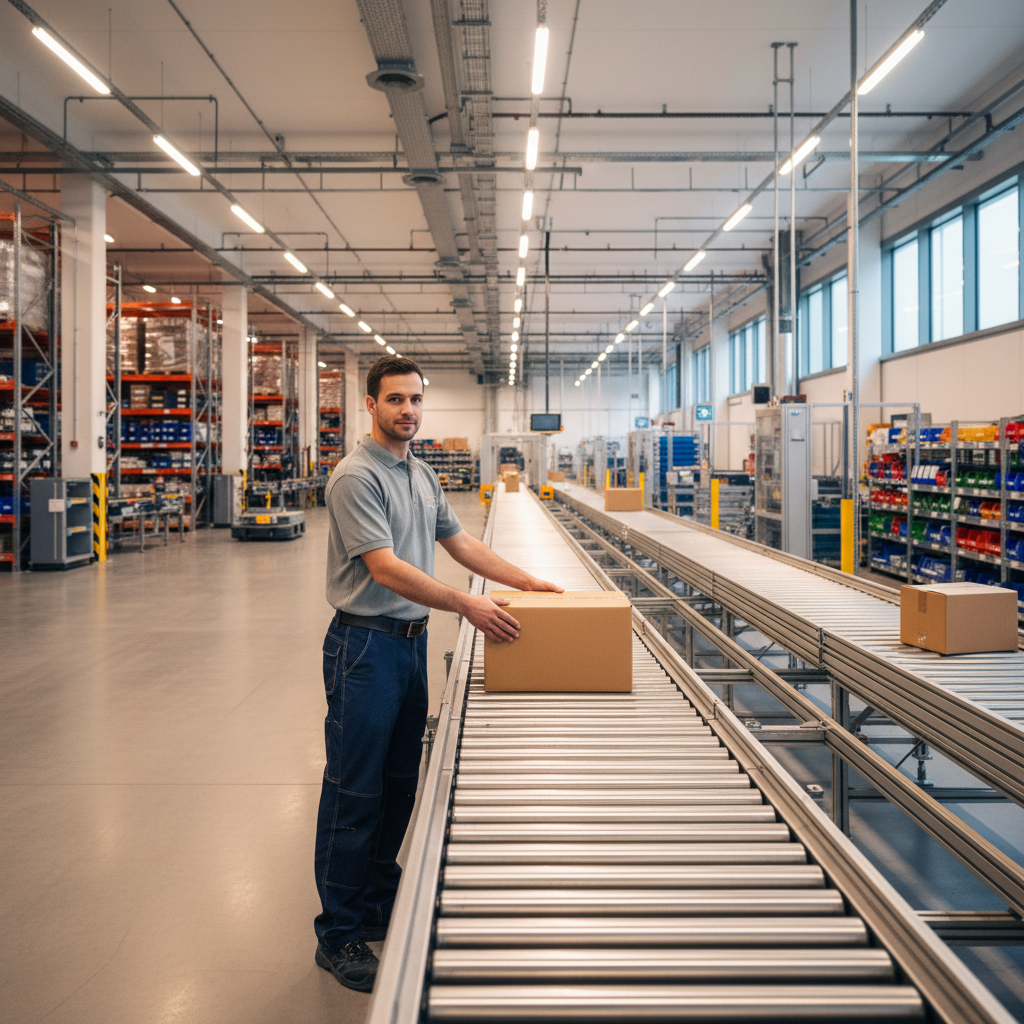
In the fast-paced world of logistics and e-commerce fulfillment, the efficiency of a warehouse is often measured in picks per hour and meters per second. However, a critical, often underestimated, factor underpins sustainable productivity: workplace ergonomics. Neglecting ergonomics leads to increased employee absenteeism, lower morale, and significant costs associated with workplace injuries. This article explores how intelligently designed conveyor systems are not just about moving goods, but about creating a healthier, safer, and more productive work environment for the people at the heart of the operation.
Definition
Ergonomic conveyor systems are material handling solutions specifically designed to fit the task to the worker, not the other way around. They aim to minimize physical strain by reducing actions like bending, stretching, lifting, and repetitive movements, thereby lowering the risk of work-related musculoskeletal disorders (MSDs).
Key Ergonomic & Performance Numbers
| Metric | Typical range (EU 2026) | Notes |
|---|---|---|
| Optimal Conveyor Working Height | 750 mm - 1,100 mm | Adjustable to suit operator height and task (e.g., picking vs. packing). |
| Reduction in MSD Risk | 30% - 60% | Achieved through reduced lifting, bending, and repetitive motions. |
| Productivity Increase | 10% - 25% | Direct result of reduced fatigue, fewer micro-breaks, and faster task completion. |
| Typical ROI for Ergonomic Upgrades | 1.5 - 3 years | Calculated from reduced absenteeism, higher throughput, and lower insurance premiums. |
| Max. Repetitive Manual Lift Weight | 3 kg - 5 kg | Recommended limit to avoid strain in repetitive tasks (cf. EU-OSHA guidelines). |
| Acceptable Noise Level | < 70 dBA | Modern MDR conveyors operate significantly quieter than older systems, reducing stress. |
The Hidden Costs of Poor Ergonomics in Logistics
In any European distribution center, the direct cost of a workplace injury is clear. What's less visible are the indirect costs, which can be four to ten times higher. Poor ergonomics is a leading cause of work-related musculoskeletal disorders (MSDs), which account for a significant portion of all occupational illnesses in the EU. These disorders lead to:
- Increased Absenteeism: Employees suffering from back pain, RSI (Repetitive Strain Injury), and other MSDs take more sick days, disrupting workflow and requiring costly temporary staff.
- Lower Productivity: An operator in discomfort works slower and less accurately. Fatigue leads to errors in picking, packing, and sorting, impacting order fulfillment quality.
- High Employee Turnover: A physically demanding and uncomfortable work environment leads to burnout and higher staff turnover, incurring continuous recruitment and training costs.
Core Principles of Ergonomic Conveyor Design
Creating an ergonomic workspace revolves around a few core principles. When applied to conveyor systems, they transform the operator's interaction with the material flow.
1. Working in the "Golden Zone"
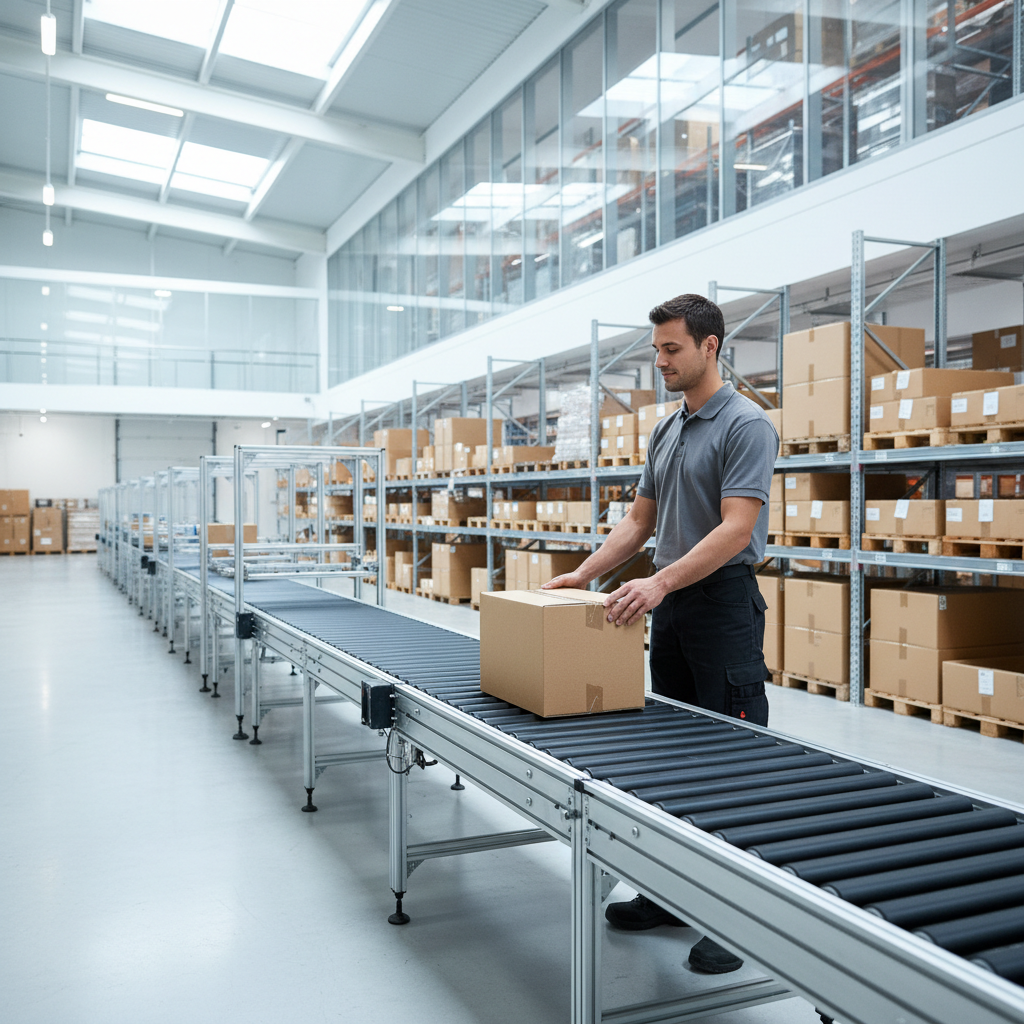
The "golden zone" or "power zone" for lifting is the area between the mid-thigh and mid-chest. Work should be designed to keep tasks within this zone. For conveyor applications, this means ensuring the conveyor surface is at a height that prevents operators from bending down or reaching up. Height-adjustable conveyor sections, particularly at packing or picking stations, are a primary solution. They allow operators of different heights to position the work surface at their individual optimal level, typically between 750 mm and 1,100 mm.
2. Reducing Reaching and Repetition
Excessive reaching and repetitive movements are a major cause of shoulder and back injuries. Ergonomic design aims to bring items closer to the operator. This can be achieved with tilting sections on belt conveyors that present items for easier access, or by using turntables and ball transfer units that allow operators to rotate heavy packages without twisting their bodies. The goal is to keep arm movements short and within a comfortable range.
3. Automating Vertical and Horizontal Transfers
Manually lifting boxes from one conveyor line to another is a high-risk activity. This is where automation provides a significant ergonomic benefit. Vertical transfers can be handled by spiral conveyors or vertical lifts, which move products between different levels without manual intervention. For horizontal transfers between parallel lines, pusher arms or cross-belt sorters can automate the process, completely eliminating the need for manual handling of goods in transit.
Comparing Ergonomic Conveyor Technologies
Different technologies offer various levels of ergonomic improvement. The right choice depends on the specific application, product type, and required throughput.
| Technology | Primary Ergonomic Benefit | Best For | Typical Cost (€/m) |
|---|---|---|---|
| Adjustable Height Conveyor Sections | Eliminates bending/stretching; allows neutral posture. | Packing, picking, and quality control stations. | €800 - €1,500 |
| Ball Transfer Tables / Turntables | Reduces body twisting when reorienting heavy items. | Manual palletizing, depalletizing, and inspection points. | €1,200 - €2,500 (per unit) |
| Zero-Pressure Accumulation Conveyors | Reduces stress from product jams and allows for paced work. | Buffering zones before workstations, preventing line pressure. | €600 - €1,100 |
| Goods-to-Person (G2P) Systems | Eliminates walking and searching; presents items at optimal height. | High-volume e-commerce picking and order fulfillment. | System-based pricing (€100k+) |
Measuring the ROI of Ergonomic Investments
Investing in ergonomics is not just a cost; it’s a strategic investment in operational excellence. The Return on Investment (ROI) can be calculated by quantifying improvements in several areas:
- Reduced Costs of Absenteeism: Calculate the cost of sick days (wages, temporary staff, lost productivity) before and after the ergonomic intervention. A 30% reduction in MSD-related sick days is a conservative estimate.
- Increased Productivity: Measure key metrics like picks per hour (PPH) or units per hour (UPH). An operator who is comfortable and less fatigued can often achieve a 10-25% increase in throughput.
- Improved Quality: Track error rates in picking and packing. A more focused and comfortable worker makes fewer mistakes, reducing the cost of returns and customer complaints.
- Lower Insurance Premiums: A demonstrated commitment to safety and a lower incident rate can lead to negotiations for lower workers' compensation insurance premiums.
As detailed in our partner post, when companies grow, their processes must scale intelligently. Ergonomic improvements are a core component of that scalable growth, ensuring that an increase in volume doesn’t lead to a proportional increase in physical strain on the workforce.
Integration with Warehouse Automation for Maximum Impact
Ergonomics and automation are two sides of the same coin. A fully optimized warehouse uses automation to eliminate the most strenuous, repetitive, and non-value-added tasks, freeing up human operators to focus on more complex, value-adding activities in an ergonomically sound environment. Integrating ergonomic conveyor design with a Warehouse Execution System (WES) allows for intelligent routing and pacing of work. For example, the WES can control the flow of goods to a packing station, ensuring the operator is never overwhelmed or left waiting, further reducing stress and improving focus. To learn more about how these systems interact, explore our comprehensive guide to WMS, WCS, and WES integration.
Easy Systems: Your Partner in Ergonomic Warehouse Design
At Easy Systems, a proud member of the BOA Concept group, we believe that world-class logistics automation is human-centric. Our design philosophy places the well-being and efficiency of the operator at the forefront. We don't just sell conveyor modules; we engineer comprehensive solutions that blend seamlessly into your operations, enhancing both productivity and workplace health. From modular roller conveyors that can be configured to the perfect height and layout, to sophisticated goods-to-person integrations, we are a trusted European partner for companies looking to build the resilient, efficient, and healthy warehouses of the future.
Frequently asked questions
What is the ideal height for an ergonomic packing station conveyor?+
The ideal height for a packing station conveyor is adjustable, typically ranging from 750 mm to 1,100 mm. This allows operators of different statures to position the work surface at their elbow height, ensuring a neutral posture and minimizing back and shoulder strain. A fixed height of around 900 mm is a common compromise if adjustability is not possible.
How much can ergonomic conveyors reduce workplace injuries?+
Implementing well-designed ergonomic conveyor systems can significantly reduce work-related musculoskeletal disorders (MSDs). Studies and industry reports show that risk reduction can be as high as 60% by automating lifting, minimizing bending and reaching, and ensuring operators can work in comfortable, neutral postures.
What is the average cost of an ergonomic conveyor system in Europe?+
The cost varies widely. A simple, modular roller conveyor might cost between €400 - €700 per meter. An adjustable-height workstation section could be €800 - €1,500. A complete goods-to-person system is a major investment, often starting from €100,000. The key is to assess the ROI, which is often realized within 2-3 years.
How do goods-to-person systems improve ergonomics?+
Goods-to-Person (G2P) systems are a pinnacle of warehouse ergonomics. They eliminate the most strenuous part of picking: walking and searching. An automated system brings the required items directly to a stationary operator at an optimal height (around 900-1000 mm), which can increase pick rates by 200-300% while virtually eliminating physical strain.
Are there regulations for ergonomics in European warehouses?+
Yes, several EU directives apply. The framework Directive 89/391/EEC sets the general principles for managing health and safety. More specifically, Directive 90/269/EEC covers the manual handling of loads, outlining employer responsibilities to avoid or reduce risks. The Machinery Directive 2006/42/EC also requires that machinery, including conveyors, be designed and constructed to be safe and ergonomic.
How quickly can I expect a return on investment from ergonomic upgrades?+
The return on investment (ROI) for ergonomic conveyor upgrades is typically seen within 18 to 36 months. This is driven by a combination of factors, including a measurable 10-25% increase in worker productivity, reduced costs from absenteeism, and lower staff turnover rates. For many companies, the gains in operational efficiency and employee well-being justify the initial investment quickly.

The Easy Systems editorial desk reviews and fact-checks every Conveyor-Design article against Benelux project experience. Editors translate engineering decisions — throughput, peak factors, layout, integration — into plain-language guides for operations managers, project leads and decision-makers.
- Warehouse layout & slotting
- Order-profile analysis
- Vendor-neutral comparison
- Benelux logistics market