Energy-Efficient Conveyors: A Benelux Warehouse Guide
Implementing energy-efficient conveyor systems is crucial for Benelux warehouses facing high energy costs. Technologies like Motorized Drive Rollers (MDR) and smart zoning can reduce electricity consumption by up to 80%, offering a typical ROI within 2-3 years.
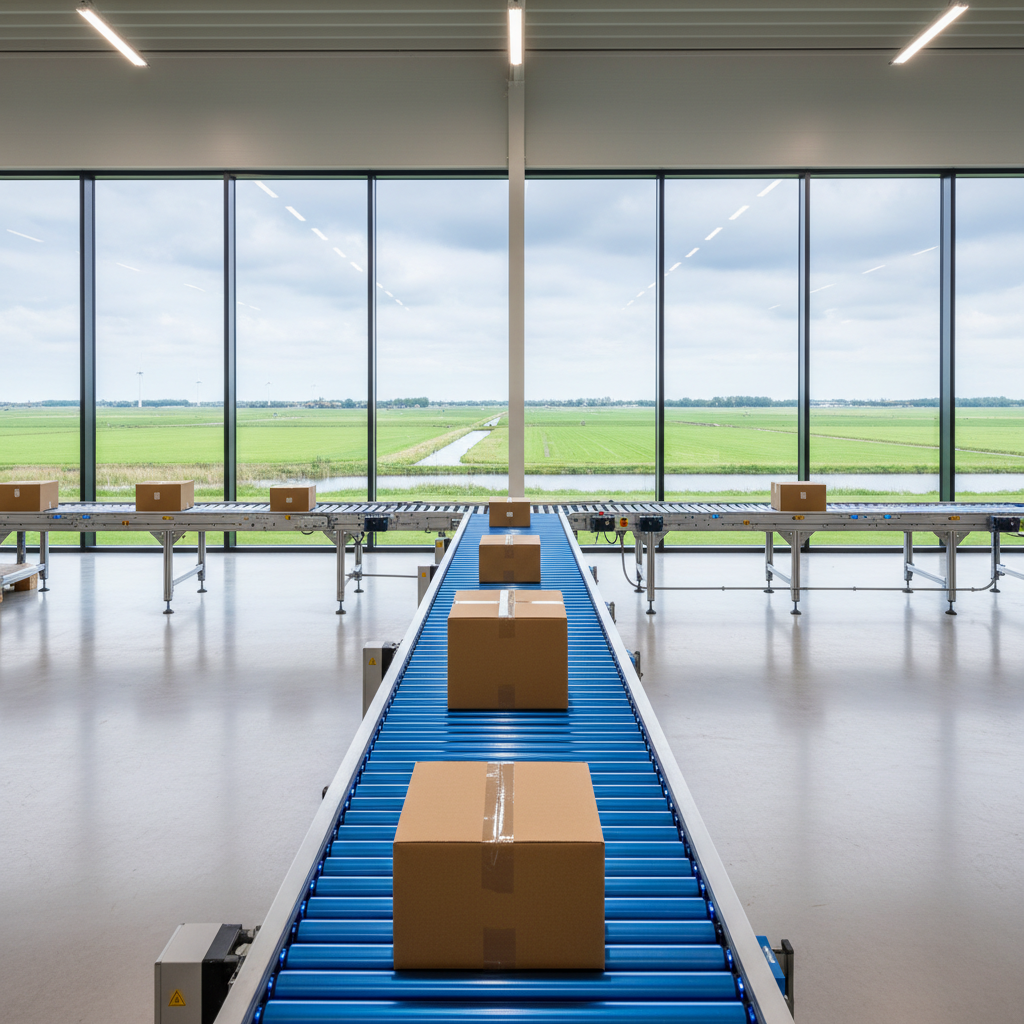
In the high-stakes logistics landscape of the Benelux, where every square meter and kilowatt-hour counts, warehouse managers are under constant pressure to optimize. With rising energy prices and stringent European sustainability mandates, the focus has shifted dramatically towards green logistics. Energy-efficient conveyor solutions are no longer a luxury but a strategic imperative, offering a powerful combination of significant cost savings, a smaller carbon footprint, and enhanced operational flexibility.
Definition
Energy-efficient conveyor solutions are material handling systems designed to transport goods using minimal electrical power. This is primarily achieved through advanced motor technology, such as 24V DC Motorized Drive Rollers (MDR), and intelligent system logic that ensures conveyor sections only run when goods are present, a concept known as "run-on-demand".
Key Numbers
| Metric | Typical range (EU 2026) | Notes |
|---|---|---|
| Energy Savings vs. Traditional | 60% - 80% | Compared to a continuously running, centrally driven AC motor system. |
| Investment Cost (MDR) | €750 - €1,500 per meter | Depends on width, load capacity, and control complexity. |
| Return on Investment (ROI) | 2 - 4 years | Based on energy savings, lower maintenance, and increased uptime in a typical Benelux facility. |
| Power Consumption (per zone) | 30W - 60W | Only when a package is present and moving. Idle consumption is near zero. |
| Typical Speed | 0.2 m/s - 1.5 m/s | Adjustable per zone to match operational needs (e.g., accumulation vs. transport). |
| Maintenance Interval | 20,000+ operating hours | For brushless DC motors; significantly longer than brushed motors or traditional gearmotors. |
| Acoustic Noise Level | < 60 dB | Considerably quieter than pneumatic or AC motor-driven systems, improving the work environment. |
The Core Technology: Motorized Drive Rollers (MDR)
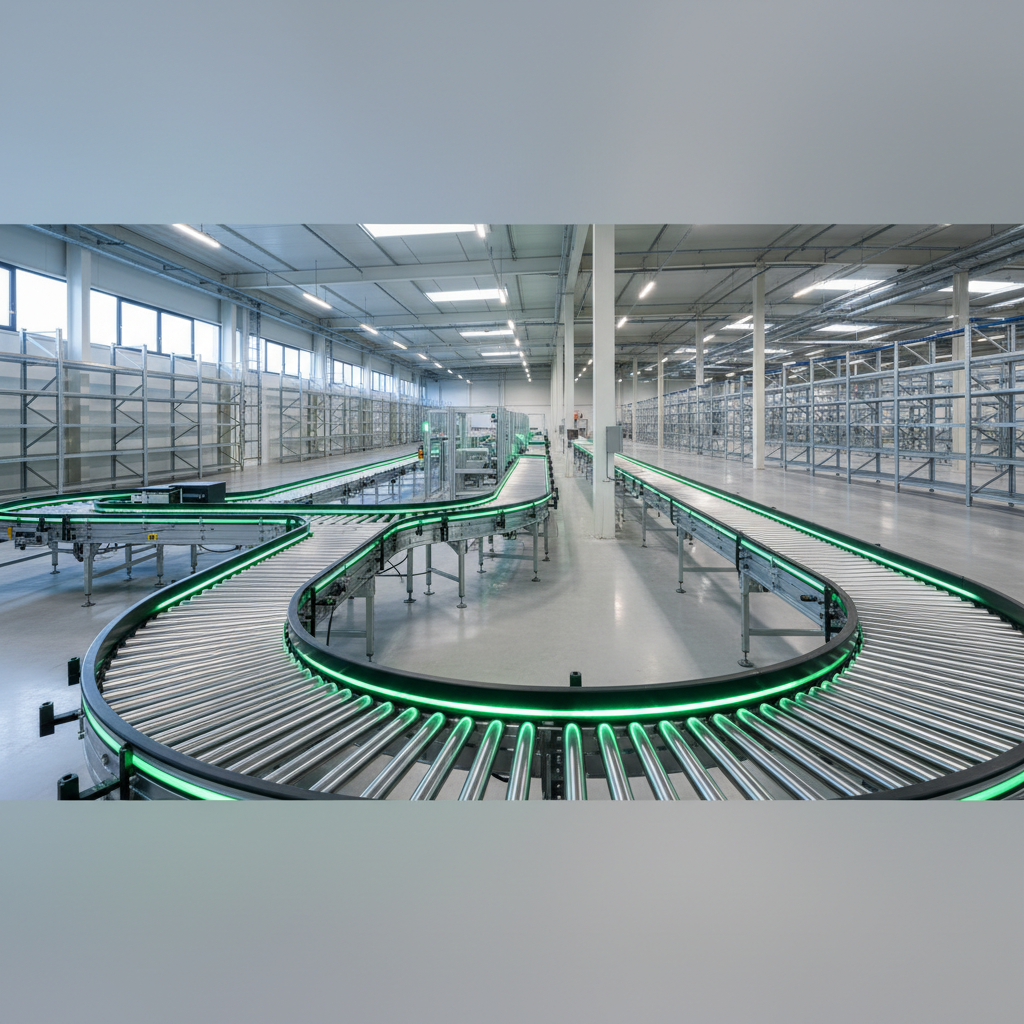
The revolution in energy-efficient conveyors is built on the 24V DC Motorized Drive Roller, or MDR. Unlike traditional conveyors that use a single, large AC motor to power long sections of belt or rollers via complex chains and belts, MDR systems are fundamentally different. Each small section of the conveyor, called a "zone," has its own integrated motor within one of the rollers. This single roller conveyor then powers the other free-spinning rollers in its zone, typically via polyurethane O-rings. This modular, decentralized approach is the key to its efficiency.
The real intelligence lies in the controls. Each MDR zone is governed by a local controller that communicates with its neighbours. A photoelectric sensor at the start of each zone detects the presence of a product (a carton, tote, or pallet). Only when a product is detected does the controller activate the motor for that specific zone. Once the product has been handed off to the next zone, the motor switches off. This "run-on-demand" principle means that for large parts of the day, a significant portion of your conveyor system can be completely idle and consuming virtually no power, a stark contrast to the constant hum and energy draw of a traditional system.
Comparing Motor Technologies
To understand the impact of MDR, it's useful to compare it with the alternatives. The choice of motor technology is the single most important factor in a conveyor's energy profile.
| Motor Technology | Energy Efficiency | Control Granularity | Noise Level | Typical Cost |
|---|---|---|---|---|
| Central 400V AC Motor | Low | None (All or nothing) | High (70-75 dB) | Low (initial) |
| Pneumatic Actuators | Very Low | Zone-level | Very High (75-85 dB) | Medium |
| 24V DC Brushless MDR | Very High | Zone-level (Individual) | Very Low (<60 dB) | High (initial) |
Smart Design: Beyond the Motor
While MDR is the star player, a truly energy-efficient system relies on intelligent overall design. How you configure your zones and manage the flow of goods is critical for maximizing savings.
Zero-Pressure Accumulation (ZPA)
One of the most valuable features enabled by MDR is Zero-Pressure Accumulation (ZPA). In a ZPA system, products are accumulated along the conveyor without ever touching each other. When a carton stops at a downstream bottleneck (like a packing station or sortation system), the zone controller communicates this upstream. The next carton will then halt in the preceding zone, and so on, creating a buffer of separated products. This prevents product damage from collisions and eliminates the energy wasted by rollers spinning uselessly beneath a stationary queue of boxes. The system automatically releases the cartons one by one when the bottleneck is cleared.
Optimizing Logic with WCS
For larger, more complex systems, a Warehouse Control System (WCS) is essential for energy optimization. The WCS acts as the brain, orchestrating the flow of goods across the entire facility. It can make intelligent decisions to minimize conveyor usage, such as:
- Dynamic Routing: If a packing lane is full, the WCS can reroute cartons to an alternative lane instead of having them accumulate and wait.
- Sleep Modes: The WCS can put entire conveyor lines into a deep sleep mode during periods of low activity (e.g., between waves or during shift changes), reducing idle power consumption to zero.
- Speed Control: Not every process requires the maximum speed. The WCS can dynamically adjust the speed of conveyor zones to match the required throughput, saving energy during slower periods. This is particularly relevant when integrating with complex sortation systems.
The Financial & Sustainability Case in the Benelux
The business case for energy-efficient conveyors is especially strong in Belgium, the Netherlands, and Luxembourg. This region faces some of the highest industrial electricity prices in Europe, often exceeding €0.25 per kWh. A traditional 100-meter belt conveyor running 16 hours a day could consume over 40,000 kWh per year, costing €10,000 annually. An equivalent MDR system, by running only when needed, could reduce that consumption by 75%, saving €7,500 per year on that single line alone.
Beyond direct costs, sustainability is a key driver. With EU regulations like the Corporate Sustainability Reporting Directive (CSRD), large companies are required to report on their energy consumption and carbon footprint. Investing in green logistics technology is a tangible, measurable way to improve these metrics, enhancing brand image and meeting regulatory requirements. As one Dutch logistics manager noted in a recent industry publication, "our customers don't just ask for delivery times anymore; they demand proof of our sustainability efforts." For companies that are scaling up, these efficiency gains are crucial. As noted in a recent analysis, companies grow, but their processes don't always grow with them, leading to inefficiencies that can be solved with modular, efficient automation.
Positioning for the Future with Easy Systems
In a competitive market like the Benelux, efficiency is survival. Migrating to energy-saving conveyor technology is not just an incremental improvement; it's a fundamental upgrade to your operational resilience and financial health. It reduces your dependency on volatile energy markets, lowers your operational expenditure, and future-proofs your facility against stricter environmental regulations.
At Easy Systems, we specialize in designing and implementing intelligent, modular conveyor solutions tailored to the specific needs of Benelux warehouses. We understand the local challenges of space, cost, and the demand for sustainability. Our approach focuses on using cutting-edge technologies like MDR and smart controls to build systems that are not only powerful and reliable but also exceptionally energy-efficient. We partner with you to analyze your unique product flow, identify opportunities for energy savings, and deliver a system with a clear and rapid return on investment. Trust Easy Systems to be your partner in building a more profitable and sustainable warehouse operation.
Frequently asked questions
How much energy can an MDR conveyor system really save?+
An MDR (Motorized Drive Roller) conveyor system can reduce electricity consumption by 60% to 80% compared to traditional systems powered by a single 400V AC motor. This is because MDR zones only consume power (around 30-50W) when a product is actively being transported, versus the constant power draw of older systems.
What is the typical cost of an energy-efficient conveyor in the Netherlands?+
The investment for an MDR-based system in the Netherlands typically ranges from €750 to €1,500 per meter. The final cost depends on factors like conveyor width, load capacity, and the complexity of the required control system. While the initial investment is higher, the ROI is usually achieved within 2-4 years through energy savings.
Are energy-efficient conveyors difficult to maintain?+
No, they are generally easier and cheaper to maintain. MDR systems use brushless 24V DC motors with a typical lifespan exceeding 20,000 operating hours. The modular, plug-and-play nature means that if a motor fails, you can replace a single roller in minutes, often without specialized tools, minimizing downtime.
Does an energy-efficient conveyor system also mean it's quieter?+
Yes, significantly. A major benefit of 24V MDR systems is their low noise level, typically operating below 60 decibels. This is much quieter than the 70-75 dB of AC motor systems or the sharp noises from pneumatic stops, leading to a safer and more pleasant working environment for warehouse staff.
Can I upgrade my existing conveyor line to be more energy-efficient?+
Upgrading an existing line can be challenging and is often not cost-effective. The fundamental design of traditional versus MDR systems is very different. It is usually more practical and provides a better ROI to replace entire sections with new, modular, energy-efficient conveyor technology designed for your specific needs.

The Easy Systems engineering team designs, integrates and commissions conveyor systems and warehouse automation across Belgium, the Netherlands and Luxembourg. Combined experience covers roller and belt conveyors, sorters, AGV/AMR fleets, AutoStore, shuttle AS/RS and WMS/WCS integration for distribution centers and e-commerce fulfillment operations.
- Conveyor design (roller, belt, modular plastic)
- Sortation & merge logic
- AGV / AMR fleet integration
- AutoStore & shuttle AS/RS
- WMS / WCS integration