Vision Technology in Conveyor Systems for QC & Sorting in Benelux
Integrating advanced vision technology into conveyor systems is revolutionizing quality control and sorting processes in Benelux warehouses. This article covers the key technologies, implementation benefits, and specific costs for businesses in Belgium, the Netherlands, and Luxembourg.
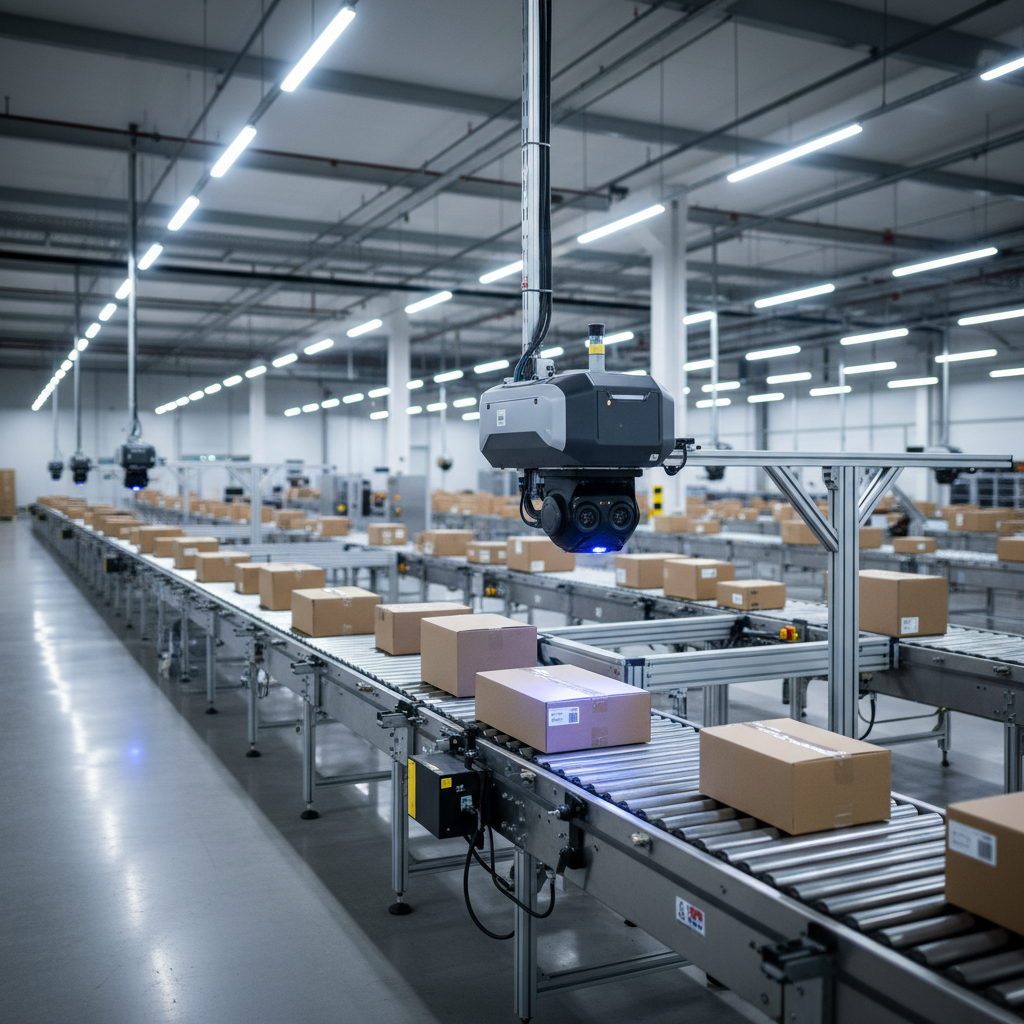
Key numbers
| Metric | Typical range (EU 2026) | Notes |
|---|---|---|
| Initial System Cost (per line) | €30,000 - €80,000 | Covers hardware, software, and basic integration for a single conveyor. |
| Accuracy Rate (Code Reading) | >99.9% | For well-printed 1D/2D codes. AI defect detection accuracy is typically 97-99%. |
| Throughput Capacity | 3,000 - 15,000 items/hour | Dependent on item size, spacing, and inspection complexity. |
| Typical Return on Investment (ROI) | 12 - 24 months | Based on labour cost savings (avg. €40/hr) and error reduction. |
| Maximum Conveyor Speed | 1.5 - 3.0 m/s | Higher speeds require superior cameras and lighting to avoid motion blur. |
| Data Processing Latency | 50 - 200 ms | Time from image capture to sending a decision (e.g., 'divert') to the WCS/PLC. |
In the hyper-competitive logistics landscape of the Benelux—a crucial gateway to Europe—speed and accuracy are not just advantages; they are essential for survival. E-commerce giants and 3PL providers are under constant pressure to process orders faster and with fewer errors. Integrating advanced machine vision technology into conveyor systems represents a quantum leap in addressing these challenges, transforming standard material handling lines into intelligent arteries of the warehouse.
Definition
Conveyor vision technology is the integration of cameras, sensors, and intelligent software with conveyor systems to automatically identify, inspect, measure, and sort products and packages. This system acts as the "eyes" of the warehouse, enabling automated decision-making for quality control and logistical routing without manual intervention.
The Strategic Importance in Benelux Logistics
The Benelux region, with major ports like Rotterdam and Antwerp, is a high-density logistics hub. High labor costs, averaging €35-€45 per hour in warehousing, combined with a tight labor market, make automation a strategic necessity. For facilities in Belgium, the Netherlands, and Luxembourg, automating quality control and sorting isn't about replacing workers but about augmenting their capabilities to handle increasing volumes and customer expectations for perfect orders.
H3: Beyond Simple Barcode Scanning
Early automation relied on simple laser scanners. Today’s vision systems are vastly more powerful. They don't just read a barcode; they assess package integrity, verify label placement, read human-readable text (OCR), and even check for fill levels or component presence inside semi-transparent packaging. This is critical for maintaining high OTIF (On-Time In-Full) rates demanded by modern retail and e-commerce.
Core Vision Technologies for Conveyor Integration
Implementing a vision system involves selecting the right imaging technology for the task. The choice depends on the application's complexity, the speed of the conveyor, and the type of data required.
H3: 1D/2D Code Readers
These are the most common types. 1D barcode readers use a laser or LED to read linear barcodes. 2D imagers use a camera to capture an image of more complex codes like QR codes or Data Matrix. Modern 2D imagers can read codes that are poorly printed, damaged, or at skewed angles, a common issue on high-speed lines.
H3: 3D Dimensioning & Weighing
3D vision cameras, often using Time-of-Flight (ToF) or stereo vision technology, create a three-dimensional point cloud of an object. This is used to instantly calculate its length, width, and height. When combined with an in-motion scale, this "Dim-Weight-Scan" (DWS) data is crucial for revenue calculation in shipping and for optimizing vehicle load space.
H3: AI-Powered Image Analysis
The latest evolution involves Artificial Intelligence. An AI model can be trained to "see" defects that are difficult to define with traditional rules. This includes detecting subtle dents, tears, liquid spills on packages, or verifying that the right set of items is in an order tote. The system learns from examples, becoming more accurate over time.
Application 1: Automated Quality Control
Using vision systems for quality control (QC) on a conveyor line provides consistent, 24/7 inspection that is impossible to achieve with human labor alone. Manual inspection is prone to fatigue and error, with accuracy rates often dropping below 95% during long shifts. An automated system maintains an accuracy rate above 99.9%.
On a typical belt conveyor moving at 1.5 m/s, a vision system can inspect hundreds of items per minute. For example, a food distributor in the Netherlands can use vision to check the seal integrity and label correctness on 5,000 packages per hour, automatically diverting any defective items to a rework station without stopping the primary flow.
Application 2: High-Speed Sorting & Routing
Once an item is identified and inspected, the vision system communicates this data to the Warehouse Control System (WCS). The WCS then directs the conveyor’s sorting mechanism—such as a pop-up wheel sorter or a cross-belt sorter—to route the package to the correct destination. This could be a specific shipping lane, a packing station, or a quarantine area.
This process is fundamental to modern sortation systems. A parcel hub near Brussels, for instance, can process over 15,000 packages per hour. Each package is scanned, its dimensions are checked, and it is routed to one of 100+ outbound lanes based on its postal code, all within seconds and with near-perfect accuracy.
Comparing Vision System Technologies
Choosing the right technology is a trade-off between capability, speed, and cost. This table provides a general comparison for systems integrated into a conveyor line.
| Feature | 1D Barcode Scanner | 2D Area Imager | 3D Vision Camera |
|---|---|---|---|
| Primary Technology | Laser / LED | Camera-based Imaging | Stereo / Time-of-Flight (ToF) |
| Key Use Case | Simple, high-quality code reading | Damaged codes, OCR, basic QC | Dimensioning, volume calc, complex QC |
| Typical Max Conveyor Speed | ~3.0 m/s | ~2.5 m/s | ~2.0 m/s |
| Typical Benelux Cost (Hardware) | €800 - €2,500 | €2,000 - €7,000 | €8,000 - €20,000+ |
| Data Output | String (barcode data) | Image, String, Pass/Fail Signal | 3D model, Dimensions (L/W/H), Volume |
Implementation Costs & ROI in the Benelux
The investment in a conveyor vision system can vary significantly.
- Basic System: A single 2D camera for barcode reading and label presence on one conveyor line might cost between €15,000 and €25,000, including integration with the conveyor PLC.
- Advanced System: A multi-camera, AI-powered system for complex defect detection across several lines could exceed €100,000.
The Return on Investment (ROI) is compelling. A Belgian 3PL provider handling e-commerce returns found that a €40,000 investment in a vision system to automatically check and sort returned items paid for itself in 14 months by reducing manual processing time by 75% and improving the accuracy of restocking. As many businesses find, internal processes often fail to keep pace with company growth, making automation a critical investment. For more on this, read our analysis on how operational processes can lag behind business growth.
Easy Systems: Your Trusted Partner for Vision Integration
Successfully implementing vision technology requires more than just buying a camera; it demands a deep understanding of material handling, control systems, and warehouse processes. At Easy Systems, we specialize in designing and building intelligent conveyor solutions for the European market. We don't just sell hardware; we engineer integrated systems where the mechanical flow and digital intelligence work in perfect harmony.
Our expertise lies in selecting the right vision components and, more importantly, integrating them seamlessly with the conveyor logic and your existing WMS/WCS. Whether you are in Ghent, Eindhoven, or Luxembourg, we can help you design a system that enhances your quality control, boosts your sorting speed, and delivers a tangible return on investment.
Frequently asked questions
What is the primary benefit of adding vision technology to my conveyor system?+
The primary benefit is a drastic increase in sorting and QC accuracy to over 99.9%. This directly reduces costs from shipping errors, which can account for 1-3% of revenue. It also boosts throughput, enabling the processing of up to 15,000 items per hour per line, significantly lowering reliance on manual labour.
Can vision systems be retrofitted onto existing conveyor lines?+
Yes, most systems are designed for retrofitting. A typical installation involves mounting a camera gantry above the conveyor, requiring less than 2 m² of space. The main task is software integration with your WCS/PLC, often accounting for 30-50% of the project timeline. The physical hardware installation can be done in 1-2 days.
What is the typical cost for a complete vision system in the Benelux?+
For a standard 2D code reading and dimensioning setup on one conveyor in 2026, expect an all-in cost of €30,000 to €80,000. This includes hardware, software, and integration. More complex AI-driven systems for subtle defect detection can exceed €100,000 per line, as they require more powerful computing.
How does AI enhance conveyor vision systems?+
AI-powered analysis goes beyond barcodes. It identifies complex defects like package damage, liquid spills, or incorrect items with over 98% accuracy. Training an AI model for a new task may take 2-4 weeks and a dataset of several thousand images, but it automates QC tasks that previously required human inspection.
How quickly can a vision system pay for itself?+
In the high-labour-cost Benelux market, the Return on Investment (ROI) is typically between 12 and 24 months. This is calculated from direct labour savings, as one system can perform the work of 2-3 full-time employees per shift, plus a significant reduction in costly shipping errors. 24/7 operations often see an ROI in under a year.

The Easy Systems engineering team designs, integrates and commissions conveyor systems and warehouse automation across Belgium, the Netherlands and Luxembourg. Combined experience covers roller and belt conveyors, sorters, AGV/AMR fleets, AutoStore, shuttle AS/RS and WMS/WCS integration for distribution centers and e-commerce fulfillment operations.
- Conveyor design (roller, belt, modular plastic)
- Sortation & merge logic
- AGV / AMR fleet integration
- AutoStore & shuttle AS/RS
- WMS / WCS integration