Low-Code/No-Code in Conveyor Projects in the Benelux
Benelux warehouses are accelerating conveyor project deployment by up to 50% using low-code/no-code platforms. This approach lowers initial software development costs by 30-40% and allows for faster on-site adjustments, reducing reliance on specialized programmers.
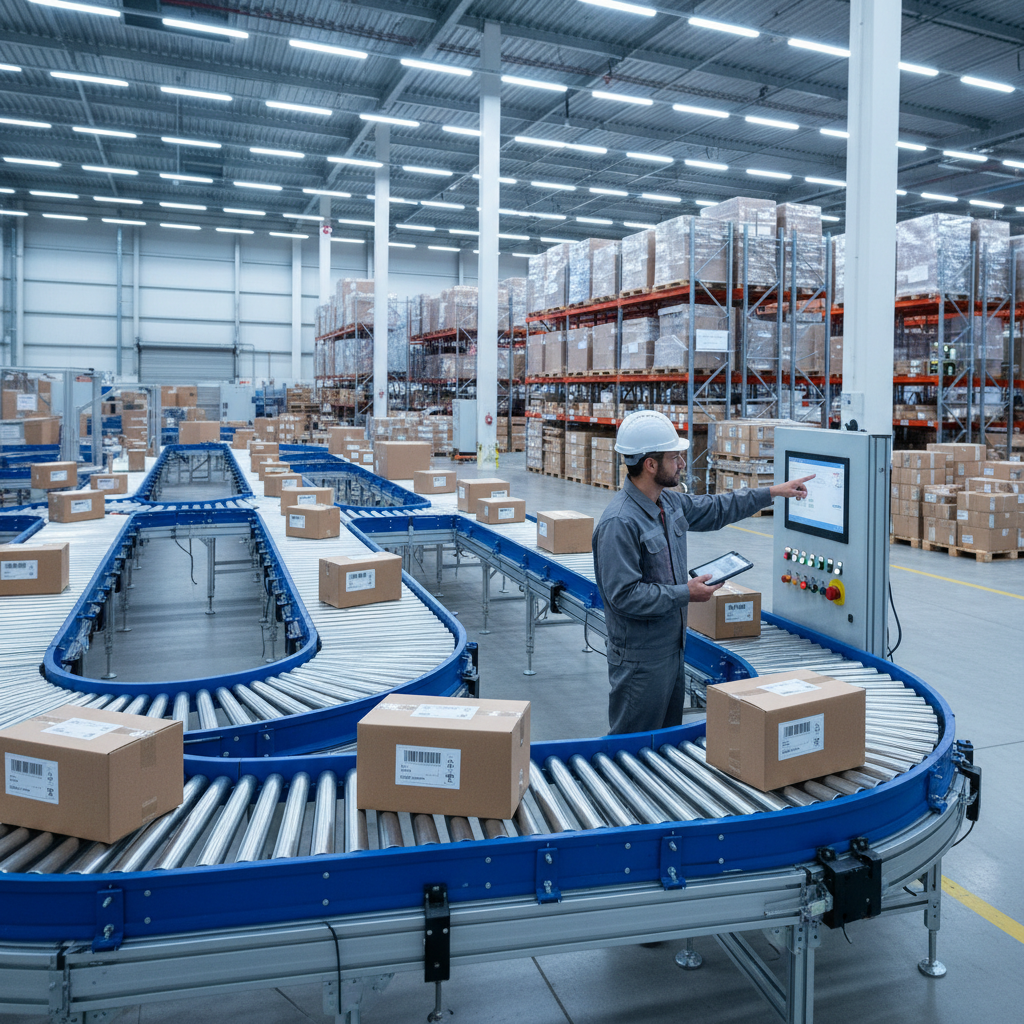
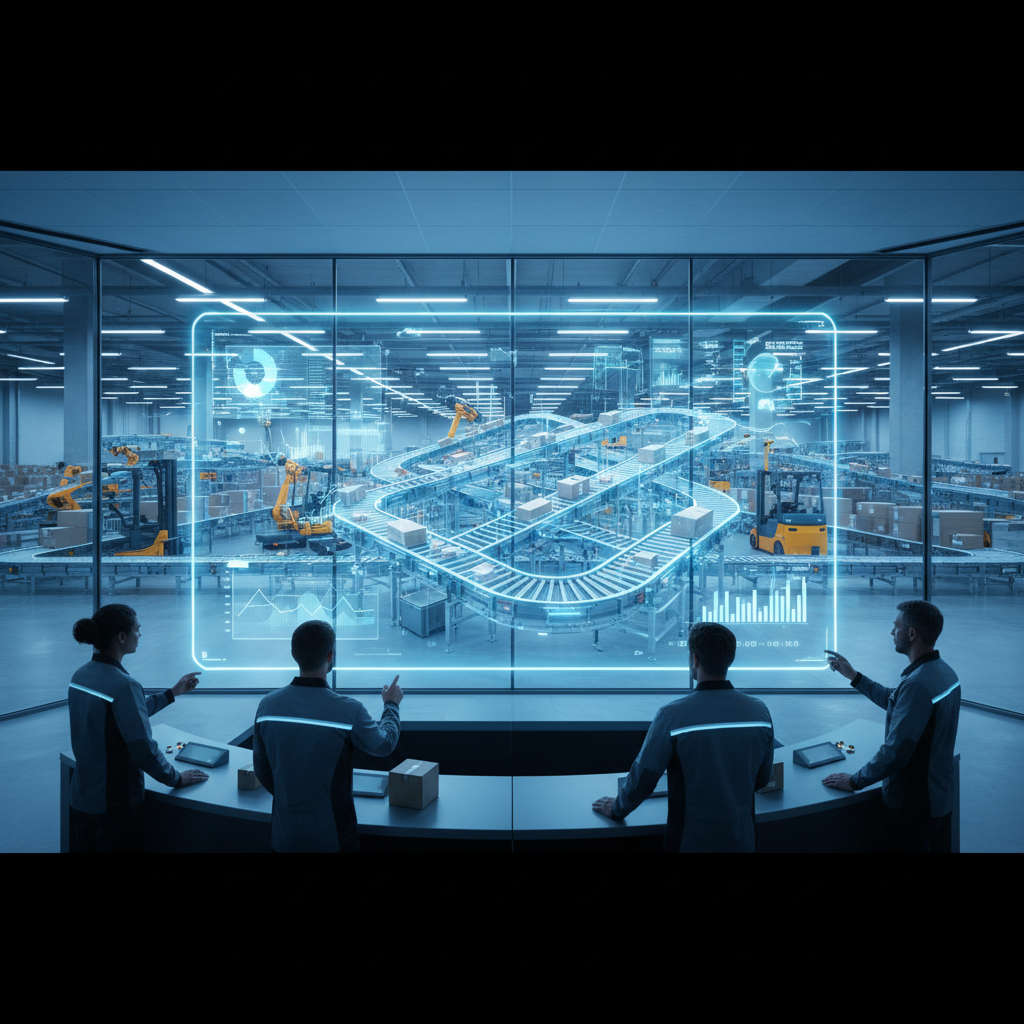
The intense pressure on Benelux distribution centers to expand and adapt quickly is meeting a powerful new enabler: low-code and no-code software platforms. This paradigm shift is moving warehouse automation control from the slow, expensive domain of custom code to a fast, flexible, and more accessible model. For conveyor system projects, this means faster rollouts, lower costs, and greater operational agility in a highly competitive European logistics landscape.
Definition
Low-code/no-code platforms provide a graphical user interface for software development, allowing users to create and configure applications by dragging and dropping functional blocks rather than writing traditional lines of code. In the context of conveyor systems, this enables engineers and technicians to design, test, and deploy control logic for material flow without deep programming expertise in languages like those used for PLCs (Programmable Logic Controllers).
Key Numbers
| Metric | Typical range (EU 2026) | Notes |
|---|---|---|
| Implementation Speed-up (Software) | 30% - 50% | Compared to traditional custom PLC/WCS software development cycles. |
| Initial Development Cost Reduction | €15,000 - €50,000 | Reduction on a typical medium-sized conveyor project (€150k - €350k). |
| Training Time for On-site Staff | 16 - 40 hours | To achieve proficiency in basic configuration and troubleshooting, vs. years for PLC programming. |
| Time to Modify a Zone/Logic | 0.5 - 2 hours | For a trained technician, versus days of developer time and costly change orders. |
| Typical System Payback (ROI) | 1.5 - 3 years | Accelerated due to lower initial costs and faster commissioning. |
| Integration API Availability | 80%+ | Percentage of platforms offering pre-built connectors for major WMS/ERP systems. |
The Traditional Challenge: Custom Code & PLC Dependency
Historically, the intelligence behind a conveyor system resided in a complex mix of PLCs and a Warehouse Control System (WCS). Every piece of logic—when to start a motor, where to divert a parcel, how to manage accumulation—had to be custom-programmed by highly specialized engineers. This approach, while robust, creates significant bottlenecks.
- High Costs: PLC/WCS programmers are scarce and expensive. A typical project could see 20-30% of its budget allocated solely to software development and commissioning.
- Long Lead Times: The cycle of writing code, testing it in a simulated environment, deploying it on-site, and then debugging the inevitable real-world issues can add months to a project timeline.
- Operational Rigidity: Once a system is live, even small changes—like altering a sortation lane or adjusting the timing on a merge point—require a new development cycle. This involves creating a change request, getting a quote, scheduling a developer, and planning for downtime. This process can be prohibitively slow for businesses needing to adapt to changing market demands.
The Benelux Context: A Need for Speed
Warehouses in Belgium, the Netherlands, and Luxembourg face a unique combination of pressures: high land and labor costs, extreme logistics density (e.g., the Antwerp-Rotterdam-Rhine corridor), and the demanding service levels of European e-commerce. In this environment, a 6-month delay in a conveyor system launch isn't just an inconvenience; it's a significant loss of competitive advantage.
Low-Code/No-Code as the Accelerator
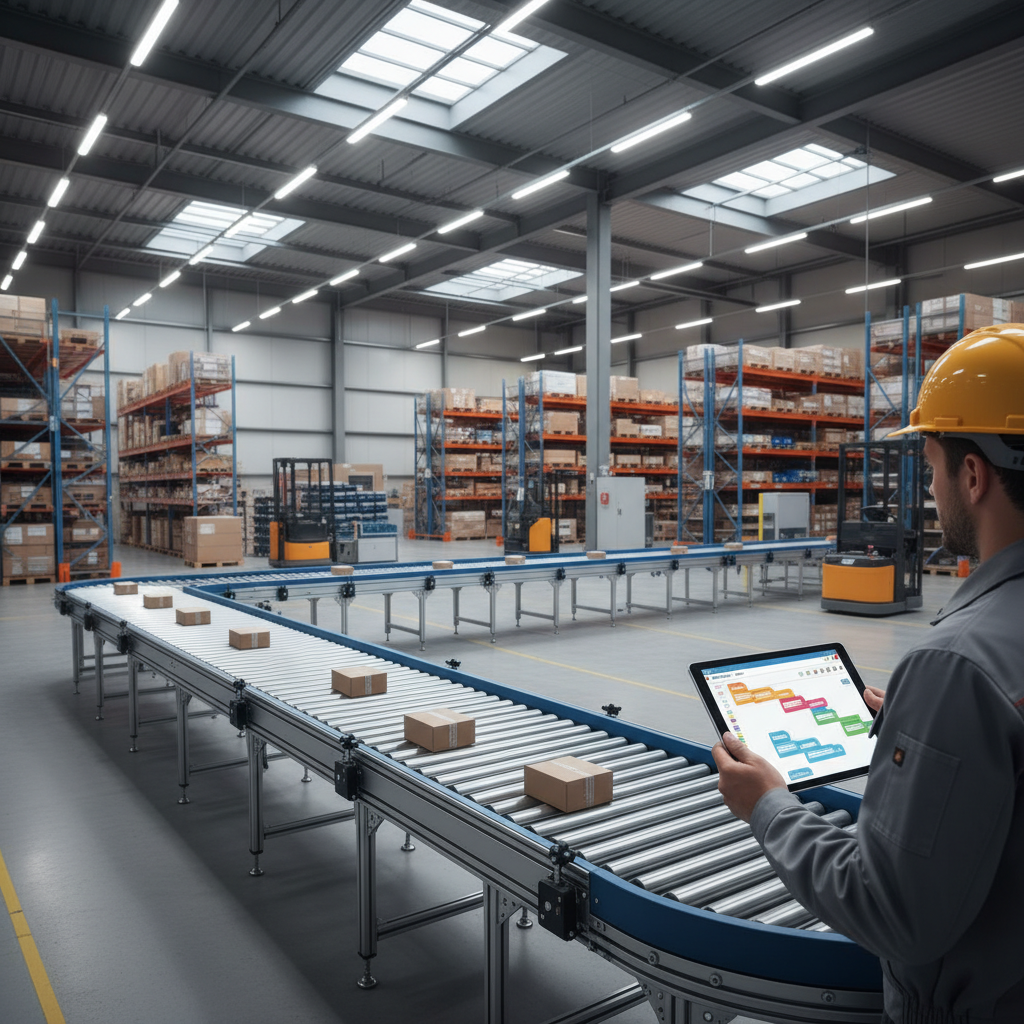
Low-code platforms insert a powerful abstraction layer between the high-level business logic (e.g., "parcels for postcode 2000 go to Lane 5") and the low-level hardware control ("activate motor controller M-34B"). Instead of writing code, operators use a visual editor.
This approach democratizes the control process. A project engineer or lead maintenance technician can now visually assemble and configure logic flows that are easy to understand and modify. Find more in-depth information about integrating control systems in our guide on WMS, WCS and WES.
Core Components of a Low-Code Conveyor Platform
- Visual Flow Editor: A drag-and-drop canvas where users connect logical blocks (e.g., "Scanner Read," "Divert," "Accumulate") to define material flow.
- Pre-built Hardware Libraries: A catalogue of common conveyor hardware (motors, sensors, diverters, barcode scanners) with pre-configured control interfaces. Users simply select the component they are using.
- API & Integration Hub: Simplified tools for connecting the conveyor system to the broader warehouse ecosystem, especially the Warehouse Management System (WMS) for receiving orders and sending back confirmations.
- Digital Twin & Simulation: The ability to test the configured logic on a virtual 3D model of the conveyor system before any physical hardware is even installed. This drastically reduces on-site commissioning and debugging time.
Comparative Analysis: Traditional vs. Low-Code Implementation
The differences in project workflow and outcomes are stark, especially in the context of the Benelux market where agility is paramount.
| Project Phase | Traditional PLC/WCS Programming | Low-Code Platform Approach |
|---|---|---|
| Logic Design | Functional specs written in documents, translated to code by a programmer. | Logistics manager & engineer co-design the flow visually in the platform. |
| Development | Weeks or months of specialized coding. High cost per hour (€100-€150/hr). | Days of configuration by a trained project engineer. |
| Testing | Primarily during on-site commissioning. High risk, high pressure. | Extensive pre-testing via digital twin. Bugs are found and fixed virtually. |
| Commissioning | Weeks of on-site debugging, involving expensive specialists. | Days of final validation and I/O checks. On-site team is empowered. |
| Post-launch Changes | Slow, expensive change order process. Potential for weeks of delay. | On-site technician makes and tests changes in hours. High operational agility. |
Real-World Impact in Benelux Warehouses
Consider a 3PL in Venlo needing to add a new client with specific packaging and labeling requirements. With a traditional system, integrating this new workflow could take 2-3 months. Using a low-code platform, a trained internal team could configure, test, and deploy the new sorting and routing logic within a week. The business can say "yes" to new opportunities faster, a critical advantage. This agility is precisely the challenge many businesses face; as described in a recent analysis, companies grow, but their processes don't always keep up, creating a bottleneck that technology like low-code can solve.
Positioning for the Future: Easy Systems as Your Trusted Partner
The shift towards low-code/no-code is not just a technological trend; it's a strategic business decision. It's about reclaiming control, fostering agility, and future-proofing your investment. However, its success hinges on a foundation of robust, reliable, and modular hardware. A flexible software layer is only as good as the physical system it controls.
At Easy Systems, we specialize in designing and manufacturing high-quality, modular conveyor systems that are the ideal physical backbone for modern software control. Our expertise in creating standardized yet versatile hardware—from simple roller conveyors to complex sorting solutions—ensures that you have a reliable, scalable foundation ready to be managed by next-generation control platforms. We design our systems for easy integration, ensuring that whether you use a traditional WCS or a new low-code platform, the hardware performs flawlessly. Partner with us to build a conveyor system that is not only efficient today but also agile enough for the demands of tomorrow.
Frequently asked questions
What is the main benefit of using a low-code platform for a conveyor system in the Benelux?+
The primary benefit is speed. Low-code platforms can reduce the software implementation and commissioning time for conveyor projects by 30-50%, allowing Benelux warehouses to adapt to market changes and onboard new clients much faster than with traditional programming.
How much cost can be saved with no-code conveyor solutions?+
Cost savings are significant, primarily in development and modification. Initial software development can be 30-40% cheaper. For a medium-sized project of €250,000, this can mean a saving of €20,000-€40,000 in upfront software engineering costs.
Do I need to be a programmer to change a low-code conveyor system?+
No. That is the core advantage. After a training period of typically 16-40 hours, on-site maintenance staff or process engineers can handle most common configuration changes, such as altering sort destinations or adjusting zone speeds, using a graphical drag-and-drop interface.
Are low-code platforms powerful enough for complex warehouse automation?+
Yes. Modern low-code platforms are highly sophisticated and capable of managing complex logic, including integration with scanners, scales, and robotic cells. They often use a powerful 'digital twin' for simulating and validating complex scenarios with millions of parcels before going live.
How does low-code integrate with an existing WMS or ERP system?+
Most low-code platforms are designed for easy integration. They offer pre-built connectors and use modern APIs (like REST or OPC UA) to communicate with a Warehouse Management System (WMS). This simplifies the process of receiving picking orders and reporting back sorting confirmations.
Is a low-code solution reliable for a 24/7 logistics operation?+
Absolutely. The low-code platform is used for configuration and logic design. The underlying runtime engine that executes the logic on the warehouse floor is a highly optimized, robust piece of software designed for mission-critical 24/7 operations, often achieving uptimes greater than 99.9%.

The Easy Systems engineering team designs, integrates and commissions conveyor systems and warehouse automation across Belgium, the Netherlands and Luxembourg. Combined experience covers roller and belt conveyors, sorters, AGV/AMR fleets, AutoStore, shuttle AS/RS and WMS/WCS integration for distribution centers and e-commerce fulfillment operations.
- Conveyor design (roller, belt, modular plastic)
- Sortation & merge logic
- AGV / AMR fleet integration
- AutoStore & shuttle AS/RS
- WMS / WCS integration