Low-Code/No-Code for Rapid Conveyor Deployment in the Benelux
Low-code/no-code platforms are revolutionizing conveyor project deployment in the Benelux, enabling non-technical staff to configure and adapt systems, significantly reducing traditional PLC programming bottlenecks and costs.

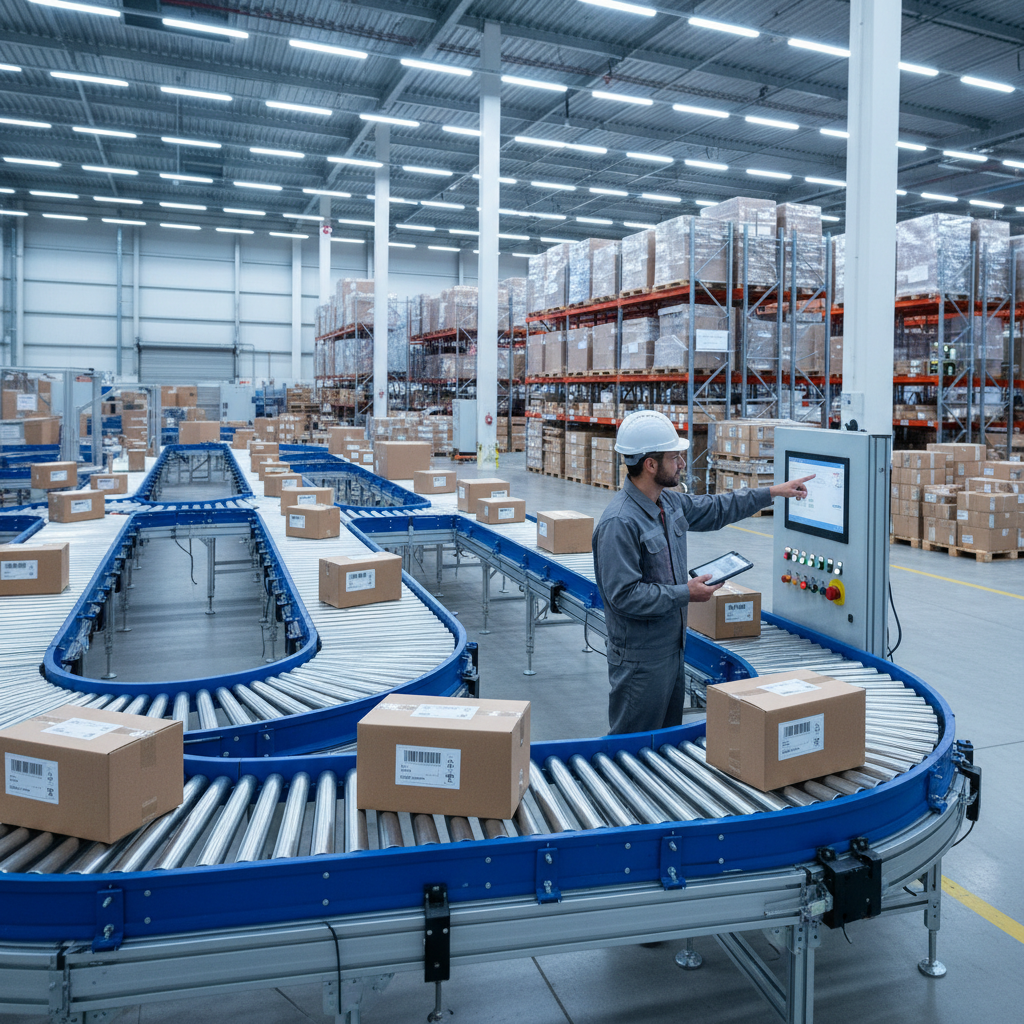
In the fast-paced logistics landscape of the Benelux, speed is everything. Warehouse and distribution center managers face constant pressure to deploy and adapt material handling systems faster than ever before. Traditional conveyor projects, heavily reliant on specialized PLC programming, are often slow and costly. However, a new paradigm is emerging: low-code and no-code platforms are democratizing conveyor control, enabling rapid implementation and unprecedented operational agility.
Definition
Low-code/no-code platforms in the context of conveyor systems are software environments that use graphical user interfaces and pre-built logic blocks instead of traditional programming languages (like ladder logic for PLCs). This allows employees with deep process knowledge, but without a software engineering background, to configure, deploy, and modify conveyor behavior and control flows.
Key Numbers
| Metric | Typical range (EU 2026) | Notes |
|---|---|---|
| Implementation Time Reduction | 30-50% | Compared to traditional PLC-based projects. |
| Programming Cost Savings | €15,000 - €25,000 | On a typical €250,000 sorting system project. |
| Time-to-Change (system logic) | 1-4 hours | For tasks like re-routing a destination or changing accumulation logic. |
| Training Time for On-site Staff | 8-16 hours | To achieve proficiency in basic configuration and troubleshooting. |
| Dependency on External Programmers | Reduced by >70% | For day-to-day operational changes and adjustments. |
| Integration with WMS/WES | 2-5 days | Using pre-built API connectors, down from several weeks. |
The Traditional Bottleneck: PLC Programming
For decades, the Programmable Logic Controller (PLC) has been the workhorse of industrial automation. These rugged computers are exceptionally reliable for controlling machinery. However, they come with a significant drawback: they require highly specialized knowledge of programming languages like Ladder Logic, Structured Text, or Function Block Diagram. In the Benelux, as in the rest of Europe, qualified PLC programmers are scarce and expensive. This creates several problems:
- Long Lead Times: Projects are often delayed, waiting for programmer availability.
- High Costs: A specialized PLC programmer can cost between €800 and €1,200 per day.
- Operational Rigidity: Even a small change, like altering the destination for a specific barcode, requires a code update, testing, and deployment by a programmer. This can take days or even weeks.
- Vendor Lock-in: Companies become dependent on the original integrator or a specific programmer who understands the custom code written for their system.
How Low-Code/No-Code Changes the Game
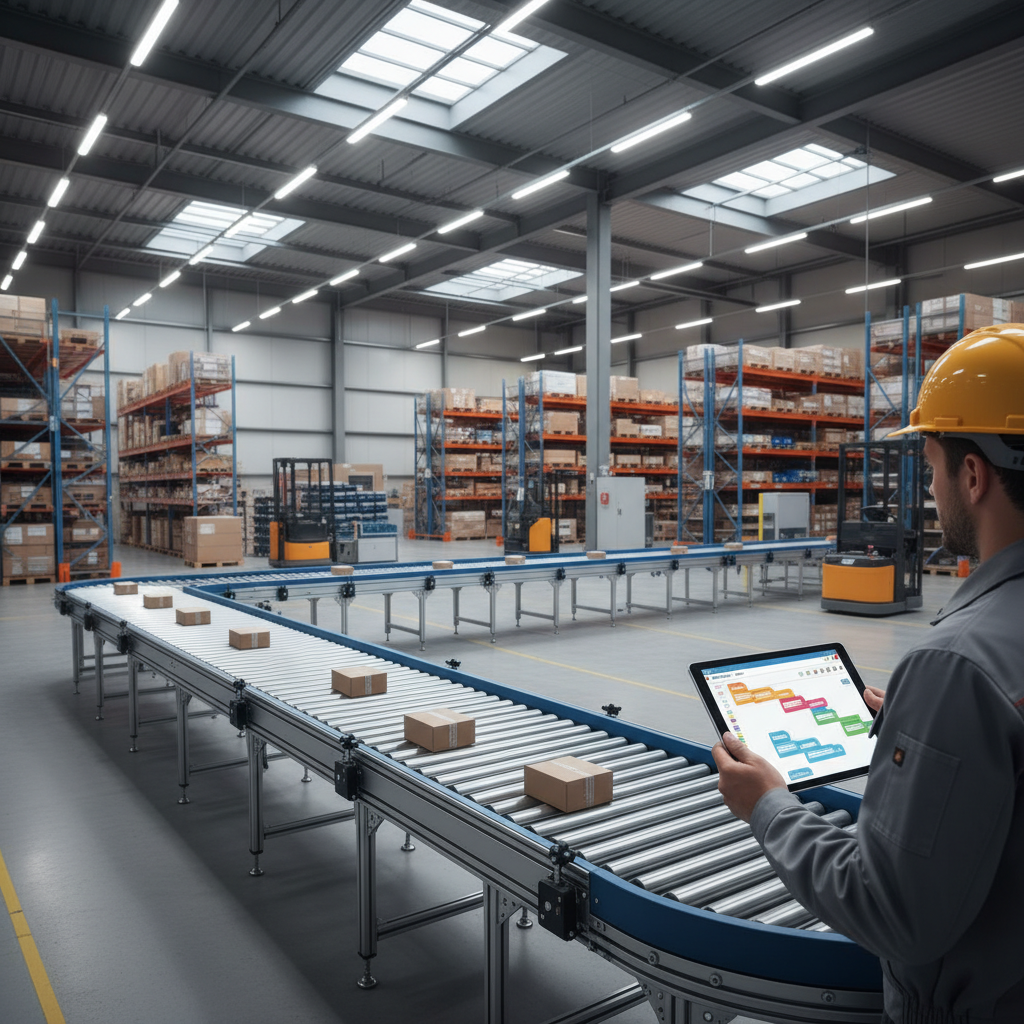
Low-code platforms introduce a layer of abstraction on top of the complex underlying control system. Instead of writing code, operators use a drag-and-drop interface with pre-built functional blocks. Think of it like building with LEGO® bricks, where each brick has a defined function: "Read Barcode," "Divert Left," "Start Motor," "Wait for Sensor."
Key Advantages in a Benelux Context
The logistics hubs in Belgium, the Netherlands, and Luxembourg are characterized by high-volume, high-variability operations, especially in e-commerce fulfillment. This is where low-code excels:
- Speed of Deployment: A standard sorting system that might take 3-4 weeks to program with a PLC can often be configured in under a week with a low-code platform. This accelerates the entire project timeline, leading to a faster return on investment.
- Empowerment of On-site Teams: A logistics manager or a maintenance technician can be trained to make modifications. If a new carrier is added or a packing station is repurposed, they can reroute the flow themselves within hours, without external help. This operational self-sufficiency is a massive competitive advantage.
- Cost Reduction: While the initial software might have a license fee, the savings on programming, commissioning, and future modifications are substantial. For many SMEs in the Benelux, this makes sophisticated automation accessible for the first time. As detailed in a recent analysis, business growth requires scalable processes, and low-code is a key enabler for this scalability.
- Standardization and Quality: Because configurations are built from pre-tested software blocks, the risk of human error in coding is drastically reduced. This leads to more reliable and predictable system behavior from day one.
Low-Code vs. Traditional PLC Programming: A Comparison
The choice between a low-code approach and traditional programming depends on the complexity and uniqueness of the application. For standard logistics processes, low-code is increasingly the preferred method.
| Aspect | Low-Code/No-Code Platform | Traditional PLC Programming |
|---|---|---|
| Required Skillset | Process logic understanding, analytical skills | Specialized programming (Ladder Logic, ST), IT networking |
| Implementation Speed | Fast (days to weeks) | Slower (weeks to months) |
| Cost of Changes | Low; often handled internally | High; requires external programmer engagement |
| Flexibility | High; users can reconfigure flows easily | Low; changes are a formal project |
| Best For | Sorting, transport, accumulation, WCS tasks in e-commerce, 3PL | High-speed, safety-critical, or highly custom machine control |
| Example Scenario | Adding a new packing destination for a seasonal promotion | Developing a unique control algorithm for a robotic palletizer |
The Role of the Warehouse Control System (WCS)
It's important to understand where these low-code platforms fit. They often function as a modern, user-friendly Warehouse Control System (WCS). The WCS acts as the "traffic cop" for the warehouse, taking high-level commands from the Warehouse Management System (WMS) — like "move pallet A to location B" — and translating them into specific, real-time instructions for the conveyor motors, diverters, and scanners.
Modern low-code WCS platforms come with pre-built connectors for major WMS providers and hardware components (e.g., Zebra scanners, Sick sensors), dramatically simplifying integration, which has historically been a complex and error-prone phase of any automation project.
Easy Systems: Your Partner for Agile Conveyor Automation
At Easy Systems, we have embraced the power of low-code configuration to deliver conveyor and sorting solutions that are not only robust and efficient but also remarkably agile. Our approach is built on a foundation of standardized, modular hardware and a powerful, intuitive software layer. We understand that Benelux businesses cannot afford to be locked into rigid systems. Our solutions are designed to be managed and adapted by your own team, giving you full control over your logistics processes.
We combine high-quality modular conveyors with a pre-configured, low-code control platform that eliminates the need for expensive, time-consuming custom PLC programming for all standard applications. This allows us to deliver sophisticated sorting and transport systems in a fraction of the traditional time, empowering you to adapt to market demands instantly. Partner with us to build a logistics backbone that grows with your business.
Frequently asked questions
What is the main advantage of low-code for conveyor systems?+
The main advantage is speed. Low-code platforms can reduce the implementation and commissioning time for a conveyor project by 30-50% compared to traditional PLC programming, allowing your warehouse to become productive much faster and accelerating the ROI.
Can I really configure a conveyor system without being a programmer?+
Yes. Low-code platforms use a graphical, drag-and-drop interface with pre-built logic blocks. If you understand your warehouse's workflow, you can learn to configure and modify material flows. Basic training typically takes only 8-16 hours for a technician or process owner.
Is a low-code conveyor system less powerful than a PLC-based one?+
Not for standard logistics tasks. For applications like sorting, transport, and accumulation, low-code systems are equally powerful and much more flexible. For highly specialized, high-speed machine control or complex safety applications, a traditional PLC may still be the preferred choice.
How much can I save with a no-code approach in the Benelux?+
Savings are significant. On a typical €250,000 conveyor project, you could save €15,000 to €25,000 in upfront programming costs. More importantly, you save on ongoing costs by handling routine changes—like adding a new shipping destination—in-house, avoiding daily rates of €800-€1,200 for external programmers.
How does a low-code system integrate with my existing WMS?+
Modern low-code platforms, acting as a WCS, are designed for easy integration. They typically use standardized APIs and pre-built connectors for major WMS providers. This can reduce integration time from several weeks of custom development to just a few days of configuration.

The Easy Systems engineering team designs, integrates and commissions conveyor systems and warehouse automation across Belgium, the Netherlands and Luxembourg. Combined experience covers roller and belt conveyors, sorters, AGV/AMR fleets, AutoStore, shuttle AS/RS and WMS/WCS integration for distribution centers and e-commerce fulfillment operations.
- Conveyor design (roller, belt, modular plastic)
- Sortation & merge logic
- AGV / AMR fleet integration
- AutoStore & shuttle AS/RS
- WMS / WCS integration