The Role of Data Analysis in Optimizing Conveyor Routes & Throughput
Data analysis is crucial for modern warehouses, enabling the optimization of conveyor routes and a significant increase in throughput. By leveraging real-time data from WCS and sensors, logistics managers can identify bottlenecks, predict maintenance needs, and improve overall system performance, leading to cost savings and higher efficiency.
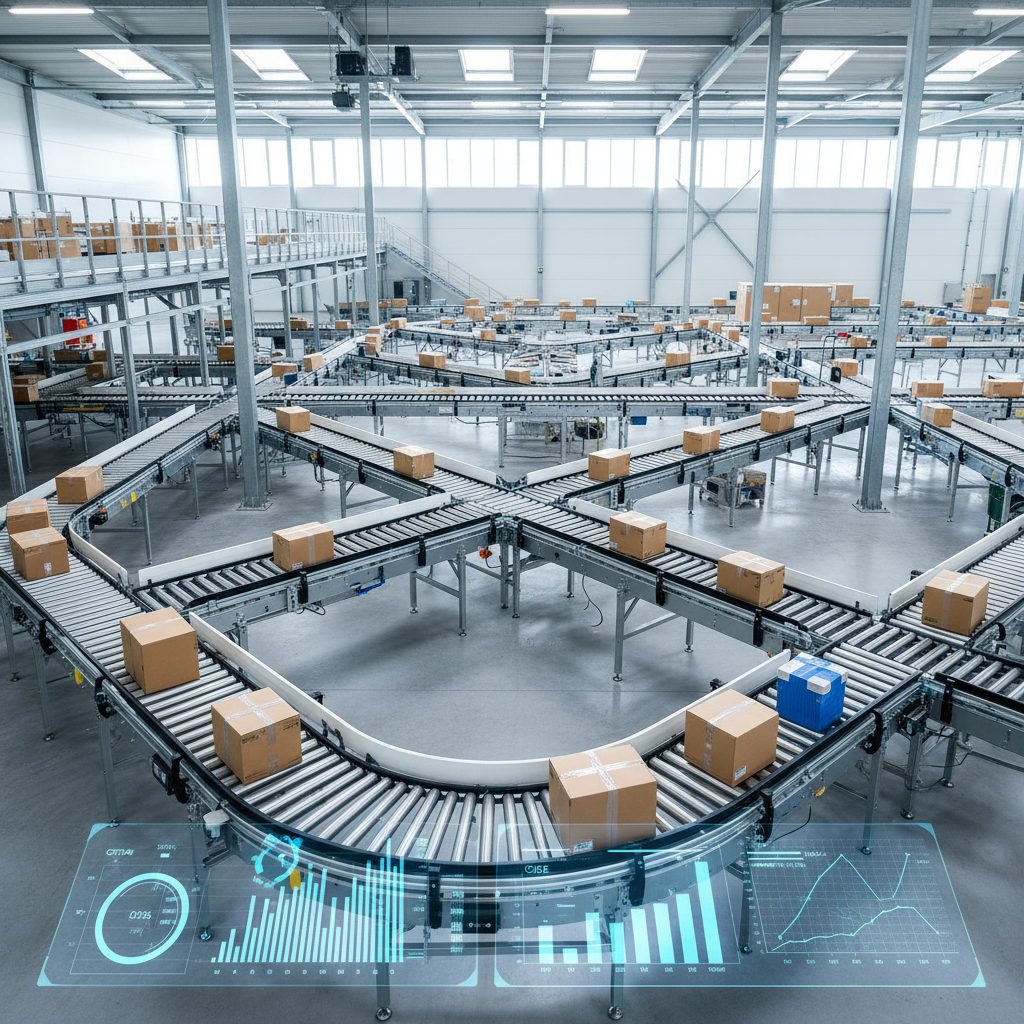
In the high-stakes world of European logistics, where every second and every square meter counts, the efficiency of your material handling systems is paramount. Gone are the days of "set it and forget it" conveyor configurations. Today, leading distribution centers leverage the power of data analysis to unlock unprecedented levels of performance, turning their conveyor networks into intelligent, self-optimizing arteries of productivity.
Definition
Data analysis for conveyor optimization is the practice of systematically collecting, processing, and interpreting data from a warehouse's conveyor network to enhance route efficiency, maximize throughput, and minimize downtime. It involves using software tools to analyze real-time and historical data from sources like sensors, PLCs, and a Warehouse Control System (WCS).
Why Data Analysis is No Longer Optional in Logistics
Historically, conveyor systems were managed reactively. A breakdown occurred, and maintenance was called. A bottleneck appeared, and engineers would manually re-route or re-program. In today's competitive landscape, this reactive approach is a recipe for failure. With e-commerce driving higher order volumes and tighter delivery windows (often same-day), warehouses cannot afford unplanned downtime or suboptimal flow.
Data analysis enables a fundamental shift to proactive and predictive management. By understanding the intricate patterns of how goods move through the facility—down to the individual motor, sensor, and conveyor segment—managers can anticipate problems before they occur. This data-driven approach allows for smarter decision-making, moving beyond guesswork to strategies based on empirical evidence. The goal is to create a resilient and agile logistics operation that can adapt to fluctuating demand and maintain peak performance.
Key Performance Indicators (KPIs) for Conveyor Optimization
Effective optimization begins with measuring what matters. While a WMS might track inventory levels, a WCS provides the granular, machine-level data needed for conveyor analysis. Key metrics include:
- Cases/Totes Per Hour (CPH): The most direct measure of a system's throughput. Analyzing CPH by zone or segment helps pinpoint underperforming areas.
- Overall Equipment Effectiveness (OEE): A composite score based on availability (uptime), performance (speed), and quality (error-free handling). An OEE score of 85% is considered world-class, but many warehouses operate at 60-70% without realizing it until they analyze the data.
- Cycle Time: The time it takes for a parcel to travel from point A to point B. High variability in cycle times for the same route often indicates intermittent congestion or mechanical issues.
- Downtime Incidents & Duration: Tracking not just that a line stopped, but why and for how long. Is a specific photo-eye failing repeatedly? Is a motor overheating during peak hours? This data is crucial for root cause analysis.
- Sortation Accuracy: For systems with sorters, what is the percentage of missorts? Data can reveal if a specific divert or destination lane is problematic, perhaps due to timing or scanner issues.
Tools and Technologies for Data Collection
Actionable insights require clean, reliable data. This data is gathered from the nervous system of the modern automated warehouse. A robust data collection strategy integrates information from multiple layers of the automation stack.
- Sensors and Actuators: The ground level of data. Photo-eyes, barcode scanners, weight scales, and motor encoders provide the raw on/off, yes/no, and measurement signals. Modern sensors using IO-Link technology can provide additional diagnostic data beyond simple state changes.
- Programmable Logic Controllers (PLCs): These industrial computers orchestrate the immediate actions of the conveyor hardware based on sensor inputs. They are a primary source of operational data, executing the logic for routing, accumulation, and transfers.
- Warehouse Control System (WCS): The WCS is the crucial link between the high-level planning of the WMS and the physical control of the PLCs. It directs the flow of goods on the conveyors in real-time, making it the single most important data source for route and throughput analysis. For more on how these systems interact, see our guide on WMS/WCS integration.
This data is aggregated and visualized using HMI/SCADA interfaces or, increasingly, pushed to dedicated data historian databases and cloud-based analytics platforms for more sophisticated analysis.
Comparing Data Analysis Techniques
Not all data analysis is created equal. The level of sophistication directly impacts the value derived. Warehouses typically mature through these four stages of analytics.
| Analysis Type | Core Question | Example Application | Business Value |
|---|---|---|---|
| Descriptive | What happened? | A daily report showing total CPH and downtime events for each conveyor line. | Basic performance visibility. (€) |
| Diagnostic | Why did it happen? | Drilling down into a downtime event to see it was caused by repeated faults from a single sensor on curve C-7. | Root cause identification. (€€) |
| Predictive | What will happen? | An algorithm analyzes motor current and temperature data, predicting a 90% chance of failure in the next 72 hours. | Proactive maintenance, reduced downtime. (€€€) |
| Prescriptive | What should we do? | The system automatically re-routes 10% of flow from the main line to a secondary line to avoid a predicted bottleneck during the upcoming peak. | Automated optimization, maximum efficiency. (€€€€) |
The Data Analysis Process for Route Optimization
Turning data into efficiency is a structured process.
Step 1: Data Collection & Aggregation
The initial phase involves ensuring all relevant data points—sensor states, motor speeds, tote IDs, timestamps—are captured and stored in a structured format. This creates a historical baseline of the system's "normal" behavior.
Step 2: Bottleneck Identification
Using visualization tools (like heatmaps of the facility layout) and statistical analysis, engineers look for anomalies. Where does tote density consistently spike? Which merge point has the longest average queue time? A section of zero-pressure accumulation conveyor that is consistently full is a clear indicator of a downstream bottleneck.
Step 3: Simulation and Modeling
Once a bottleneck is identified, potential solutions must be tested. Rather than disrupting live operations, this is done using "digital twin" software. Engineers can model the effect of increasing a conveyor's speed from 0.7 m/s to 0.9 m/s, or simulating a new routing logic. The model predicts the impact on upstream and downstream flows, preventing unintended consequences.
Step 4: Implementation & Monitoring
After a change has been validated through simulation, it is implemented in the live WCS logic. The impact is then closely monitored against the baseline KPIs to confirm the desired improvement and ensure no new problems have been created. This closes the loop, creating a cycle of continuous improvement.
European Context: Unique Challenges
Operating in Europe adds layers of complexity that data analysis helps address. A distribution center in Venlo, Netherlands, might be routing parcels for delivery in Germany, Belgium, and France on the same day. Data analysis can help optimize sorting and routing decisions based on carrier cut-off times and destination-specific labeling requirements. Furthermore, as organizations scale, their internal processes must evolve to handle increased complexity. As detailed in the post "Companies grow, but their processes don't always keep up," data analysis is a key tool for managing this growth effectively. Data privacy under GDPR also means that any data linked to individuals must be handled correctly, influencing how tracking data is stored and anonymized.
Easy Systems: Your Partner for Data-Driven Conveyor Solutions
Understanding the power of data is one thing; building a system that effectively harnesses it is another. At Easy Systems, we design and implement modular conveyor solutions with data and control at their core. Our systems are built using high-quality components and controlled by sophisticated WCS software that provides the rich data necessary for meaningful analysis.
We don't just sell conveyors; we provide the intelligent backbone for your logistics operation. Our expertise in integrating PLCs, sensors, and control software ensures that you have a transparent, manageable, and optimizable material handling system from day one. We partner with you to translate operational data into a clear competitive advantage, ensuring your warehouse is not just automated, but truly intelligent.
Frequently asked questions
What is the first step in optimizing conveyor routes with data?+
The first step is comprehensive data collection from all relevant sources, including sensors, PLCs, and your Warehouse Control System (WCS), to establish a clear performance baseline.
How much can throughput be increased through data analysis?+
While results vary, many warehouses report throughput increases of 15-25% by systematically analyzing conveyor data to eliminate bottlenecks and optimize flow.
Is a WMS or WCS more important for conveyor data analysis?+
A WCS (Warehouse Control System) is more directly involved, as it manages the real-time activities of the conveyor equipment. It provides the granular data needed for performance analysis, often in conjunction with a WMS for overall inventory and order management.

The Easy Systems editorial desk reviews and fact-checks every Conveyor-Design article against Benelux project experience. Editors translate engineering decisions — throughput, peak factors, layout, integration — into plain-language guides for operations managers, project leads and decision-makers.
- Warehouse layout & slotting
- Order-profile analysis
- Vendor-neutral comparison
- Benelux logistics market