The Future of Intralogistics: How AI Is Transforming Conveyors
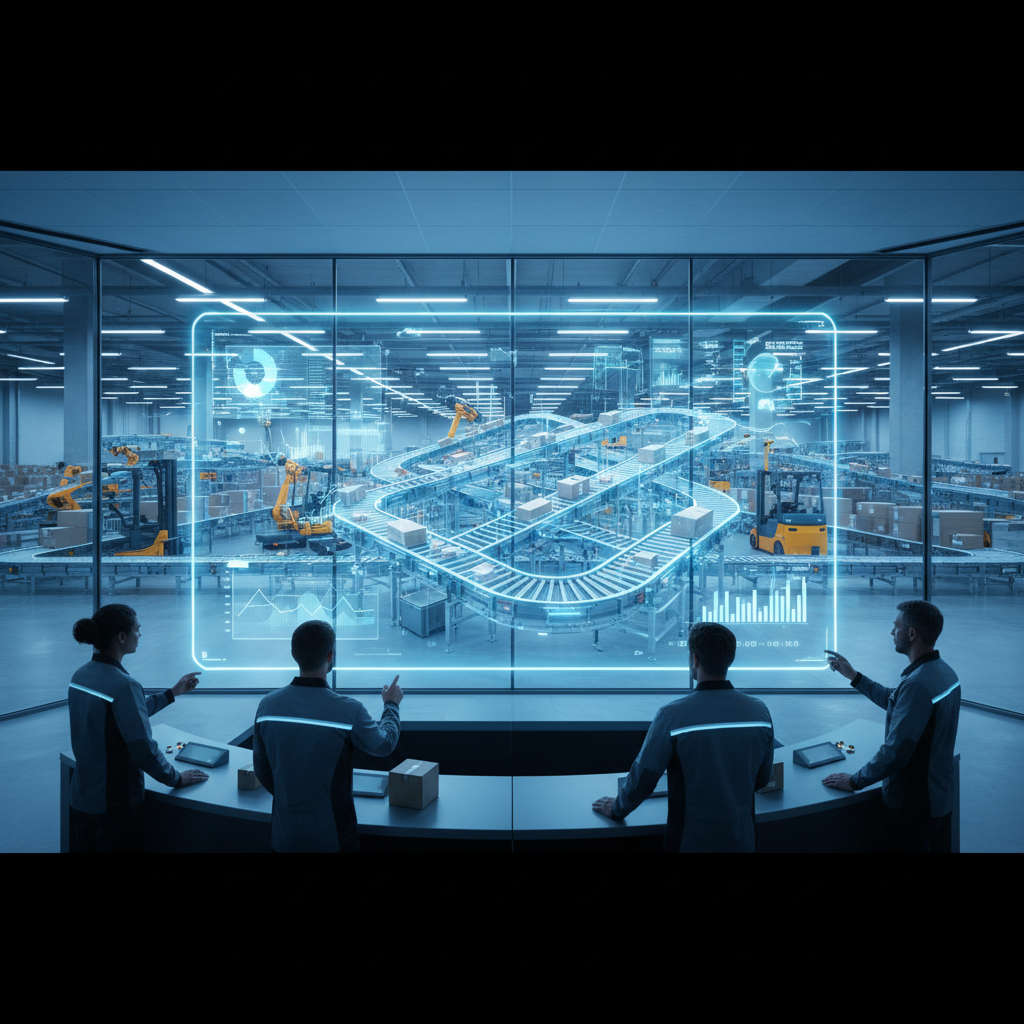
Artificial Intelligence and Machine Learning are actively transforming intralogistics by making conveyor systems smarter, faster, and more predictive. This evolution is key for European warehouses aiming to increase throughput, reduce operational costs, and stay ahead of the curve.
Key numbers
| Metric | Typical range (EU 2026) | Notes |
|---|---|---|
| Throughput Increase | 15-25% | Achieved via dynamic routing and flow optimization. |
| Unplanned Downtime Reduction | 20-35% | Result of predictive maintenance AI analyzing sensor data. |
| AI-powered Sorting Accuracy | >99.98% | Using computer vision for label, damage, or content verification. |
| Energy Consumption Reduction | 10-20% | Obtained by running motors and segments only when needed (run-on-demand). |
| Payback Period (ROI) | 1.5 – 3 years | Includes hardware retrofitting, software (WES/WCS), and integration. |
| Sensor Retrofit Cost | €250 – €800 per node | Cost per installed sensor (vibration, thermal) or AI camera point. |
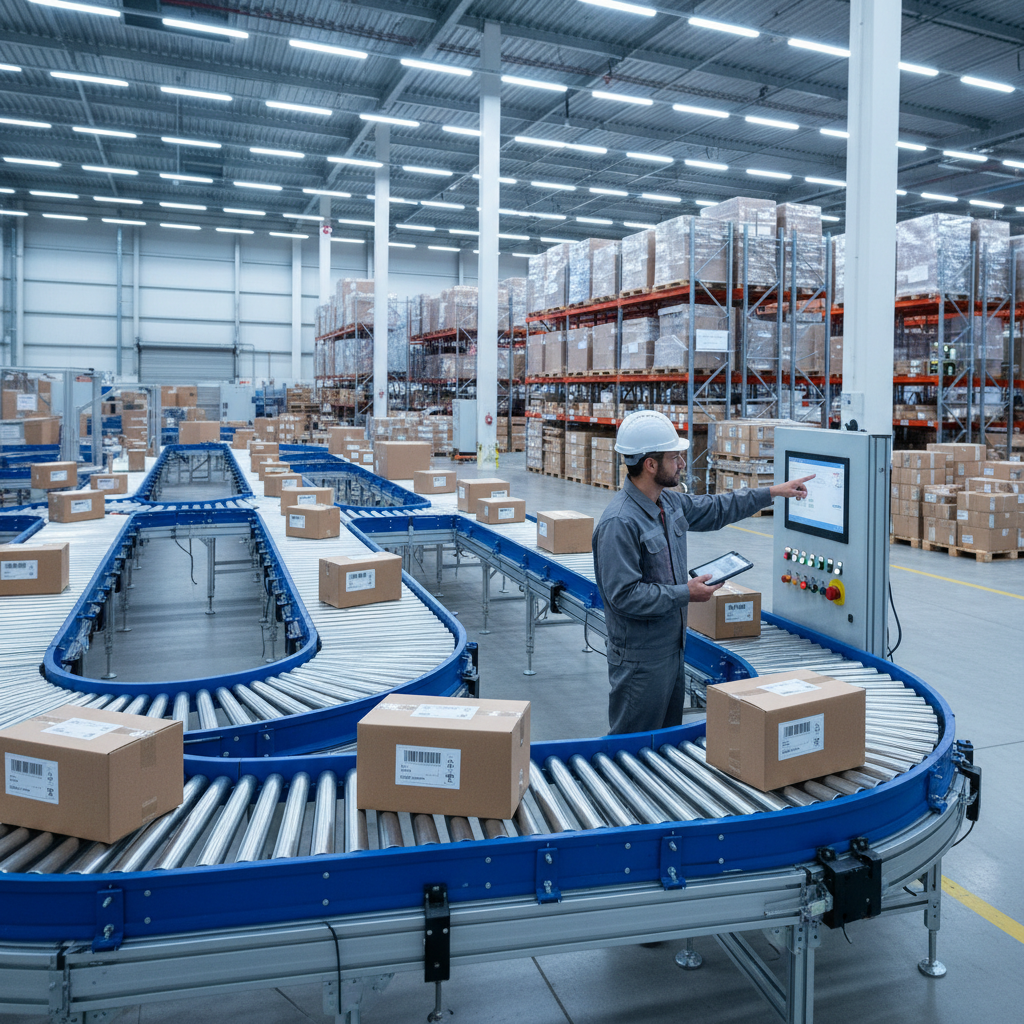
The relentless hum of conveyor belts has long been the soundtrack of intralogistics. These systems are the arteries of any distribution center, moving goods from receiving to storage, picking, and shipping. However, as e-commerce demand surges and delivery expectations shorten, the traditional, rather rigid logic of conveyor systems is being pushed to its limits. The next frontier isn’t about making conveyors faster, but smarter. Enter Artificial Intelligence (AI) and Machine Learning (ML), technologies poised to redefine the capabilities of these essential workhorses.
Definition
In the context of intralogistics, AI and Machine Learning for conveyor systems refers to the use of advanced algorithms and computational intelligence to analyze data from the system, enabling it to make autonomous decisions for process optimization, predictive maintenance, and dynamic routing, moving beyond simple pre-programmed logic.
From PLC Logic to Cognitive Automation
For decades, the brain of a conveyor system has been the Programmable Logic Controller (PLC). A PLC is a robust industrial computer that executes a fixed set of rules: if a sensor detects a box at point A, then activate motor B to move it to point C. This is a reactive system; it works flawlessly for predictable, high-volume flows but lacks flexibility. If a disruption occurs, the system often requires manual intervention.
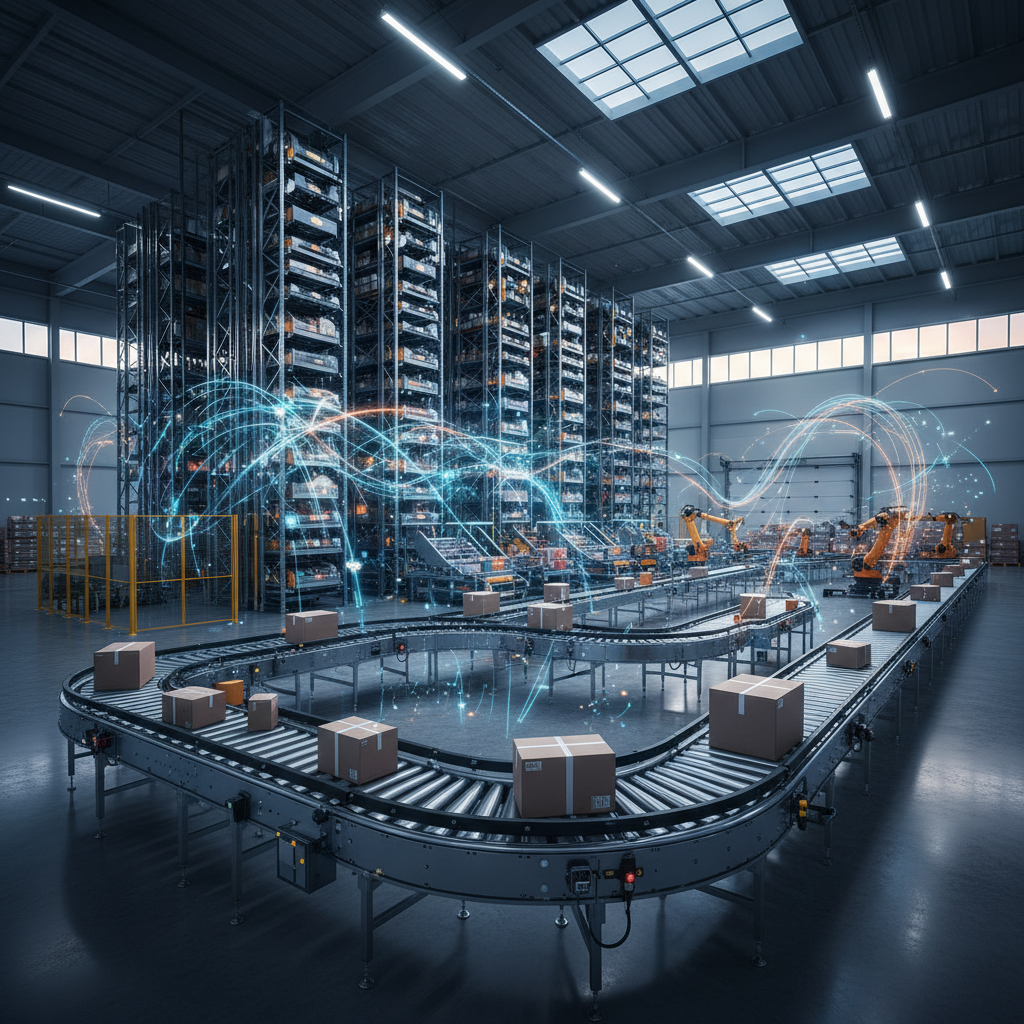
AI introduces a cognitive layer on top of this control structure. Instead of just following "if-this-then-that" commands, an AI-enhanced system can learn from historical and real-time data. It might learn that certain routes get congested at 3 PM on a Tuesday, or that a specific motor’s energy consumption is subtly increasing, indicating an impending failure. This allows the system to move from being purely reactive to becoming proactive and predictive, marking a fundamental shift in warehouse management.
Core AI/ML Applications in Conveyor Systems
The integration of AI isn't a single, monolithic change but a collection of powerful applications that address specific pain points within the warehouse. These applications work in synergy to create a more resilient, efficient, and transparent logistics flow. The most impactful of these are predictive maintenance, AI-powered vision for quality control, and dynamic flow optimization.
Predictive Maintenance: The End of Unplanned Downtime
Unplanned downtime is the bane of every warehouse manager. A single failed motor on a critical conveyor path can halt operations for hours, costing tens of thousands of Euros in lost productivity and delayed orders. Traditional preventive maintenance (e.g., servicing a motor every 5,000 hours) is an improvement over running to failure, but it’s inefficient; parts are often replaced when they still have significant life left, or they fail before the scheduled service.
Predictive Maintenance (PdM) uses ML algorithms to change this. Here’s how it works:
- Data Collection: Sensors are placed on critical components like motors, bearings, and belts to monitor variables such as vibration, temperature, current draw, and noise.
- Pattern Recognition: An ML model is trained on a massive dataset of both normal and failure-state operation. It learns the subtle signatures that precede a component failure.
- Alerting: When the AI detects a pattern that matches an impending failure, it alerts the maintenance team via the Warehouse Control System (WCS), specifying which component is at risk and estimating the remaining time to failure.
AI-Powered Vision & Quality Control
Traditional barcode scanners and photoelectric sensors are effective, but they have their limitations. A slightly damaged barcode, a skewed label, or an unusually shaped parcel can cause a misread, leading to a mis-sort. This requires manual intervention and slows down the entire system.
AI-powered vision systems, using high-resolution cameras and sophisticated image recognition software, offer a quantum leap in capability. These systems can:
- Read damaged, obscured, or poorly placed barcodes with high accuracy.
- Identify products without a barcode based on their shape, color, or packaging (object recognition).
- Detect damage to a package (e.g., dents, leaks) and automatically reroute it to a quality control station.
- Verify order accuracy by identifying the items in a tote as it passes the camera, comparing them against the order manifest in real-time.
Dynamic Routing and Flow Optimization
In a conventional warehouse, the routes for goods are largely fixed. A roller conveyor system might be designed to handle an average of 2,000 cartons per hour (CPH). But what happens when a flash sale causes a sudden spike to 3,000 CPH, or a supply chain disruption drops the volume to 500 CPH?
AI, often integrated within a Warehouse Execution System (WES), excels at solving these complex, dynamic problems. By analyzing real-time data on carton volume, destination, and conveyor occupancy, the AI can make intelligent, second-by-second decisions. As many businesses find, processes don't always scale with growth, creating bottlenecks. AI helps resolve this by dynamically re-routing cartons to less congested paths, activating or deactivating accumulation zones, and even adjusting the speed of conveyor segments to save energy during low-volume periods. This is a core principle behind Smart Conveying. For a deeper understanding of how these control systems interlink, the guide on WMS, WCS, and WES integration offers valuable insights.
| Feature | Traditional Conveyor System (PLC-based) | AI-Enhanced Conveyor System |
|---|---|---|
| Control Logic | Fixed, reactive (If-Then rules) | Dynamic, predictive (Learning from data) |
| Maintenance | Preventive (scheduled) or Reactive (breakdown) | Predictive (condition-based alerts, ~30% less downtime) |
| Energy Efficiency | Constant speed, high baseline consumption | Variable speed, dynamic power-down (up to 20% energy saving) |
| Sorting & QC | Barcode scanners, photoelectric sensors (~98% accuracy) | AI vision systems, object recognition (>99.5% accuracy) |
| Flow Management | Static routing, prone to bottlenecks | Dynamic routing, real-time load balancing (~15-25% higher throughput) |
The European Context: Standards and Adoption
In Europe, the push for Industry 4.0 and green logistics is accelerating the adoption of AI in intralogistics. The EU’s focus on sustainability, for instance, makes the energy-saving aspects of AI-managed conveyors particularly attractive. A warehouse in Germany or the Netherlands running conveyors 24/7 can realize substantial cost savings and reduce its carbon footprint by dynamically managing motor activation, potentially saving hundreds of thousands of kWh per year.
Furthermore, European directives on worker safety and ergonomics encourage the use of automation that reduces manual handling and repetitive tasks. AI-powered systems that autonomously handle sorting and quality inspection fit perfectly within this framework. While standards like OPC UA are helping to create the interoperability needed for complex AI systems, the challenge remains to integrate legacy equipment with these modern, data-driven platforms.
Positioning for the Future: Easy Systems as Your Trusted Partner
The transition to an AI-driven intralogistics landscape can seem daunting. It requires a partner who understands not only the cutting-edge technology but also the practical realities of warehouse operations. At Easy Systems, we specialize in designing, building, and integrating modular conveyor systems that are ready for the future. Our philosophy is built on creating robust, scalable solutions that serve as the perfect foundation for advanced automation.
We work with you to understand your unique operational challenges—from managing peak season demand to reducing sorting errors. Our expertise in modular design ensures that your conveyor system can evolve with your business, allowing for the seamless integration of AI-powered sensors, vision systems, and advanced control software when the time is right. We bridge the gap between today's reliable PLC-controlled hardware and tomorrow's predictive, AI-optimized network, ensuring your warehouse is not just efficient today but positioned for leadership in the years to come.
Frequently asked questions
Can AI be retrofitted onto existing conveyor systems?+
Yes, in many cases. Retrofitting involves adding sensors (vibration, temperature) and AI cameras to existing hardware. The core of the upgrade is a Warehouse Execution System (WES) with AI capabilities that interprets this new data and commands the PLCs. A typical retrofit project, including sensor installation and software integration, can take 3-6 months to complete.
What is the typical ROI for implementing AI in conveyor logistics?+
The Return on Investment (ROI) varies, but most warehouses see a positive ROI within 18-36 months. Gains come from reduced downtime, lower labour costs, improved energy efficiency of up to 20%, and higher throughput. A mid-sized distribution centre can expect annual savings of €150,000 to €300,000 from these optimisations.
What is the difference between AI control and traditional PLC logic?+
PLCs operate on fixed, reactive 'if-this-then-that' rules. AI introduces a cognitive layer, using machine learning to analyse data to make predictive and adaptive decisions, optimising flow and anticipating failures. This moves the system from purely reactive to proactive, reducing the need for manual overrides by over 50% in complex operations.
What kind of data does the AI use to optimise conveyors?+
The AI uses data from multiple sources. It analyses vibration, temperature, and motor current data for predictive maintenance. It uses high-resolution images from cameras for sorting and quality control. Finally, it uses operational data from the Warehouse Management System (WMS) to understand overall flow. A typical system may analyse over 100 data points per second.
How does AI-powered vision help in sorting?+
AI vision systems radically improve sorting. High-speed cameras capture images of parcels, and AI algorithms read barcodes (even damaged ones), check addresses, and identify package shape, dimensions, or damage. This allows the system to route items to the correct outbound lane with over 99.98% accuracy, reducing miss-sorts and the need for manual correction work.

The Easy Systems engineering team designs, integrates and commissions conveyor systems and warehouse automation across Belgium, the Netherlands and Luxembourg. Combined experience covers roller and belt conveyors, sorters, AGV/AMR fleets, AutoStore, shuttle AS/RS and WMS/WCS integration for distribution centers and e-commerce fulfillment operations.
- Conveyor design (roller, belt, modular plastic)
- Sortation & merge logic
- AGV / AMR fleet integration
- AutoStore & shuttle AS/RS
- WMS / WCS integration