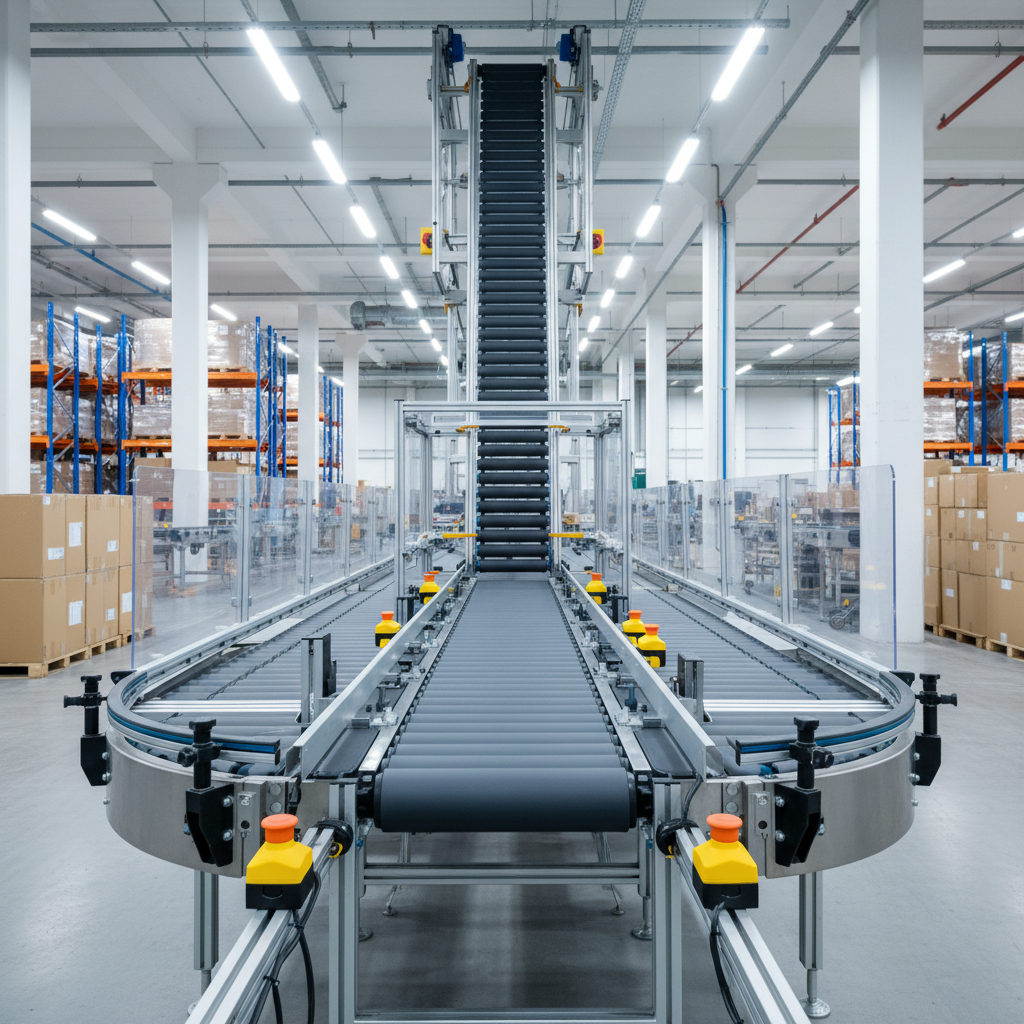
Preventing Conveyor Failures: Maintenance & Diagnostics for Ops Managers
This article provides operations managers with a comprehensive guide to preventing conveyor system failures, detailing preventive maintenance strategies, the latest diagnostic tools, and how to maximize uptime and profitability.

In any modern warehouse or distribution centre, the conveyor system is the circulatory system. When it stops, everything stops. Unplanned downtime isn't just an inconvenience; it's a direct hit to profitability, order fulfilment, and customer satisfaction. For Operations Managers across Europe, moving from a reactive "fix-it-when-it-breaks" model to a proactive, preventive maintenance strategy is not just best practice—it's essential for survival and growth. This guide provides a framework for implementing a robust maintenance program using modern diagnostics.
Definition
Conveyor Preventive Maintenance (PM) is a proactive strategy involving regularly scheduled inspections, adjustments, lubrication, and parts replacement on a conveyor system. The goal is to identify and correct potential issues before they escalate into major failures that cause unscheduled downtime.
Key Numbers
| Metric | Typical range (EU 2026) | Notes |
|---|---|---|
| Unplanned Downtime Reduction | 70-90% | Compared to a purely reactive maintenance strategy. |
| Average Cost of Downtime | €5,000 - €25,000 / hour | Varies by facility size, industry, and time of day. |
| Preventive Maintenance Cost | €200 - €500 / month per 100m | Includes labour and consumables for a standard system. |
| Annual ROI of PM Program | 250% - 450% | Calculated by dividing downtime cost avoidance by PM program cost. |
| Motor & Gearbox Lifespan Increase | 30-50% | Proper lubrication and monitoring are key drivers. |
| Energy Savings from Optimization | 5-15% | Well-maintained systems run more efficiently, reducing kWh consumption. |
| Mean Time Between Failures (MTBF) | Increase by 100-200% | Effective PM doubles the average operational time before a failure. |
Common Causes of Conveyor System Failure
Understanding the weakest links is the first step toward fortifying your system. While every facility is unique, failures typically concentrate in a few key areas. Ignoring these can lead to cascading problems, where a single failed €50 bearing can cause tens of thousands in damage and lost production.
1. Belt and Chain Issues
The belt is the most common point of failure. Mistracking (the belt drifting to one side) is a primary culprit, leading to frayed edges and catastrophic tears. This is often caused by improper tensioning, worn rollers, or an unlevelled conveyor frame. For a standard Belt conveyor, maintaining tension within ±5% of the manufacturer's specification is critical. Chain conveyors, while more robust, can suffer from lubrication issues and chain stretch, leading to jerky movements and eventual failure.
2. Motor and Drive Failures
The drive unit, comprising the motor and gearbox, is the heart of the conveyor. Overheating is a major warning sign. Common causes include:
- Inadequate Lubrication: Insufficient or incorrect lubricant in the gearbox leads to increased friction and heat.
- Overloading: Consistently running the conveyor beyond its specified maximum load (e.g., >50 kg/m) puts immense strain on the motor.
- Poor Ventilation: Dust and debris blocking motor cooling fins can cause it to overheat and fail prematurely.
3. Roller and Bearing Seizures
In roller conveyor systems, the failure of a single roller may seem minor, but it increases the load on adjacent rollers and the drive system. Bearing failure is the most common issue, usually due to contamination from dust and debris or loss of lubrication. A seized bearing can damage the conveyor frame and even the belt if it rubs against it.
4. Control System and Sensor Malfunctions
Modern conveyor systems rely on a complex network of sensors and a PLC (Programmable Logic Controller) to manage flow. A dirty or misaligned photo-eye can fail to detect a package, causing jams and collisions. Software glitches or network issues can bring the entire line to a halt, highlighting the need for both mechanical and electrical maintenance expertise.
Developing Your Preventive Maintenance Checklist
A generic checklist isn't enough. The most effective approach is to divide your system into logical zones and create specific daily, weekly, monthly, and annual tasks for each. This ensures thoroughness and allows for delegation.
Consider a zone-based approach for your system, which might be a section of a roller conveyor guide style system:
- The Drive Zone (Motor/Gearbox): Check for unusual noises, leaks, and overheating. Monthly, check lubricant levels and condition. Annually, consider a professional oil analysis.
- The Take-up Zone: This is where belt tension is managed. Daily, visually inspect belt tracking. Weekly, confirm tension is within specification using a tension gauge.
- The Infeed/Discharge Zones: These high-traffic areas are prone to impact damage. Weekly, inspect transition plates, chutes, and guards for signs of wear or misalignment.
- The Main Conveyor Body: For every 10m section, check for seized rollers, belt damage, and debris accumulation. Clean frames and rollers weekly.
Advanced Diagnostic Tools for Modern Warehouses
While visual inspections and checklists are the bedrock of PM, technology offers a powerful layer of predictive capability. Investing in these tools can shift your strategy from preventive to predictive, fixing parts moments before they fail.
| Diagnostic Tool | What It Detects | Typical Cost (EU) | Best For |
|---|---|---|---|
| Thermal Imaging Camera | Overheating in motors, bearings, electrical panels. Friction from belt rubbing. | €1,500 - €5,000 | Monthly scan of all critical components. Identifies "hot spots" for further investigation. |
| Vibration Analysis Sensor | Imbalance, misalignment, and wear in rotating parts like bearings and gearboxes. | €500 - €2,000 per sensor (plus software) | Continuous monitoring of high-value drives or mission-critical sections. |
| Oil Analysis Kit | Contaminants and wear particles in gearbox oil, indicating internal component degradation. | €50 - €150 per sample | Quarterly or semi-annual analysis for major drive units. Acts as a "blood test" for your gearbox. |
| Acoustic Monitoring | Changes in sound patterns that indicate bearing wear, lubrication issues, or structural cracks. | €1,000 - €4,000 for a starter kit | Detecting high-frequency sounds that are inaudible to the human ear, especially in noisy environments. |
Integrating Diagnostics with your WCS
The ultimate goal is a fully integrated system where diagnostic data feeds directly into your WCS (Warehouse Control System). An IoT-enabled vibration sensor, for example, can detect that a critical motor bearing is likely to fail within the next 48 hours. The WCS can then automatically flag the issue, create a work order in the maintenance system, check spare parts inventory, and even suggest routing packages around that conveyor section during a scheduled low-traffic period for repair.
Calculating the ROI of a Preventive Maintenance Program
Securing budget for a PM program requires a clear business case. The calculation is straightforward:
Annual ROI (%) = [(Cost of Downtime Avoided) - (Cost of PM Program)] / (Cost of PM Program) * 100
Let's use a realistic example for a mid-sized e-commerce facility in Germany:
- Cost of Downtime: Estimated at €10,000 per hour.
- Historic Downtime: 10 hours per month (120 hours/year) before PM.
- Cost of PM Program: €3,000 per month (€36,000 per year) for a technician and tools.
- Resulting Downtime: PM reduces downtime by 80% to 2 hours per month (24 hours/year).
Cost of Downtime Avoided: (120 hours - 24 hours) * €10,000/hour = €960,000
Annual ROI: (€960,000 - €36,000) / €36,000 * 100 = 2,566%
This demonstrates that a PM program is not a cost but a high-yield investment. As you gather more data, this calculation becomes a powerful tool for justifying further investment in diagnostics or staff training.
Easy Systems: Your Partner in Proactive Maintenance and System Longevity
Preventing conveyor failure is a continuous process of observation, analysis, and action. While the tools and techniques discussed provide a robust framework, the initial system design is paramount. A well-designed, modular conveyor system is inherently easier and more cost-effective to maintain. At Easy Systems, we design and build conveyor solutions with maintenance and total cost of ownership at the forefront. Our modular designs allow for quick component replacement, and our adherence to using high-quality, standardized parts simplifies spare parts management. We understand that as companies grow, their processes must grow with them, and that includes building a foundation of reliable, maintainable automation. Partner with us to create a system that is not only efficient on day one but remains a productive asset for years to come.
Frequently asked questions
How much does conveyor downtime really cost a warehouse?+
The cost of conveyor downtime for a typical European warehouse or distribution center ranges from €5,000 to over €25,000 per hour. This figure includes lost productivity, potential late-delivery penalties, idle labor costs, and the expense of emergency repairs.
How often should I perform preventive maintenance on my conveyor?+
A typical schedule involves daily visual checks, weekly inspections of tracking and tension, and monthly lubrication and detailed checks of motors and bearings. A full system audit, including diagnostics like thermal imaging, should be conducted quarterly or semi-annually.
What is the most common cause of conveyor belt failure?+
The single most common cause is belt mistracking, where the belt drifts to one side. This leads to friction, fraying, and eventually, a complete tear. It's often a symptom of other issues, such as improper tensioning or worn rollers, which a PM program can identify.
Is it worth investing in diagnostic tools like thermal cameras?+
Yes. A thermal imaging camera, which can be purchased for around €2,000, can identify overheating components like motors and bearings weeks before they fail. By preventing just one hour of downtime, the tool has already paid for its investment multiple times over.
Can I upgrade my old conveyor system with new diagnostic sensors?+
Absolutely. Many modern IoT sensors are designed for retrofitting. Wireless vibration and temperature sensors can be attached to older motors and gearboxes, providing real-time data to a central dashboard or your WCS for a fraction of the cost of a new system.
What is the expected lifespan of a conveyor belt?+
The lifespan varies greatly based on material, usage, and maintenance. A standard PVC belt in a high-volume 24/7 distribution center might last 3-5 years with excellent maintenance. Without it, the same belt could fail in under 18 months. Proper care can effectively double its operational life.

The Easy Systems editorial desk reviews and fact-checks every Conveyor-Design article against Benelux project experience. Editors translate engineering decisions — throughput, peak factors, layout, integration — into plain-language guides for operations managers, project leads and decision-makers.
- Warehouse layout & slotting
- Order-profile analysis
- Vendor-neutral comparison
- Benelux logistics market