Predictive Maintenance for Conveyors: A Practical Guide
Predictive maintenance uses sensor data and AI to forecast conveyor component failures before they happen, enabling scheduled repairs over costly downtime. This data-driven approach can reduce maintenance costs by up to 30% and significantly improve warehouse efficiency.
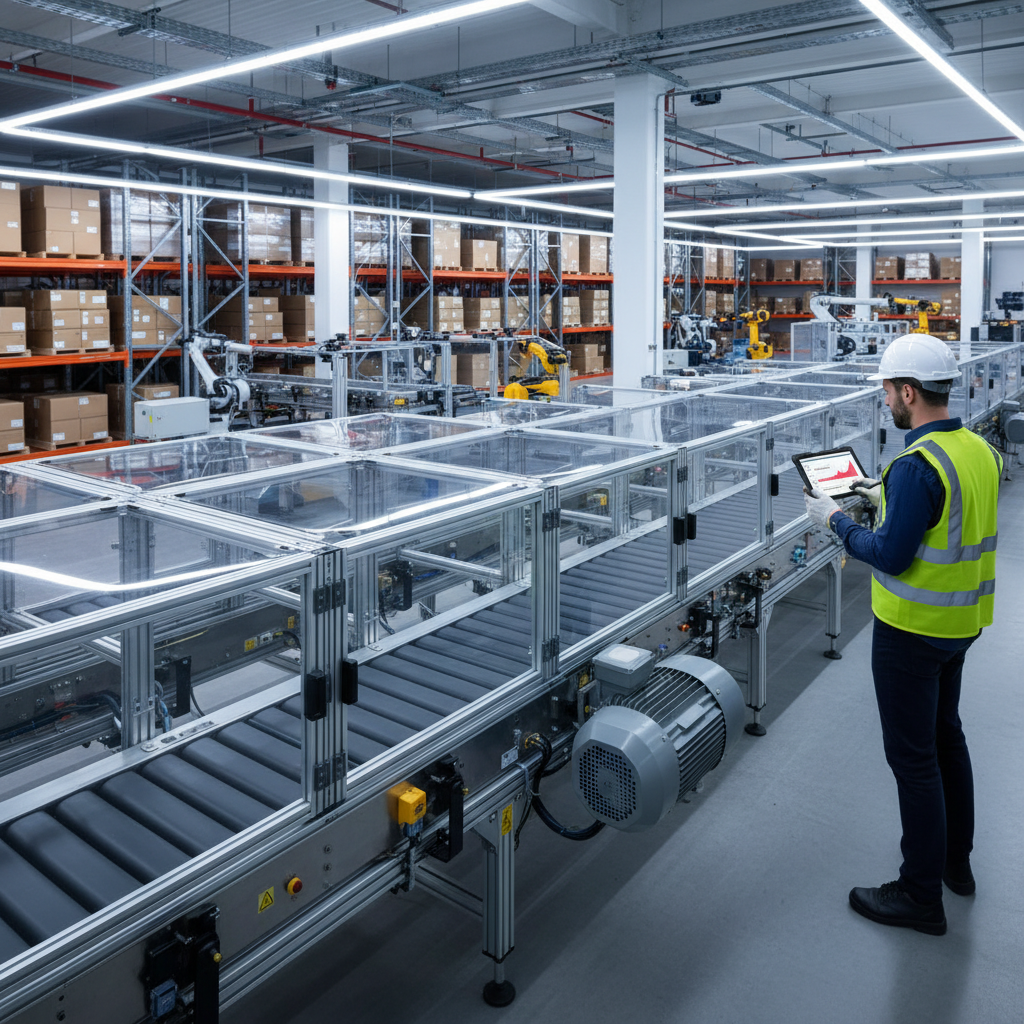
In the high-stakes world of European logistics, unplanned downtime is not just an inconvenience; it's a critical failure that can halt operations, delay shipments, and erode profitability. For assets as central as conveyor systems, moving from a reactive "fix-it-when-it-breaks" model to a proactive, data-driven strategy is essential. Predictive Maintenance (PdM) offers this paradigm shift, using real-time data to anticipate failures and transform maintenance from a costly problem into a competitive advantage.
Definition
Predictive Maintenance (PdM) is a proactive maintenance strategy that uses data analysis tools and techniques to detect anomalies in operation and possible defects in processes and equipment so they can be fixed before they result in failure. For conveyor systems, this involves mounting sensors on critical components, collecting data, and using software to identify patterns that signal an impending fault. This data is often managed and processed via a PLC or higher-level control system.
Key Numbers
| Metric | Typical Range (EU 2026) | Notes |
|---|---|---|
| Unplanned Downtime Reduction | 30% - 70% | Dependent on system maturity and data quality. |
| Maintenance Cost Reduction | 25% - 30% | Fewer emergency repairs and more efficient use of technician time. |
| Initial PdM Investment (per system) | €15,000 - €50,000 | For a medium-sized system, including sensors and software setup. |
| Return on Investment (ROI) | 1 - 2 years | Accelerated by high throughput and costly downtime events. |
| Component Lifespan Extension | 20% - 40% | Reduced strain and timely adjustments on motors, bearings, and belts. |
| OEE Improvement | 3% - 10% | Gains in availability, performance, and quality. |
| Energy Savings per Motor | ~5% - 12% | Healthy, well-maintained motors operate more efficiently. |
How Predictive Maintenance Transforms Conveyor Uptime
The core principle of PdM is simple: listen to your equipment. By continuously monitoring the health of a conveyor system, you can move away from the constraints of a fixed maintenance schedule. Instead of replacing a bearing every 2,000 hours of operation (preventive), you replace it when sensor data indicates its specific performance is degrading. This data-first approach ensures maintenance is only performed when necessary, saving valuable time and resources while preventing unexpected failures.
From Data Point to Actionable Insight
The process begins with installing sensors on high-failure-risk components. These are typically:
- Motors & Gearboxes: For monitoring vibration, temperature, and energy consumption.
- Bearings & Rollers: For tracking temperature and acoustic signatures.
- Belts & Chains: For checking tension, alignment, and wear using optical or ultrasonic sensors.
Predictive vs. Preventive vs. Reactive Maintenance
Understanding where PdM fits is crucial. Each strategy has its place, but they offer vastly different levels of efficiency and cost-effectiveness, particularly for complex systems like a roller conveyor network.
| Strategy | Trigger | Cost Profile | Best For |
|---|---|---|---|
| Reactive Maintenance | Equipment Failure | Very High (downtime, overtime, express parts) | Non-critical, easily replaceable components. |
| Preventive Maintenance | Time-based or Usage-based Schedule | Medium (can involve unnecessary part replacement) | Systems with predictable wear patterns and moderate failure costs. |
| Predictive Maintenance (PdM) | Real-time Condition Data & AI Forecasts | Low (optimized labour, just-in-time parts) | Business-critical systems where downtime is unacceptable. |
Key Technologies Fueling Conveyor PdM
A successful PdM program relies on a suite of robust Internet of Things (IIoT) technologies working in concert.
Sensing & Data Collection
- Vibration Analysis: The most common PdM technique. Accelerometers attached to motor housings or bearing blocks can detect imbalances, misalignments, and bearing wear long before they become audible or cause a failure. A healthy motor has a consistent vibration signature; deviations signal trouble.
- Thermal Imaging: Infrared cameras or fixed thermal sensors can identify overheating in motors, electrical panels, and friction points on a belt. An unusually hot bearing, for instance, is a classic sign of lubrication failure or excessive load.
- Acoustic Analysis: Highly sensitive microphones can "hear" the high-frequency sounds associated with bearing lubrication issues or subsurface cracks, which are inaudible to the human ear.
- Oil Analysis: For conveyors with large gearboxes, analyzing oil samples for metal particles or changes in viscosity can reveal the health of internal gears and bearings.
- Motor Current Signature Analysis (MCSA): This electrical technique analyzes the current flowing to the motor to detect rotor bar issues, electrical imbalances, and other issues without requiring direct sensor mounting on the machine.
Implementing a PdM Program: A Phased Approach
Adopting PdM is not an overnight switch but a strategic project. For a typical European logistics facility, the process involves several key stages:
- Criticality Analysis: Identify which conveyor sections are most critical to your operation. Focus on single points of failure, sorters, and high-throughput lines. Not all conveyors need advanced PdM.
- Pilot Program: Select a single critical conveyor line for a pilot project. Install sensors on its 3-5 most vital components (e.g., main drive motor, key sorting junctions). This limits initial investment and allows the team to build expertise.
- Data Integration: Integrate sensor data with your maintenance management software (CMMS) or a dedicated PdM platform. The goal is to automate the creation of work orders from data-driven alerts.
- Establish Baselines: Run the system for a period (e.g., 100-200 hours) to establish a "normal" performance baseline for each sensor. This baseline is what future data will be compared against.
- Scale & Refine: Once the pilot proves its ROI (typically within 12-18 months), systematically roll out the program to other critical assets. Continuously refine the alert thresholds as you gather more data.
While the initial cost can seem daunting, companies must weigh it against the staggering cost of inaction. As detailed in our analysis on process scalability, stagnant processes in growing companies lead to hidden costs, and reactive maintenance is a prime example of a process that breaks under pressure.
The Future is Now: AI and Machine Learning in Maintenance
The next frontier of PdM is the widespread adoption of AI and Machine Learning (ML). While traditional PdM uses pre-set thresholds (e.g., "alert if vibration exceeds X"), ML models can learn the unique operating signature of a machine and detect complex, multi-variable patterns that a human could never spot. An ML algorithm might, for example, correlate a minor increase in motor temperature with a small change in acoustic signature and a specific time of day to predict a gearbox failure two weeks in advance, allowing for just-in-time parts ordering and minimal disruption.
Easy Systems: Your Partner in Proactive Conveyor Solutions
At Easy Systems, we design and build modular conveyor systems with reliability and maintainability at their core. We understand that in the modern European supply chain, the conveyor is the artery of the warehouse. Our systems are engineered for durability, using high-quality components and designs that facilitate easy inspection and access. By focusing on robust engineering from day one, we provide a solid foundation for your maintenance strategy, whether it's preventive or a forward-looking predictive program. We partner with you to select the right belt conveyor or roller conveyor solution that not only meets your throughput targets but also minimizes your total cost of ownership through smart, maintainable design.
Frequently asked questions
What is the primary goal of predictive maintenance for conveyors?+
The primary goal is to minimize unplanned downtime by using real-time data to predict equipment failures before they occur. This allows maintenance to be scheduled during non-operational hours, increasing Overall Equipment Effectiveness (OEE) by an average of 3-10% and reducing urgent repair costs.
How much does it cost to implement predictive maintenance in a warehouse?+
Initial costs for a mid-sized European warehouse can range from €15,000 to €50,000. This includes sensors, software, and integration. While significant, the ROI is often realized within 1-2 years due to saved downtime and reduced maintenance expenditures.
What are the first signs a conveyor belt needs maintenance?+
Early signs detectable with PdM include increased motor vibration or temperature, indicating strain. You might also notice belt slipping, fraying edges, or surface cracks. An acoustic sensor might pick up changes in roller noise, signaling a bearing issue long before a visual cue appears.
How does predictive maintenance differ from preventive maintenance?+
Preventive maintenance is time-based (e.g., 'replace motor every 2 years'), regardless of condition. Predictive maintenance is condition-based ('replace motor when vibration data predicts failure'), ensuring work is only done when needed, which can cut maintenance tasks by 25% or more.
Which conveyor parts benefit most from predictive maintenance?+
The most significant benefits are seen on critical, high-wear components. These include motors, gearboxes, main drive rollers, and bearings, as their failure typically causes a complete system shutdown. Monitoring these can prevent over 80% of downtime events.
What is the typical ROI for a conveyor predictive maintenance program?+
The typical Return on Investment (ROI) for a well-implemented PdM program is between 12 and 24 months. This is driven by drastic reductions in unplanned downtime, lower repair costs, and an extension of component lifespan by 20-40%.

The Easy Systems editorial desk reviews and fact-checks every Conveyor-Design article against Benelux project experience. Editors translate engineering decisions — throughput, peak factors, layout, integration — into plain-language guides for operations managers, project leads and decision-makers.
- Warehouse layout & slotting
- Order-profile analysis
- Vendor-neutral comparison
- Benelux logistics market