Predictive Maintenance for Conveyor Systems in the Benelux
Predictive maintenance leverages IoT sensors and AI to forecast equipment failures in conveyor systems, enabling proactive repairs. This approach significantly cuts unexpected downtime and extends the operational life of critical warehouse assets in the Benelux.

In the high-stakes logistics landscape of the Benelux, where every second counts, unplanned downtime is more than an inconvenience—it's a critical failure that can halt operations, delay shipments, and erode profitability. For warehouses and distribution centers relying on vast conveyor networks, the question is not if a component will fail, but when. Predictive Maintenance (PdM) offers a data-driven answer, shifting the paradigm from reactive repairs to proactive, intelligence-led interventions.
Definition
Predictive Maintenance (PdM) is a proactive maintenance strategy that uses data analysis tools and techniques to detect anomalies in operation and possible defects in processes and equipment so that they can be fixed before they result in failure. For conveyor systems, this involves using sensors to monitor the condition of components in real-time, enabling organisations to forecast failures and schedule maintenance precisely when needed, rather than on a pre-determined schedule or after a breakdown has occurred. This data is often managed and actioned via a PLC or higher-level software.
Key Numbers: Predictive Maintenance for Conveyor Systems
| Metric | Typical Range (EU 2026) | Notes |
|---|---|---|
| Reduction in Unplanned Downtime | 30% - 50% | Compared to reactive maintenance strategies. |
| Maintenance Cost Reduction | 20% - 30% | Achieved by optimising labour and reducing unnecessary parts replacement. |
| Implementation Cost (Retrofit) | €150 - €500 per monitoring point | Depends on sensor type, wireless connectivity, and software platform. |
| Return on Investment (ROI) Period | 1.5 - 3 years | Faster ROI in high-throughput facilities (e-commerce, parcel). |
| Increase in Asset Lifespan | 10% - 20% | Proactive care reduces cumulative wear and tear on critical components. |
| Energy Savings | 5% - 10% | Well-maintained motors and bearings operate more efficiently, reducing electricity consumption. |
| Spare Parts Inventory Reduction | 20% - 40% | Shifts from a "just-in-case" to a "just-in-time" parts strategy. |
The Evolution of Maintenance: From Reactive to Predictive
Historically, maintenance strategies have evolved significantly. Understanding this evolution highlights the value of PdM, especially in the capital-intensive environment of warehouse automation.
A Comparison of Maintenance Strategies
Each maintenance approach has its place, but for mission-critical systems like conveyors, a proactive strategy is demonstrably superior. Here’s how they compare:
| Strategy | Approach | Pros | Cons |
|---|---|---|---|
| Reactive Maintenance | "Run to failure." Fix components only after they break down. | Lowest initial cost; no planning required. | Highest downtime cost; unpredictable failures; safety risks; collateral damage. |
| Preventive Maintenance | Time-based. Service equipment on a fixed schedule (e.g., every 6 months). | Reduces likelihood of failure; more structured than reactive. | Can lead to over-maintenance (replacing good parts); doesn't prevent all failures. |
| Predictive Maintenance (PdM) | Condition-based. Use sensor data to predict when a component will fail. | Minimises downtime; maximises component life; optimises labour and parts. | Higher initial investment; requires data analysis capabilities. |
| Prescriptive Maintenance | AI-driven. Not only predicts failure but also recommends a specific solution. | Highest level of optimisation; self-learning capabilities. | Most complex and expensive to implement; still an emerging technology. |
Core Technologies Driving Predictive Maintenance
A successful PdM program is built on a foundation of modern technology. These components work together to turn raw data into actionable insights.
H3: IoT Sensors: The Eyes and Ears of the System
Sensors are the frontline data gatherers. For conveyor systems, the most common types include:
- Vibration Sensors: These are the most critical for PdM. They detect subtle changes in vibration patterns that indicate wear in motors, bearings, and gearboxes long before human senses can.
- Thermal Imaging/Infrared Sensors: These monitor component temperature. Overheating is a classic sign of friction, poor lubrication, or electrical problems in motors and control panels.
- Acoustic Sensors: Similar to vibration sensors, these listen for changes in the sound profile of a running machine, which can indicate issues like belt misalignment or worn-out bearings.
- Oil Analysis Sensors: For systems with gearboxes, these sensors can detect particles or degradation in lubricants, signalling internal wear.
H3: Data Processing and AI/Machine Learning
Raw data from thousands of sensor readings is useless without analysis. This is where AI and machine learning come in. Algorithms are trained on baseline data from a healthy system. They then monitor the live data stream for deviations from this norm. When the algorithm detects a pattern that correlates with known failure modes, it triggers an alert for the maintenance team, often providing a forecast of the remaining useful life (RUL) of the component.
Key Components to Monitor on Conveyor Systems
While a comprehensive PdM strategy can cover the entire system, focusing on the most critical and failure-prone components yields the highest ROI. For a typical roller conveyor or belt conveyor system, these include:
- Drive Motors: The heart of the conveyor. Vibration and thermal analysis can predict bearing failure, winding issues, and overheating.
- Gearboxes: Essential for speed reduction. Oil analysis and vibration monitoring can detect gear tooth wear and bearing fatigue.
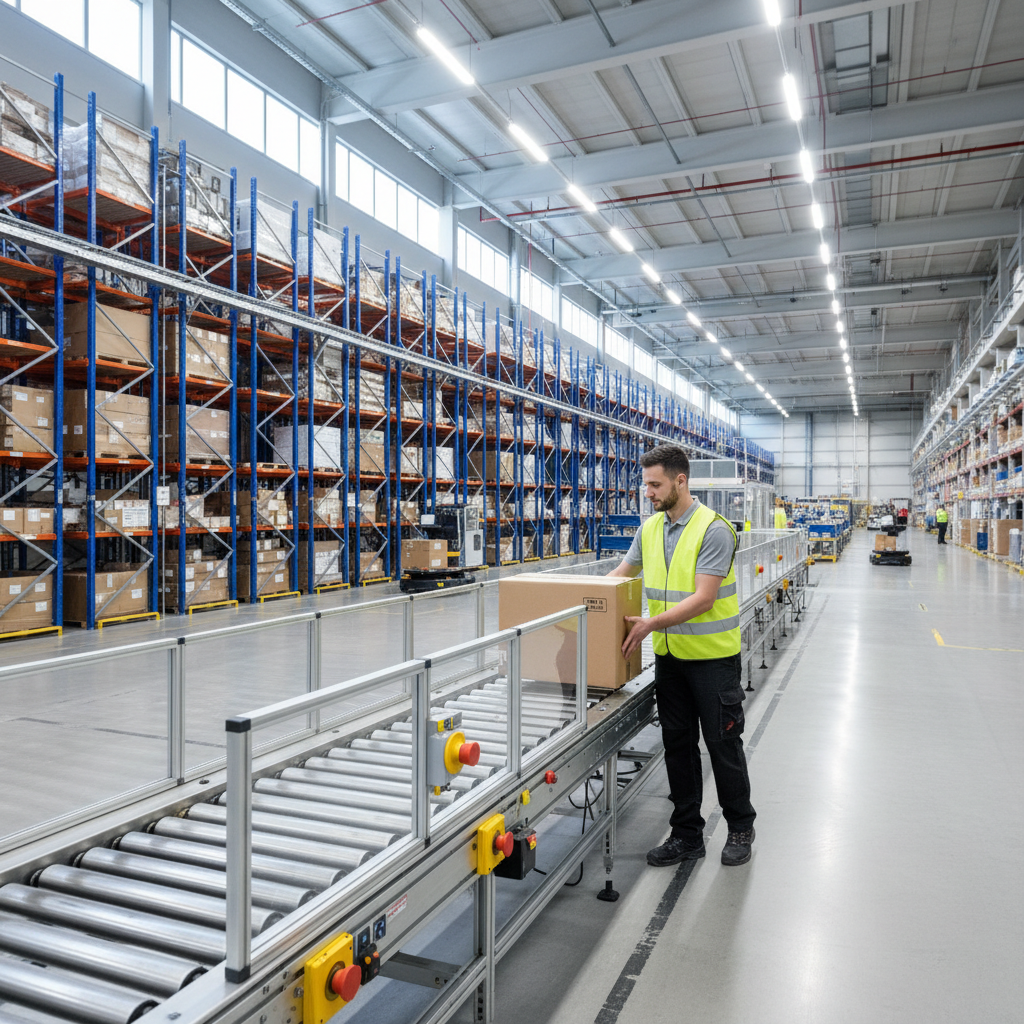
- Bearings: One of the most common failure points. High-frequency vibration analysis is extremely effective at detecting microscopic flaws long before they become critical problems. On a Roller Conveyor, monitoring the bearings within the rollers is key to ensuring smooth flow.
- Conveyor Belts/Chains: Acoustic and laser sensors can detect misalignment, tension issues, or wear and tear that could lead to a catastrophic rip or break.
The Business Case: ROI for Benelux Warehouses
The decision to invest in PdM is a financial one. For a typical Benelux distribution center handling thousands of parcels per hour, the cost of a single hour of unplanned downtime can run into tens of thousands of Euros in lost productivity and potential penalties. By preventing just a few hours of downtime per year, a PdM system often pays for itself quickly. The benefits extend beyond pure downtime avoidance, creating a more resilient and efficient operation.
H3: Optimized Labour and Spare Parts
PdM allows for "just-in-time" maintenance. Instead of dispatching technicians on a fixed schedule to inspect healthy equipment, their time is focused on assets that actually require attention. This reduces labour costs and increases efficiency. Similarly, a clear view of upcoming component needs allows for a leaner, more targeted spare parts inventory, freeing up capital and reducing carrying costs.
Challenges and Considerations
Implementing PdM is not without its hurdles. The initial investment in sensors, software, and potentially data science expertise can be significant. Furthermore, as discussed in the post "Bedrijven groeien, maar hun processen groeien niet altijd mee," integrating new technologies into existing workflows requires careful planning to ensure processes scale effectively with the business. Data security and the management of large data volumes are also key considerations that must be addressed from the outset.
Easy Systems: Your Partner for Intelligent Conveyor Solutions
In the competitive Benelux market, operational excellence is non-negotiable. Predictive maintenance is a cornerstone of a modern, resilient logistics operation, transforming your maintenance department from a cost center into a strategic asset. At Easy Systems, we don't just build conveyors; we engineer intelligent material handling solutions designed for maximum uptime and longevity. Our systems are built with maintenance in mind, incorporating high-quality components and designed for easy integration with modern PdM technologies. We partner with you to design, implement, and support conveyor systems that form the reliable backbone of your warehouse, ensuring that you're not just keeping up, but staying ahead. Trust Easy Systems to help you transition to a smarter, more predictive approach to maintenance and operational efficiency.
Frequently asked questions
What is the main benefit of predictive maintenance for conveyors?+
The primary benefit is the significant reduction in unplanned downtime, which can be cut by up to 50%. This directly boosts productivity and profitability by ensuring the continuous flow of goods in a warehouse or production facility.
How much does it cost to implement predictive maintenance in a Benelux warehouse?+
The cost varies, but a typical starting point for retrofitting existing conveyors is between €150 and €500 per monitoring point. The total investment depends on the number of assets monitored, sensor complexity, and the chosen software platform.
Which sensors are used for conveyor predictive maintenance?+
The most common sensors are vibration analysts, which detect mechanical wear in motors and bearings. Thermal sensors to monitor for overheating, and acoustic sensors to identify changes in operational noise are also frequently used.
How does predictive maintenance differ from preventive maintenance?+
Preventive maintenance is time-based (e.g., servicing a motor every 1,000 hours), while predictive maintenance is condition-based. It uses real-time data to perform maintenance only when a component shows signs of degradation, avoiding unnecessary work.
What is the typical ROI for a conveyor PdM project?+
For most logistics and e-commerce facilities in the Benelux, the return on investment (ROI) for a predictive maintenance project is typically between 1.5 and 3 years, driven by major savings from downtime avoidance.
Can predictive maintenance be added to existing conveyor systems?+
Yes, retrofitting existing conveyor systems is one of the most common ways to implement PdM. Wireless sensors and cloud-based software platforms make it possible to add predictive capabilities to older equipment with minimal disruption.

The Easy Systems editorial desk reviews and fact-checks every Conveyor-Design article against Benelux project experience. Editors translate engineering decisions — throughput, peak factors, layout, integration — into plain-language guides for operations managers, project leads and decision-makers.
- Warehouse layout & slotting
- Order-profile analysis
- Vendor-neutral comparison
- Benelux logistics market