Predictive Maintenance for Conveyor Systems in the Benelux
Discover how predictive maintenance (PdM) uses data analytics and IoT sensors to anticipate conveyor system failures before they occur, specifically tailored for logistics hubs in Belgium, the Netherlands, and Luxembourg.
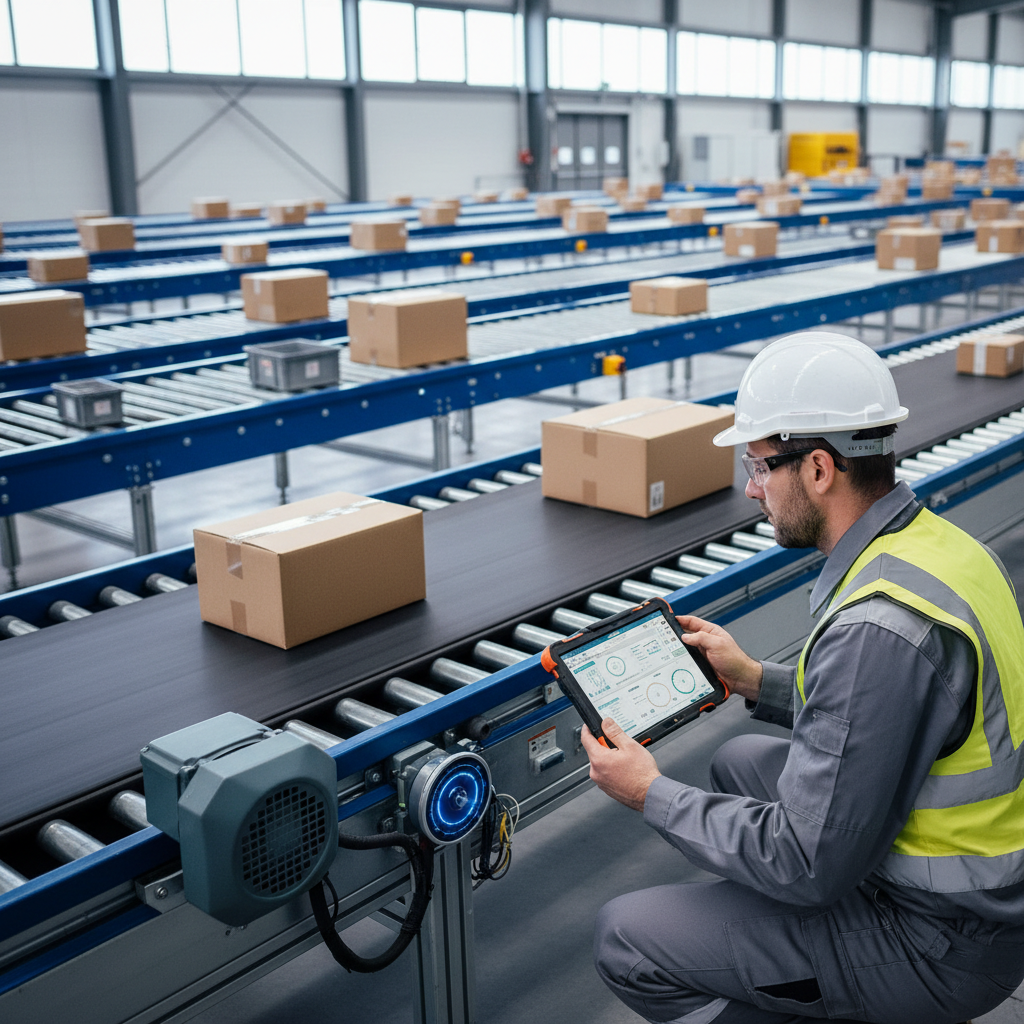
Key numbers
| Metric | Typical range (EU 2026) | Notes |
|---|---|---|
| Unplanned Downtime Reduction | 50% - 75% | Compared to a reactive maintenance baseline. |
| Annual Maintenance Cost Reduction | 30% - 40% | Vs. reactive maintenance; includes labour and parts. |
| Initial Implementation Cost (100m line) | €15,000 - €25,000 | Cost for a pilot on a critical conveyor section. |
| ROI Realisation Period | 12 - 24 months | Time to recoup initial investment through savings. |
| Equipment Lifespan Extension | 20% - 40% | Achieved by replacing components based on need, not schedule. |
| Prediction Accuracy | >95% | Accuracy of ML models in forecasting component failure. |
In the high-stakes, fast-paced logistics landscape of the Benelux, unplanned downtime is not just an inconvenience; it's a critical failure that can halt an entire operation. As warehouses and distribution centers operate on razor-thin margins and tight delivery schedules, the reliability of material handling systems is paramount. This article explores Predictive Maintenance (PdM) as a strategic imperative for conveyor systems, moving beyond traditional reactive and preventive approaches to create a smarter, more resilient, and cost-efficient operation.
Definition
Predictive Maintenance (PdM) is a proactive maintenance strategy that monitors the condition and performance of equipment during normal operation to predict failures. By using a combination of sensor data (e.g., vibration, temperature), data analytics, and machine learning, PdM identifies potential defects in real-time, allowing maintenance to be scheduled precisely when needed—before a breakdown occurs and only when necessary.
From Reactive to Predictive: The Evolution of Maintenance
The journey to operational excellence in maintenance involves a significant strategic shift. For decades, many facilities relied on a "run-to-failure" or reactive model. Today, the focus is on data-driven foresight.
The Old Ways: Reactive and Preventive Maintenance
Reactive maintenance, or "firefighting," addresses issues only after a component fails. This is the costliest approach, leading to extensive unplanned downtime, collateral damage to other parts, and expensive emergency repairs. A broken motor on a central belt conveyor during peak season, for instance, can cost a Benelux e-commerce hub tens of thousands of euros per hour in lost revenue and SLA penalties.
Preventive maintenance was a major step forward. It involves servicing equipment at predetermined intervals (e.g., every 500 operational hours or every six months). While it reduces catastrophic failures, it often leads to unnecessary work, as parts are replaced based on a conservative schedule, not their actual condition. This means perfectly good components are discarded, and maintenance resources are not used optimally.
The Predictive Leap
Predictive maintenance transcends these limitations by using data to make informed decisions. By knowing a specific bearing is likely to fail in the next 150 hours, you can schedule its replacement during a planned, low-impact window, minimizing disruption and maximizing the component's useful life.
| Maintenance Strategy | Core Principle | Typical Downtime Impact | Estimated Annual Cost (100m conveyor line) | Best For |
|---|---|---|---|---|
| Reactive | Fix it when it breaks | High (Unplanned) | €15,000 - €25,000 | Non-critical, low-cost systems |
| Preventive | Fix it at regular intervals | Low (Planned) | €8,000 - €12,000 | Systems with predictable wear patterns |
| Predictive | Fix it when data predicts failure | Minimal (Optimized Planned) | €5,000 - €9,000 (after initial setup) | High-throughput, critical systems |
Core Technologies for Conveyor Predictive Maintenance
Implementing a successful PdM program for conveyor systems hinges on deploying the right combination of sensor technologies and analytical tools. These technologies act as the nervous system of your material handling equipment.
1. Vibration Analysis
Vibration sensors are the cornerstone of conveyor PdM. Placed on motor housings, gearboxes, and bearing blocks, they detect minuscule changes in vibrational patterns. Healthy equipment has a stable, known vibration signature. Deviations can indicate:
- Bearing wear and spalling
- Imbalance in rollers or pulleys
- Misalignment between motor and gearbox
- Looseness of mounting bolts
2. Thermal Imaging (Thermography)
Infrared cameras and fixed thermal sensors monitor the temperature of critical components. Overheating is a clear sign of trouble. Common issues detected via thermography include:
- Electrical faults in motor control cabinets or the main PLC.
- Friction from misaligned belts or seized rollers.
- Inadequate lubrication in gearboxes.
3. Acoustic Analysis
Similar to vibration analysis, acoustic sensors listen for changes in the sound profile of the conveyor. High-frequency ultrasonic detectors can pick up sounds inaudible to the human ear, which often signal:
- Air leaks in pneumatic systems (e.g., for diverters or pushers).
- Early-stage cracks or defects in mechanical parts.
- Dry-running bearings.
4. Oil Analysis
For conveyors with heavy-duty gearboxes, analyzing the lubricating oil provides a wealth of information. Sensors or periodic lab tests can measure the presence of metal particles, changes in viscosity, and chemical contamination. This data offers deep insights into the health of internal gears and bearings, predicting wear and tear with high accuracy.
Implementing a PdM Program in Your Benelux Facility
Transitioning to predictive maintenance is a strategic project, not just a technology purchase. It requires planning, integration, and a shift in mindset.
Step 1: Asset Criticality Assessment
You cannot monitor everything. Start by identifying the most critical conveyors in your operation. Which system failure would cause the most significant bottleneck? A primary sortation line? The main inbound transport line from the docks? Focus your initial investment here, where the ROI will be highest.
Step 2: Sensor Selection and Installation
Based on the failure modes of your critical assets, select the appropriate sensors. For a high-speed belt conveyor, this would typically involve vibration and thermal sensors on the drive unit and key pulleys. Installation is minimally invasive and can often be done during brief, planned downtimes. A typical budget for a medium-sized (1,500 m²) warehouse might range from €15,000 to €50,000 for initial sensor and software setup.
Step 3: Data Integration and Software
Sensor data needs to be collected, aggregated, and analyzed. This is where a Warehouse Control System (WCS) or a dedicated PdM software platform comes in. The platform visualizes data, generates alerts, and ideally integrates with your Computerized Maintenance Management System (CMMS) to automatically create work orders. Many companies struggle as their processes don't scale with their growth; integrating PdM is a key step to ensure operational processes can keep up. Read more about how processes can fail to scale with company growth.
Step 4: Building the Model and Setting Baselines
Once data starts flowing, the system needs to learn what "normal" looks like. This initial period involves establishing baseline performance metrics for each monitored component. Over weeks or months, the machine learning algorithms refine their understanding, becoming increasingly accurate at distinguishing normal operational noise from genuine fault indicators.
The Business Case: ROI in the Benelux Context
The Benelux region, with its high labor costs and strategic importance as a European logistics gateway (Port of Antwerp-Bruges, Port of Rotterdam, Schiphol Airport), stands to gain immensely from PdM.
Consider a large 3PL provider in Venlo. Unplanned downtime on their main outbound conveyor costs them an estimated €20,000 per hour in penalties and delayed shipments. A PdM system with an initial cost of €80,000 that prevents just two major 4-hour outages per year pays for itself in the first year. The benefits compound from there:
- Reduced Maintenance Costs: Maintenance is performed only when needed, cutting labor hours and spare part consumption by up to 30%.
- Increased Asset Lifespan: Proactively addressing minor issues prevents catastrophic failures, extending the life of a typical conveyor motor (e.g., a 2.2 kW SEW-Eurodrive) from 7 years to 10+ years.
- Improved Safety: Predicting failures prevents dangerous situations, such as sudden belt snaps or motor seizures.
- Enhanced Capacity: Higher system availability means more reliable throughput, allowing warehouses to handle higher volumes without expanding their physical footprint.
Easy Systems: Your Partner for Intelligent and Reliable Conveyor Solutions
At Easy Systems, we don't just build conveyors; we engineer the backbone of your logistics operation. We understand that in the modern European market, reliability is not an option—it's the foundation of success. Our modular conveyor systems, from robust roller conveyors to versatile belt systems, are designed for durability and ease of maintenance.
We work with our clients to design systems that are not only efficient on day one but are also ready for the future of maintenance. By incorporating smart design principles and collaborating with leading technology partners, we help you build an infrastructure that is prepared for predictive maintenance integration. Whether you are upgrading an existing facility or designing a new greenfield distribution center in Belgium, the Netherlands, or Luxembourg, leverage our expertise to ensure your material handling systems deliver maximum uptime and a superior return on investment.
Frequently asked questions
What is the typical ROI for a predictive maintenance program on conveyor systems?+
In a Benelux logistics context, the Return on Investment (ROI) for a PdM program often exceeds 8x. This is achieved through significant reductions in unplanned downtime (up to 75%), lower maintenance costs (25-35%), and an extended equipment lifespan of over 20%, generating a rapid payback period.
How long does it take to implement a predictive maintenance system?+
A pilot project on a critical conveyor line can typically be implemented in 6-8 weeks, covering sensor installation and software setup. Following this, the system requires a data-gathering period of approximately 2-4 months to establish accurate operational baselines and begin generating reliable failure predictions.
Can PdM be retrofitted to older conveyor systems?+
Yes, a key strength of modern PdM solutions is their ability to be retrofitted. Wireless IoT sensors for vibration, temperature, and power can be attached to critical components like motors on older conveyor lines, integrating them into an analytics platform with minimal disruption. Over 90% of existing systems are compatible.
What kind of sensors are used in conveyor PdM?+
PdM primarily uses non-invasive sensors. Vibration sensors detect irregularities in motors and bearings, often predicting failure 3-4 weeks in advance. Thermal sensors monitor for overheating, a sign of stress. Acoustic sensors identify noise changes, while power consumption monitors spot inefficiencies indicating component strain.
Is predictive maintenance expensive to start?+
Initial investment for a pilot project on a 100-meter critical conveyor line typically ranges from €15,000 to €25,000. This covers hardware, software licensing for the first year, and setup. The investment is often recovered within 12-24 months through the prevention of a single major downtime event, which can cost thousands per hour.

The Easy Systems engineering team designs, integrates and commissions conveyor systems and warehouse automation across Belgium, the Netherlands and Luxembourg. Combined experience covers roller and belt conveyors, sorters, AGV/AMR fleets, AutoStore, shuttle AS/RS and WMS/WCS integration for distribution centers and e-commerce fulfillment operations.
- Conveyor design (roller, belt, modular plastic)
- Sortation & merge logic
- AGV / AMR fleet integration
- AutoStore & shuttle AS/RS
- WMS / WCS integration