Predictive Maintenance for Conveyor Systems: A Benelux Guide
Implement predictive maintenance for your conveyor systems to cut downtime by up to 30% and reduce maintenance expenses by 25%. This guide covers the key technologies, strategies, and ROI for warehouses in the Benelux region.
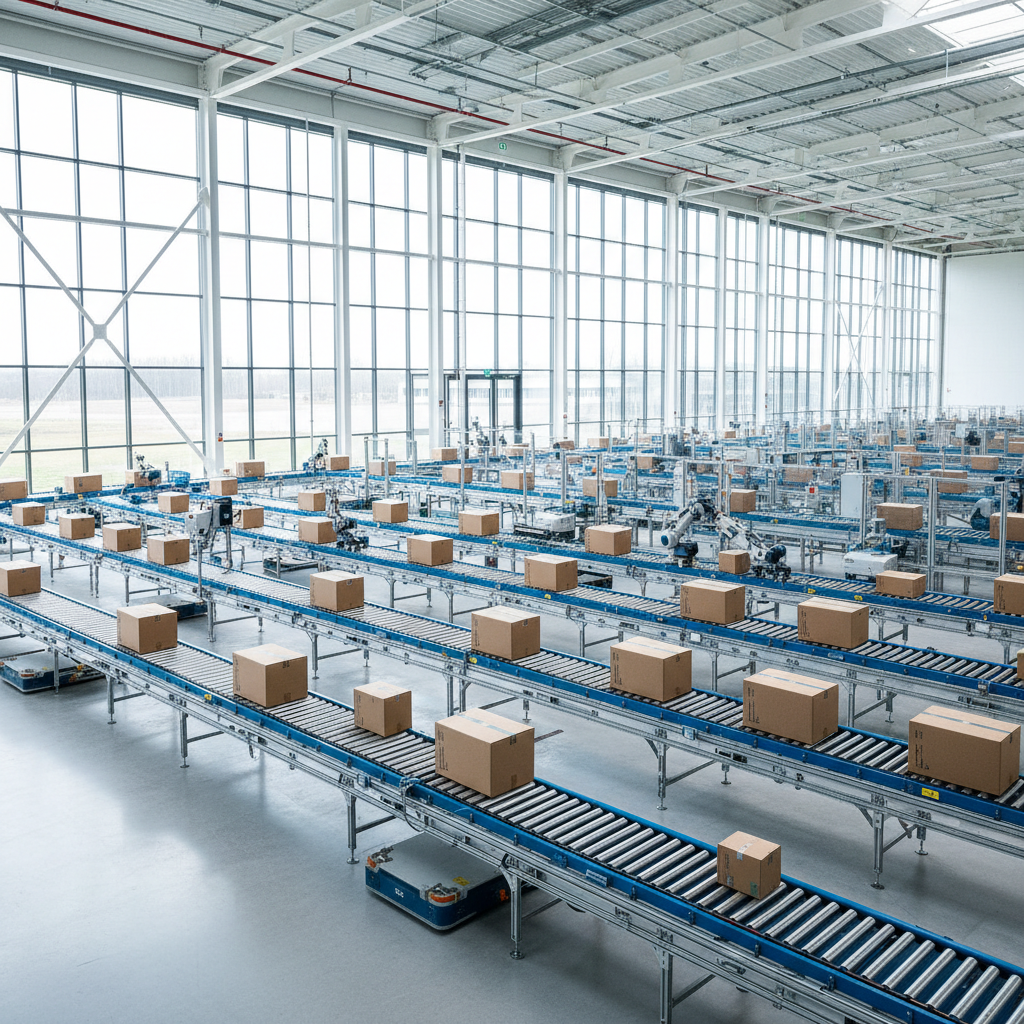
In the high-stakes logistics landscape of the Benelux—a nerve center for European trade—warehouse downtime is not just an inconvenience; it's a critical financial drain. As throughput demands increase, traditional maintenance strategies are proving inadequate. The shift from reactive or preventive schedules to data-driven predictive maintenance (PdM) is becoming essential for survival and growth, allowing facilities in Rotterdam, Antwerp, and Liège to preemptively solve problems before they halt operations.
Definition
Predictive Maintenance (PdM) for conveyor systems is a proactive strategy that uses data analysis tools and sensor technology to detect anomalies in operation and predict potential equipment failures. Instead of repairing components after they break (reactive) or on a fixed schedule (preventive), PdM allows maintenance to be performed precisely when it is needed, minimizing costs and operational disruptions.
Key Numbers
| Metric | Typical range (EU 2026) | Notes |
|---|---|---|
| Initial Investment (per line) | €5,000 - €25,000 | Includes sensors, software, and basic integration. |
| ROI | 12 - 24 months | Depends on system criticality and downtime cost. |
| Downtime Reduction | 20% - 30% | Compared to a purely reactive maintenance strategy. |
| Maintenance Cost Savings | 15% - 25% | Achieved by reducing overtime labor and rush-ordering parts. |
| Sensor Unit Cost | €50 - €500 | Varies from simple vibration sensors to complex thermal cameras. |
| Energy Savings | 3% - 8% | From running well-maintained, efficient equipment like MDR systems. |
From Reactive Chaos to Predictive Control
For decades, warehouse maintenance has been caught between two undesirable poles. The first, reactive maintenance ("if it ain't broke, don't fix it"), leads to sudden, catastrophic failures, often during peak hours. A single broken belt conveyor can bring an entire sorting operation to a standstill, costing a large e-commerce facility upwards of €10,000 per hour in lost revenue and recovery costs. The second, preventive maintenance, is based on fixed schedules—replacing a motor every 5,000 operational hours, for example. While better than being reactive, this approach often leads to replacing perfectly good components, wasting budget and skilled labor.
Predictive maintenance offers a third, more intelligent path. By continuously monitoring the actual condition of equipment, it provides a real-time health status and forecasts the ideal time for intervention.
Core Technologies for Conveyor Predictive Maintenance
A successful PdM program relies on a stack of interconnected technologies that work together to turn raw data into actionable insights.
Sensor Technology: The Nervous System
The foundation of PdM is the ability to collect high-quality data. For conveyor systems, this involves several key types of sensors:
- Vibration Analysis: Small, affordable sensors attached to motor housings, bearings, and gearboxes can detect subtle changes in vibration patterns. An increase in high-frequency vibration, for instance, is a classic early warning sign of bearing failure, giving weeks or even months of notice.
- Thermal Imaging: Infrared cameras, either fixed or handheld, can spot overheating components. An electrical cabinet, motor, or friction point on a belt that is hotter than its baseline indicates a potential failure.
- Acoustic Analysis: Similar to vibration analysis, specialized microphones can "listen" to a machine's operational sounds and detect anomalies that are imperceptible to the human ear.
- Power Consumption Monitoring: A gradual increase in the amperage drawn by a conveyor motor can signal increased friction, belt tension issues, or impending motor failure.
Data Acquisition and Processing
Sensors generate a vast amount of data. This data must be collected, contextualized, and processed. Modern systems often use the existing PLC (Programmable Logic Controller) network to gather this information. For older systems or more complex sensor types, IoT gateways can collect data and send it to a central server or cloud platform for analysis. Edge computing—where initial data processing happens on a device near the conveyor—is also gaining traction to reduce latency and data transmission costs.
Comparing Maintenance Strategies for Conveyor Systems
Choosing the right maintenance strategy is a critical business decision. The optimal choice depends on the specific asset, its criticality, and the facility's tolerance for downtime.
| Strategy | Typical Cost | Downtime Impact | Labor Requirement | Best For |
|---|---|---|---|---|
| Reactive Maintenance | Low (initially), High (failure) | High & Unplanned | High-stress, unplanned overtime | Non-critical, low-cost, easily replaced components. |
| Preventive Maintenance | Medium to High | Low & Planned | Scheduled, sometimes unnecessary | Critical systems where a schedule is better than a surprise. |
| Predictive Maintenance (PdM) | High (initial investment) | Minimal & Planned | Highly efficient, data-driven tasks | High-value, critical systems where uptime is paramount. |
Implementing a PdM Program in a Benelux Warehouse
Deploying a PdM program is a strategic project, not just an IT installation. A phased approach is crucial for success.
- Asset Criticality Assessment: Not every conveyor needs a full suite of PdM sensors. Start by identifying the most critical systems. In an e-commerce center, this might be the main sortation line; in a food production facility, it could be the spiral conveyor cooling the product.
- Select a Pilot Project: Choose one critical conveyor line for a pilot program. This allows you to prove the concept, refine your methods, and demonstrate ROI to stakeholders before a full-scale rollout.
- Establish a Baseline: Once sensors are installed, let the system run for a period (e.g., 100-200 hours) to collect data on "normal" operation. This baseline is what the AI algorithms will use to detect future deviations.
- Integrate with Workflow: The goal of a PdM alert is not an email—it's a work order. Integrate the analytics platform with your Computerized Maintenance Management System (CMMS) to automatically trigger inspection or repair tasks for your technical team.
The Financial Equation: Investment vs. Return
The business case for PdM is compelling. A typical investment of €5,000-€25,000 for a critical conveyor line may seem substantial. However, preventing just one 8-hour stoppage on a line that costs €5,000/hour in downtime already yields a €40,000 return. Add to this the savings from not replacing parts prematurely and optimizing maintenance schedules, and the ROI is often realized in under two years. Many companies find that as they grow, their internal processes don't keep pace. This is a common growing pain that smart investments in maintenance can help alleviate. You can read more on how to address this process-growth gap. For a deeper dive into the hardware that forms the backbone of these systems, our Roller Conveyor guide offers essential reading.
Why Easy Systems is Your Trusted Partner for Smart Maintenance
At Easy Systems, we understand the pressures of modern logistics in the Benelux and beyond. Our philosophy is to design and build modular, robust conveyor systems that are not only efficient from day one but are also ready for the future of maintenance. We engineer our systems with high-quality components and logical data access points (e.g., via PLC), making the integration of predictive maintenance technology seamless. By choosing Easy Systems, you are investing in a reliable material handling backbone that provides the transparency and data-readiness needed to minimize downtime, control costs, and keep your business moving forward. We are not just a supplier; we are your partner in building resilient, future-proof warehouse operations.
Frequently asked questions
What is the average cost of implementing predictive maintenance for conveyors?+
The initial cost for a single critical conveyor line typically ranges from €5,000 to €25,000 in the EU. This includes sensors, data acquisition hardware, software licenses, and initial setup. The final cost depends heavily on the complexity of the system and the number of data points monitored.
How long does it take to see a return on investment for PdM?+
Most Benelux warehouses see a full return on investment (ROI) for a predictive maintenance program within 12 to 24 months. This is driven by significant reductions in unplanned downtime, which can cost thousands of euros per hour, and lower overall maintenance expenses.
What are the first signs a conveyor part needs maintenance?+
Early warning signs detectable by PdM systems include increased motor vibration, a rise in the temperature of a bearing housing by more than 10-15°C, unusual acoustic patterns, or a gradual increase in the motor's electrical current draw, indicating higher friction or strain.
Can predictive maintenance be retrofitted onto older conveyor systems?+
Yes, retrofitting is one of the most common ways to implement PdM. External sensors for vibration, temperature, and power can be easily added to older machines. The data can then be collected via a separate IoT gateway, bypassing the need to modify the existing, older PLC controls.
Which conveyor parts benefit most from predictive maintenance?+
The components with the highest ROI for PdM are rotating parts and high-wear items. This includes motors, gearboxes, main drive bearings, and high-tension rollers. Monitoring these can prevent the most common and disruptive types of mechanical failures in a conveyor system.
How much downtime can predictive maintenance realistically prevent?+
A well-implemented PdM program can realistically reduce unplanned downtime on targeted assets by 20% to 30%. While it cannot prevent every failure, it transforms most sudden, catastrophic stops into short, planned maintenance events, saving significant operational costs.

The Easy Systems engineering team designs, integrates and commissions conveyor systems and warehouse automation across Belgium, the Netherlands and Luxembourg. Combined experience covers roller and belt conveyors, sorters, AGV/AMR fleets, AutoStore, shuttle AS/RS and WMS/WCS integration for distribution centers and e-commerce fulfillment operations.
- Conveyor design (roller, belt, modular plastic)
- Sortation & merge logic
- AGV / AMR fleet integration
- AutoStore & shuttle AS/RS
- WMS / WCS integration