Optimizing Intralogistics: Cross-Docking & Conveyors in Benelux
Automated cross-docking using conveyor systems is revolutionizing Benelux logistics by minimizing storage time and accelerating throughput. This strategy uses technologies like belt and roller conveyors to move goods directly from inbound to outbound, drastically cutting handling costs and improving delivery speeds.
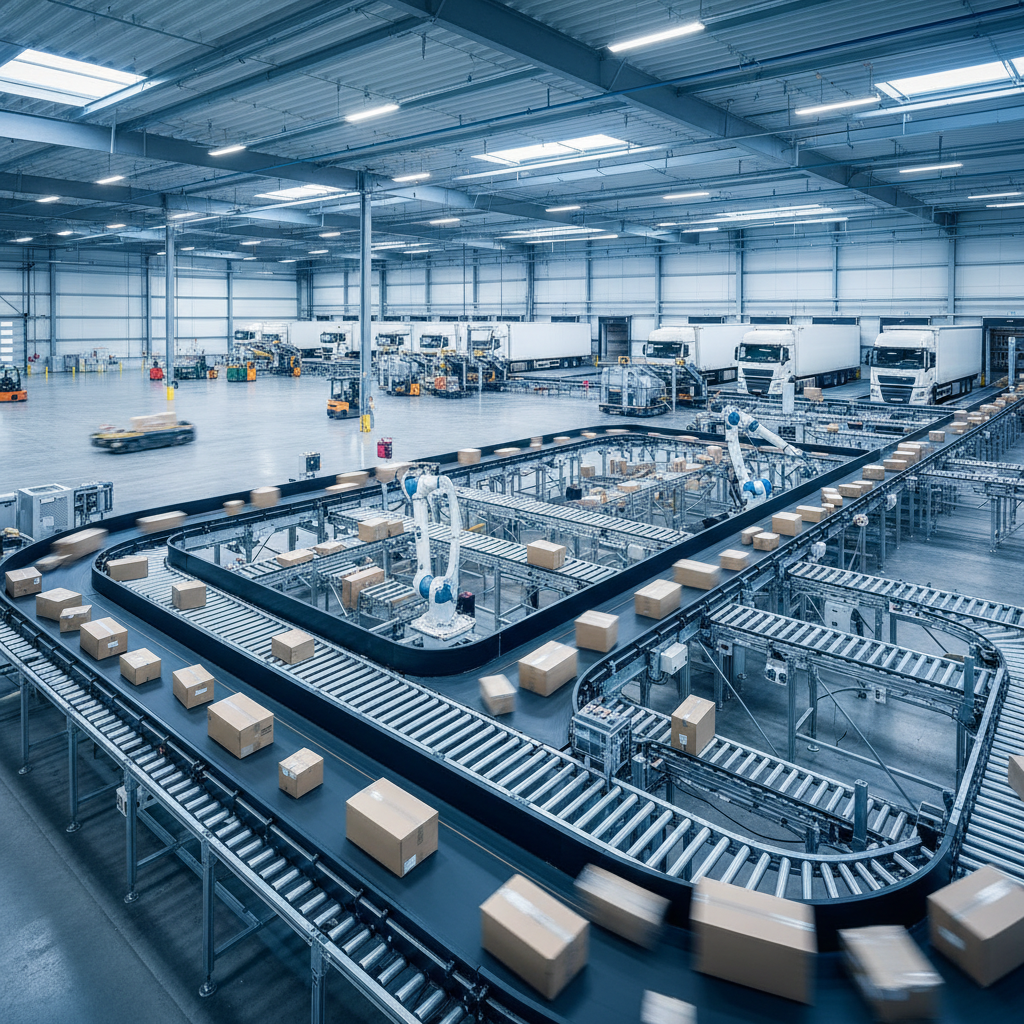
In the high-stakes world of European logistics, the Benelux region stands as a critical hub. With massive ports like Antwerp-Bruges and Rotterdam, and a dense network of roads and distribution centers, speed is paramount. For logistics managers, the pressure to reduce lead times and operating costs is immense. This is where cross-docking, supercharged by automated conveyor systems, becomes a game-changing strategy for optimizing intralogistics workflows.
Definition
Cross-docking is a logistics procedure where products from a supplier or manufacturing plant are distributed directly to a customer or retail chain with minimal to no handling or storage time. Goods are unloaded from inbound transport and immediately loaded onto outbound transport, effectively "crossing the dock."
The Strategic Advantage of Cross-Docking in the Benelux
The Benelux (Belgium, Netherlands, Luxembourg) is the logistical heart of Europe. In 2022, the Port of Rotterdam alone handled over 467 million tonnes of goods. Cross-docking transforms this geographical advantage into a competitive edge. Instead of goods sitting in a warehouse for 24-48 hours, they can be processed and re-routed in as little as 1-3 hours. This near-elimination of dock-to-stock time is a powerful tool for companies aiming for Just-In-Time (JIT) delivery and higher customer satisfaction (OTIF) rates.
For a typical Benelux DC handling fast-moving consumer goods (FMCG), this means products arriving from a factory in Germany can be on their way to a retail outlet in France the same day, without ever touching a storage shelf. This velocity is impossible to achieve with traditional warehousing models.
The Role of Automated Conveyors in Modern Cross-Docking
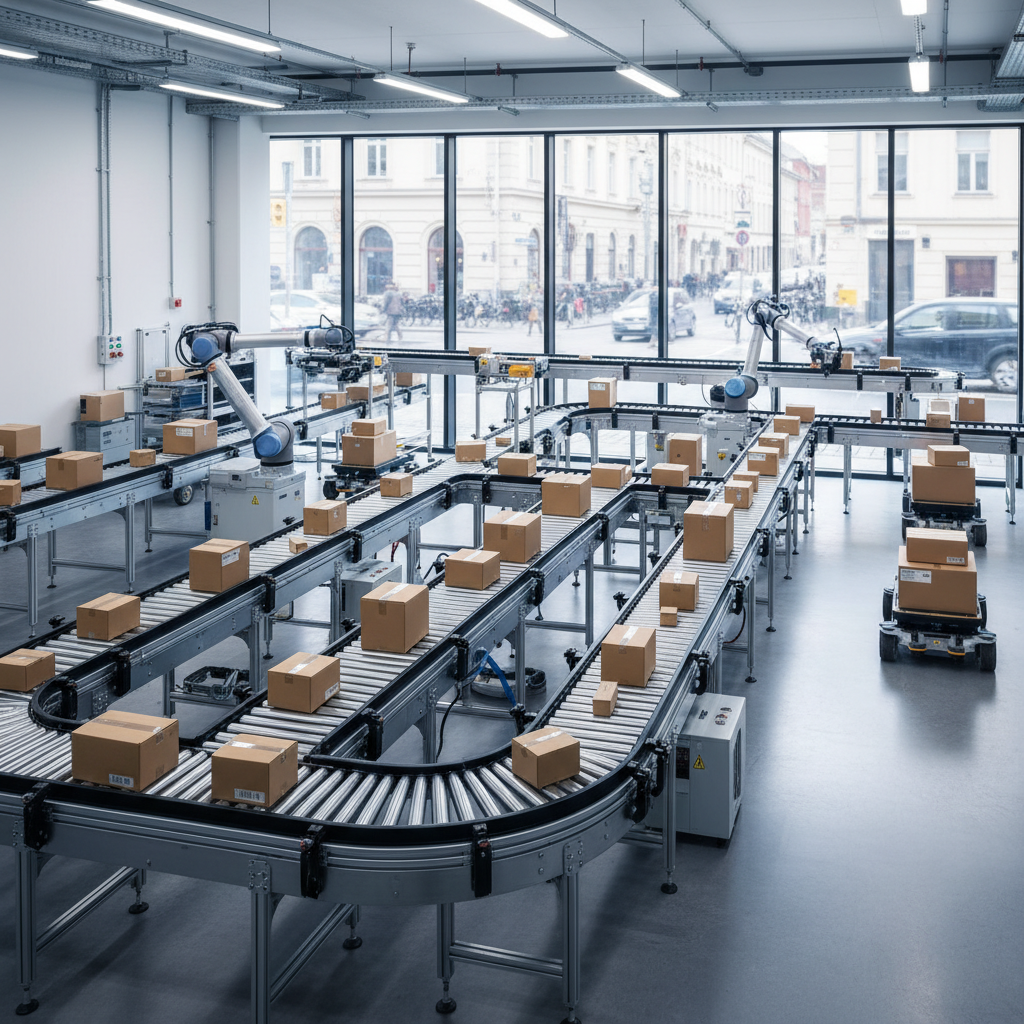
While manual cross-docking using forklifts and pallet jacks is possible, it's inefficient and prone to error. True optimization is achieved through automation. Automated conveyor systems are the backbone of a modern cross-docking facility, acting as the circulatory system that moves goods swiftly and accurately from receiving to shipping.
From Manual to Automated: A Necessary Evolution
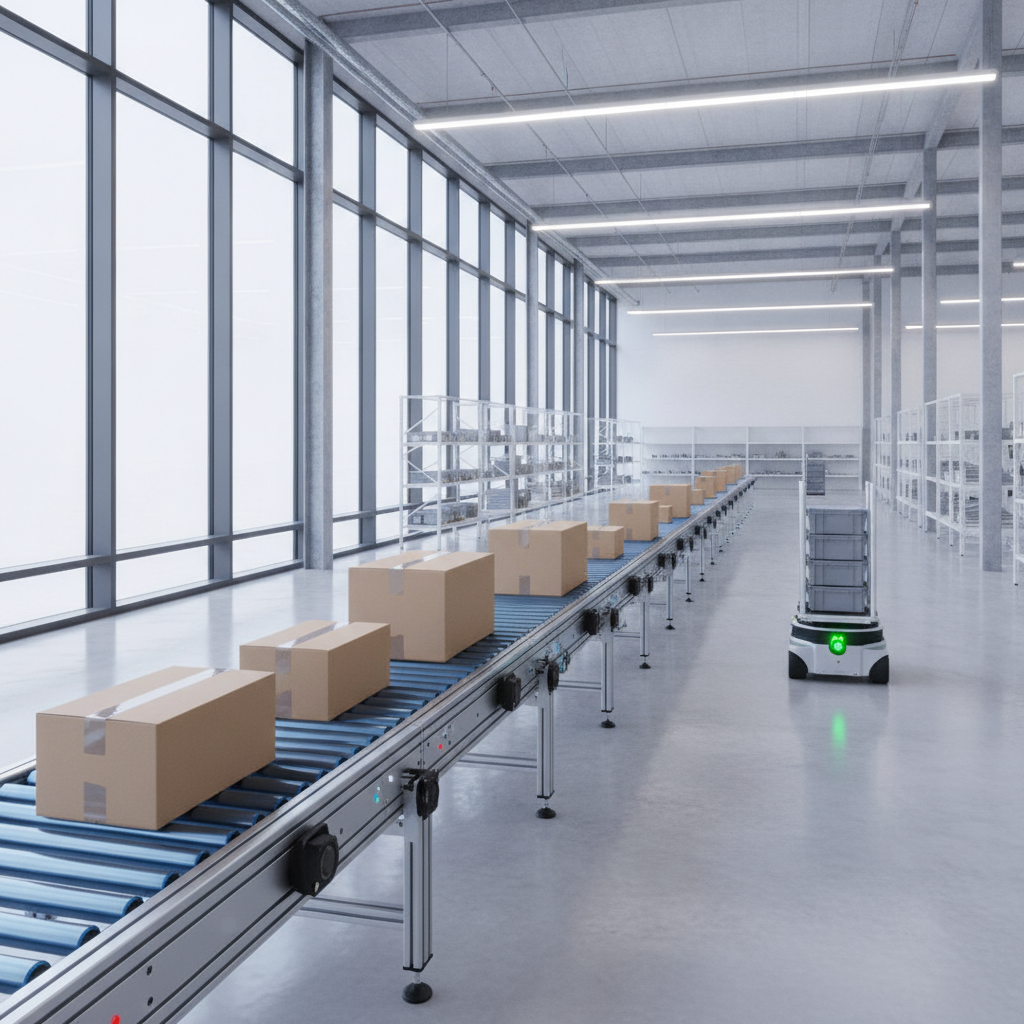
A manual operation might move a few hundred pallets per hour. An automated system, however, can process thousands of items, from small parcels to full pallets weighing over 1,000 kg. High-speed belt conveyors can operate at speeds of up to 2.5 m/s, transporting items rapidly across the facility. They integrate seamlessly with scanners and sortation systems, ensuring every item is correctly identified and routed to the right outbound door. The integration of a robust WMS is crucial for orchestrating this high-speed ballet of boxes and pallets.
Types of Cross-Docking & Their Conveyor Needs
Cross-docking isn't a one-size-fits-all solution. The optimal setup depends on the type of goods and the supply chain's structure. Each type has specific requirements for its material handling systems.
| Cross-Docking Type | Typical Goods | Primary Conveyor System | Key Benefit |
|---|---|---|---|
| Retail Cross-Docking | Pre-tagged, high-volume apparel, electronics, FMCG. | High-speed sortation conveyors (e.g., cross-belt sorters). | Rapid consolidation of goods for specific store deliveries. |
| Manufacturing Cross-Docking | Sub-assemblies and components for a JIT production line. | Heavy-duty chain or roller conveyors for pallets and containers. | Reduces costly inventory at the manufacturing plant. |
| Transportation Cross-Docking | Consolidation of smaller shipments (LTL) into full truckloads (FTL). | Telescopic belt conveyors for loading/unloading, accumulation conveyors for staging. | Improves transport efficiency and reduces shipping costs. |
| Distributor Cross-Docking | Assembling components from various suppliers into a single product kit. | Zero-pressure accumulation conveyors & workstations. | Combines products for value-added services before shipping. |
Designing a High-Efficiency Cross-Docking Terminal
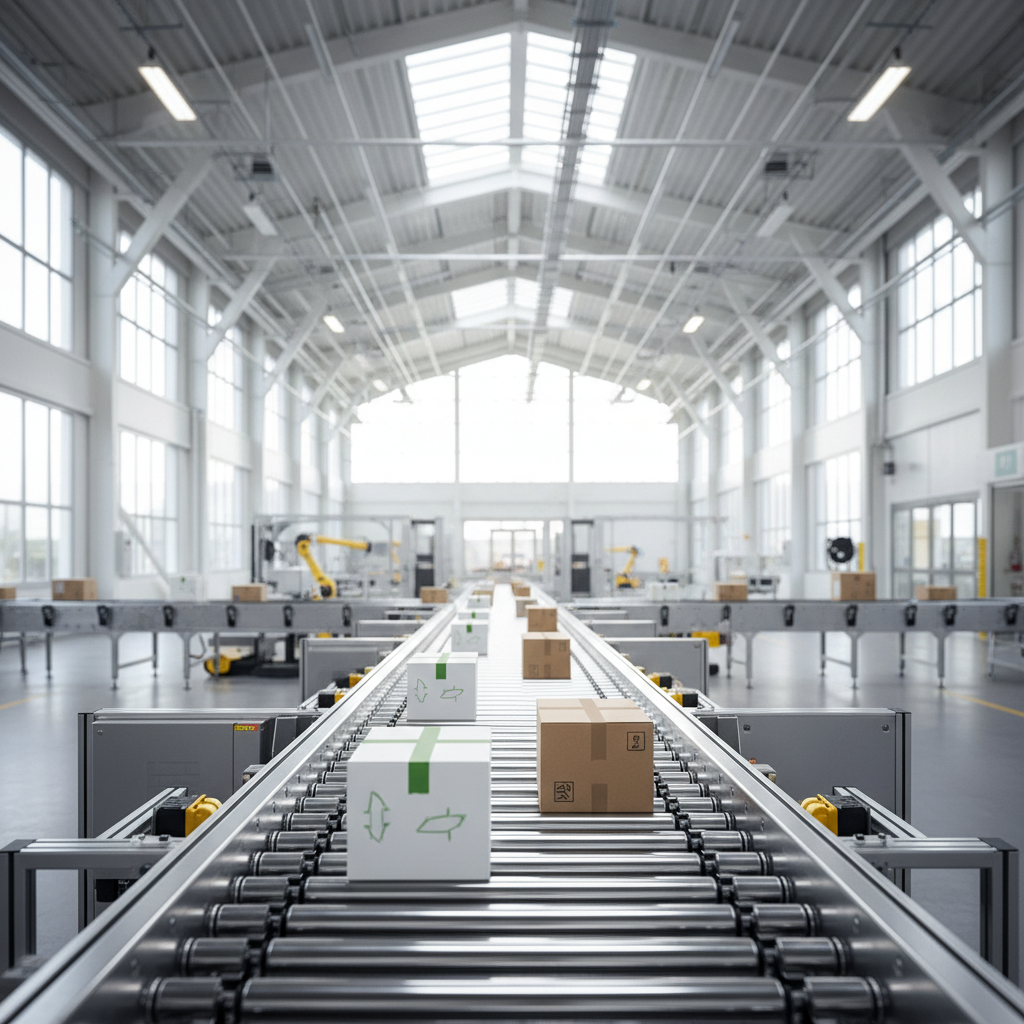
An effective cross-docking facility is designed for flow. The building is often long and narrow (I-shape) to minimize the distance goods travel. A central sortation area is the core of the operation. Here, packages are scanned and automatically routed to the correct outbound lane. This process is complex and requires a seamless connection between hardware and software. For a deeper understanding of the technologies involved, our comprehensive guide on Sortation Systems is an excellent resource.
It is in this design phase where many companies realize their existing processes are a bottleneck to growth. As noted in our analysis on how business growth can outpace process maturity, scaling operations requires a foundational shift in thinking, moving from manual tasks to integrated, automated workflows.
Quantifiable Benefits: A Cost-Benefit Analysis
The business case for automated cross-docking is compelling. The initial investment (CAPEX), which can range from €500,000 for a simple system to over €10 million for a large-scale automated hub, is offset by significant operational savings (OPEX).
- Reduced Storage Costs: With warehouse space in prime Benelux locations costing €60-€95 per square meter annually, eliminating the need for vast storage areas delivers direct savings. Cross-docking can reduce storage footprint by over 50%.
- Lower Labor Costs: Automation reduces the need for manual handling. A conveyor system can move and sort goods with a fraction of the workforce required for a manual operation, cutting labor costs by 20-40%.
- Increased Throughput: An automated facility can handle a significantly higher volume of goods. A single automated sorting line can process between 5,000 and 15,000 items per hour, a task that would require dozens of workers.
- Improved Accuracy: Automated scanning and sorting virtually eliminate human error, leading to accuracy rates above 99.9%. This reduces costly returns and improves customer satisfaction.
Implementation Challenges and Solutions
Transitioning to an automated cross-docking model is not without its challenges. It requires meticulous planning, a significant upfront investment, and a high degree of coordination between suppliers, carriers, and the facility itself. The system must be able to handle variations in package size, weight (from 50g to 50kg), and fragility. Furthermore, the Warehouse Execution System (WES) or Warehouse Control System (WCS) must be robustly integrated with the overarching WMS to ensure real-time visibility and control. Working with an experienced integration partner is critical to navigate these complexities and ensure the designed system meets the specific throughput and sorting requirements of the business.
Easy Systems: Your Partner for Automated Intralogistics
In the fast-paced Benelux market, efficiency is not just an advantage; it's a necessity. Automated cross-docking is a powerful strategy to achieve the speed, accuracy, and cost-effectiveness required to compete. However, the success of such a project hinges on expert design and flawless execution.
At Easy Systems, we specialize in developing modular, scalable conveyor solutions tailored to the unique demands of our clients. With decades of experience in the European market, we understand the intricacies of designing and implementing high-performance systems for cross-docking, sorting, and warehouse automation. We don't just sell conveyors; we build the backbone of your intralogistics success. Partner with us to transform your supply chain from a cost center into a competitive advantage.
Frequently asked questions
What is the main advantage of cross-docking in logistics?+
The primary advantage is speed. Cross-docking significantly reduces the time goods are held in a warehouse, often from days to just a few hours. This accelerates the entire supply chain, lowers inventory holding costs, and improves customer delivery times.
How much does an automated conveyor system for cross-docking cost?+
The cost varies widely based on scale and complexity. A small, semi-automated system might start around €250,000, while a large, fully integrated facility with high-speed sortation can exceed €10 million. The ROI is typically justified by reduced labor and storage costs.
Which industries in the Benelux benefit most from cross-docking?+
Industries with high-volume, time-sensitive goods benefit most. This includes e-commerce, food and beverage, retail (especially fast fashion and groceries), and postal/parcel services, all of which have a major presence in the Benelux region.

The Easy Systems engineering team designs, integrates and commissions conveyor systems and warehouse automation across Belgium, the Netherlands and Luxembourg. Combined experience covers roller and belt conveyors, sorters, AGV/AMR fleets, AutoStore, shuttle AS/RS and WMS/WCS integration for distribution centers and e-commerce fulfillment operations.
- Conveyor design (roller, belt, modular plastic)
- Sortation & merge logic
- AGV / AMR fleet integration
- AutoStore & shuttle AS/RS
- WMS / WCS integration