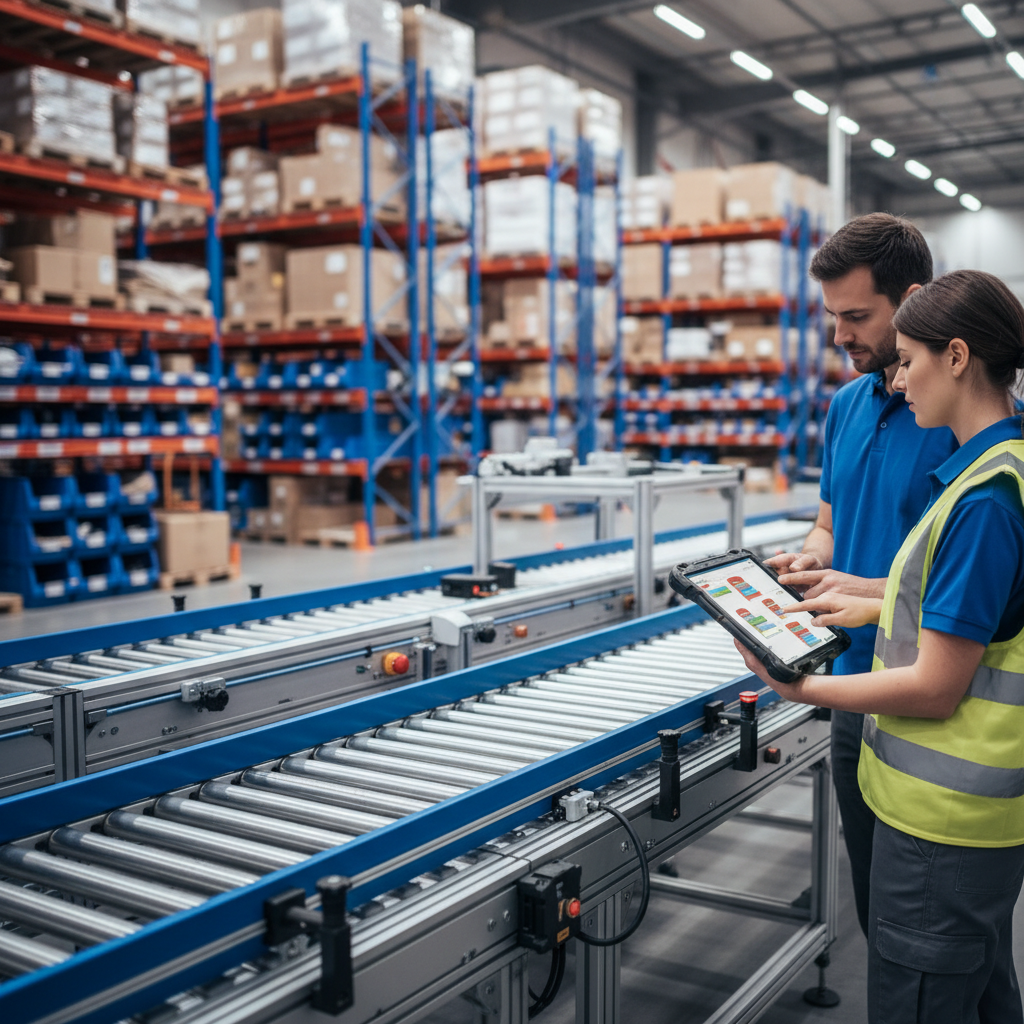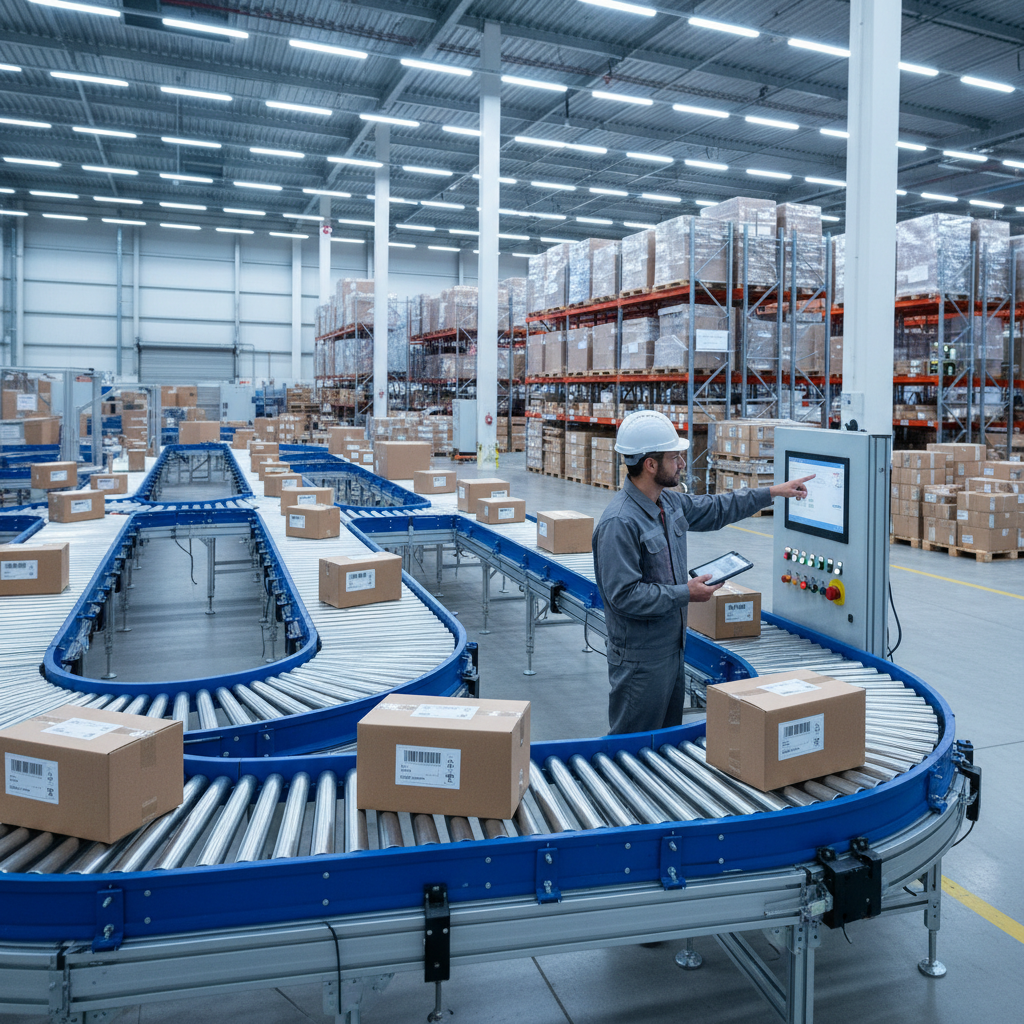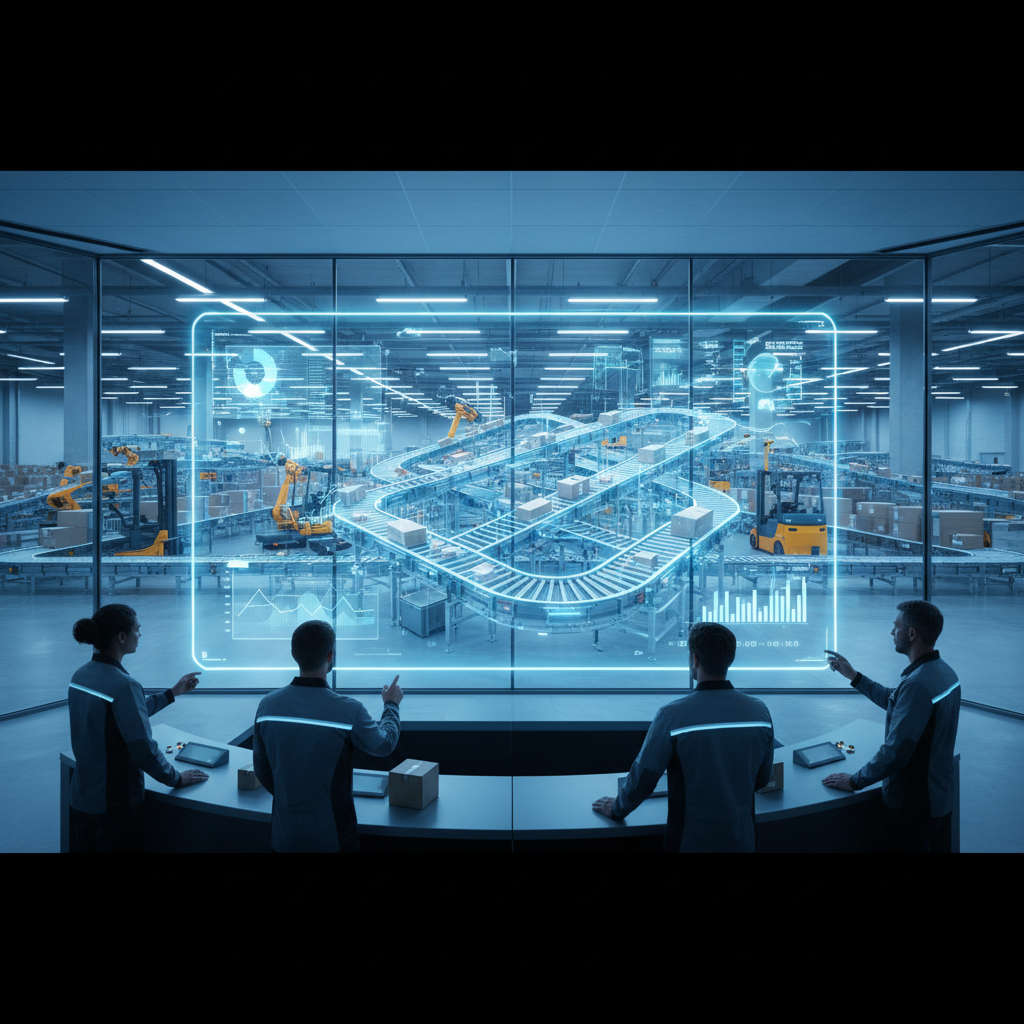
Modular Robotics on Conveyor Systems: Flexibility and Scalability
Modular robotics integrated with conveyor systems offer unprecedented flexibility and scalability for modern production. These systems allow businesses to adapt to changing demands in hours, not months, significantly boosting efficiency and future-proofing operations.
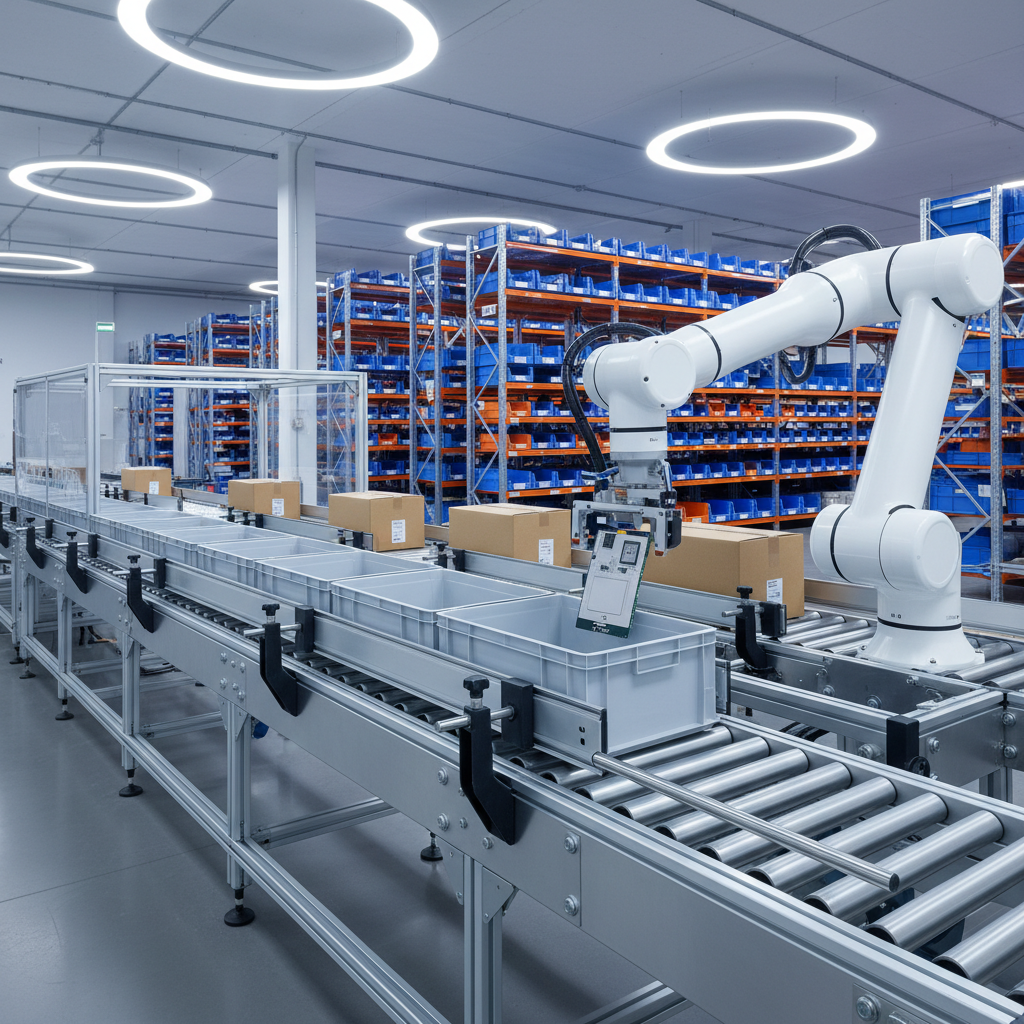
In the fast-paced landscape of European manufacturing and logistics, the ability to adapt is no longer a competitive advantage—it's a necessity. Traditional, monolithic automation systems, while powerful, often lack the flexibility to respond to fluctuating market demands, new product introductions, or supply chain disruptions. This is where modular robotics, when integrated directly onto conveyor systems, provides a transformative solution, offering a new paradigm of flexibility and scalability for modern production environments.
Definition
Modular robotics on conveyor systems refers to the integration of self-contained, task-specific robotic units (e.g., pick-and-place arms, sorters, palletizers) into a standard conveyor line. Unlike traditional automation, these modules are designed for rapid installation, reconfiguration, and removal, enabling 'plug-and-play' functionality that allows a production or logistics line to be dynamically altered.
Key Numbers
| Metric | Typical Range (EU 2026) | Notes |
|---|---|---|
| Initial Investment (per module) | €25,000 - €80,000 | Depends on complexity, payload, and brand (e.g., cobot vs. industrial arm). |
| Reconfiguration Time | 2 - 8 hours | Time to swap, add, or remove a robotic module from an active line. |
| Typical ROI | 1.5 - 3 years | Faster ROI is driven by reduced downtime and labour cost savings. |
| Payload Capacity | 0.5 kg - 1,000 kg | Range covers small item picking (e-commerce) to full pallet handling. |
| Operational Speed | 0.5 m/s - 4 m/s | The speed of the robotic action, distinct from conveyor speed. |
| Footprint per Module | 1 m² - 5 m² | The physical space required on the factory floor next to the conveyor. |
The End of Fixed Automation?
For decades, automation meant large, fixed, and highly customized systems. A conveyor line with a robotic arm was designed and programmed for one specific task. Changing the product or process often required extensive downtime, reprogramming by specialists, and significant capital expenditure. In an era of mass personalization and volatile demand, this rigidity is a major liability. Many businesses find that their operational needs evolve faster than their fixed infrastructure, a common growing pain we've discussed in detail. As companies grow, their processes don't always keep up, creating bottlenecks that modularity can solve.
Core Benefits of Modularity
- Flexibility: Adapt the line for new products, packaging, or tasks by simply swapping modules. A line sorting parcels today can be reconfigured for assembling components tomorrow.
- Scalability: Start with a semi-automated line and add robotic modules as demand grows. This allows for phased investment (CapEx) and avoids over-dimensioning the system from day one.
- Reduced Downtime: A faulty module can be quickly swapped out for a replacement, minimizing production stops. Maintenance can be performed offline on the spare module.
- Redeployability: Assets are not sunk. A robotic module used for a seasonal peak in e-commerce can be redeployed to a different part of the factory during the off-season.
Enabling Technologies: The 'Plug & Play' Promise
True modularity relies on standardization. Without it, 'plug and play' becomes 'plug and pray'. Several key technologies are making this a reality in European warehouses.
Standardized Hardware and Software Interfaces
At the core of modular integration is the need for systems to speak the same language. This involves both physical and digital standards.
- Mechanical Interface: Standardized mounting points and connections on the conveyor frame that allow a robotic module to be physically attached quickly and securely.
- Electrical Interface: Quick-connect power and safety circuits (like E-stops) ensure that modules can be integrated safely without complex rewiring.
- Software Communication: Protocols like OPC UA (Open Platform Communications Unified Architecture) are crucial. They create a vendor-agnostic communication layer, allowing a Siemens PLC controlling the conveyor to seamlessly exchange data with a Fanuc robot and a Cognex vision system. This simplifies the complex world of WMS, WCS, and WES integration, a topic we explore further in our Guide to WMS/WCS Integration.
Comparing Modular Robotic Technologies
Not all robotic modules are created equal. The choice depends entirely on the task at hand. The table below compares common types seen on European production lines.
| Robotic Module Type | Primary Task | Typical Payload | Key Advantage |
|---|---|---|---|
| Collaborative Robot (Cobot) Arm | Assembly, QC, packing | 1 - 25 kg | Can work safely alongside humans without extensive caging. |
| Industrial Robot Arm (6-axis) | High-speed pick & place, welding | 5 - 1,000 kg | Very high speed and precision for repetitive tasks. |
| SCARA Robot | Pick & place, assembly | 1 - 20 kg | Extremely fast and precise on a horizontal plane. |
| Modular Sorter | Diverting items | Up to 50 kg | Can be inserted into a conveyor line to add sorting destinations. |
| Autonomous Mobile Robot (AMR) with Top Module | Transporting goods to/from conveyor | 100 - 1500 kg | Decouples the conveyor from other processes, adding immense flexibility. |
Application Spotlight: E-commerce Fulfillment
A prime example of modular robotics is in an e-commerce distribution center. A standard belt conveyor transports totes with mixed-item orders.
The Modular Setup
At various points along the line, different robotic modules are deployed:
- Depalletizing: A heavy-payload industrial arm breaks down incoming pallets, placing cases onto the conveyor.
- Goods-to-Person Station: A cobot picks individual items from a tote delivered by the conveyor and places them into an order box, often guided by a pick-to-light system.
- Packing & Sealing: Further down the line, a specialized module erects a carton, a cobot places the items inside, another machine adds dunnage, and a final module seals and labels the package.
During peak season (e.g., Q4), the center can double its packing capacity by simply adding two more packing modules to the line over a weekend. Once the peak is over, these modules can be removed and stored or redeployed, preventing unnecessary capital from being tied up in idle equipment.
Implementation: Challenges and Best Practices
While the vision is appealing, successful implementation requires careful planning.
Challenges
- System Integration: Ensuring seamless data flow between the robot controller, the conveyor PLC, and the overarching Warehouse Execution System (WES) can be complex.
- Safety: Integrating robotics requires a thorough risk assessment. While cobots are designed for collaboration, industrial arms need robust safety caging and sensors.
- Flow and Bottlenecks: A super-fast robot is useless if the upstream or downstream conveyor can't keep up. The entire line must be analyzed as a single, cohesive system.
Why Easy Systems is Your Trusted Partner for Modular Automation
The transition to modular automation is as much about process design as it is about technology. It requires a partner who understands material flow, system integration, and the realities of the factory floor. At Easy Systems, we specialize in designing and building intelligent, flexible conveyor systems that serve as the backbone for modern automation.
Our pre-engineered conveyor modules and open, straightforward control philosophy are designed to integrate seamlessly with third-party robotics. We don't just sell conveyors; we provide the robust, scalable, and connected foundation that allows you to deploy modular robotics effectively. We help you analyze your entire process, from infeed to outfeed, ensuring that your investment in robotics delivers the promised flexibility and ROI. By future-proofing your transport system today, we empower you to scale and adapt for the challenges of tomorrow.
Frequently asked questions
How much does a modular robotic cell for a conveyor cost in Europe?+
A single modular robotic cell for a conveyor typically costs between €25,000 and €80,000. The price varies based on the robot's payload (e.g., a 5 kg cobot vs. a 500 kg industrial arm), its speed, and the complexity of the required gripper and vision systems.
How long does it take to integrate a robotic arm into an existing conveyor line?+
For a pre-engineered modular system with standardized interfaces, physical and electrical integration can take as little as 2-8 hours. The software integration and commissioning with the WCS or PLC might take an additional 1-3 days, depending on complexity.
What is the typical ROI for adding a robot to a conveyor system?+
The typical Return on Investment (ROI) for a modular robotic cell in a logistics or manufacturing environment is between 1.5 and 3 years. This is achieved through direct labour savings, increased throughput (often by 20-30%), and improved accuracy and quality.
Can modular robots work alongside human employees?+
Yes, 'collaborative robots' or 'cobots' are specifically designed to work safely alongside humans without extensive physical guarding. They use sensors to detect collisions and operate at lower speeds, making them ideal for tasks like packing, assembly, and quality control.
What is the main advantage of modular robotics over traditional automation?+
The main advantage is flexibility. A traditional automated line might take weeks or months to re-tool for a new product. A modular system allows an operator to swap out a robotic cell in a single shift (e.g., 8 hours), drastically reducing downtime and enabling high-mix, low-volume production.
What communication protocol is best for modular robotics?+
OPC UA (Open Platform Communications Unified Architecture) is widely considered the leading standard for Industry 4.0 and modular systems. Its vendor-neutral, secure, and scalable framework allows seamless communication between robots, conveyors, PLCs, and higher-level software like WES or ERP systems.

The Easy Systems editorial desk reviews and fact-checks every Conveyor-Design article against Benelux project experience. Editors translate engineering decisions — throughput, peak factors, layout, integration — into plain-language guides for operations managers, project leads and decision-makers.
- Warehouse layout & slotting
- Order-profile analysis
- Vendor-neutral comparison
- Benelux logistics market